
How to break a big assignment into smaller steps that work
By Rive News / Research desk | Rive News / Published October 27, 2026 at 9:00 AM PKT
Key takeaways
- A big assignment feels hard because it is really a dozen small tasks wearing one deadline.
- Each step should be small enough to finish in a single work session, with its own date.
- Work backwards from the due date, and leave 24 hours between the final draft and the last read-through.
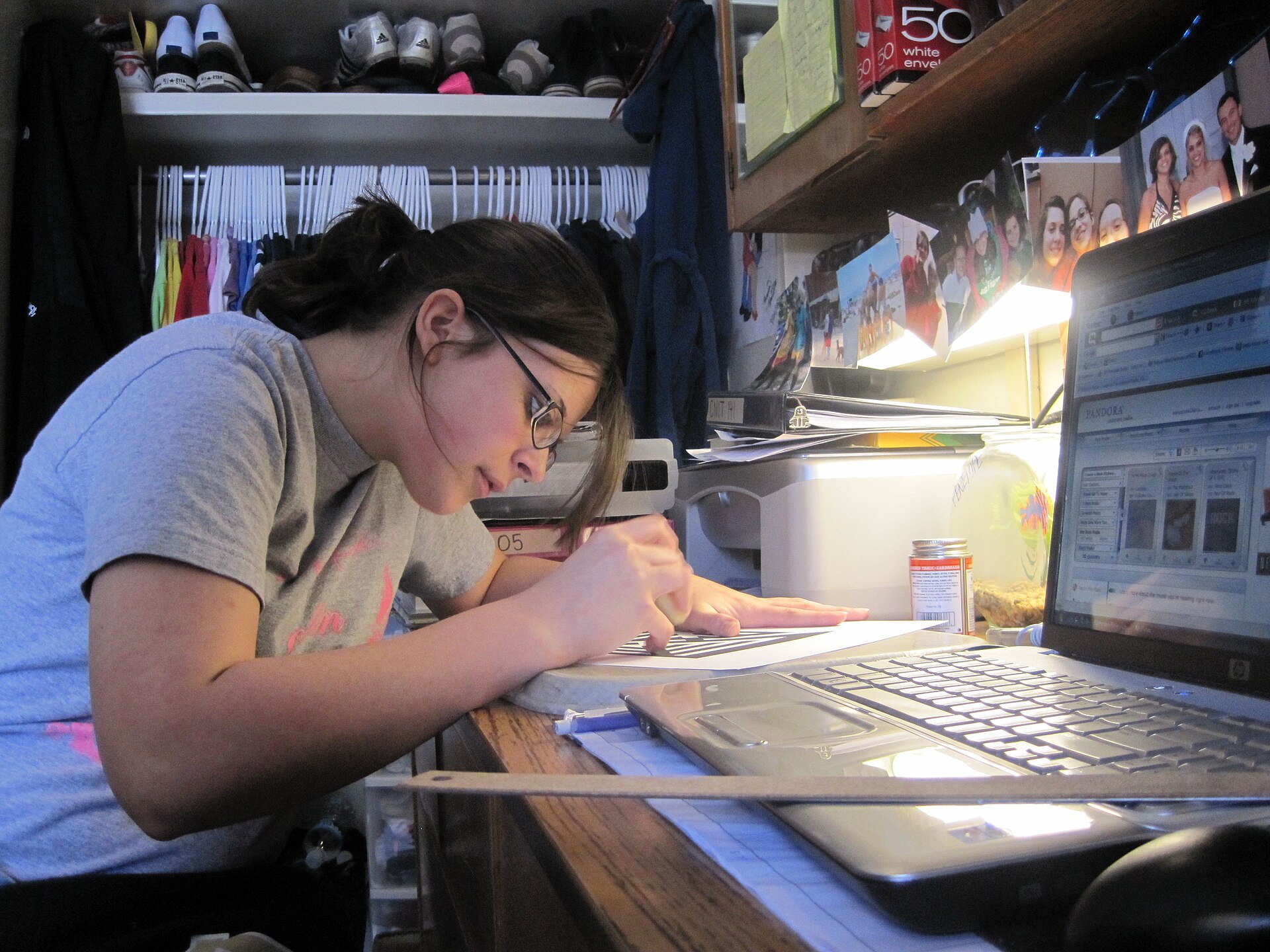
A student writing and studying at a desk, working through one small step at a time. Photograph: the studying student
Image Credits: Wikimedia Commons
A big assignment is not one task. It is a chain of smaller tasks that share a single deadline, and the chain gets manageable once each link is named and dated.
This article explains why big assignments feel overwhelming, how to start by reading the brief properly, how to split the work into phases, how to turn phases into single-session tasks, and how to schedule backwards from the deadline.
Why big assignments feel overwhelming
A vague goal such as "work on the essay" is hard to start. It has no finish line, so the brain cannot tell when the session is done, and stopping feels like quitting.
Fanshawe College's study guide makes the same point directly. It warns that a daily goal like "work on research paper" is not well-defined, and that vague goals make procrastination easier.
Specific steps fix that problem. "Find three peer-reviewed articles" has a clear end, and finishing it gives a small sense of progress that makes the next step easier to start.
The overwhelm is also a size illusion. A 2,000-word essay sounds huge, but four body paragraphs written on four different days are just four ordinary writing sessions.
Starting is the hardest part of the whole chain. Once the first small task is done, the assignment stops being an abstract worry and becomes a list with visible progress.
Start by reading the brief properly
Before splitting anything, read the assignment instructions and the marking rubric in full. Fanshawe's example plan puts this first, before topic choice or research, and for good reason.
Note the word count, the required sources, the format, and the exact question being asked. A plan built on a misread brief is wasted effort, however neat it looks.
Write down any parts you do not understand, and ask about them early. Questions asked in week one are cheap, while questions asked the night before submission are not.
This step also sets the phases that follow. A lab report, a presentation, and an essay all break down differently, so the brief decides the shape of your plan.
Split the work into phases
Most large assignments fall into the same broad phases, whatever the subject. The usual set is understanding the brief, researching, outlining, drafting, revising, and submitting.
For a research paper, Fanshawe's guide works through reading the instructions, choosing a topic, library research, note-taking, outlining, drafting paragraph by paragraph, editing, and proofreading.
Keep the phase list short, around five or six items. Too many phases just recreate the original overwhelm in a new form.
Each phase should also have a visible result. Research ends with notes, outlining ends with a structure, and drafting ends with a complete rough version, even if it is rough.
For group work, add one extra phase for merging parts. Agree early on who writes which section and when the pieces come together, since merged drafts always need more editing time than anyone expects.
Turn phases into single-session tasks
This is the step most students skip, and it is the one that matters most. Break each phase into tasks that fit one work period, and give each task a date.
Fanshawe's guide advises creating steps that can be done easily in one day, and preferably in a single work period. Its example splits drafting into one paragraph per session rather than "write the essay" in one sitting.
Concordia University's planning sheet shows the same idea in numbers. Its four-week term paper plan lists 14 dated tasks, from choosing a topic in one hour to a final proofread, spread across a month.
Use verbs that describe a finished action. "Read two articles and take notes" beats "do research", because you can check it off without arguing with yourself about whether it counts.
If a task still feels too big, split it again. There is no penalty for a long list of small wins, but there is a real cost to a short list of tasks you keep avoiding.
Work in focused blocks when you sit down. The Pomodoro pattern of 25 minutes of work followed by a 5-minute break, described in student study guides, suits single-session tasks well.
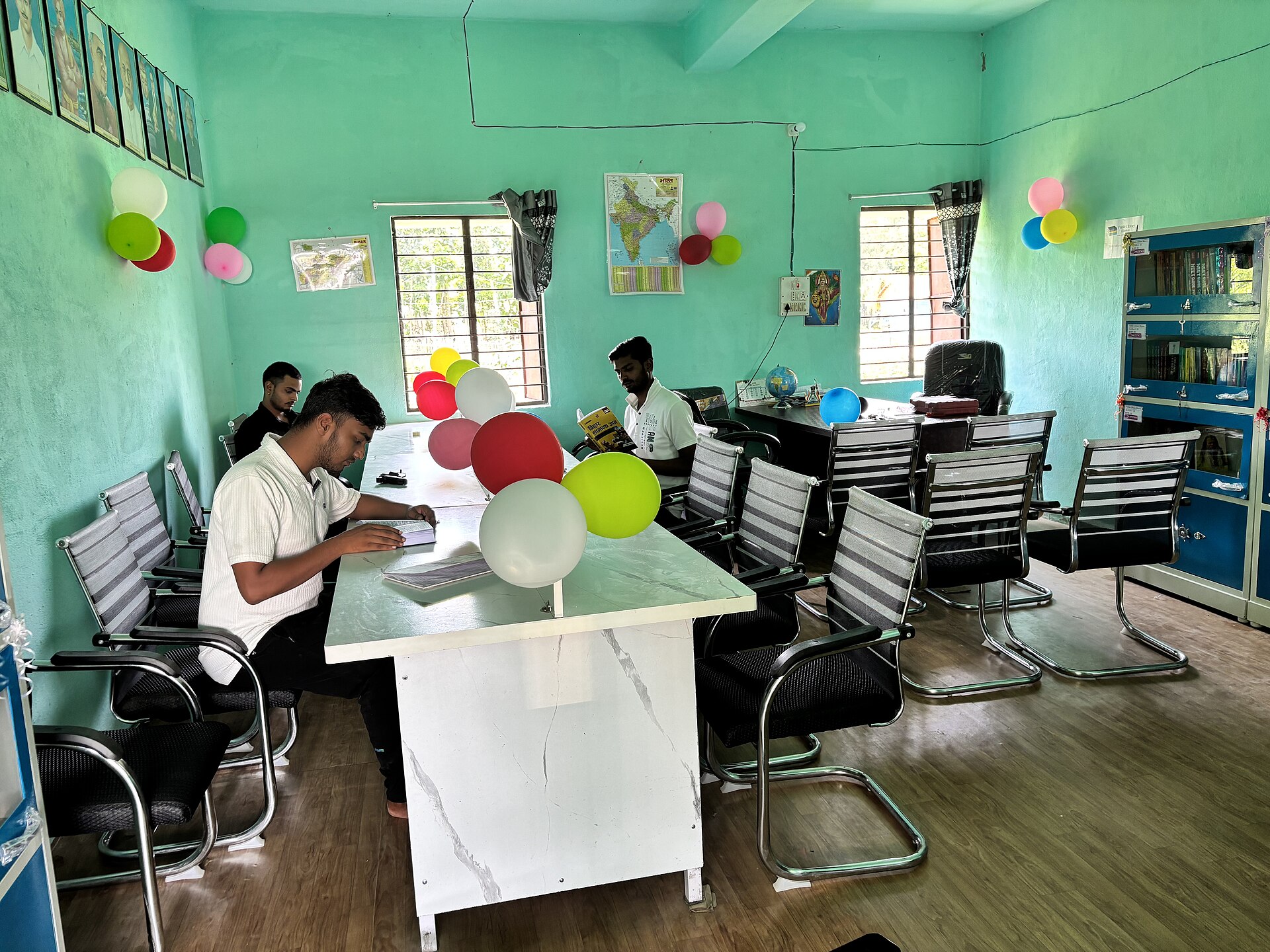
Students reading in a public library during the research phase. Photograph: the library readers
Image Credits: Wikimedia Commons
Schedule backwards from the deadline
Once the tasks exist, place them on a calendar by working backwards from the due date. Start with submission day, then place editing, then drafting, then research.
UMass Dartmouth's guide recommends always giving yourself one extra day to correct anything that may go wrong at the last minute. That buffer day is insurance, not spare time to waste.
The same guide recommends leaving 24 hours between finishing the final edited draft and the final read-through. A rested eye catches mistakes that a tired one slides past.
Put the calendar where you will see it every day. UMass Dartmouth advises posting a copy in a place it will be seen daily, so the plan stays visible instead of living in a forgotten notebook.
Then follow it loosely but firmly. If a task slips by a day, move it, but do not silently delete it, since deleted tasks have a habit of reappearing as panic the night before submission.
Review the plan once a week, not once at the end. A five-minute weekly check is enough to spot a slipping phase early, while there is still time to adjust the remaining dates.
The bottom line
Breaking a big assignment down is a practical skill, not a personality trait. Read the brief, split the work into phases, cut each phase into single-session tasks, and schedule them backwards from the deadline with a buffer day spare.
Start with the smallest possible step today, even if it is only reading the rubric and writing the task list. One finished step is the fastest cure for an assignment that feels too big to begin. Pick the task, set a timer, and stop when it is done.
Tags: study skills, assignments, time management
Rive News's research desk covers study methods, drawing on university study guides and public learning research.
Related
- How to Stop Procrastinating on Homework With Small Steps
- What Is the Pomodoro Technique, and Does It Work?
- How to Organise Revision for Five Subjects at Once
- How to Study for Exams Without Burning Out
Subscribe for one plain-English explainer each morning.
Rive News aims for accurate, sourced explainers; corrections are published when an error is confirmed.
Related stories

Why Do I Blank Out During Tests Despite Studying: Test Anxiety and Retrieval Failure
Blanking out in exams is retrieval failure, not missing knowledge. Anxiety drains working memory; rereading builds false confidence. Here

How to Study for Exams Without Burning Out
Sleep 7-8 hours, study in 25-50 minute blocks, and exercise daily. The science-backed way to study for exams without burning out, and what
Why Do I Forget What I Just Read? Science Has an Answer
You forget what you just read because of the forgetting curve, mapped by Ebbinghaus in 1885. Science explains why memory fades fast and how