
Why Do Deadlines Improve Focus, Even Artificial Ones?
Key takeaways
- Deadlines improve focus by making the cost of delay immediate, which raises motivation and narrows attention.
- Artificial deadlines work because the brain responds to the constraint itself, not to who set it.
- Tight deadlines help execution tasks most, and backfire when they create panic or squeeze creative work.
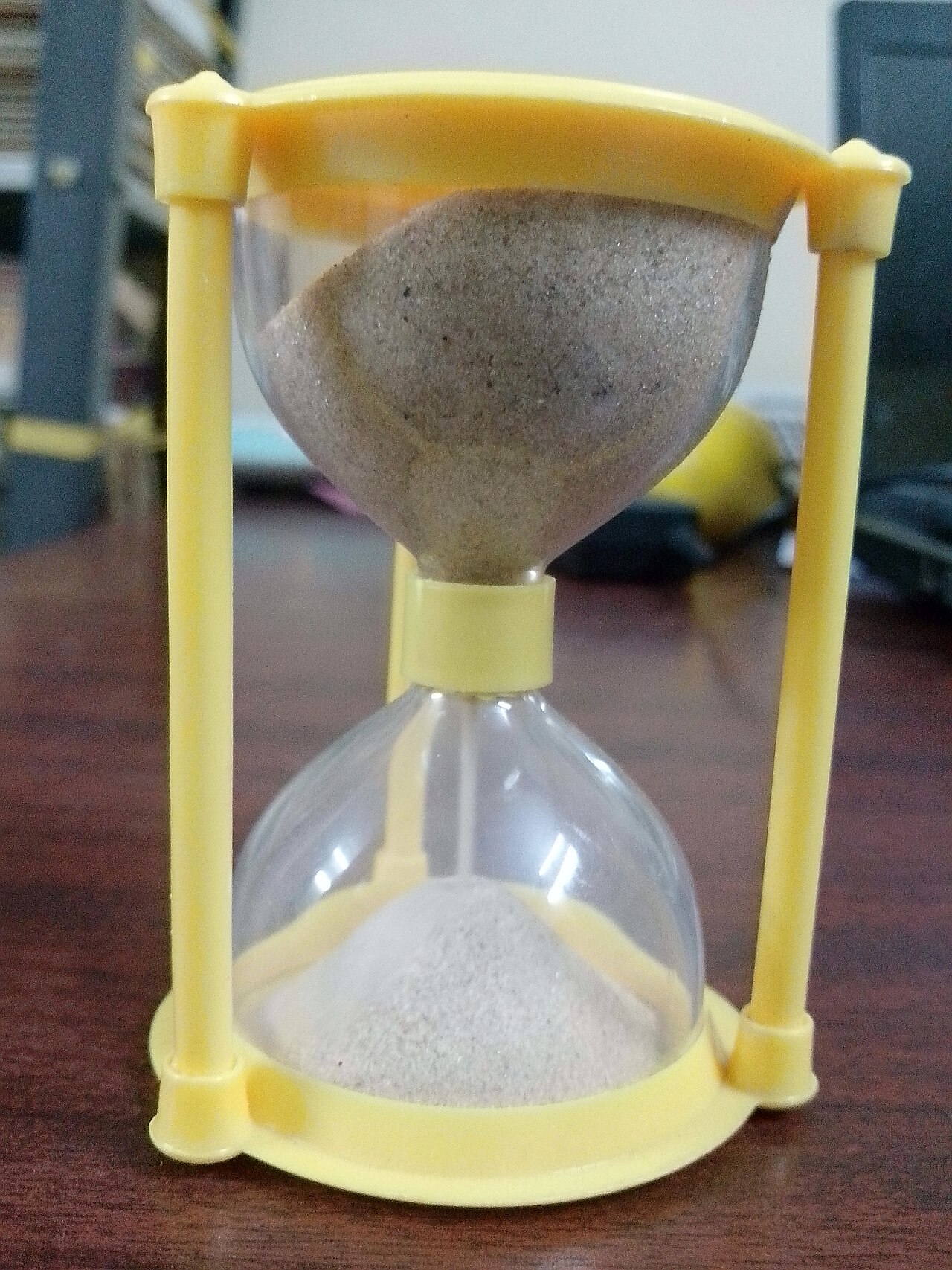
A deadline is a date by which a task must be done. An artificial deadline is one you set yourself, earlier than the real due date, with no outside penalty for missing it. Both can sharpen focus, and the artificial kind often works surprisingly well.
The reason is not willpower. A deadline changes how the brain values time. Weeks before a due date, another episode of a show feels cheap.
The night before, the same episode feels expensive. Every wasted minute has an obvious consequence, so attention narrows and decisions speed up.
This article explains why deadlines improve focus even when they are artificial, including Parkinson's Law, urgency bias, and motivation research, plus the limits where tight deadlines stop helping.
Work expands to fill the time available
The classic statement comes from Cyril Northcote Parkinson, a British naval historian. In 1955, he wrote an essay for The Economist about bureaucracy, and it contained a single sentence that outlived the rest: work expands so as to fill the time available for its completion.
Parkinson was mocking government departments that grew by 5 to 7 percent per year between 1914 and 1954 while the empire they administered shrank. The insight translated neatly to individual behavior. Given all afternoon to write a report, most people spend the first hours on tangential research, reorganizing notes, and polishing sentences that do not need it.
The report itself gets written in the last stretch, in a mild panic.
A useful test is the font-choice trap. Given a whole Saturday to build a slide deck, a person may spend an hour choosing fonts, another rearranging slides, and another hunting for the perfect photo. Given 45 minutes, the same person picks a plain font and finishes.
The deadline did not make them smarter. It removed the low-value options.
Researchers have documented a related effect in experiments published in the Journal of Personality and Social Psychology. People sometimes took longer to finish tasks simply because they believed more time was available. The belief alone changed the pace, which is why a self-set deadline can work: the brain reacts to the constraint, not to the calendar.
Why urgency beats importance
Deadlines do more than compress time. They reorder priorities. Meng Zhu, an associate professor of marketing at Johns Hopkins Carey Business School, found that longer deadlines can make an assignment feel more difficult, not less.
The extra time invites a bigger, vaguer sense of the task, and the task swells to match.
Zhu and colleagues Yang Yang and Chris Hsee studied what happens when people juggle several deadlines at once. They found that people regularly pursue less important assignments with shorter deadlines over more important assignments with longer deadlines. In a paper in the Journal of Consumer Research, they called this the mere urgency effect.
The pattern is familiar. Many people check and answer email instead of working on the revenue report or the team project. Urgent tasks offer immediate and certain payoffs, while important tasks sit far from completion.
Zhu's studies went further: people favored urgent but trivial tasks even when those differences were controlled for. Urgency seems to carry its own appeal, independent of the payoff.
That finding explains why artificial deadlines help. A self-set deadline borrows urgency from the real one and attaches it to today. The important task stops being a distant obligation and becomes the thing due next.
The brain, which responds strongly to near consequences, finally treats it that way.
Managers can use the same lever in reverse. When a deadline is far away, reminding people of the final payoff of each task pulls attention back to outcomes instead of dates. The goal is to make the important task feel as pressing as the urgent one, without inventing a false crisis.

Motivation rises as the deadline nears
Temporal Motivation Theory, developed by psychologists Piers Steel and Cornelius Konig, gives the pattern a formal shape. In simplified terms, motivation depends on how valuable a goal feels and how far away its reward or consequence sits. As the deadline approaches, the same goal feels more motivating because its consequences are closer.
That is why so many people do their best work in the last hour before something is due. The brain genuinely does not prioritize a deadline two weeks away. The limbic system, which drives moment-to-moment behavior, is tuned to immediate consequences.
A deadline in two hours produces a strong urgency signal. A deadline in two weeks produces almost none.
The Yerkes-Dodson law adds a second piece. This principle, dating back more than a century, proposes that rising arousal improves performance up to a point, then harms it. A moderate deadline lifts arousal into the productive zone: attention narrows, distractions fade, and decisions come faster.
Too much pressure pushes past that zone into overwhelm, where errors multiply.
Artificial deadlines aim for the middle of that curve. They create enough arousal to focus attention without the panic of a genuinely impossible cutoff. The trick is to make the artificial deadline feel binding.
A deadline written on a list and ignored is not a deadline. One tied to a concrete next step, such as sending a draft to a colleague by lunch, carries weight because someone else will see the result.
How to set artificial deadlines that work
A good artificial deadline has three traits: a specific outcome, a short horizon, and a visible consequence. Vague goals like "work on the report" fail because the brain can always find more to do. Specific goals like "write the executive summary and the first two sections" succeed because done is obvious.
Start by estimating the task with no time pressure, then cut that estimate by 20 to 30 percent. That is the time box. It should feel slightly uncomfortable, enough to create urgency, but not so tight that quality collapses.
For a three-hour writing project, three 45-minute boxes with short breaks often beat one 180-minute block, because each box resets the urgency signal.
Use this checklist when setting one:
- Define done in one sentence before the timer starts.
- Pick a horizon of hours or a day, not weeks.
- Attach a consequence, such as sharing the draft or starting the next task.
- Stop at the cutoff and review, even if the work feels unfinished.
Break large projects into mini-deadlines. A research report due Friday becomes data collection on Monday, analysis on Tuesday, a draft on Wednesday, and review on Thursday. Each mini-deadline is small enough to feel near, and each one produces visible progress.
Progress itself is motivating, which makes the next deadline easier to meet.
Time boxing also tames low-value work. Email left unconstrained can eat a whole morning. Given a 20-minute box twice a day, most people handle the large majority of it adequately.
The rest gets a proper reply later, when it genuinely deserves one. The same logic applies to meetings: a 60-minute meeting cut to 45 saves 15 minutes, and the tighter frame forces the group to decide faster.
Students can apply the same method to study. A practice test scheduled for tomorrow creates a near deadline that forces recall, which is far more effective than rereading. Readers who want to rebuild notes around recall can set a timer and rewrite the material from memory, then check what was missing.
Where tight deadlines backfire
Deadlines are a tool, not a cure. They work best for execution tasks, where the direction is clear and the challenge is doing the work: writing, analysis, coding, or design with a known brief. They work poorly for discovery tasks, where the challenge is figuring out what needs to be done.
A genuinely novel problem may need incubation time, a period when the brain works on it in the background before a solution surfaces. Hammering that kind of problem with tight deadlines can produce rushed, shallow thinking. The practical fix is to separate the phases: broad blocks for exploration, then time-boxed blocks for synthesis.
Chronic time pressure is a different failure mode. If every task is aggressively time-boxed and the whole day is a race, the result is stress, not productivity. Chronic stress degrades working memory, executive function, and creative thinking, which are exactly the capacities good work needs.
Deadline pressure should be a targeted tool, not the default atmosphere.
Estimation errors cause a third problem. Most people underestimate how long tasks take, a bias psychologists call the planning fallacy. A new time boxer will set boxes that are too short, miss them, and conclude the method failed.
The fix is to track actual times for a few weeks and adjust. Estimation is a skill that improves with a record.
There is also the quality trap. Tight deadlines force a focus on the core 80 percent of value, which is usually the right call. But for work where the last details carry the value, such as a legal filing or a safety check, a compressed deadline can cut the wrong corners.
Match the tightness of the deadline to the cost of an error.
Finally, do not romanticize cramming. The fact that panic can produce a burst of output does not make panic a good system. A student who writes three pages in an hour the night before a deadline has still lost the chance to revise, check sources, and sleep.
Protecting the study setting helps too, since a quiet room lowers the arousal that a deadline already raises. The goal of artificial deadlines is to get the focus of the last hour without the damage of the last minute.

The bottom line
Deadlines improve focus because they make delay costly, and artificial deadlines work because the brain responds to the constraint rather than to who set it. Parkinson's Law explains the drift, urgency bias explains the reordering, and motivation research explains the rising drive as the cutoff nears. Use short, specific, consequence-backed deadlines for execution work, and leave room for discovery, rest, and revision.
The best deadline is the one that creates urgency early enough that panic never has to arrive.
Tags: deadlines, focus, productivity, study habits
Latest in Education
- Why Does Rewriting Notes Rarely Help but Remaking Them Does?
- How Does Background Noise Affect Concentration?
- What Is the Feynman Technique and Why Does It Expose Gaps?
Subscribe for one research-backed study tip each week.
Related stories

Why Do I Blank Out During Tests Despite Studying: Test Anxiety and Retrieval Failure
Blanking out in exams is retrieval failure, not missing knowledge. Anxiety drains working memory; rereading builds false confidence. Here

How to Study for Exams Without Burning Out
Sleep 7-8 hours, study in 25-50 minute blocks, and exercise daily. The science-backed way to study for exams without burning out, and what

Why Do I Forget What I Just Read? Science Has an Answer
You forget what you just read because of the forgetting curve, mapped by Ebbinghaus in 1885. Science explains why memory fades fast and how