
Why Does Rewriting Notes Rarely Help but Remaking Them Does?
Key takeaways
- Copying notes builds familiarity, which feels like learning but rarely survives a test.
- Remaking notes from memory forces retrieval, which strengthens the exact skill exams demand.
- In one study, retrieval practice beat concept mapping by 50 percent on delayed retention.
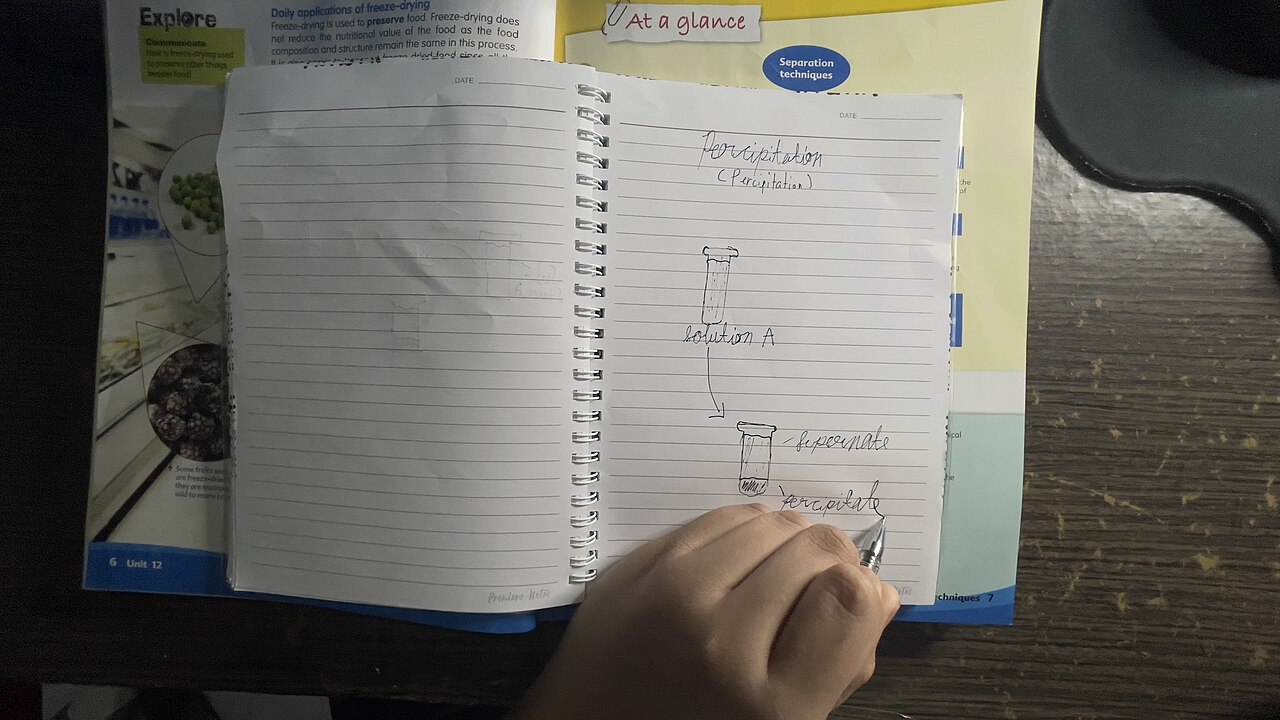
Rewriting notes means copying them again, usually with the original in view. Remaking notes means rebuilding them from memory, with the original closed, then checking what was missing. The two activities look alike from across the room.
In the brain, they are nearly opposites.
Copying keeps the material in front of the eyes, so the hand moves while memory rests. Remaking hides the material, so memory must do the work of finding it. That difference decides which method helps on a test.
This article explains why rewriting notes rarely helps but remaking them does, including the evidence on rereading, retrieval practice, and the trap of familiarity.
Copying feels like learning
A freshly rewritten page looks like progress. The handwriting is neater, the headings are tidier, and the colors are consistent. The hour feels spent, and the student walks away confident.
The problem is that the confidence comes from fluency, not from memory.
Fluency is the ease of processing something that is already in view. A clean page is easy to read, so the brain mistakes easy reading for solid knowing. On test day, the page is gone, and the ease goes with it.
The student faces a blank page and discovers that recognition was doing all the work.
Copying also skips the decision that matters. When the original is open, the hand can transcribe without choosing what is important. The brain never has to rank ideas, connect them, or translate them into its own words.
Those are the operations that build durable memory, and copying bypasses every one of them.
This does not mean neat notes are useless. A clear original set helps later review, and organizing headings can aid understanding on a first pass. The mistake is treating the second copy as study.
Once the notes exist in readable form, more copying adds little. The return on that hour is close to zero, and the hour could have gone to practice that tests memory.
The familiarity trap
Psychologists call the core problem the illusion of knowing. Seeing material repeatedly makes it feel familiar, and familiarity feels like mastery. The feeling is sincere, and it is wrong.
Jeffrey Karpicke, a professor of psychological sciences at Purdue University, has studied this gap for years. His finding is blunt: when students have the material right in front of them, they think they know it better than they actually do. Many do not realize that putting the material away and practicing retrieval is a far stronger study strategy.
The trap has a second layer. Students use familiarity to decide what to study next. They skip the sections that look familiar and drill the sections that look new.
Because the familiar sections were never tested by recall, the study plan steers time away from exactly the material that needs it. The result is a schedule that feels efficient and fails precisely where it felt safest.
A simple check breaks the trap. Close the notes and write down everything you remember about one topic, then compare. The gaps on that page are honest.
They show what memory can produce, not what the eyes can recognize. That gap list is the best study guide a student can make, because it targets the next session at real weakness.
Teachers see the same pattern from the other side. Students who reread a chapter three times arrive confident and perform no better than students who read it once. The extra passes polished recognition, which the test does not measure.
A single pass followed by a recall attempt beats three passive passes, and it takes less time.
What the research found
The broadest review comes from John Dunlosky of Kent State University and colleagues. Their 2013 report in Psychological Science in the Public Interest reviewed the evidence for ten common learning techniques. Two strategies earned the highest utility rating: practice testing and distributed practice, which means spreading study over time.
Five techniques earned a low utility rating, and they include some of the most popular habits in school: summarization, highlighting and underlining, and rereading. Dunlosky said he was shocked that strategies students use so often provide so little benefit. His prescription was direct: by replacing rereading with delayed retrieval practice, students would benefit.
The review matters because it compared techniques head to head on the same evidence standard. Practice testing won across many kinds of tests and across ages. Rereading lost because it builds familiarity rather than recall.
Highlighting lost for a similar reason: the pen moves, the eyes follow, and memory sits out.
Karpicke's experiments at Purdue put numbers on the gap. In two studies, 200 students read science texts and then studied in one of two ways. One group made concept maps, drawing the connections between ideas.
The other group closed the text and practiced recalling the concepts from memory. A week later, the retrieval group scored 50 percent higher on long-term retention than the concept map group.
The test itself was demanding. It asked about specific concepts and about inferences, connections that were not stated directly in the text. Retrieval practice won on both measures.
Karpicke concluded that learning is fundamentally about retrieving, and that self-testing enriches the learning process in a way that elaboration alone does not.
Students in the study misjudged the methods badly. Most predicted that concept mapping would help long-term learning more. They were wrong, and the mismatch is the point.
The method that feels harder during study, because it exposes gaps, is the method that produces stronger memory later. Effort during practice is a signal, not a warning.
Later reviews confirmed the pattern at larger scale. A 2021 meta-analysis by John Hattie and Gregory Donoghue covered 242 studies with 1,619 effects and 169,179 participants. Its conclusion matched Dunlosky: the most effective techniques were distributed practice and practice testing.
Rewriting, rereading, and highlighting stayed near the bottom.

Why remaking works
Remaking notes works because it forces three operations that copying skips: searching memory, organizing what comes back, and noticing what is missing. Each one strengthens a different part of learning.
Searching memory is the core mechanism. When you try to recall a definition without looking, the brain activates the path to that fact and strengthens it. The next attempt finds the path faster.
A test demands exactly this operation, so practice matches performance. Copying never runs the path, so the path stays weak.
Organizing matters because recall returns fragments, not pages. A student remaking notes must decide what goes first, what belongs under which heading, and how ideas connect. Those decisions build a structure that later recall can follow.
A copied page has a structure too, but it is the author's structure, borrowed whole. The borrowed version fades faster because the student never built it.
Noticing gaps closes the loop. A remake attempt ends with a comparison against the original, and the comparison produces a precise list of what was forgotten. That list directs the next round.
Copying produces no gap list, because nothing was ever missing. The student leaves with a tidy page and no map of weakness.
There is also a timing benefit. Remaking works best after a delay, when some forgetting has set in. The effort of recovering a half-faded fact strengthens it more than recovering a fresh one.
That is why delayed retrieval practice, recall a day or two after first learning, beats immediate rereading. The delay makes the test harder and the memory stronger.
How to remake notes the right way
The method is simple, but the details decide whether it works. Follow this sequence for each topic.
- Read the source once and take normal notes, then close everything.
- On a blank page, write down all you remember, using your own words and structure.
- Open the original and mark every gap, error, and missing connection in a different color.
- Study only the marked gaps, then close everything and remake the page again.
- Repeat after a one-day gap, then after a three-day gap.
Keep each remake short. A page per topic is plenty, and a focused 20-minute session beats a wandering hour. The goal is not a beautiful document.
The goal is a record of what memory can produce unaided.
Use questions as prompts. Turn each heading into a question before closing the notes: "Why did the treaty fail?" beats "The treaty" as a cue, because it demands an answer rather than a label.
Flashcards work the same way, and they suit definitions, dates, and vocabulary. The card shows the question, memory supplies the answer, and the flip checks it.
Vary the format across rounds. First remake in sentences, second remake as a diagram from memory, third remake as a spoken explanation to an empty chair. Each format forces a fresh retrieval rather than a rehearsed copy.
Explaining aloud is the core of the Feynman technique, and it exposes gaps that silent writing hides.
When is copying ever useful? Copying helps on the first pass, when the goal is to capture material accurately during a fast lecture. It also helps when reorganizing messy notes into a readable original, once.
After that, copying should stop and remaking should start. The dividing line is whether the source is open. Open source means transcription.
Closed source means study.
Students with heavy reading loads can combine remaking with spacing. Instead of remaking all notes the night before an exam, remake one topic per day across the week. Distributed practice plus retrieval practice is the combination the reviews rated highest, and it fits a normal schedule.
A short self-set deadline keeps each session honest, because the timer forces recall instead of drift.
The bottom line
Rewriting notes rarely helps because copying builds recognition while exams demand recall. Remaking notes from memory forces retrieval, exposes real gaps, and strengthens the path that the test will use. The evidence is consistent: practice testing and spaced study beat rereading, highlighting, and copying across hundreds of studies.
Close the notes, rebuild the page, check the gaps, and repeat after a delay. The page will look rougher than a copied one, and it will hold up far better when it counts.
Tags: study methods, note taking, retrieval practice, learning
Latest in Education
- Why Do Deadlines Improve Focus, Even Artificial Ones?
- How Does Background Noise Affect Concentration?
- What Is the Feynman Technique and Why Does It Expose Gaps?
Subscribe for one research-backed study tip each week.
Related stories

Why Do I Blank Out During Tests Despite Studying: Test Anxiety and Retrieval Failure
Blanking out in exams is retrieval failure, not missing knowledge. Anxiety drains working memory; rereading builds false confidence. Here

How to Study for Exams Without Burning Out
Sleep 7-8 hours, study in 25-50 minute blocks, and exercise daily. The science-backed way to study for exams without burning out, and what

Why Do I Forget What I Just Read? Science Has an Answer
You forget what you just read because of the forgetting curve, mapped by Ebbinghaus in 1885. Science explains why memory fades fast and how