
The Feynman Technique: Why Explaining Exposes Knowledge Gaps
Key takeaways
- The Feynman technique asks you to explain an idea in plain words, as if teaching someone with no background.
- Gaps appear where you reach for jargon, skip steps, or wave past the hard part.
- You then restudy only those gaps and explain again until the explanation holds together.
What is the Feynman technique?
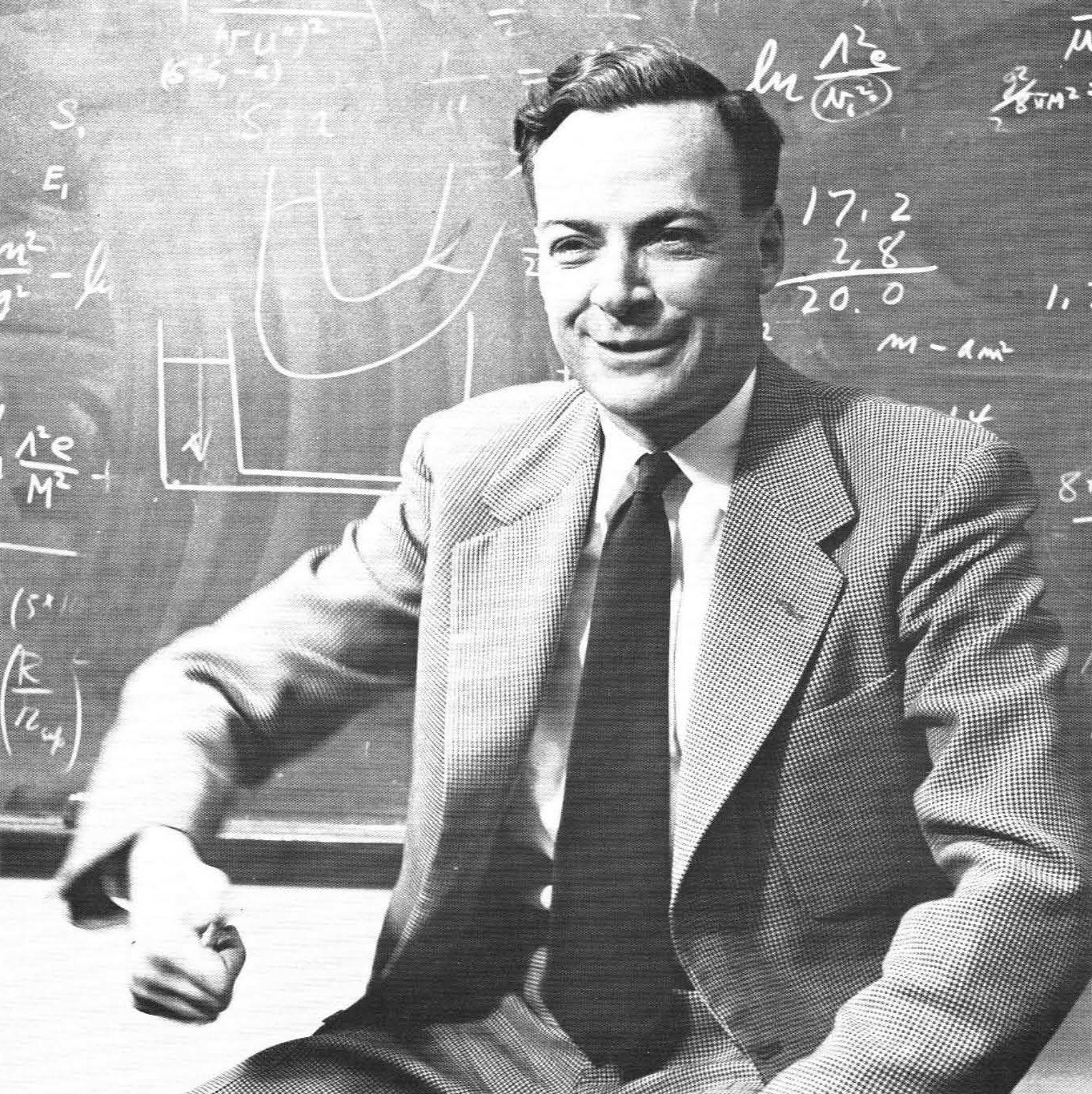
The Feynman technique is a study method named after physicist Richard Feynman. It asks you to teach a concept in simple terms, as if explaining it to a child, according to the University of York's study guide. Where your explanation breaks down, you have found a gap in your understanding.
Feynman won a Nobel Prize in physics and was known for explaining hard ideas so clearly that non-experts could follow them. He believed that if you could not explain something simply, you did not really understand it. That belief became the foundation of the technique that carries his name.
The method has four steps: teach it simply, identify gaps, simplify and clarify, then review and repeat. Each step matters, and skipping one weakens the whole method. This article explains the four steps, why explaining exposes gaps, and where the technique works best.
The four steps
Step one is to teach it to a child. Choose one topic you want to understand and try explaining it as if talking to someone who knows nothing about it.
You can write it down, speak it out loud, or explain it to a friend or family member. York's guide stresses choosing a specific topic rather than a whole subject.
Step two is to identify knowledge gaps. Children ask "why" questions, and if you cannot answer the why, you should go back to studying the material.
Note every spot where you stumbled, used jargon, or skipped a step. Those spots are the map of what you do not yet know.
Step three is to simplify and clarify. Rewrite the complex sections in simpler terms. Aim for clarity and ease of understanding.
Replace technical words with ordinary ones wherever the meaning survives. Use an analogy only when it carries the actual mechanism, not when it just sounds good.
Step four is to review and repeat. Go through the process again, refining your explanation until you can explain the concept simply and accurately. The loop is the technique.
One pass finds gaps. Repeated passes close them.
Why explaining exposes gaps
Reading feels like learning because it feels fluent. You follow the author's sentences, nod along, and mistake recognition for understanding.
Rereading strengthens that illusion because the text grows familiar. Familiarity is not knowledge.
Explaining breaks the illusion. When you must produce the idea yourself, in your own words and in order, there is nowhere to hide. You cannot borrow the author's sentences.
You cannot skip the step you never grasped. The gap that reading concealed becomes visible the moment you try to say it.
Jargon is the most common hiding place. As one developer's account puts it, a meeting speaker can spend 45 minutes on a caching strategy using terms like "eventual consistency" and "cache coherence protocol," then fail to answer a simple question: when a user updates their profile, how long until they see the change?
The speaker understood the vocabulary but not the system. The Feynman technique forces you to disambiguate, because if you cannot explain a term without repeating it, your understanding is lexical, not conceptual.
The technique also exposes false order. Many topics feel understood because the learner knows the conclusion. Explaining forces the learner to rebuild the chain that leads to it.
A missing link in that chain is a gap, even if the conclusion is correct. Rewriting notes rarely helps but remaking them does for the same reason: rebuilding structure reveals what copying hides.
A third exposure mechanism is the "why" test. A child asks why, and the answer to why requires a cause, not a label.
Saying "the market fell because of volatility" names a pattern without explaining it. The Feynman technique keeps asking why until the explanation reaches a real mechanism or admits it does not know.
A worked example
Take a topic many students meet: why the seasons change. A surface explanation says summer happens when Earth is closer to the Sun. That is wrong, and the Feynman technique catches it quickly.
Try explaining it to a twelve-year-old in plain words. Earth spins on a tilted axis. As Earth orbits the Sun, the tilt points one hemisphere toward the Sun for part of the year and away for the rest.
When your hemisphere tilts toward the Sun, sunlight hits more directly and days last longer. That is summer.
When it tilts away, sunlight slants and days shorten. That is winter.
Notice what the plain explanation forced. It required the tilt, the orbit, and the angle of sunlight, and it ruled out distance. If you could not say why tilted sunlight warms more than slanted sunlight, you found a gap.
You would restudy that one point, then explain again. Gaurav Tiwari's guide makes the same point about scope: pick "how supply and demand set prices," not "economics." A narrow topic makes gaps findable.
When the technique works best
The technique works best for concepts with structure: causes, mechanisms, processes, and relationships. Science, economics, history arguments, and programming concepts all fit. It also works for preparing to teach, because teaching is the technique's natural home.
It works less well for pure memorization. York's guide notes that it is not suitable for simple concepts or heavily memorization-based topics.
Memorizing vocabulary, dates, or drug names needs repetition and testing, not explanation. Use flashcards there and save the Feynman technique for ideas.
It is also time-intensive. York lists the time cost as a disadvantage: the method requires significant effort to learn, understand deeply, and explain in your own words.
That cost is the point. Deep understanding is slower than skimming, and the technique trades speed for durability.
The technique also needs honesty. If you let yourself use jargon, skip steps, or accept a vague explanation, it finds nothing.
The rule is strict: plain words, full chain, no hand-waving.
Common mistakes
The first mistake is explaining to an imaginary expert. If your audience already knows the jargon, you never have to translate it, and the gaps stay hidden.
The audience must be a beginner. A child, a friend outside the field, or an empty chair all work.
The second mistake is stopping at the first gap. One gap usually hides others behind it.
The technique is a loop: explain, find gaps, restudy, explain again. Stopping after one pass leaves the deeper gaps untouched.
The third mistake is polishing the performance instead of the understanding. A smooth talk can still rest on memorized sentences.
The test is not fluency. It is whether you can answer follow-up questions and rebuild the explanation from a different starting point.
The fourth mistake is using it on everything. A study session that Feynman-techniques every fact will run out of time.
Reserve the method for the load-bearing ideas: the concepts that other ideas rest on. For the rest, use faster tools such as practice questions and spaced review.
The fifth mistake is skipping the write-down. Speaking alone lets gaps slide past in the flow of talk.
Writing forces each sentence to stand on its own. York's guide allows speaking or writing, but writing leaves a record you can check against the source.
How to run a 30-minute session
Pick one concept and one blank page. Write the concept at the top.
Set a timer for ten minutes and explain it in plain words, as if teaching a beginner. Do not look at your notes during this pass.
Read what you wrote and mark every gap. Circle jargon you could not replace. Mark steps you skipped.
Note questions you could not answer. This marked page is the most valuable study material you own.
Spend ten minutes restudying only the marked spots. Go to the source material, not to a summary. Read the exact section that covers each gap, and write the missing piece in one plain sentence.
Spend the final ten minutes explaining the whole concept again from scratch. Compare the two versions.
The second should be shorter, plainer, and complete. If a gap remains, it becomes the first item in your next session.
For group study, take turns explaining. Listeners should ask "why" at every step where the explanation leans on a label. The group's questions find gaps faster than solo work, because another person's confusion is harder to dismiss than your own.
How it connects to other study methods
The Feynman technique pairs naturally with active recall. Recall asks you to retrieve an idea from memory.
The Feynman technique asks you to retrieve it and rebuild it in plain words. The second demand is stricter, which is why it finds gaps that recall alone misses.
It also pairs with spaced repetition. A concept you explained well today will fade in a week.
Re-explaining it after a delay tests whether the understanding lasted or was only fresh.
It complements, rather than replaces, practice problems. Problems test whether you can apply an idea. Explanation tests whether you understand it.
Cognitive load theory explains why the technique feels hard. Working memory is limited, and rebuilding an explanation from scratch spends it. That effort is the schema-building work that produces lasting learning, and it is exactly what passive review avoids.
FAQ
How is the Feynman technique different from rereading?
Rereading builds familiarity with the author's words. The Feynman technique forces you to produce the idea in your own words, which reveals gaps that familiarity hides. It is active where rereading is passive.
Do I need a real listener?
No. Writing the explanation, or speaking it aloud to an empty room, works. A real listener helps because their questions expose gaps you would miss, but the core mechanism is producing the explanation yourself.
How long should one session take?
A focused session on one concept takes about 30 minutes: ten to explain, ten to restudy gaps, ten to explain again. Broad topics need several sessions, one per sub-concept.
Can children use the Feynman technique?
Yes, with guidance. A child explaining a lesson to a parent or sibling gets the same benefit. The adult's job is to ask "why" kindly and to keep the explanation in the child's own words.
The bottom line
The Feynman technique exposes gaps because explaining in plain words leaves no place to hide. Choose one concept, teach it as if to a beginner, mark every stumble, restudy only those spots, and explain again. The method is slow, but the understanding it builds lasts longer than anything rereading produces.
Tags: feynman technique, study methods, active recall, learning
Latest in Education
- Cognitive Load: How Cluttered Slides Hurt Student Learning
- Why Rewriting Notes Rarely Helps but Remaking Them Does
- What Is Growth Mindset vs Fixed Mindset in Practice?
- Why Do Deadlines Improve Focus Even Artificial Ones?
Subscribe for one practical learning-science idea each week.
Related stories

Why Do I Blank Out During Tests Despite Studying: Test Anxiety and Retrieval Failure
Blanking out in exams is retrieval failure, not missing knowledge. Anxiety drains working memory; rereading builds false confidence. Here

How to Study for Exams Without Burning Out
Sleep 7-8 hours, study in 25-50 minute blocks, and exercise daily. The science-backed way to study for exams without burning out, and what

Why Do I Forget What I Just Read? Science Has an Answer
You forget what you just read because of the forgetting curve, mapped by Ebbinghaus in 1885. Science explains why memory fades fast and how