
What the Feynman technique is for difficult topics
By Rive News / Research desk | Rive News / Published October 27, 2026 at 9:00 AM PKT
Key takeaways
- The Feynman technique is a four-step study method: choose a concept, explain it simply, find where your explanation breaks, and fix those gaps.
- Its power comes from teaching: explaining from memory exposes shallow understanding that rereading hides.
- The packaged four steps were popularized later by other writers, not published by Feynman himself, though the attitude behind them was his.
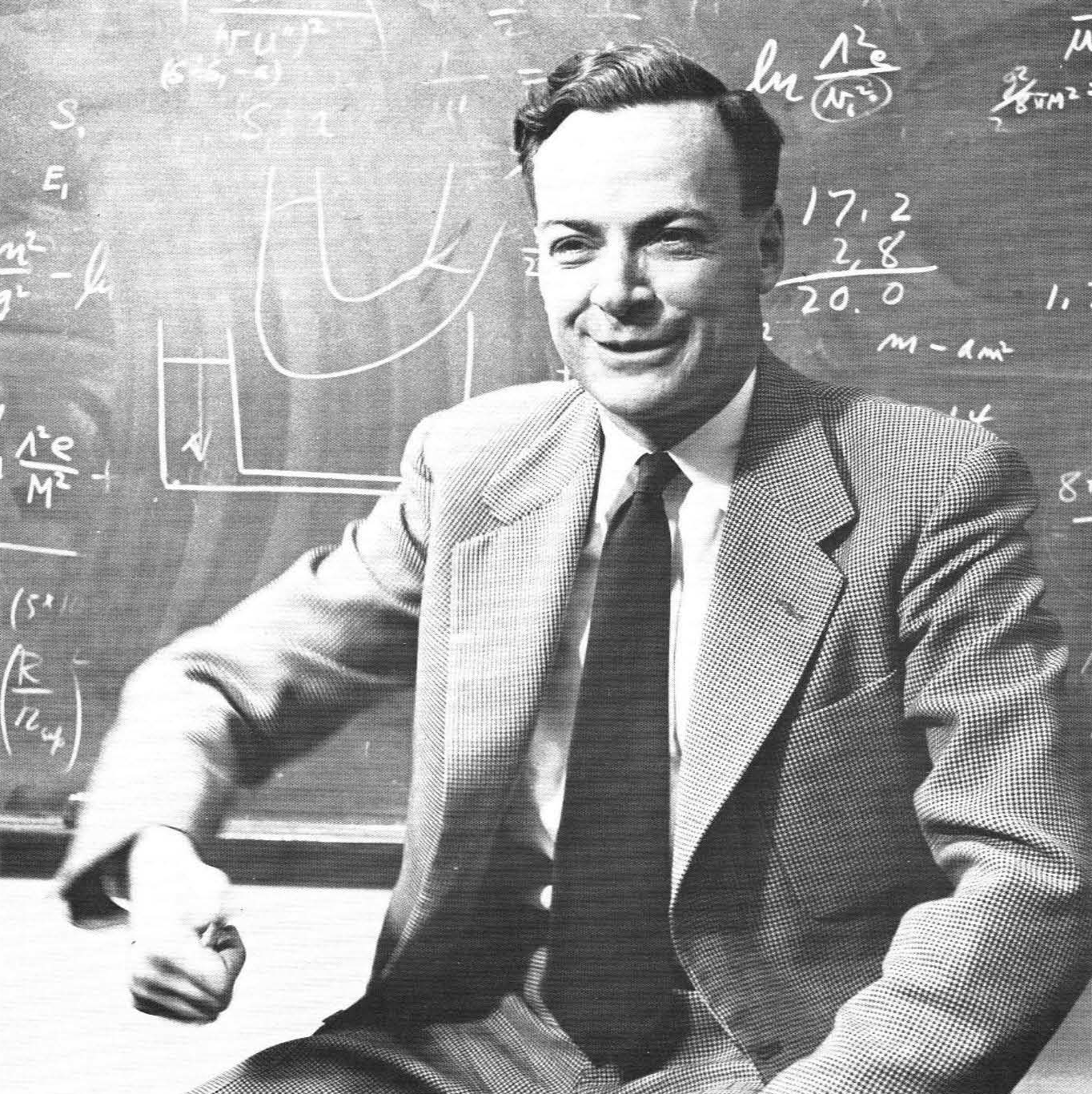
[Richard Feynman in 1959, six years before his Nobel Prize in Physics.] Photograph: Wikimedia Commons contributor
Image Credits: Wikimedia Commons
The Feynman technique is a study method built on one idea: if you cannot explain something simply, you do not understand it well enough yet. It turns learning into a loop of explaining, stumbling, and repairing, instead of a loop of reading and hoping. The method is named after Richard Feynman, the American physicist who shared the 1965 Nobel Prize in Physics for his work in quantum electrodynamics.
Feynman was famous for explaining hard physics in plain language, and the technique bottles that skill into four steps. This article explains the Feynman technique for difficult topics, including the four steps, why teaching exposes gaps, a worked example, and where the method falls short.
The four steps
The standard version of the technique has four steps, and they work best on one narrow concept at a time. Trying to apply them to a whole subject at once, such as all of biology, usually produces a vague explanation that teaches nothing.
- Pick a concept and study it. Choose something specific, such as how interest compounds or why the seasons change, and read about it carefully first.
- Explain it in plain language. Write or say the explanation as if teaching a 12-year-old, with no jargon and no textbook phrases.
Use your own words throughout. 3. Find the gaps.
Notice where you get stuck, reach for a technical term you cannot unpack, or wave your hands through a step. Those spots are exactly what you do not understand yet. 4.
Go back to the source, fill the gaps, and simplify again. Repeat the explanation until it flows without stalling, then shorten it until every sentence earns its place.
The loop is the method. A single pass rarely produces a clean explanation, and the value sits in the second and third attempts, when the gaps found in the first attempt get repaired.
Why explaining exposes gaps
Rereading feels productive because the material looks familiar. That familiarity is misleading, since recognizing a sentence is much easier than producing its meaning from memory.
Explaining forces production, and production reveals the difference between knowing a term and understanding the idea behind it. A guide to active recall and how to use it explains the retrieval side of this in more depth.
The technique bundles several well-supported learning mechanisms into one routine. Explaining from memory is retrieval practice, which strengthens recall more than restudying.
Generating your own wording adds the generation effect, since material you produce yourself sticks better than material you only read. Preparing to teach also raises effort and organization, an effect researchers call the protege effect.
Jargon is the main hiding place the technique attacks. A student can repeat a phrase like market equilibrium for weeks without being able to say what happens when a price rises.
Asked to explain it to a child, the student must either unpack the phrase or admit the gap. That admission is the most useful moment in the whole routine.
A worked example
Take a concept many students meet early: why the seasons change. A first explanation might say the Earth is closer to the sun in summer. That is a common error, and the technique catches it fast, because the next question from a curious listener would be why the northern and southern hemispheres then have opposite seasons.
Going back to the source corrects the model. Seasons change because the Earth's axis tilts about 23.5 degrees relative to its orbit, so each hemisphere leans toward the sun for part of the year and away for the rest. Distance from the sun plays almost no role in the seasons.
The refined explanation then becomes short and testable. A tilted Earth means sunlight hits each hemisphere more directly in its summer and more obliquely in its winter. If any sentence in that version still needs a technical term to survive, it goes back for another pass.
The honest history
Feynman never published a numbered four-step technique. The packaged version was popularized online around 2011 by writers such as Scott Young and later by Farnam Street, who turned his teaching attitude into a worksheet. Knowing this matters, because it stops the method from being treated as a sacred procedure rather than a practical tool.
What genuinely was Feynman's is the attitude underneath it. He believed learning by understanding beat learning by rote, and he warned against fooling yourself about what you knew. In his 1974 commencement address at Caltech, he put it this way: "The first principle is that you must not fool yourself, and you are the easiest person to fool.
"
A second line of his captures the same idea from the other side. On the blackboard found in his office after his death in 1988, he had written: "What I cannot create, I do not understand." Both lines describe the standard the technique holds you to, which is the ability to rebuild an idea in your own words.
Where the technique falls short
The Feynman technique is slow, and that is a real cost. Explaining one concept properly can take longer than reading a chapter, so it suits the hardest or most important ideas rather than every page of a syllabus. For material that only needs memorizing, such as vocabulary lists, plain retrieval practice is usually faster.
It also needs a reliable source to return to. If your textbook is wrong or your first explanation is confidently wrong, the loop can polish an error instead of removing it. Checking the repaired explanation against a second source, a teacher, or a worked problem set guards against that failure.
The method struggles with skills that are physical rather than verbal. Explaining a tennis serve simply will not teach your body to perform one, though it may clarify the mechanics you should practice. Pairing the technique with actual practice, rather than using it as a substitute, keeps it honest.
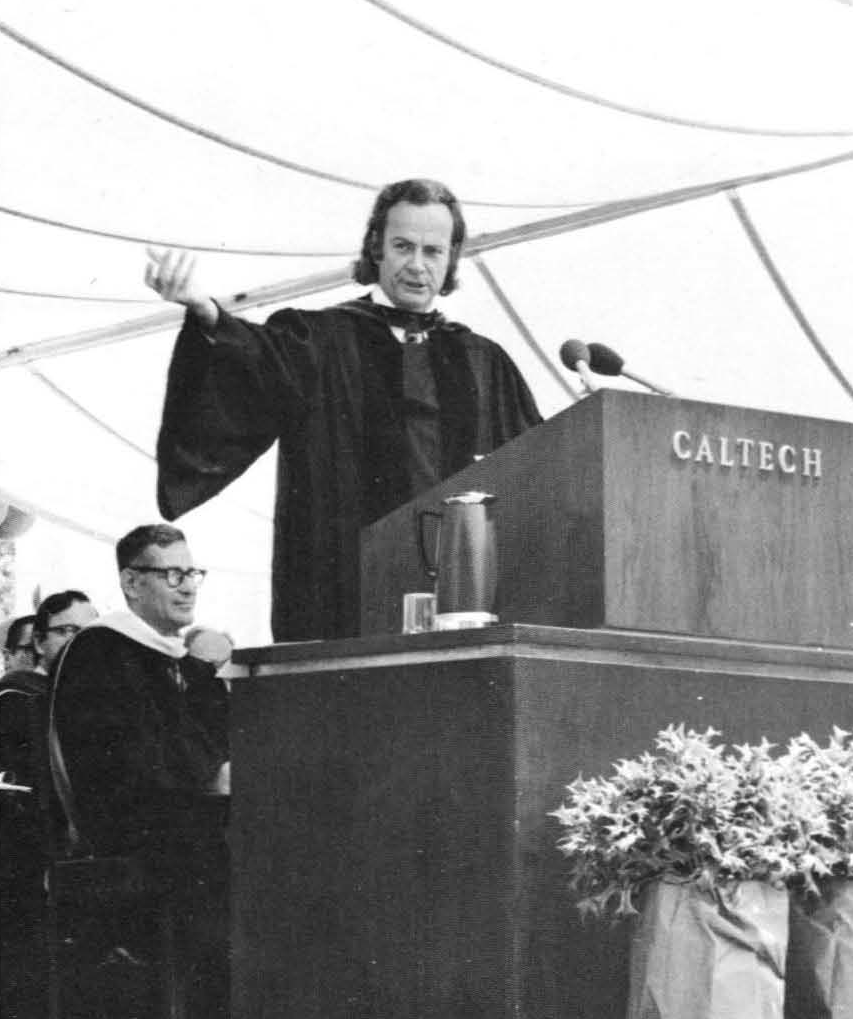
[Richard Feynman in 1974, the year of his famous Caltech commencement address on self-deception.] Photograph: Wikimedia Commons contributor
Image Credits: Wikimedia Commons
How to use it this week
Start with the concept you least want to explain, since that is usually the one with the biggest gap. Set aside 30 minutes, write the concept at the top of a blank page, and explain it without looking at your notes. Mark every stall with a star instead of pushing past it.
Then study only the starred parts. Rereading the whole chapter wastes the diagnosis you just made, since the stars already tell you where to look. After studying, explain the concept again from scratch, and compare the two versions to see what changed.
Finally, try teaching it to a real person if you can. A patient friend, a study partner, or even a rubber duck will do, but a live listener asks the follow-up questions that expose the gaps you walked past. If no listener is available, write the explanation as if one is reading over your shoulder.
Frequently asked questions
Is the Feynman technique scientifically proven?
No single study proves the packaged four steps as a unit. Its components, retrieval practice, generation, and learning by teaching, each have research support, which makes the technique plausible rather than proven. Treat it as a well-grounded routine, not a guaranteed result.
How long should one Feynman session take?
A focused session on one concept usually takes 20 to 40 minutes, including the return to source material. Shorter sessions on smaller concepts work better than one long session covering a whole topic.
Does it work for maths and science only?
No, it works wherever understanding matters more than memorization. Law students use it for doctrines, language learners for grammar rules, and managers for business models. The method cares about explanation, not subject.
What if I cannot explain something even after restudying?
Break the concept into smaller pieces and explain each piece separately. A concept that resists explanation is often two or three concepts bundled together, and the bundle is what defeats the explanation.
The bottom line
The Feynman technique is a discipline for honest learning: explain simply, find where the explanation breaks, repair the gap, and simplify again. It works because teaching from memory exposes the difference between recognizing an idea and understanding it.
Use it on the concepts that matter most, keep a reliable source nearby for repairs, and remember that the four steps are a later packaging of Feynman's attitude, not a procedure he published. The test is always the same, which is whether you can rebuild the idea in your own words without leaning on jargon.
Tags: Feynman technique, study methods, learning science, active recall
Rive News is a research desk that explains study methods, science, and everyday topics from public sources, without invented experts or first-hand claims.
Related
- The Feynman technique: why explaining exposes knowledge gaps
- What is active recall and how to use it for studying
- What is desirable difficulty in learning?
Subscribe for one practical explainer in your inbox every morning.
Standards: facts in this article trace to the public sources listed above; corrections are published when a source is shown to be wrong.
Related stories

Why Do I Blank Out During Tests Despite Studying: Test Anxiety and Retrieval Failure
Blanking out in exams is retrieval failure, not missing knowledge. Anxiety drains working memory; rereading builds false confidence. Here

How to Study for Exams Without Burning Out
Sleep 7-8 hours, study in 25-50 minute blocks, and exercise daily. The science-backed way to study for exams without burning out, and what

Why Do I Forget What I Just Read? Science Has an Answer
You forget what you just read because of the forgetting curve, mapped by Ebbinghaus in 1885. Science explains why memory fades fast and how