
How Does Music With Lyrics Hurt Concentration? The Science
Key takeaways
- Lyrics compete with reading and writing in the brain's phonological loop, the system that rehearses verbal information.
- Four self-paced reading experiments found lyrical music slowed readers, while instrumental versions of the same songs did not.
- The distraction persists even for songs you like, so preference is not a reliable guide.
Half of students study with music on, and many insist it helps them focus. The research draws a sharp line between kinds of music. Instrumental music is often neutral or mildly helpful. Music with lyrics is a different story.
The reason is not volume or taste. It is a collision inside working memory: the words in the song fight the words on the page for the same mental workspace.
This article explains how lyrics disrupt concentration, what the experiments actually measured, and how to build a study soundtrack that does not sabotage the work.
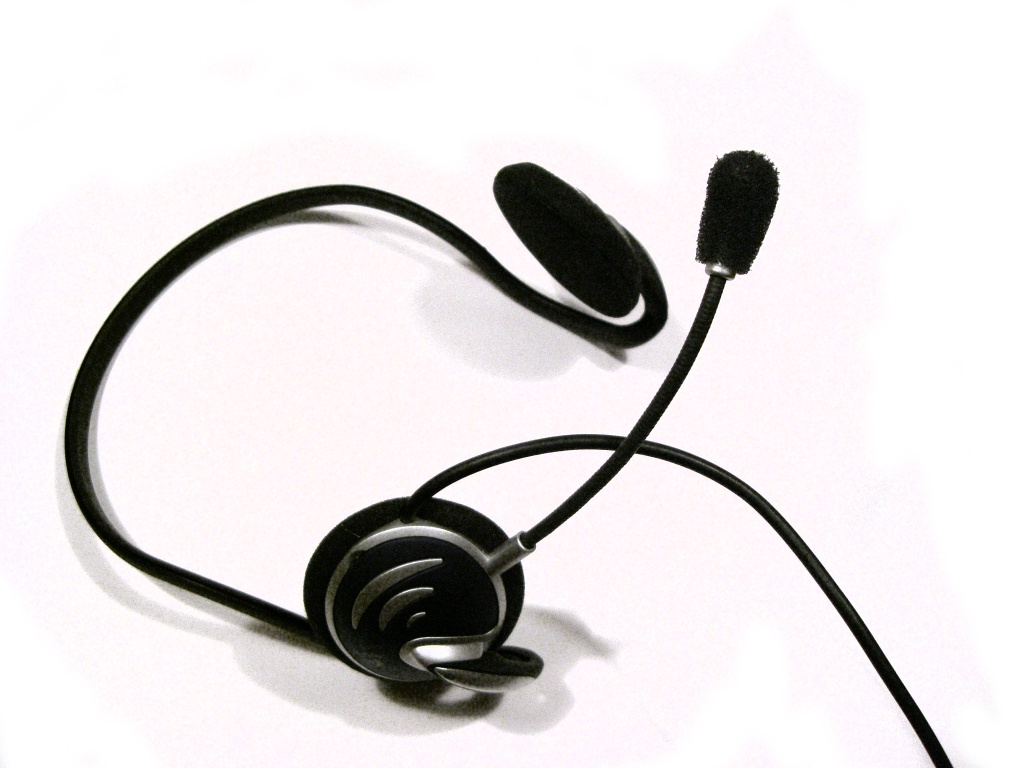
Headphones deliver the music; the lyrics deliver the distraction. Photograph: Richard Wheeler.
Image Credits: Wikimedia Commons / Richard Wheeler (Zephyris)
The phonological loop: one workspace, two tenants
Working memory holds the information you are actively using. One of its components, the phonological loop, rehearses verbal material: the sentence you just read, the formula you are memorizing, the point you are about to write down.
Lyrics arrive as verbal material too. When a song plays words into your ears while your eyes read words off a page, both streams demand the same rehearsal system. The loop cannot serve two masters. Attention flips between the lyrics and the text, and each flip costs time and accuracy.
This is the same mechanism behind the classic "irrelevant sound effect." Laboratory studies going back to the 1980s show that background speech and changing-state sounds disrupt verbal short-term memory, even when listeners try to ignore them. Lyrics are simply the most potent version: meaningful, structured, and hard to tune out.
What the reading experiments found
The cleanest test of the lyric question comes from a series of four self-paced reading experiments by Martin Vasilev and colleagues. Participants read short paragraphs under three sound conditions: silence, lyrical songs at about 150 words per minute, and the instrumental versions of the same songs.
The results were consistent. Instrumental music either did not affect reading times or led to slightly faster reading compared with silence. Lyrical music increased reading times in three of the four experiments. The researchers concluded that instrumental music does not distract during reading, but song lyrics appear to be distracting, even if the effect is mild.
Other work points the same way. Perham and Currie reported in 2014 that both liked and disliked lyrical music was more distracting than instrumental music, which rules out the common excuse that the problem is only songs you hate. A 2020 paper in Frontiers in Psychology confirmed that irrelevant speech and music disrupt verbal serial recall through the changing-state properties of the sound, and noted that the degree of distraction grows with the acoustic variation in the signal.
For reading, writing, and memorization, the lyric penalty is real and measurable. Tasks that do not lean on the phonological loop, such as sketching or repetitive manual work, suffer far less.
Why you cannot trust your own feeling
Many students report that lyrical music helps them concentrate, and the feeling is sincere. But the feeling measures mood, not performance. Music can lift mood and reduce boredom, which makes a study session feel better without making it more productive.
The distraction is also partly unconscious. You do not notice the micro-interruptions when a lyric phrase pulls your attention for a fraction of a second. You notice only the smooth session and the pleasant song. Experiments measure the lost time; feelings do not.
Familiarity does not rescue lyrics either. Knowing every word of a song might reduce the surprise of the signal, but the words still enter the phonological loop. Singing along, even silently, is the clearest sign that the two verbal streams are colliding.

Deep study tasks deserve a soundtrack that stays out of the way. Photograph: Nenad Stojković.
Image Credits: Wikimedia Commons / Nenad Stojković (Shixart1985)
Building a soundtrack that does not hurt
If silence feels oppressive, instrumental music is the evidence-backed compromise. The Vasilev experiments found instrumental versions of the same songs did not slow readers. Ambient, classical, or lo-fi tracks without words give the ears something to do without taxing the verbal system.
Keep the volume low and the playlist familiar. Novel or complex music draws attention even without lyrics, and loud music of any kind adds arousal that can help simple tasks while hurting complex ones.
Match the music to the task. Reserve lyrics for chores, exercise, and breaks. When the work involves reading, writing, or memorizing, switch to instrumental or silence. The rule is simple: if the task uses words, the background should not.
Quizzing yourself beats re-reading the chapter, and a quiet room makes that retrieval work easier. For the evidence on testing versus rereading, see why quizzing yourself beats re-reading the chapter.
Frequently asked questions
Does all music hurt concentration?
No. The damage is specific to verbal tasks paired with verbal music. Instrumental music shows little or no cost in reading experiments, and for simple or repetitive tasks, music of any kind can help by sustaining arousal and mood.
What about songs in a language I do not understand?
They are less disruptive than lyrics you understand, because unfamiliar words demand less of the phonological loop. But they are not silent: the changing-state sound still carries some cost. Instrumental remains the safer choice.
Can I study with lyrics if I keep the volume very low?
Lower volume helps slightly, but the lyric effect is about meaning, not loudness. Quiet lyrics still enter verbal working memory. If you must have sound, quiet and instrumental beats quiet and lyrical.
Why do I feel more focused with my favorite songs on?
Music improves mood and masks distracting environmental noise, which feels like focus. Experiments show the feeling and the performance diverge: readers with lyrical music take longer even when they report no distraction.
The bottom line
Music with lyrics hurts concentration because words in the song compete with words in your work for the phonological loop. Four reading experiments found lyrical music slowed readers while instrumental versions did not, and the penalty applies to songs you like as well as songs you hate. For reading, writing, and memorizing, choose instrumental or silence, and save the lyrics for the walk home.
Latest in Education
- Why Does Quizzing Yourself Beat Re-Reading the Chapter?
- Why Do You Get Goosebumps From Music?
- Why Do Some Messages Show as Green and Others as Blue?
- How Do Trees Survive Freezing Winters Without Moving?
Get one research-backed study insight in your inbox each week. Subscribe to the Rive News newsletter.
Related stories

Why Do I Blank Out During Tests Despite Studying: Test Anxiety and Retrieval Failure
Blanking out in exams is retrieval failure, not missing knowledge. Anxiety drains working memory; rereading builds false confidence. Here

How to Study for Exams Without Burning Out
Sleep 7-8 hours, study in 25-50 minute blocks, and exercise daily. The science-backed way to study for exams without burning out, and what

Why Do I Forget What I Just Read? Science Has an Answer
You forget what you just read because of the forgetting curve, mapped by Ebbinghaus in 1885. Science explains why memory fades fast and how