
What Is Metacognition in Learning? A Simple Explanation
Key takeaways
- Metacognition means monitoring and managing your own thinking: knowing what you know and what you do not.
- It has two parts: knowledge about how you learn, and the skill of steering your learning as it happens.
- The habit is simple to practice: plan before you study, check yourself during, and review what worked after.

Rodin's The Thinker: metacognition is the mind observing and directing its own learning. Photograph: Wikimedia Commons contributor
Image Credits: Wikimedia Commons
Metacognition is thinking about thinking. It is the quiet part of your mind that notices when a chapter is not sinking in, decides to switch tactics, and later asks whether the new tactic worked.
The term was formally introduced by psychologist John Flavell in 1976. He defined it as knowledge about one's own thought processes, and more practically as the active watching and control of thinking while it happens. Flavell gave a plain example: you are being metacognitive when you notice you are having more trouble learning one topic than another, or when it strikes you that you should double-check something before accepting it as fact.
This article explains what metacognition actually is, breaks it into its two main parts, shows how it looks during real studying, and gives you a simple routine to build the habit. It closes with the bottom line and answers common questions.
The simplest definition that still holds up
Many definitions of metacognition exist, but Flavell's core idea has survived fifty years of research: it is awareness of your own knowledge (what you do and do not know) plus the ability to understand, control, and adjust your mental processes.
The psychologist Ann Brown put it in similar terms in 1987, describing metacognition as one's knowledge and control of one's own cognitive system. Metcalfe and Shimamura shortened it to a phrase students remember: "knowing about knowing."
Here is a working definition for daily life: metacognition is the inner supervisor of your learning. It plans the work, watches the work happen, and judges the result. When you catch yourself skimming a page without absorbing it and decide to re-read with questions in mind, that supervisor just did its job.
The two parts: knowing and steering
Researchers split metacognition into two parts, and the split is useful because each part needs different practice.
Metacognitive knowledge is what you understand about learning itself. It includes knowing your own strengths (you remember diagrams better than paragraphs), knowing the demands of a task (this exam rewards examples, not definitions), and knowing which strategies fit which situation (flashcards for vocabulary, practice problems for math). Flavell grouped this knowledge into person, task, and strategy variables.
Metacognitive regulation is the steering: planning an approach, watching progress, and judging the outcome. According to the Psychologs overview of the field, this judging side is what lets learners plan, monitor, self-regulate, and adjust the strategies they use to manage their thinking.
A student can have plenty of knowledge and poor regulation. They know highlighting is weak and testing is strong, yet they highlight anyway because it feels productive. Metacognition only pays off when the supervisor actually steps in.
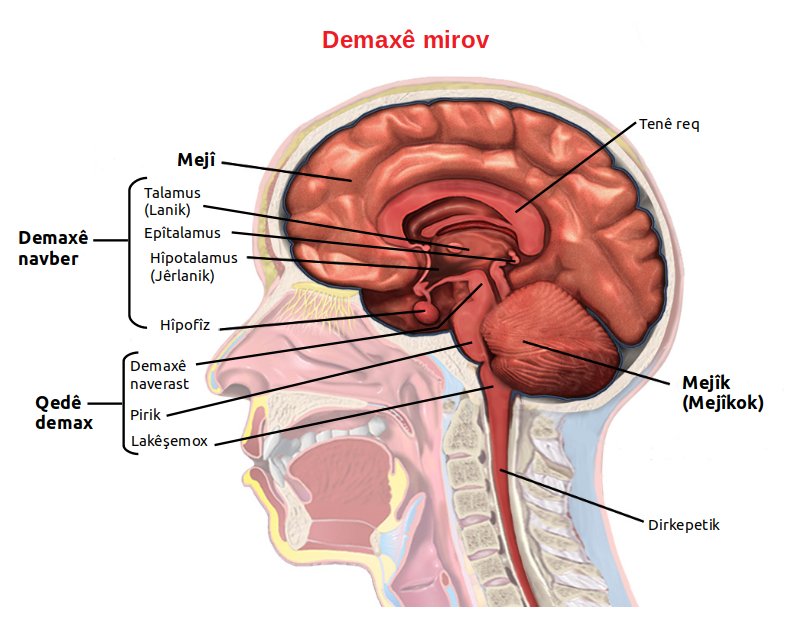
A sagittal diagram of the human brain; researchers have called metacognition 'knowing about knowing.' Photograph: Wikimedia Commons contributor
Image Credits: Wikimedia Commons
What it looks like during real studying
Metacognition runs in three phases: before, during, and after a learning task. Flavell's model of cognitive monitoring describes links between metacognitive knowledge, metacognitive experiences, goals, and strategies. These phases are where that model meets a desk and a textbook.
Before: you plan. What do I need to learn? What is the exam format? Which strategy fits? A metacognitive student opening a biology chapter decides to sketch each process from memory after reading, because past experience says diagrams stick for her. Planning takes five minutes and changes the whole session.
During: you monitor. Is this making sense? Am I actually learning or just moving my eyes? This is the hardest phase because it requires interrupting yourself. The habit that builds it is the pause-and-recite: every few pages, close the book and explain the idea aloud. If you cannot, the supervisor has found a gap.
After: you judge. Did the plan work? What will I change next time? This is where most students stop short. They finish studying and never ask whether the studying worked. A two-minute debrief (what stuck, what did not, what to change) turns every session into data for the next one.
This three-phase loop connects directly to proven study methods. How spaced repetition actually works explains the scheduling side, while how to read a textbook effectively gives the during-phase technique a concrete home.
Why students confuse it with being smart
Metacognition is not intelligence. It is a skill, and it can be trained apart from ability. A very bright student who never checks their understanding can still fail an exam by studying the wrong things confidently. A less gifted student who plans, monitors, and adjusts will often outperform them.
The confusion comes from a bias researchers call the illusion of knowing. Familiarity feels like understanding. You recognize a concept on the page, so you assume you could explain it. Metacognitive habits exist exactly to break that illusion: the recite test, the practice question, the blank-page summary. Each one replaces a feeling with evidence.
This is also why blanking out during tests is often a metacognition problem, not a memory problem. The student never built a monitoring habit, so the first honest check of their knowledge happens under exam pressure.
A simple routine to build the habit
You do not need a course in psychology. Try this loop for one week:
- Plan (2 minutes): write one sentence on what you will learn and pick one strategy for the session.
- Monitor (during): every 15 minutes, close the book and recite the last idea in your own words.
- Judge (3 minutes): at the end, write what worked, what did not, and one change for tomorrow.
Expect it to feel slow at first. Monitoring interrupts flow, and beginners often discover they were studying badly. That discomfort is the mechanism working. Within a couple of weeks, the checks become automatic and the sessions get shorter, because you stop spending hours on strategies that never worked.

A school classroom; metacognitive habits can be taught and practiced at any age. Photograph: Wikimedia Commons contributor
Image Credits: Wikimedia Commons
Frequently asked questions
What is metacognition in simple words?
It is thinking about your own thinking. When you notice you do not understand something and change how you are studying, you are using metacognition. It has two parts: knowing how you learn best, and actively managing your learning as it happens.
What is an example of metacognition in the classroom?
A student reads a paragraph, realizes she cannot explain it, and re-reads it while asking herself questions. Another example: a student chooses practice problems over re-reading because she knows tests require applying ideas, not recognizing them.
Is metacognition the same as self-awareness?
They overlap but are not identical. Self-awareness is broad: knowing your emotions, motives, and behavior. Metacognition is narrower: awareness and control of your thought processes, specifically how you learn, remember, and solve problems.
Can metacognition be taught?
Yes. The before-during-after routine in this article is a teaching method in itself. Strategies like self-testing, planning, and post-session review are all trainable habits, and they work at every age and subject.
What is the difference between cognition and metacognition?
Cognition is the thinking itself: reading, remembering, calculating. Metacognition is thinking about that thinking: noticing the reading is not working and switching to a different strategy. One does the work. The other supervises it.
The bottom line
Metacognition is the most portable learning skill you can build. It does not depend on a subject, a textbook, or an app. It is the habit of planning your approach, watching your understanding as you go, and adjusting when the evidence says to.
Start small. Before your next study session, write one sentence about your plan. During it, test yourself once. After it, write one sentence about what worked. Three sentences a day, and you have built the supervisor that makes every other study method work better.
---
Rive News's research desk covers learning science and study methods. Articles cite named public sources; no claims are invented.
Latest in Education
- How Spaced Repetition Actually Works: The Forgetting Curve and Optimal Intervals
- How to Memorize Vocabulary Fast for Exams: 7 Methods
- Why You Forget What You Just Read
- Why You Blank Out During Tests
Subscribe for weekly study-science explainers.
Rive News follows a corrections policy: factual errors are corrected promptly with a visible update note.
Related stories

Why Do I Blank Out During Tests Despite Studying: Test Anxiety and Retrieval Failure
Blanking out in exams is retrieval failure, not missing knowledge. Anxiety drains working memory; rereading builds false confidence. Here

How to Study for Exams Without Burning Out
Sleep 7-8 hours, study in 25-50 minute blocks, and exercise daily. The science-backed way to study for exams without burning out, and what

Why Do I Forget What I Just Read? Science Has an Answer
You forget what you just read because of the forgetting curve, mapped by Ebbinghaus in 1885. Science explains why memory fades fast and how