
How to Memorize Vocabulary Fast for Exams: 7 Methods
By Rive News
Research desk | Rive News
Key takeaways
- Memory fades fastest right after learning: roughly 40% of new material is gone within 20 minutes unless you review it.
- Testing yourself beats re-reading every time. Retrieval practice is the single strongest study move you can make.
- Review words at growing intervals (roughly day 2, day 7, day 30) and the forgetting curve flattens instead of falling off a cliff.
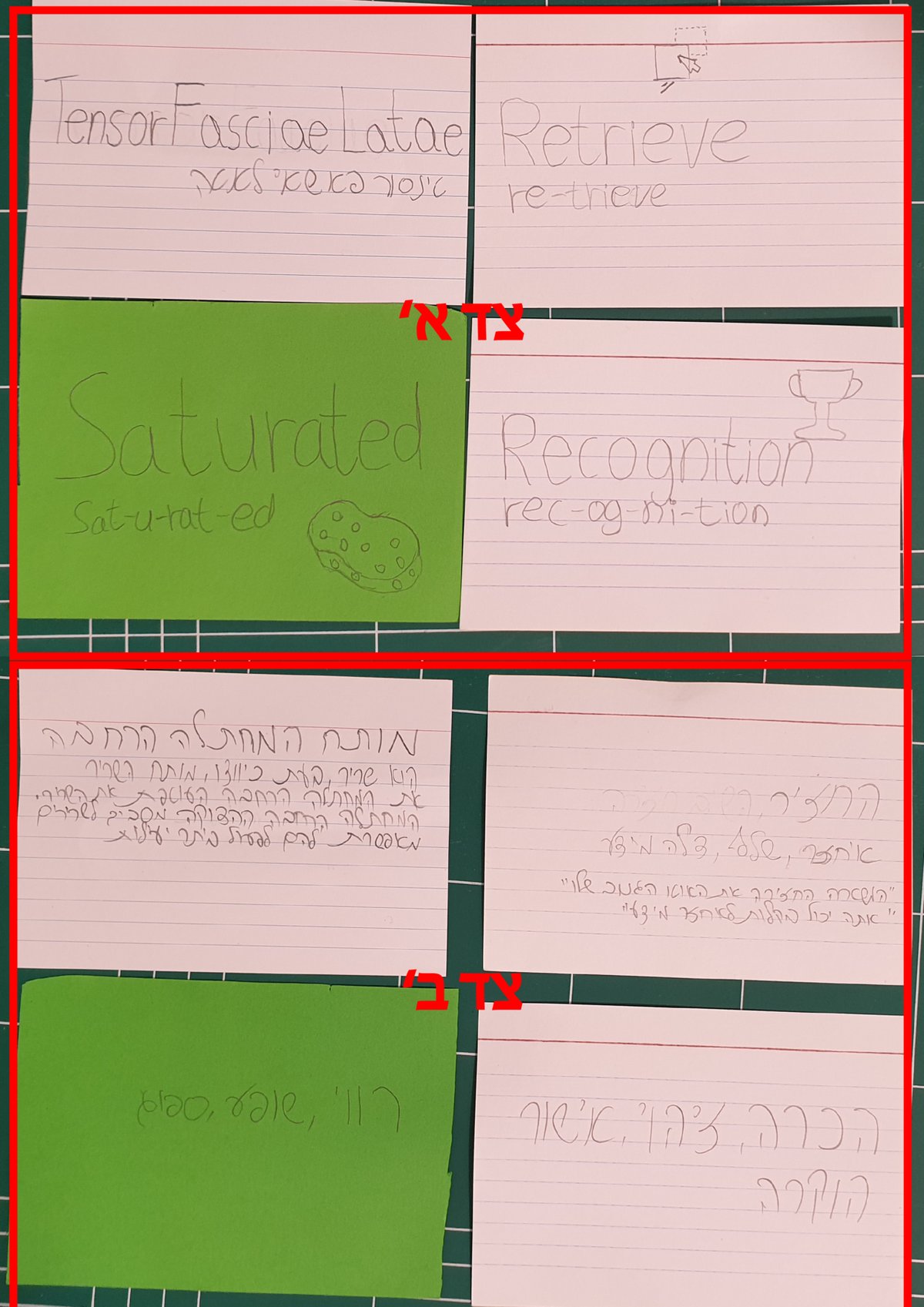
Handwritten vocabulary flashcards with words broken into syllables and small doodles as memory hooks. Photograph: Wikimedia Commons contributor
Image Credits: Wikimedia Commons
Memorizing vocabulary fast is not about reading a word list ten times. It is about how your brain stores new information, and most popular study habits work against that process.
The German psychologist Hermann Ebbinghaus mapped this in 1885. He memorized lists of nonsense syllables and tested himself over hours and days, plotting what became the forgetting curve. His finding was blunt: memory drops steeply and fast. Around 40% of new information is lost within the first 20 minutes, and roughly 70% is gone within 24 hours without review, according to the Testbook summary of his results.
This article explains why vocabulary slips away so fast, how retrieval practice changes the picture, how to schedule reviews so words stay put, and how memory tricks and real context lock in meanings. It closes with the bottom line and answers common questions.
Why vocabulary slips away so fast
Your brain treats a new word like a rumor. If nothing confirms it matters, it drops it quickly. That is the forgetting curve in action: the steepest losses happen within the first hour after learning. About 50% of new information is gone in that window, per a widely cited breakdown of Ebbinghaus's findings.
This explains a familiar exam-season pattern. You read a word list the night before, feel confident, and blank out by morning. The material never moved past short-term memory. Each review does two things: it resets the clock on forgetting, and it makes the curve flatter the next time, so gaps between reviews can grow longer.
Cramming feels productive because the words are fresh in working memory. But research on the spacing effect, first shown by Ebbinghaus himself, shows that spread-out practice beats massed practice for long-term memory. If you want the words on exam day and not just at midnight before it, you need a different plan.
Retrieval practice: test yourself, do not re-read
The single most effective thing you can do is also the most uncomfortable: close the book and try to recall the word. Retrieval practice (sometimes called the testing effect) means pulling a meaning out of memory instead of putting it in again by re-reading.
Re-reading gives you the illusion of knowing. The words look familiar, so your brain reports confidence. A test exposes the gaps. When you fail to recall a word and then check the answer, that failed attempt makes the next try stronger. This is why flashcards beat word lists.
Here is how to do it right:
- Write the word on one side of a card and a short definition plus an example sentence on the other.
- Shuffle the cards so you are not memorizing the order.
- Say the meaning aloud before flipping. Guessing counts as retrieval.
- Sort cards into "know" and "do not know" piles, and re-test the "do not know" pile until it empties.
A study session built around recall works well with the methods in our explainer on how spaced repetition actually works, which goes deeper into why timing matters. Students who struggle with retention after reading may also recognize themselves in why you forget what you just read.
Spaced repetition: review on a schedule, not at random
Spacing turns one strong memory trace into a lasting one. Instead of reviewing a word five times today, review it five times across two weeks. Each successful recall tells your brain the information matters, which is why intervals can grow longer over time.
A practical schedule for exam prep is the 2-7-30 rule described by the National Research and Policy Institute: test your recall 2 days after learning, then 7 days later, then 30 days later. For an exam two weeks out, compress it: day 1, day 3, day 7, day 13. The principle matters more than the exact numbers.
Software can handle the scheduling. Piotr Wozniak developed the first computer version of spaced repetition, SuperMemo, for MS-DOS, and his SM-2 algorithm from 1987 became the basis of tools like Anki. These systems track how easily you recall each card. They stretch the gaps for easy words and shorten them for hard ones.
If you prefer paper, use the Leitner box. It is five compartments. New cards start in box one and move up a box each time you recall them correctly. A miss sends a card back to box one. You review box one daily, box two every other day, box three weekly, and so on. The system spaces reviews automatically, no software needed.
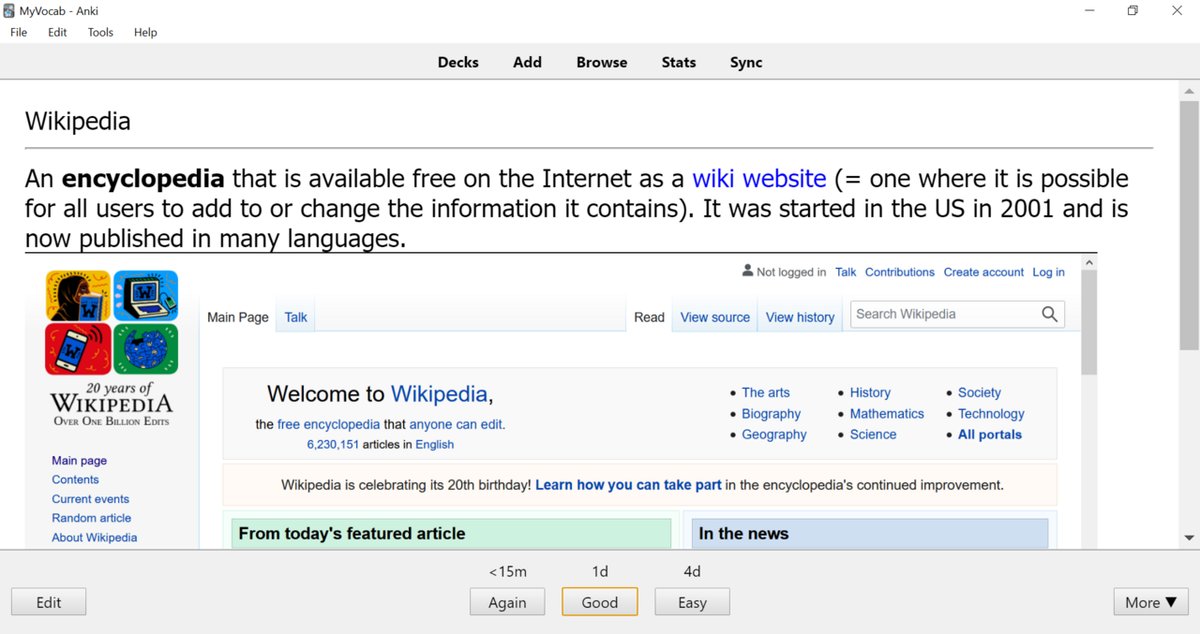
A screenshot of Anki, the spaced repetition app built on the SM-2 scheduling algorithm. Photograph: Wikimedia Commons contributor
Image Credits: Wikimedia Commons
Use mnemonics and vivid associations
Abstract words resist memory because they have nothing to attach to. Memory tricks anchor a new word to something your mind already holds, which slows the forgetting curve for material with no natural hook.
The keyword method is the classic version for vocabulary. Take the new word, find a similar-sounding word you already know, and build a vivid mental image linking the two. The image should be strange, funny, or exaggerated. Boring images fade. Absurd ones stick.
Other association tricks work the same way:
- Word parts: break the word into roots, prefixes, and suffixes you recognize, then rebuild the meaning from the parts.
- Personal hooks: attach the word to a person, place, or memory from your own life.
- Stories: chain ten words into one ridiculous paragraph and recall the story to unlock each word.
These techniques pair well with the broader note-taking strategies in how to take notes you will actually remember, because a card written in your own words is already half memorized.
Meet each word in real context
Words learned in isolation stay in isolation. A definition memorized from a list often fails you in an exam passage because your brain stored the word next to its card, not next to the ideas it belongs with.
Read or write each new word in a full sentence, ideally one linked to the exam topic. If you are learning academic vocabulary, find the words in your textbook chapters and notice how the author uses them. This gives the word a neighborhood of associations: the sentence, the paragraph, the topic, and your reaction to it.
Language learners get a bonus effect here. Using a word in your own sentence forces you to handle grammar and meaning together, which creates a richer memory than a translation pair alone. Adults learning a second language can combine this with the techniques in how to learn a language as an adult.
A simple exam-week plan
Put it together with this five-day structure for a list of 100 words:
- Day 1: Learn 50 words with mnemonics and example sentences. Retrieval-test all 50 twice.
- Day 2: Learn the other 50 the same way. Retrieval-test day 1's words once.
- Day 3: Retrieval-test all 100. Sort into know and do-not-know piles.
- Day 4: Drill the do-not-know pile with new sentences. Re-test day 1's words.
- Day 5: Full retrieval test of all 100. Review only the misses.
Twenty focused minutes of recall per day beats two hours of re-reading. If exam pressure is draining your energy, our guide on how to study for exams without burning out covers the recovery side of the schedule.

A dictionary book cover; a good dictionary remains the vocabulary learner's basic reference tool. Photograph: Wikimedia Commons contributor
Image Credits: Wikimedia Commons
Frequently asked questions
How many vocabulary words can you memorize in a day?
There is no universal number, but 20 to 50 new words per day is realistic for most students using retrieval practice and memory tricks. Beyond that, interference grows and each extra word sticks less well. Quality of review matters more than raw count.
Is it better to memorize vocabulary in the morning or at night?
The honest answer is that consistency beats timing. Some students focus better in the morning, others at night. What matters is that you sleep after learning, since memory consolidation happens during sleep. A review session right before bed followed by a morning recall test is a strong combination.
Do flashcards really work for exams?
Yes, when used for retrieval rather than re-reading. The card itself is not magic. The act of recalling the answer before you flip is what builds the memory. Shuffled, self-tested cards with growing review intervals are one of the best-supported study methods available.
Why do I forget vocabulary words right after the exam?
That is the forgetting curve doing its job. If you crammed, the words lived in short-term memory and were never consolidated. Reviews stopped the moment the exam ended, so the curve fell off a cliff. Spaced repetition after the exam is the only way to keep the words.
Should I learn words with translations or definitions?
For beginners, translations are fine and fast. As you advance, English definitions plus an example sentence build a richer network of associations, which helps with exam passages where you must infer meaning from context.
The bottom line
Fast vocabulary memorization is not a trick. It is retrieval practice plus spaced repetition plus meaningful associations, repeated until the exam. Start with a definition, test yourself before you feel ready, review on a growing schedule, and give every hard word a vivid hook.
Pick one word list this week and run the five-day plan above. Your recall on exam day will tell you more than any study tip ever could.
---
Rive News's research desk covers learning science and study methods. Articles cite named public sources; no claims are invented.
Latest in Education
- How Spaced Repetition Actually Works: The Forgetting Curve and Optimal Intervals
- How to Read a Textbook Effectively, Not Just Highlight
- Why You Forget What You Just Read
- How to Study for Exams Without Burning Out
Subscribe for weekly study-science explainers.
Rive News follows a corrections policy: factual errors are corrected promptly with a visible update note.
Related stories

Why Do I Blank Out During Tests Despite Studying: Test Anxiety and Retrieval Failure
Blanking out in exams is retrieval failure, not missing knowledge. Anxiety drains working memory; rereading builds false confidence. Here ar

How to Study for Exams Without Burning Out
Sleep 7-8 hours, study in 25-50 minute blocks, and exercise daily. The science-backed way to study for exams without burning out, and what t

Why Do I Forget What I Just Read? Science Has an Answer
You forget what you just read because of the forgetting curve, mapped by Ebbinghaus in 1885. Science explains why memory fades fast and how