
Learn a Language as an Adult: What Actually Works
Key takeaways
- Adults learn languages more slowly than full-time diplomat trainees but face no biological wall. Method and consistency matter more than age.
- The U.S. Foreign Service Institute estimates 600-750 class hours for Spanish-like languages and 2,200 hours for Arabic, Mandarin, Japanese, or Korean.
- Daily comprehensible input plus spaced-repetition review beats weekly grammar classes for building usable skill.
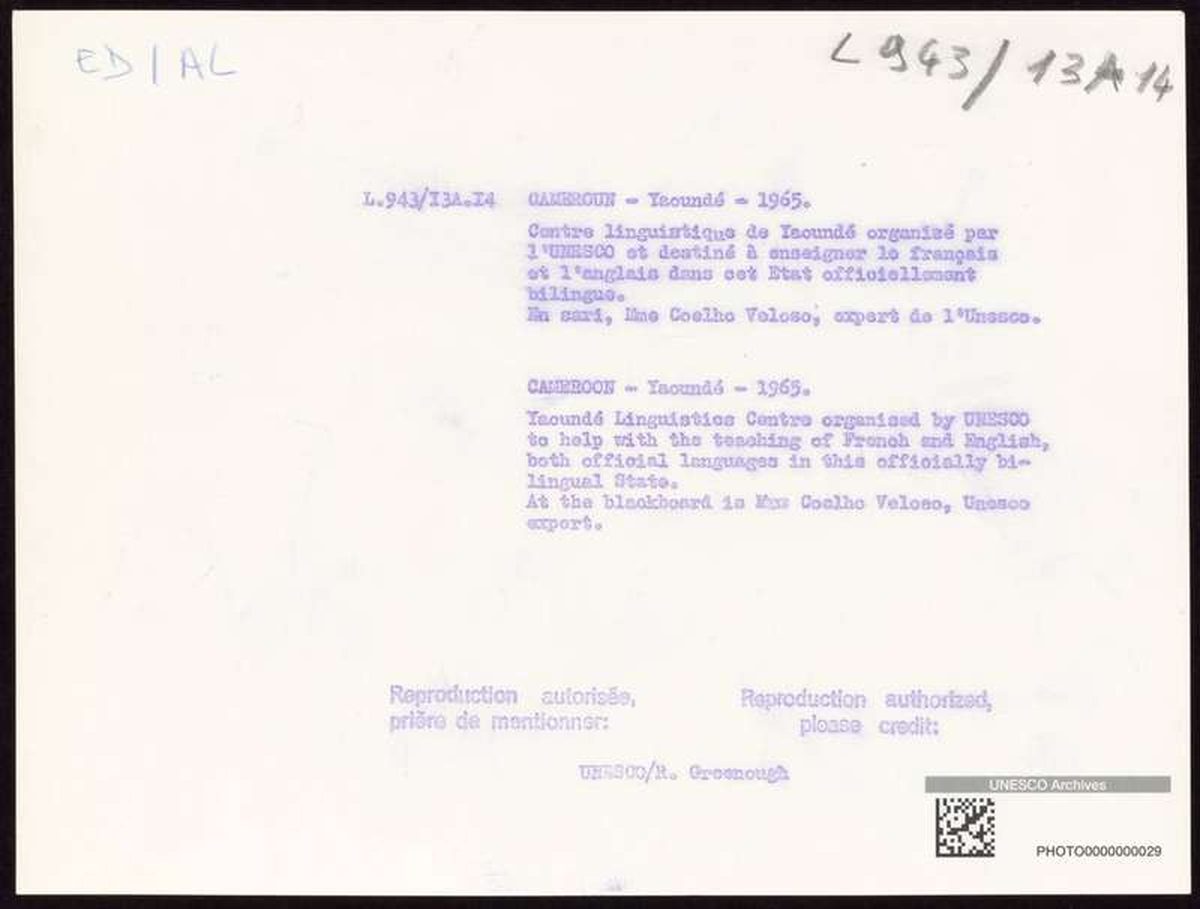
Adult students in a language class with French exercises on the chalkboard; structured input beats sporadic study. Photograph: Richard Greenough/Wikimedia Commons
Image Credits: Wikimedia Commons
Learning a language as an adult means building usable skill in a second language after childhood, when the brain no longer absorbs speech patterns on autopilot. It is harder than learning as a child, but it is not the lost cause many adults assume.
The real constraints are practical, not biological. Adults have less free time, more fear of looking foolish, and school habits that emphasize the wrong things. Fix those and progress follows.
This article explains what adult language learning actually requires, how long it takes per the best published estimates, where input-first and output-first methods disagree, how spaced repetition locks in vocabulary, which adult-specific obstacles to plan for, and what a realistic weekly routine looks like.
What adult language learning really requires
A language is several skills wearing one name. Listening comprehension, speaking, reading, and writing develop at different speeds, and most adult courses pretend they move together. They do not.
For adults, the bottleneck is usually usable input and speaking confidence, not grammar knowledge. Many learners can conjugate verbs on paper years before they can follow a fast conversation. The knowledge is there. The processing speed is not.
That gap closes with exposure volume. The brain needs thousands of encounters with words and patterns in real contexts before it can deploy them in real time. There is no shortcut around the hours, only ways to make the hours count.
How long it actually takes
The best public estimates come from the U.S. Foreign Service Institute, which trains diplomats full-time and publishes how long its students take to reach general professional proficiency. The State Department's foreign language training page lists the figures by difficulty category.
Category I languages, those closest to English such as Spanish, French, Italian, and Dutch, take 24 to 30 weeks, or 552 to 690 class hours. Category IV languages, the "super-hard" group of Arabic, Mandarin, Japanese, and Korean, take 88 weeks and 2,200 class hours.
Those are full-time numbers. A typical FSI week means 23 hours of class plus 17 hours of self-study, 40 hours total. An adult studying one hour a day will need far more calendar time: roughly two years of daily study for Spanish at that pace, per the State Department's math as summarized by student press coverage.
The estimates also assume motivated adult learners with professional teachers. Your mileage will vary with consistency, method, and how much of the language you actually use between sessions. But the numbers kill two myths at once. Fluency is not a 30-day app streak, and it is not a ten-year sentence either.
The method debate: input first or speaking first
Two camps argue about the order of operations. The input-first camp, following linguist Stephen Krashen's comprehensible input theory, says learners should absorb large amounts of understandable listening and reading before pushing output. The Refold method popularizes this: listen, watch, and read far more than you speak early on.
The logic is straightforward. Babies understand long before they talk, and forcing speech with too little input produces halting, error-frozen output. Input builds the mental models. Speaking draws on them.
The other camp argues that early speaking, even clumsy speaking, accelerates everything. Producing the language forces you to notice gaps, and feedback corrects errors before they fossilize. Intelligence-community training methods lean this way, pairing heavy input with speaking from the early stages.
The honest synthesis: input is the engine and output is the test drive. Aim for at least a 3-to-1 ratio of input to speaking in the first months, then shift the balance as comprehension solidifies. Pure input without speaking produces understanding you cannot use. Pure speaking without input produces fluency in your own mistakes.
Spaced repetition and active recall
Vocabulary is the part of language learning most amenable to engineering. Spaced repetition systems schedule flashcard reviews at increasing intervals, showing you each word just as you are about to forget it. This exploits the forgetting curve instead of fighting it.
Anki is the standard free tool, and it is the same technique medical students use to memorize anatomy. The principle transfers directly: test yourself on the word (active recall) rather than rereading it, and let the algorithm handle the timing.
This pairs naturally with input. When you meet a new word in a show or article, add it to your deck with the sentence it appeared in. Context-rich cards stick far better than isolated translations, a point our guide to how spaced repetition actually works covers in depth.
Keep the daily review habit small enough to survive bad weeks. Twenty minutes of reviews you actually do beats an hour-long system you abandon. Consistency is the entire game with vocabulary.
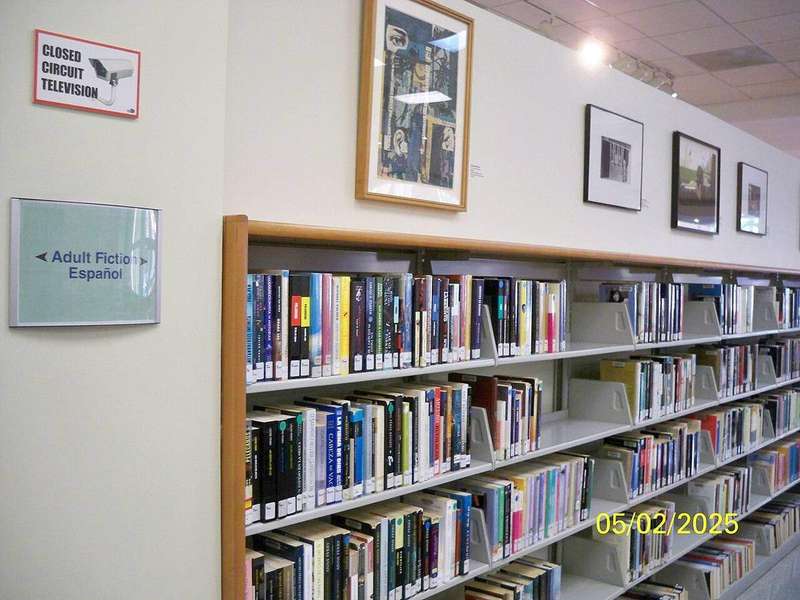
Spanish-language books on library shelves; reading material at your level is some of the best input available. Photograph: EmerioJoelMendez/Wikimedia Commons
Image Credits: Wikimedia Commons
The adult-specific obstacles
Adults face barriers children never meet. The biggest is fear of judgment: making mistakes in a new language threatens an adult's sense of competence in a way it never threatens a child. Neuroscience writer Astrid Heystee and others note that this fear grows the longer you live with the pressure, and the fix is practicing in low-stakes settings first.
Time fragmentation is the second barrier. Adults rarely get the immersion blocks that make intensive programs work. The answer is not finding more hours but protecting small ones: a daily 30-minute session outperforms a weekly three-hour binge because the brain consolidates between sessions.
The third is method mismatch. School trained most adults to study languages like math: memorize rules, then apply them. Real acquisition works in reverse: absorb patterns through input, then let the rules emerge.
Learners who blank out on tests despite studying often have the same problem in language exams: knowledge that was never practiced under realistic conditions.
Finally, plateaus are normal and demoralizing. Progress feels fast for the first months, then stalls as the easy gains run out.
The way through is changing the input diet: harder shows, real conversations, writing for correction. Same hours, richer material.
A realistic weekly routine
Here is a week that fits a working adult's life and covers all the bases. Adjust the language and materials, not the structure.
Do 30 minutes of input daily: a podcast episode, a graded reader chapter, or a show with target-language subtitles. This is non-negotiable. It is where the hours come from.
Do 20 minutes of spaced-repetition review daily. Add new cards only from material you have actually encountered, not from premade decks of words you have never seen in the wild.
Have two 30-minute speaking sessions per week: a tutor, a language exchange partner, or even talking to yourself about your day. Low stakes, high frequency.
Write 100 words once a week and get it corrected. Writing exposes grammar gaps that speaking hides, and corrections feed your flashcard deck.
Review monthly, not daily. Record yourself speaking for two minutes on the first of each month. Comparing recordings is the only honest progress metric. Daily feelings lie.

More Spanish-language books in a library collection; free reading material is an underused resource for adult learners. Photograph: EmerioJoelMendez/Wikimedia Commons
Image Credits: Wikimedia Commons
Frequently asked questions
Am I too old to become fluent in a new language?
No. Adults learn differently from children, not worse: you lose some phonetic flexibility but gain analytical skill, discipline, and existing knowledge to build on. The FSI's own students are adults, and they reach professional proficiency routinely.
How many hours per day do I actually need?
Thirty to sixty focused minutes daily produces steady progress for most learners. The FSI numbers show total hours matter more than daily intensity. One hour a day for two years beats eight hours a day for one month that you then abandon.
Should I learn grammar first?
Learn grammar as a reference, not a starting point. Get a few hundred hours of input first so the rules describe patterns you have already heard. Grammar studied in a vacuum rarely survives contact with real speech.
Do language apps alone work?
Apps are good for vocabulary and habit-building but weak on comprehension and speaking. Treat an app as one tool in the routine above, not the routine itself. If you forget what you just read, passive app sessions are usually why.
The bottom line
Adult language learning is a volume business. The FSI's hour estimates tell you the size of the job, spaced repetition and daily input tell you how to do it efficiently, and the only real enemy is the irregular schedule.
Pick one language, protect 30 to 60 minutes a day, and measure progress monthly against recordings of yourself. Two years of that beats any shortcut on the market.
Tags: language learning, adult education, study methods, spaced repetition, fluency
Rive News is the research desk behind this publication, covering learning science, study methods, and education with sourced, honest guidance.
Latest in Education & Study
- How Spaced Repetition Actually Works: The Forgetting Curve and Optimal Intervals
- What Is Active Recall and How to Use It for Studying
- Why is cramming ineffective for long-term learning?
- How to Study for Exams Without Burning Out
Subscribe for one practical learning-science guide in your inbox every week.
Related stories

Why Do I Blank Out During Tests Despite Studying: Test Anxiety and Retrieval Failure
Blanking out in exams is retrieval failure, not missing knowledge. Anxiety drains working memory; rereading builds false confidence. Here

How to Study for Exams Without Burning Out
Sleep 7-8 hours, study in 25-50 minute blocks, and exercise daily. The science-backed way to study for exams without burning out, and what

Why Do I Forget What I Just Read? Science Has an Answer
You forget what you just read because of the forgetting curve, mapped by Ebbinghaus in 1885. Science explains why memory fades fast and how