
How to revise for two exams on the same day
By Rive News / Research desk | Rive News / Published October 27, 2026 at 9:00 AM PKT
Key takeaways
- Two same-day exams are won weeks ahead, by finishing real revision for both subjects before exam day instead of cramming between papers.
- Split study time by weakness, not evenly: the harder or newer subject earns the larger share, and both subjects get regular practice.
- On the day, protect energy between papers with food, water, and rest, and do not try to learn new material in the gap.
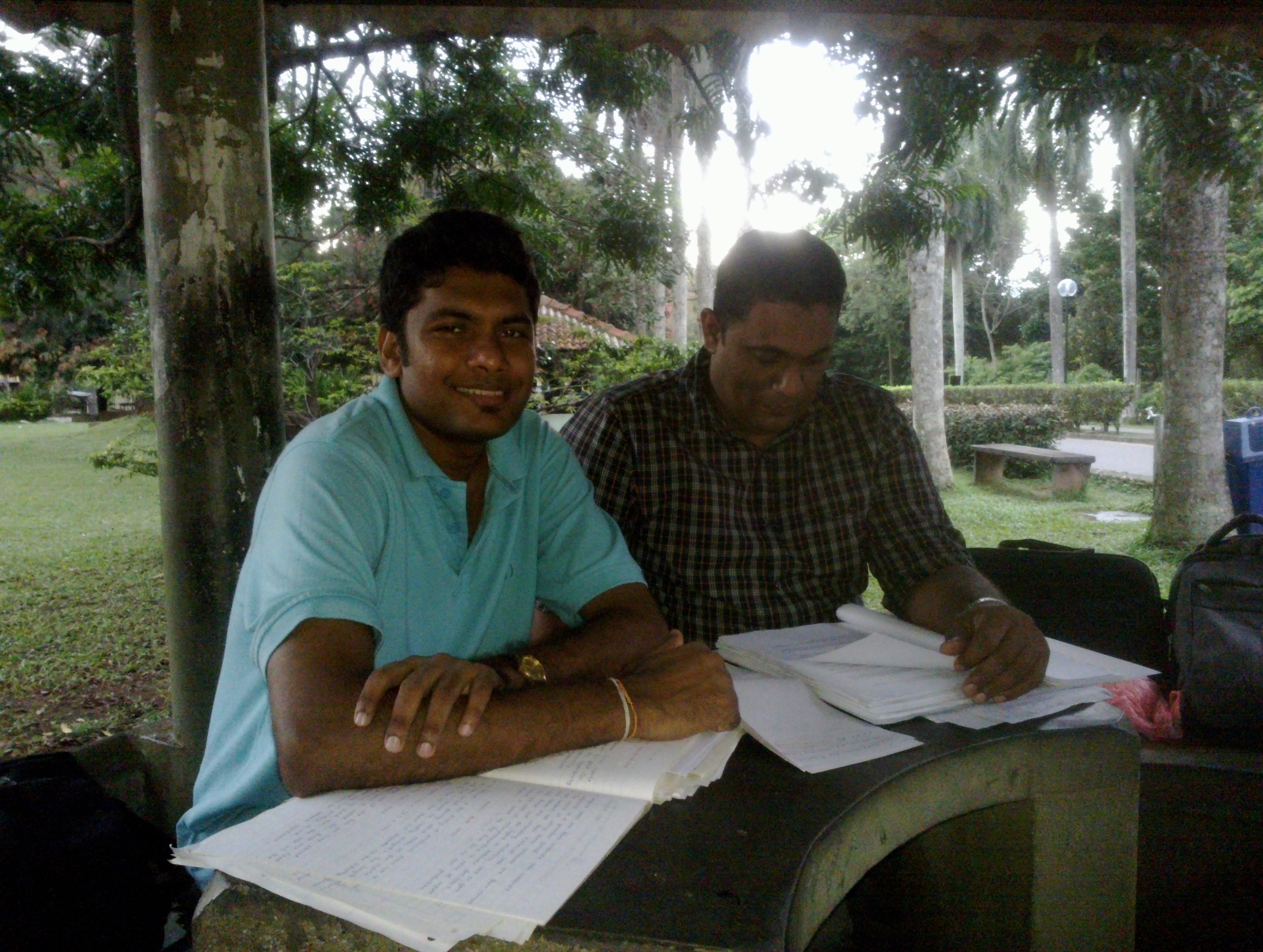
[University students studying together before exams, sharing notes and working through material.] Photograph: students studying before exams
Image Credits: Wikimedia Commons
Revising for two exams on the same day means preparing for two performances with one brain and one energy budget. It is a scheduling problem before it is a knowledge problem. The students who handle it well do not study twice as hard in the final week.
They plan earlier, practise switching between subjects, and treat exam day itself as a day for performing, not learning.
This article explains a plan that covers all three phases: the weeks before, the final days, and the gap between the two papers. It draws on revision guides written for students facing exactly this timetable, including accountancy trainees and International Baccalaureate candidates.
Start earlier than a single exam would need
The first rule is the least exciting and the most important. Start revising at least three weeks before the double-exam day, and longer if either subject is one you find hard. MyTutor's guide to juggling two exams in one day makes this point directly, advising students to highlight the double date in a personal calendar and build a revision plan around it from the start.
The reason is simple arithmetic. Two subjects need the same total revision as two single exams, but they compete for the same evenings. Starting early is the only way to give both subjects full coverage without cutting sleep in the final week.
A plan that begins three weeks out can also absorb a bad day, a missed session, or a topic that turns out to need more work than expected.
When you build the plan, list the topics you struggle with in each subject first. Those weak topics are the ones that decide grades, because strong topics largely look after themselves. A plan built around weaknesses is a plan built around marks.
Split time by weakness, not fifty-fifty
Balancing two subjects does not mean splitting every hour evenly. First Intuition, writing for accountancy students preparing for two papers at once, advises against a straight fifty-fifty split. Give more time to the newer or weaker subject, and protect the stronger one with shorter maintenance sessions so it does not fade.
A workable pattern is to alternate subjects in blocks of 40 to 60 minutes, with a short break between blocks. RevisionDojo suggests 40-minute alternating blocks for students facing two International Baccalaureate exams in one day. The alternation matters as much as the block length, because it trains your brain to switch subjects on demand, which is exactly what exam day will require.
Keep one rule inside each block. Do not mix topics from different exams in a single session. Finish a block in one subject, take a break, then start the other subject clean.
Mixing them inside one session blurs both, and the confusion shows up later when you need each subject separately.
Within each block, use active methods. Re-reading notes feels productive and tests almost nothing. Past papers, flashcards, and self-quizzing force you to retrieve material, which is what an exam measures.
First Intuition puts it bluntly: simply re-reading notes will not get you over the line, and you need to engage your brain with questions, tasks, and timed practice.
Use spaced repetition across both subjects
Spaced repetition is the habit of revisiting material at growing intervals rather than studying it once and moving on. First Intuition recommends a sequence of revisits: after one hour, the next day, one week later, two weeks later, one month later, and six weeks later. Each revisit should involve reworking key questions and testing yourself again, not just re-reading.
For two subjects, spaced repetition solves a real scheduling trap. It is easy to study subject A for a week, switch to subject B for a week, and discover that subject A has faded by exam day. A spaced schedule keeps both subjects alive across the whole revision period, because each subject gets short revisits even while the other one is the main focus.
Build the revisits into your calendar as fixed appointments. A 20-minute flashcard session for subject A on a day otherwise devoted to subject B is worth more than an extra hour on subject B, because it stops the older material from decaying.
Practise switching, not just studying
Switching between subjects is a skill, and like any skill it improves with practice. In the final two weeks, schedule at least some sessions that mimic exam day: a timed paper or timed questions in subject A, a break, then timed work in subject B. The goal is not just coverage.
It is learning what it feels like to close one subject in your mind and open another.
This matters because exam day switching is harder than study switching. After a morning paper, your brain is tired and still chewing over the questions you just answered. Practising the switch in advance means the afternoon paper starts with a familiar routine instead of a scramble.
It also teaches you how long you actually need to warm up in a subject, which tells you how much of the between-exams gap to spend on light review and how much on rest.
Timed practice serves a second purpose. It builds exam stamina. Two papers in one day can mean four or five hours of writing under pressure, and students who have never practised at that length often fade in the second paper.
A full mock day, with both subjects back to back, is the best rehearsal there is.
The night before: finish, do not start
The night before a double-exam day has one job, which is to confirm readiness, not to create it. RevisionDojo's checklist for double-exam days is clear on this: finish real revision before exam day for both subjects, and do not attempt last-minute heroics.
Pack for two exams, not one. That means pens, calculators, and any allowed equipment in duplicate where possible, plus water and lunch. Decide your between-exams routine in advance, so you are not making decisions while tired.
A routine might be: leave the hall, eat, drink water, take a short walk, glance at a one-page summary for the second subject, then go in.
Sleep is part of the plan, not a reward for finishing it. A tired brain retrieves less and switches worse, which are the two exact skills a double day demands. An extra hour of late revision that costs an hour of sleep is a bad trade on this particular night.
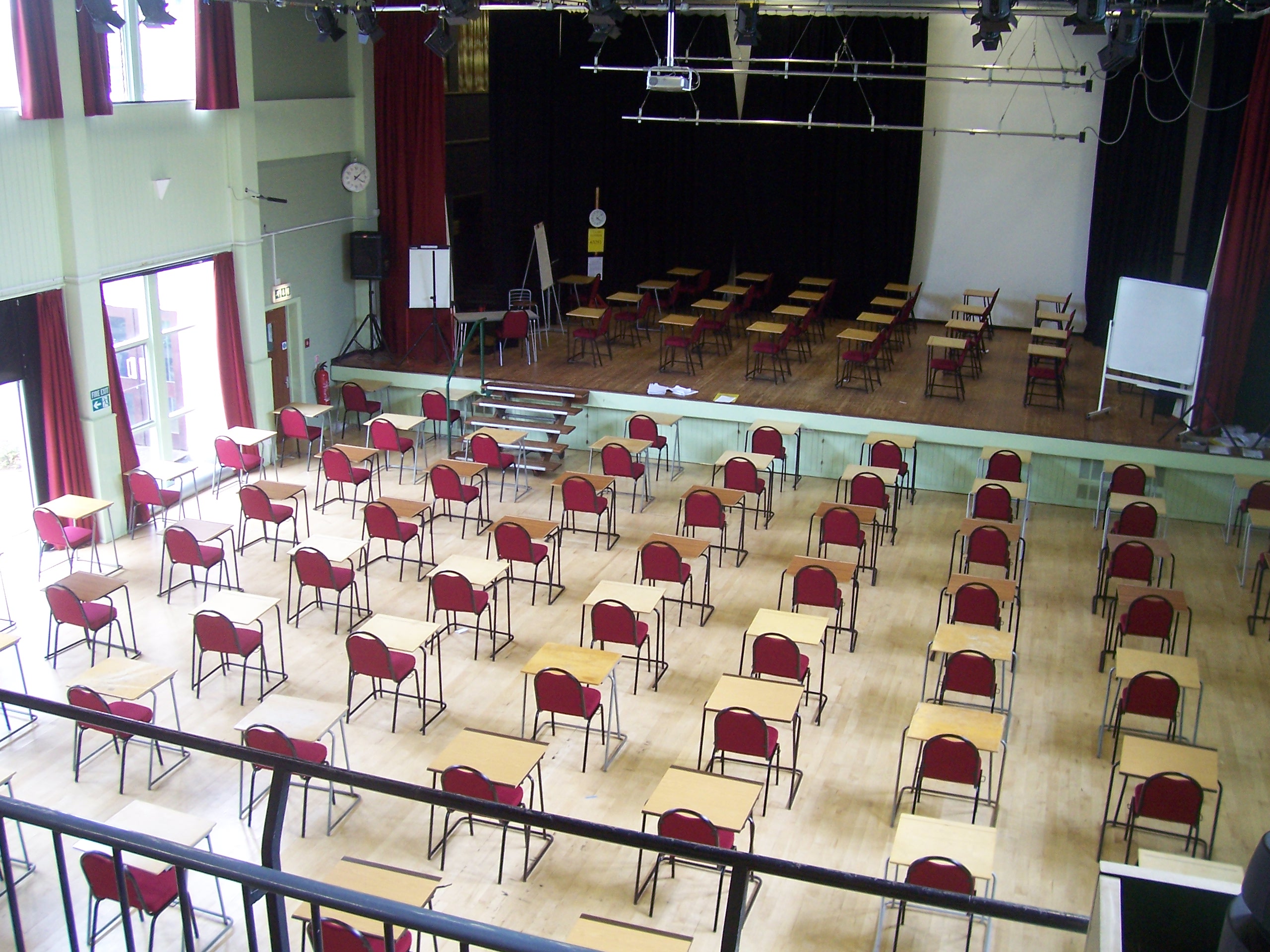
[An exam hall with rows of desks prepared for candidates.] Photograph: an exam hall
Image Credits: Wikimedia Commons
Between the papers: recover first, review lightly
The gap between papers is the most mishandled part of a double-exam day. The temptation is to cram for the second subject, because it feels close enough to fix. RevisionDojo warns against exactly this: after a full paper, the limiting factor is often fatigue, not knowledge, and heavy revision in the break rarely pays off.
Eat something predictable, not experimental. Drink water. Take a short walk if you can.
Avoid the post-mortem conversation about the morning paper, because dissecting questions you cannot change spends energy and raises anxiety without improving the afternoon.
If you must do something academic, keep it tiny. A 60-second mental scan of the second subject's key terms, or a glance at a one-page summary you prepared earlier, is enough to warm the subject up. Then stop.
The material for the second paper was either learned in the weeks before or it was not, and the gap will not change that. What the gap can change is your energy, and energy is what the second paper needs most.
MyTutor's guide agrees, advising students to avoid last-minute cramming on the day and noting that research shows it does not usually pay off. If you have a free hour between exams, looking over flashcards or a short summary can help you get into the zone for the second paper, but only after you have eaten and rested.
Frequently asked questions
Should I revise the second subject the night before?
Light review is fine, but do not use the night before to learn new material for either subject. Confirm what you know with short self-tests, pack everything you need, and protect your sleep.
How should I split revision time between the two subjects?
Give more time to the weaker or newer subject, and use shorter maintenance sessions for the stronger one. Alternate in 40 to 60 minute blocks, keep subjects separate within each block, and revisit both subjects regularly so neither fades.
What should I do in the gap between exams?
Eat, drink water, rest briefly, and avoid discussing the morning paper. A glance at a one-page summary for the second subject is enough academic work. Do not try to learn new content in the gap.
Is it better to study one subject fully, then the other?
No. Studying one subject to completion and then starting the other leaves the first subject to decay. Alternating subjects with spaced revisits keeps both fresh, and practising the switch prepares you for exam day itself.
The bottom line
Two exams on the same day reward planning more than effort. Start at least three weeks out, split time by weakness rather than evenly, and use active practice and spaced revisits to keep both subjects alive. Practise switching between subjects before exam day, finish revision the night before, and use the gap between papers to recover rather than to cram.
The students who walk into the second paper calm and fed are the ones whose preparation actually shows up on the page.
Tags: exam revision, study strategies, revision planning, exams
Rive News's research desk covers practical explainers on cars, careers, study, fitness, and food, written from public sources and checked against a published QA list.
Related
- How to organise revision for five subjects at once
- How to use past papers to revise for exams effectively
- What is the Pomodoro technique, and does it work?
Subscribe for one practical explainer each morning, written to be read in five minutes.
Standards: facts checked against public sources listed above; corrections welcomed and noted on update.
Related stories
Why Do I Blank Out During Tests Despite Studying: Test Anxiety and Retrieval Failure
Blanking out in exams is retrieval failure, not missing knowledge. Anxiety drains working memory; rereading builds false confidence. Here

How to Study for Exams Without Burning Out
Sleep 7-8 hours, study in 25-50 minute blocks, and exercise daily. The science-backed way to study for exams without burning out, and what

Why Do I Forget What I Just Read? Science Has an Answer
You forget what you just read because of the forgetting curve, mapped by Ebbinghaus in 1885. Science explains why memory fades fast and how