
What Is Exam Technique Beyond Knowing the Material: A Research Guide
Key takeaways
- Exam technique is the set of skills that converts knowledge into marks: reading questions precisely, planning answers, and managing the clock.
- Students who score well tend to self-test and schedule study time, according to a survey of 324 undergraduates.
- Deconstructing each question before writing is the single highest-leverage habit in the exam room.
Exam technique is the set of skills that turns what you know into marks on the page: reading a question for what it actually asks, choosing what to answer first, and managing the clock so the paper gets finished.
It is separate from knowledge. A student who understands every topic can still underperform if answers drift away from the question or time runs out halfway through the paper.
This article explains what exam technique covers, including how to deconstruct a question before writing, how to budget time in the exam room, and what research says about the preparation habits that actually move grades.
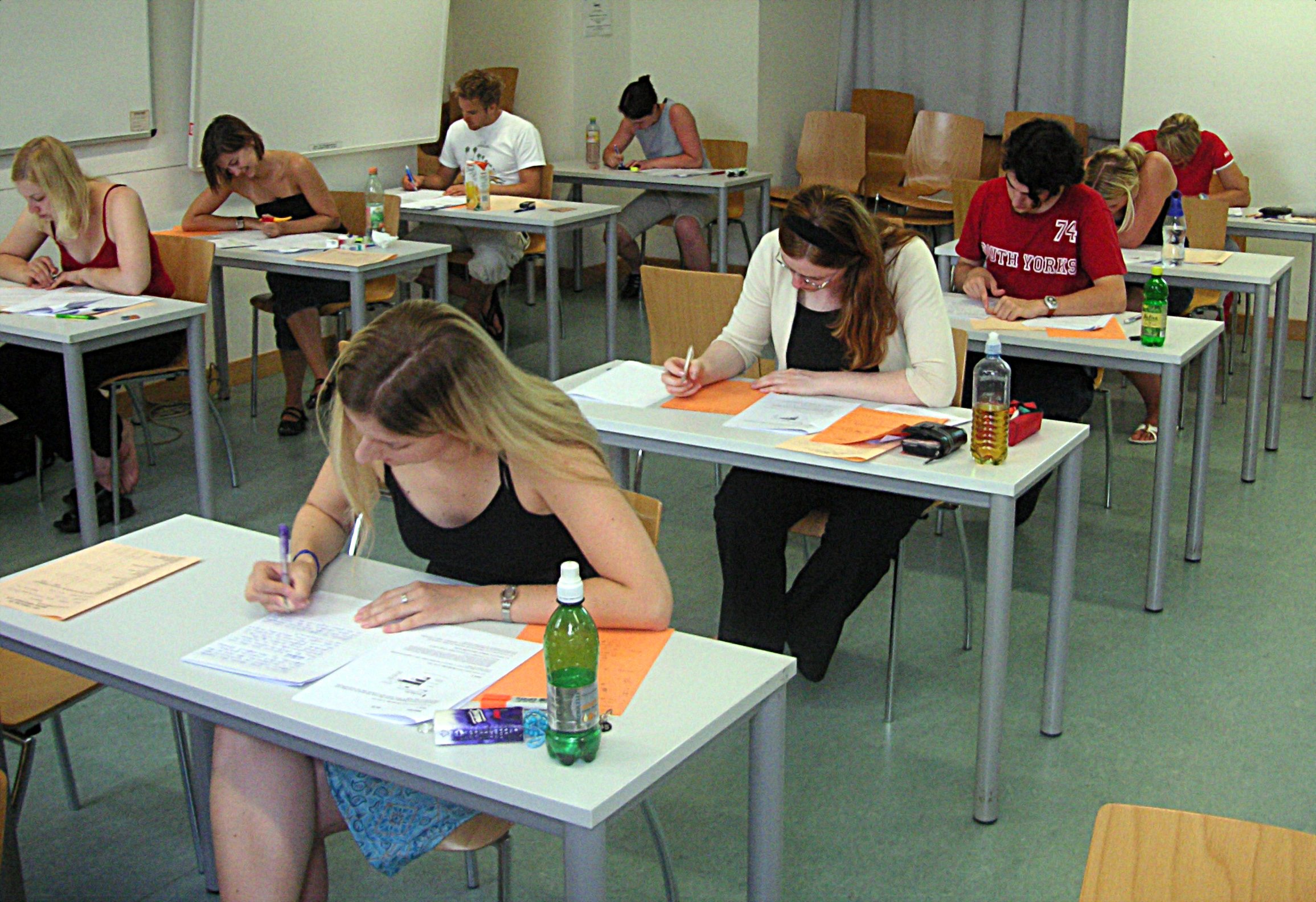
Students taking a final exam at the University of Vienna. Photograph: KF.
Image Credits: Wikimedia Commons / KF (public domain)
What exam technique actually means
Knowing the material is necessary, but it is not sufficient. Examiners mark against a marking scheme, which awards points for specific ideas, evidence, and structure. Exam technique is the discipline of aligning your answer with that scheme instead of simply writing down everything you remember.
Two students can hold the same knowledge and get different grades. The one with better technique reads the question twice, plans the structure, and answers exactly what was asked. The one without it writes a long answer to a slightly different question.
This matters most in subjects where answers are written by hand under time pressure. Essays, long problems, and case studies reward organization. Even in multiple-choice papers, technique shows up in how you handle uncertainty and the clock.
Deconstructing the question before you write
Most lost marks come from answering the question the student wished was asked rather than the one printed on the page. Deconstruction is the habit of breaking the question apart before you write a word.
Start with the command word. "Explain" asks for reasons and mechanisms. "Evaluate" asks for strengths and weaknesses plus a judgment. "Compare" asks for similarities and differences side by side. Each command word implies a different answer shape, and writing the wrong shape loses marks even when the facts are right.
Next, separate the instruction from the topic. A question has a topic (what it is about) and an instruction (what to do with it). Underline both. Then restate the question in your own words in the margin. If your restatement drifts from the printed question, you have caught the error before it costs you.
Spend two minutes on this per question. That time feels expensive, but a two-minute plan routinely saves ten minutes of rewritten paragraphs.
Budgeting time like a marker
Marks are distributed across the paper, so time should be distributed the same way. The simplest reliable method is minutes per mark: if a 100-mark paper lasts 180 minutes, each mark is worth about 1.8 minutes. A 20-mark question gets roughly 36 minutes, not an hour.
Make two passes. On the first pass, answer the questions you know best and leave clean gaps for the rest. This banks the easy marks early and keeps confidence up. On the second pass, return to the harder questions with whatever time remains.
Never leave a question blank. Marking schemes often award partial credit for a partial answer, and a structured attempt at a weak question usually beats a perfect answer that ran out of time. When the clock warns you, wrap up the current answer in three lines and move on.
The preparation habits that research supports
Exam technique in the room works best when preparation outside the room follows evidence. A 2012 study by Marissa Hartwig and John Dunlosky surveyed 324 undergraduates at Kent State University about their study habits and grade point averages. Students who reported using self-testing and who scheduled their study time tended to achieve more, according to the published abstract in Psychonomic Bulletin and Review.
The same study found that low performers were more likely to study late at night, that massing study into single sessions was associated with using fewer strategies overall, and that all students, especially low performers, were driven by impending deadlines.
A wider review by Dunlosky and colleagues in 2013 examined ten popular learning techniques and rated practice testing and distributed practice as high utility. Rereading, highlighting, and summarizing received low utility ratings. The review concluded that most students report using rereading and highlighting, yet these techniques do not consistently boost performance, so other techniques should be used in their place.
An earlier survey by Kornell and Bjork in 2007 found that 76 percent of 472 UCLA students reread whole chapters or their underlining, and around 90 percent used self-testing in some fashion. Most of that self-testing was used only to monitor memory, and students tended to believe rereading was the more effective strategy. The research record suggests the opposite: retrieving answers from memory beats reading them again.
Quizzing yourself beats re-reading the chapter, and the same evidence backs self-testing as exam preparation. Build practice questions into your revision and technique becomes a habit rather than a last-minute scramble. For a deeper look at the testing effect, see why quizzing yourself beats re-reading the chapter.
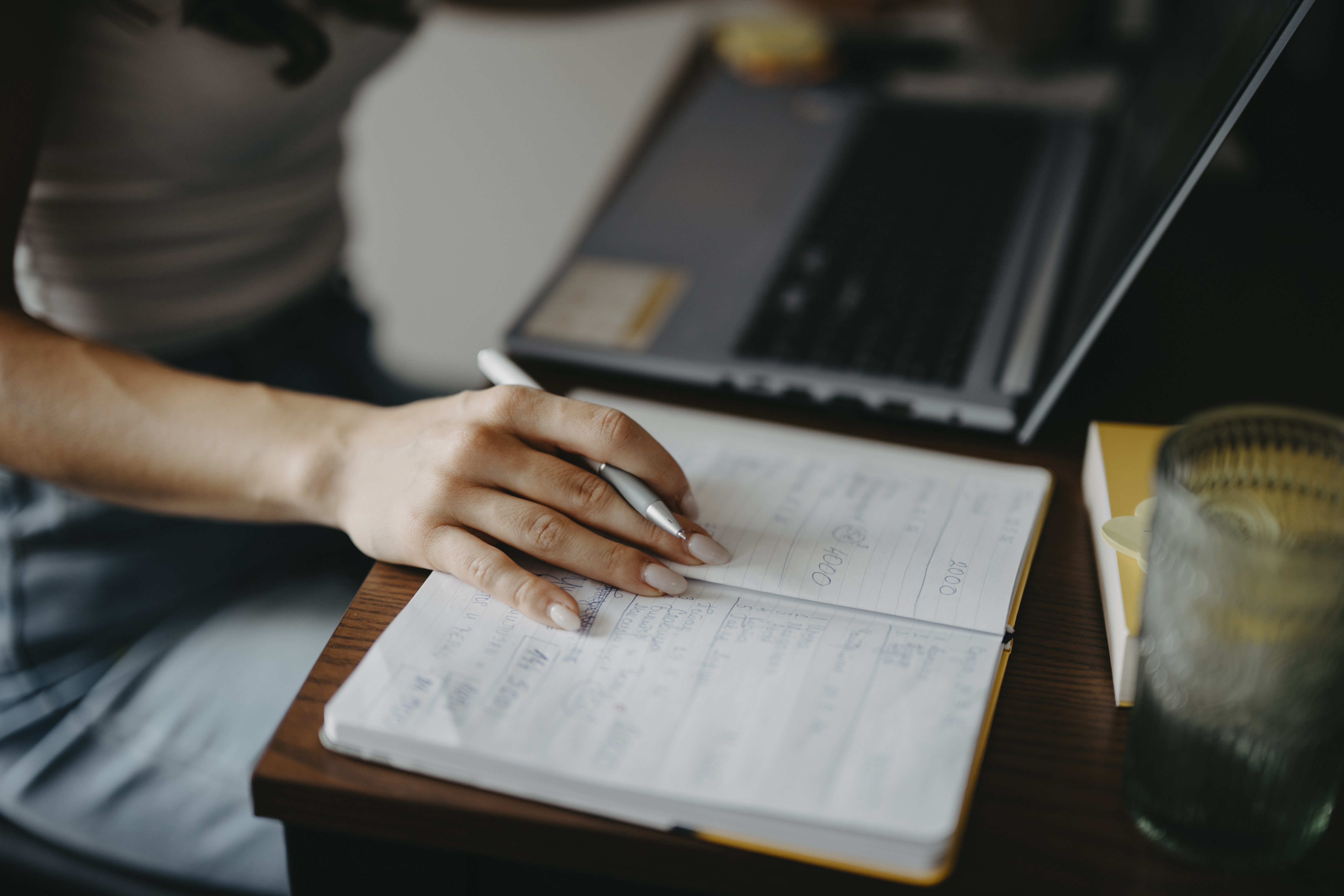
Handwritten notes remain a staple of exam preparation. Photograph: Nenad Stojković.
Image Credits: Wikimedia Commons / Nenad Stojković (Shixart1985)
Frequently asked questions
Is exam technique enough to pass without studying?
No. Technique multiplies knowledge; it does not replace it. A perfect structure around an empty answer earns little. Technique is what converts the knowledge you do have into the maximum possible marks.
How much of the exam should I spend reading the paper?
Budget five to ten minutes at the start for reading and planning. Mark the questions you will answer, note the time each should take, and rank them by confidence. This small investment prevents the most common disaster: discovering a hard question too late.
Does exam technique work for multiple-choice papers?
Yes, with adjustments. Eliminate options before choosing, answer easy questions first, and keep a strict per-question time budget. The core idea is the same: manage the clock and answer the question as written.
What if I run out of time mid-answer?
Stop and write a three-line conclusion that states your main points. A finished partial answer with a conclusion scores better than a long fragment that trails off. Then move to the next question.
Should I check answers or attempt everything first?
Attempt everything first. Checking an answered question rarely adds marks, while an untouched question guarantees zero. Reserve the final minutes for checking only after every question has an answer.
The bottom line
Exam technique is the bridge between knowledge and grades. Deconstruct each question before writing, budget time by marks, and attempt everything. Behind the scenes, the students who do best prepare by testing themselves and spacing their study, not by rereading notes the night before. Technique turns preparation into performance.
Latest in Education
- Why Does Quizzing Yourself Beat Re-Reading the Chapter?
- Why Do You Get Goosebumps From Music?
- Why Do Some Messages Show as Green and Others as Blue?
- How Do Trees Survive Freezing Winters Without Moving?
Get one research-backed study insight in your inbox each week. Subscribe to the Rive News newsletter.
Related stories
Why Do I Blank Out During Tests Despite Studying: Test Anxiety and Retrieval Failure
Blanking out in exams is retrieval failure, not missing knowledge. Anxiety drains working memory; rereading builds false confidence. Here
How to Study for Exams Without Burning Out
Sleep 7-8 hours, study in 25-50 minute blocks, and exercise daily. The science-backed way to study for exams without burning out, and what
Why Do I Forget What I Just Read? Science Has an Answer
You forget what you just read because of the forgetting curve, mapped by Ebbinghaus in 1885. Science explains why memory fades fast and how