
Why card payments sometimes stay pending for days
By Rive News / Research desk | Rive News / Published October 29, 2026 at 9:00 AM PKT
Key takeaways
- A pending payment is approved but not settled: your bank has reserved the money, and the merchant has not yet claimed it.
- Most pending card payments clear within 1 to 3 business days, once the merchant submits its batch for settlement.
- Holds can last longer at hotels, car rental firms, and fuel stations, and credit card holds can run up to 30 days before expiry.
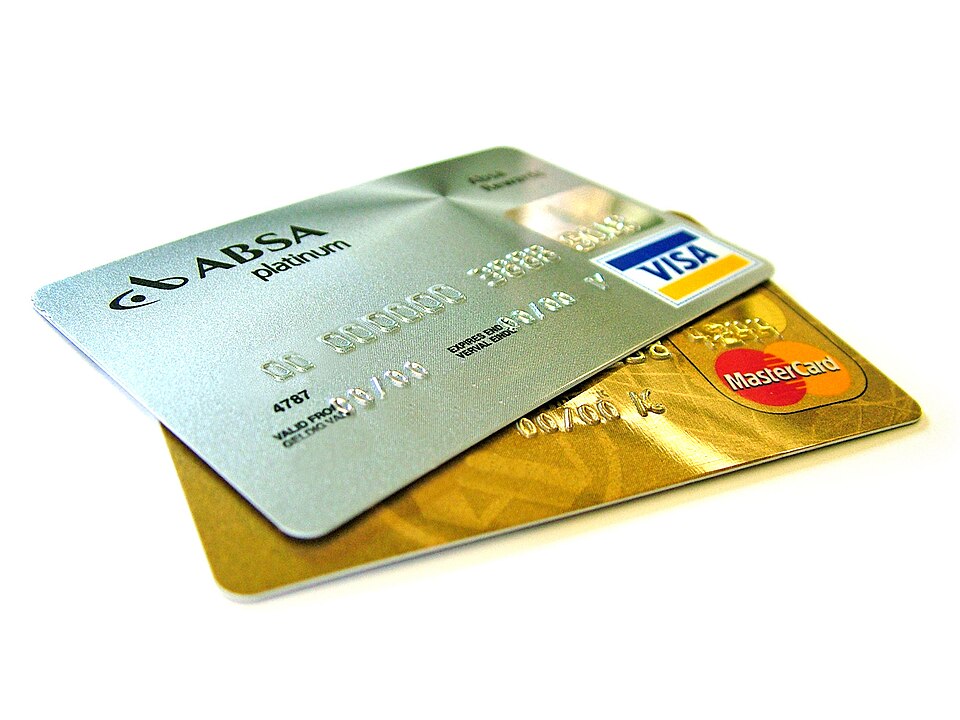
[A set of credit cards.] Photograph: credit cards
Image Credits: Wikimedia Commons
A card payment showing as pending for days means the money is reserved but has not yet moved. You cannot spend it, yet the merchant has not received it either. The status looks like a fault, but it is usually the normal gap between two steps in every card payment.
Those two steps are authorization and settlement. Authorization happens in seconds at the till or checkout.
Settlement happens later, when the merchant claims the money in a batch. The time between them is the pending period, and its length depends on the merchant, the card network, and your bank.
This article explains both steps, why some holds run long, why a pending amount can differ from the final charge, and what happens if a merchant never claims the money.
Authorization first, settlement second
Every card payment starts with an authorization request. When you tap, swipe, or enter your card number, the merchant asks your bank whether the payment can go ahead. The bank checks the balance or available credit and, if approved, places a temporary hold on that amount.
No money moves at this point. The hold simply reduces your available balance or available credit so the funds stay reserved. That is why the transaction appears in your account at once, marked as pending, even though the merchant has nothing yet.
Settlement is the second step. The merchant gathers its completed transactions, often in a daily batch, and submits them for final processing.
Once your bank processes that submission, the hold is replaced by a posted charge and the funds move to the merchant. Ramp describes this two-step shape as the reason a transaction stays pending: until the merchant submits the final charge and the bank processes it, the payment remains in its temporary state.
A pending transaction therefore affects your available balance but not your actual balance. The distinction matters when you check your account, since the two balances will disagree until the payment posts. Once it posts, the actual balance falls and the pending entry disappears.
Why most clear in days, and why some do not
Most routine purchases clear quickly, because most merchants settle daily. Mercury, writing for its own cardholders, says most pending transactions resolve within 1 to 3 business days, with timing depending on the merchant. Some merchants settle at once, while others wait until they reconcile their payments.
Weekends and public holidays stretch the count, because business days exclude them. A Friday evening purchase may sit pending across the weekend even when nothing is wrong. A merchant that settles weekly, or one that waits until an order ships, will also stretch the period.
Holds tied to hotels, car rental, and fuel stations run longer by design. In those cases the final amount is not known when you first present the card, so the merchant places an estimated hold and finalizes it later. A hotel may hold room charges plus an incidentals buffer, and a fuel station may hold a fixed sum before you pump.
Stripe explains the same shape from the business side. Some holds last only seconds, while others last for days, depending on how long the business takes to finalize the transaction. Once the final amount is known or the service is delivered, the business captures the payment and the hold becomes a posted charge for the actual amount.
If the business never completes the transaction, the hold eventually expires or is released by the issuer. The reserved funds then return to your available balance or credit. You do not need to chase the money in most cases, though a merchant or issuer can sometimes release a hold early on request.
Why a pending amount can look wrong
A pending amount sometimes differs from the price you expected, and that gap has a few ordinary causes. The most common is an estimated hold larger than the final total, typical at fuel stations, hotels, and rental firms. The hold updates to the correct amount once the merchant settles, or drops off after a few business days.
Tips add another wrinkle. A restaurant may authorize the meal total and settle a higher amount once the tip is added, so the pending figure rises when it posts. Currency conversion can shift the figure too, since the posted amount reflects the exchange rate at settlement rather than at authorization.
A failed checkout can also leave a pending hold behind. If a timeout, network fault, or security check interrupts the final step, the order may never be created while the temporary hold stays visible. The hold then expires on its own, though the wait can feel long when the money is tied up.
Duplicate pending entries usually trace to the same cause: an authorization for each attempt, with only one settling. The extras fall away when their holds expire, and only the settled charge remains. Keeping the receipt and the merchant name helps if you later need to ask about one.
The outer limits: debit versus credit
The ceiling on a hold depends on the card type and the bank. Wikipedia's summary of authorization holds states that debit card holds can fall off anywhere from 1 to 8 business days after the transaction date, depending on the bank's policy. Credit card holds may last as long as 30 days, depending on the issuing bank.
Mercury puts its own ceiling in the same range, allowing up to an industry-standard 30 business days for the merchant to complete or cancel a transaction before it is cancelled. That figure is a maximum, not a norm, and most holds clear far sooner. It still explains why a stray hold can linger for weeks in an unusual case.
Banks differ in how they display released holds. Some show the release as a separate credit, while others simply restore the available balance without a visible entry. That quiet restore can look like the charge vanished, when in fact it was only ever a temporary hold.
This is general educational information, not financial advice.
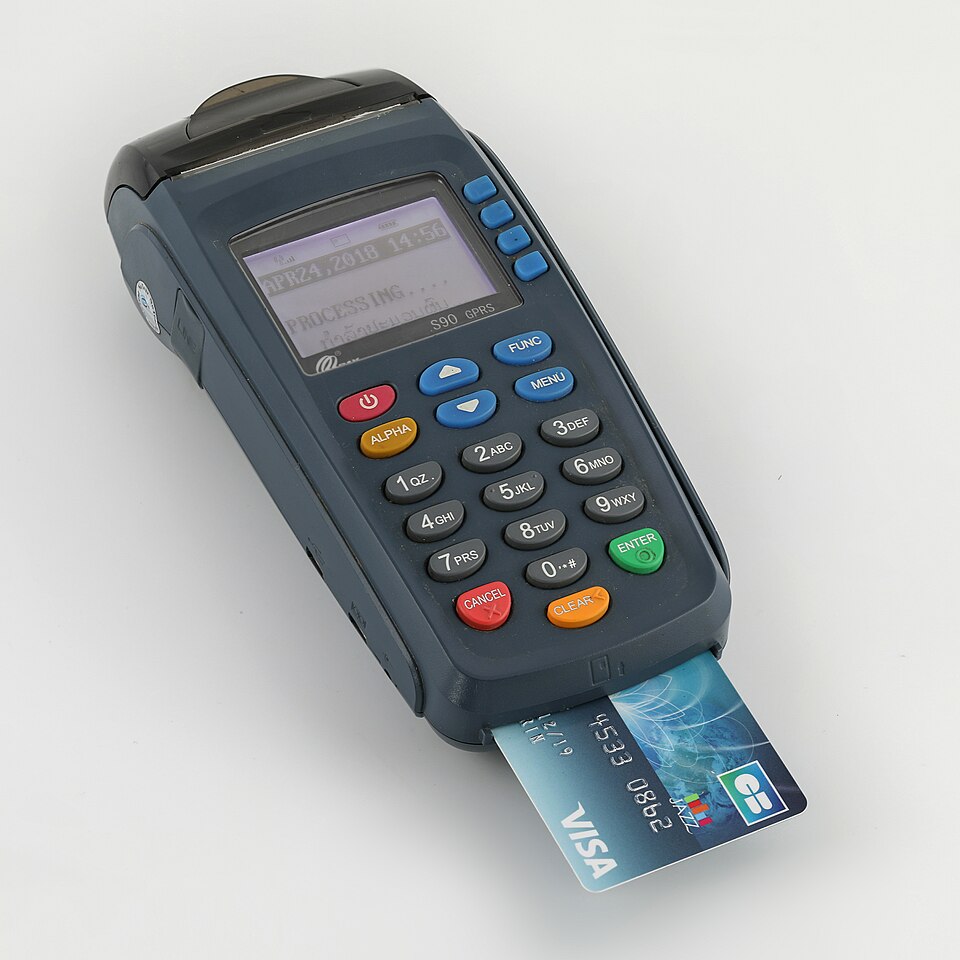
[A credit card terminal in Laos.] Photograph: a card payment terminal
Image Credits: Wikimedia Commons
Frequently asked questions
Can you dispute a pending transaction?
Usually not, since the charge is not final. Disputes apply to posted transactions, so the usual advice is to wait for the payment to post or the hold to expire, then raise it with the merchant or bank if it is wrong.
Does a pending payment mean the merchant has been paid?
No. A pending payment means the funds are reserved for the merchant, but the money moves only at settlement. Until the transaction posts, the merchant has an approved claim, not the cash.
Why does a pending charge reduce what I can spend?
The hold locks up part of your balance so the money is available when the merchant finalizes the charge. Your actual balance only changes once the transaction posts, but your available balance falls at once.
What should you do if a hold lasts longer than a month?
Contact the merchant first to confirm whether it settled or released the hold, then your bank if the hold remains. Only the merchant or the issuer can release a hold early, so a request to one of them is the route that works.
The bottom line
Card payments stay pending because authorization and settlement are two separate steps, and the merchant must still claim the money after your bank approves it. Most clear within 1 to 3 business days, while hotels, rental firms, and fuel stations hold longer because the final amount is unknown at first.
Debit holds usually clear within 1 to 8 business days, and credit holds can run up to 30 days before expiry. If a hold looks wrong, check whether it is an estimated hold or a failed checkout, wait for it to post or expire, and then take it up with the merchant or your bank.
Tags: card payments, banking, pending transactions
Rive News is a research desk that explains everyday questions using published sources, with no individual author persona behind its articles.
Related
- Bank says your funds are pending: what it actually means
- Why banks hold your check deposits for days
- How a debit card payment travels from shop to bank
- How does a credit card grace period actually work?
Subscribe for one plain-English explainer like this in your inbox each morning.
Rive News follows a standards note: facts are sourced from public pages, claims carry attribution, and corrections are made openly when a source is corrected.
Related stories

How your APR is divided by 365 to get daily interest
Lenders divide your APR by 365 for a daily rate, then apply it to your average daily balance. This guide walks through every step

What is the difference between APR and effective annual rate?
APR ignores compounding inside the year; the effective annual rate includes it. A 12.99% APR card really costs 13.80% a year. Worked

APY vs interest rate: what compounding does to your money
APY includes compounding; the interest rate does not. A 5% rate compounded monthly is really 5.12% APY. Here is how the math works and what