
Close an old credit card: when it makes sense
By Rive News / Research desk | Rive News / Published October 26, 2026 at 9:00 AM PKT
Key takeaways
- Closing a card raises your credit utilisation at once, because the same balances sit against smaller total limits.
- Your history does not vanish: a card closed in good standing stays on reports for up to 10 years.
- The strongest reason to close is an annual fee you cannot justify, after asking about a waiver or downgrade.
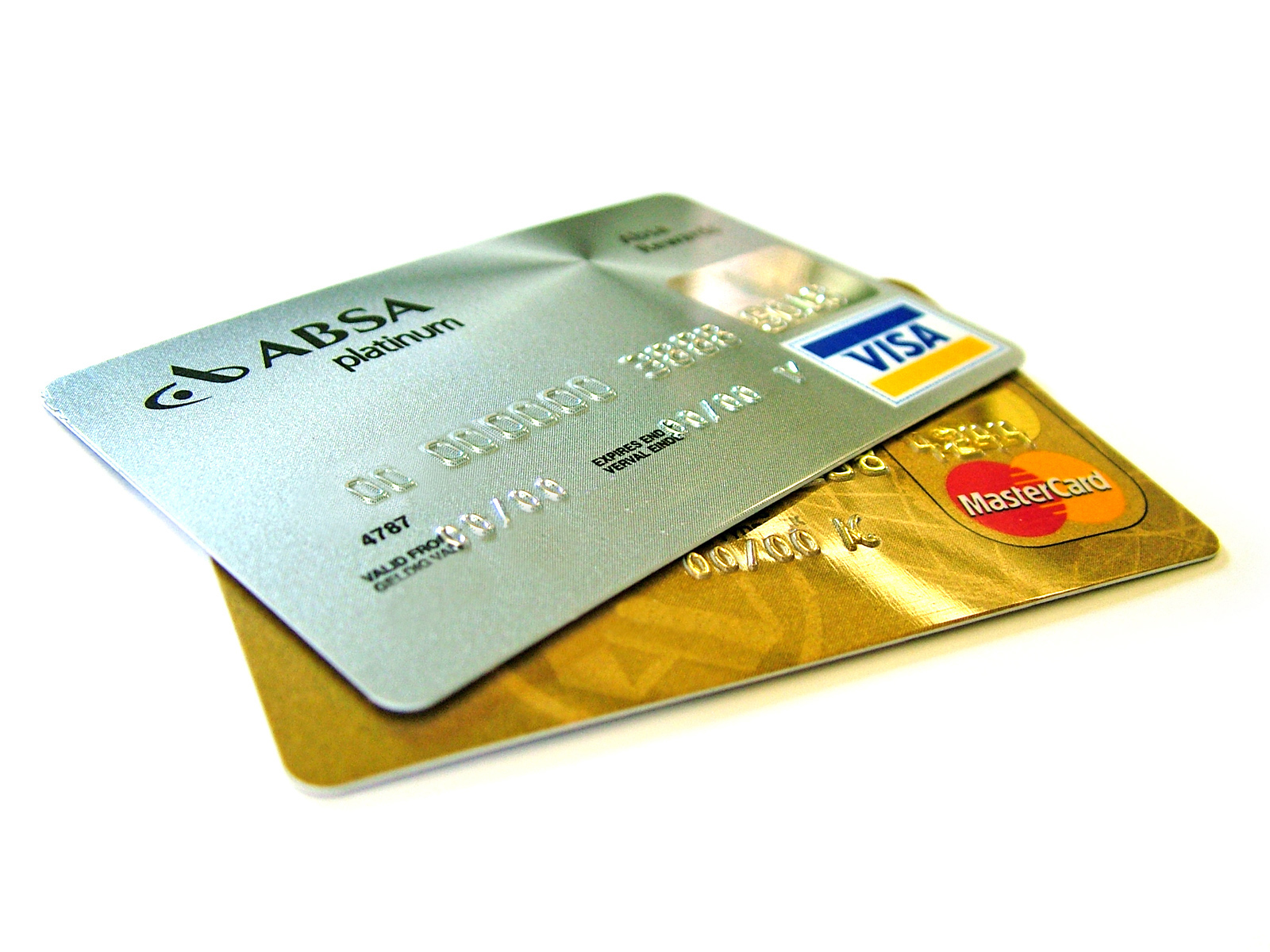
[A collection of credit cards.] Photograph: Wikimedia Commons contributor
Image Credits: Wikimedia Commons
The standard advice is never close an old credit card, but the real answer is more useful than that. Closing affects your credit in two different ways, on two different timescales, and the fee you pay every year is a real cost, not an abstraction. This article explains when to close an old credit card, when to keep it open, and what to try before you cancel.
This is general educational information, not financial advice.
What closing actually does to your credit
Two parts of a credit score are involved, and they do not move at the same speed. The first is utilisation, the share of your revolving limits you are using, which makes up about 30 percent of a FICO Score, according to The Points Party. Close a card and its limit leaves your total, so the same balances become a larger share of what remains.
The Points Party gives a clear example. With $10,000 in combined limits and $2,000 in balances, utilisation is 20 percent. Close a card with a $5,000 limit and the same $2,000 becomes 40 percent of the remaining $5,000. That effect starts as soon as the issuer reports the closure, which is why a closure can move a score quickly even when nothing else changes.
The second part is length of credit history, about 15 percent of a FICO Score. Here the common fear is wrong. NerdWallet quotes credit expert John Ulzheimer, formerly of FICO and Equifax, who says that contrary to popular myth, you do not lose the value of the card's age simply because you close it.
An account closed in good standing stays on your credit report for up to 10 years and keeps counting in score calculations.
The cost arrives later, not at once. When the closed account finally drops off after up to a decade, your oldest history can shorten with it. By then your other accounts will have aged too, which softens the effect, but the eventual loss is real.
Closing an old card is therefore a slow trade, not an instant punishment, and the immediate risk is utilisation, not age.
The annual-fee versus history trade-off
The genuine reason most people close an old card is money. A card charging a high annual fee for rewards you no longer use costs real cash every year, and keeping it open purely for credit history means paying for a score effect. Orange County's Credit Union frames the test plainly: if you are paying a high annual fee for a card you rarely use, you likely are not earning enough rewards to cover the fee.
Before closing, try two cheaper exits. First, ask the issuer to waive the fee, since retention offers exist precisely for this conversation. Second, ask to downgrade to a no-annual-fee version of the card, which keeps the credit line and its history open while removing the fee.
The Points Party and NerdWallet both recommend this order, and it resolves most fee cases without any closure at all.
If neither works, closing becomes a reasonable choice. Paying hundreds of dollars a year for nothing is a worse outcome than a temporary utilisation rise, especially if you can pay down balances first to keep utilisation low after the closure. The fee-versus-history trade is a judgement call, not a rule, and the fee side deserves real weight.
When keeping it open is clearly better
Some cards are worth keeping even unused. A card with no annual fee costs nothing to keep, and an open card that costs nothing can only help your utilisation and history. The Points Party recommends putting one small recurring charge on such a card, such as a streaming subscription, and setting up autopay, so the issuer does not close it for inactivity.
Your oldest card and your biggest-limit card deserve extra caution. These are the cards whose loss moves your score most, since they anchor both your history and your total available credit. NerdWallet notes that an unused card can still play an important role in a credit file, especially if it has a high limit, because that available credit keeps overall usage lower.
Timing matters too. If you are about to apply for a mortgage, an auto loan, or a new card, leave your credit profile alone until the loan closes. The Points Party warns that lenders look at utilisation and history at application, so a closure in the middle of an application risks a worse rate for no benefit.
Wait until the loan is funded, then decide.
When closing makes sense despite the cost
Beyond fees, a few situations justify closing. If a card keeps tempting you into balances you cannot pay off, closing it may be the right financial decision despite the short-term score effect. The score is a tool, not the goal, and a card that drives debt is a problem no score protects you from.
Fraud is another clear case. If a card has been compromised and cannot be secured, closing it is a protective step regardless of score impact. The same logic applies to predatory terms, such as excessive fees that no downgrade fixes.
In each case the card itself is the problem, not the closure.
Small, new, or low-limit cards are the lowest-risk closures. A card less than a year old has little history to lose, and a low-limit card barely changes your total available credit. Closing one of several small store cards you rarely use will usually move utilisation only slightly, provided your other cards carry healthy limits.
The risk scales with the card's size and age, so close small and new before old and large.
How to close a card cleanly
[A credit card terminal.] Photograph: Wikimedia Commons contributor
Image Credits: Wikimedia Commons
If you decide to close, do it in order. First, pay the balance in full, since a card closed in good standing is the one that keeps its history for up to 10 years. Redeem any rewards first, because unredeemed points often vanish at closure.
Move any recurring charges to another card so a missed payment does not follow you.
Then call the issuer and ask for written confirmation of the closure. Check your credit reports a month or two later to confirm the account shows as closed by the consumer, with a zero balance, rather than closed by the issuer for another reason. A clean record here is what preserves the 10-year history benefit.
Finally, consider paying down other balances before or just after the closure. Since utilisation is the immediate risk, reducing balances elsewhere offsets the lost limit. A closure paired with lower balances can leave utilisation roughly where it started, which removes the sharpest cost of the decision.
Frequently asked questions
Does closing a credit card erase its history?
No. An account closed in good standing stays on your credit report for up to 10 years and keeps counting toward your credit history during that time.
How much does closing a card hurt your credit score?
The immediate effect comes through utilisation, not age. Closing a high-limit card while carrying balances raises your utilisation share, which is about 30 percent of a FICO Score.
Should I close a card with an annual fee I do not use?
First ask for a fee waiver or a downgrade to a no-annual-fee card. If neither is available, closing is reasonable, since paying a fee for nothing is worse than a temporary score effect.
Should I close a card before applying for a mortgage?
No. Leave your credit profile unchanged until the loan closes, since lenders assess utilisation and history at application.
The bottom line
Close an old card when the fee outweighs the benefit, when the card drives debt you cannot control, or when fraud forces your hand. Keep it open when it costs nothing, anchors your history, or carries a limit your utilisation depends on. And before you cancel anything, ask for a waiver or a downgrade, because the best closure is often the one you never need to make.
Tags: credit cards, credit scores, personal finance
Rive News is a research desk that writes plain-English explainers from public sources, with no invented experts or first-hand claims.
Related
- What is a credit card grace period and how it saves you money
- Why do credit card minimum payments barely reduce the balance?
- How does a credit score actually get calculated
- What is a secured credit card and who is it for?
Subscribe for one practical personal finance explainer each week.
Rive News publishes explainers from public sources; corrections are welcomed and noted on the article.
Related stories

How your APR is divided by 365 to get daily interest
Lenders divide your APR by 365 for a daily rate, then apply it to your average daily balance. This guide walks through every step

What is the difference between APR and effective annual rate?
APR ignores compounding inside the year; the effective annual rate includes it. A 12.99% APR card really costs 13.80% a year. Worked

APY vs interest rate: what compounding does to your money
APY includes compounding; the interest rate does not. A 5% rate compounded monthly is really 5.12% APY. Here is how the math works and what