
What Is a Stock and What Do You Own When You Buy One
Key takeaways
- A stock is a slice of ownership in a real business, not just a number on a screen.
- One share can bring a vote at shareholder meetings, a claim on profits, and a claim on assets.
- Share prices move with supply and demand, and ordinary shareholders are paid last if a company fails.
This article is for general information, not financial advice.
A stock is a slice of a real business
A stock, also called a share or equity, represents ownership in a company. When you buy one share, you become a shareholder, which means you now own part of that company. The slice may be tiny.
It is still real ownership in a business with products, employees, debts, and customers.
Bitpanda Academy puts it plainly: a stock represents a small ownership stake in a single company, and buying one means you legally own a fraction of that business. The Stillman Exchange makes the same point for beginners: when people talk about buying stocks, they are talking about owning a small piece of a company, and even a very small percentage still gives you a claim to a portion of its value.
So what is a stock, and what do you own when you buy one? You own a fraction of the business itself, plus a bundle of rights that come with it. This article walks through those rights, how shares are created and traded, how shareholders earn returns, and what happens when things go wrong.
Why companies sell shares at all
Companies sell shares to raise money. Instead of borrowing from a bank, they let the public invest in them. That money funds products, expansion, and long-term projects.
The Daily Mirror notes that for a listed company, issuing shares is one of the main ways to raise capital to build products and services, expand, or fund operations.
Think of a company as a pizza cut into 100 slices, the analogy the Daily Mirror uses. Owning one slice means holding a one percent stake, a small piece but still part of the whole pizza. A large public company may have billions of slices.
Your one share is a far smaller fraction, but the principle is identical.
The first sale of shares to the public is called an initial public offering, or IPO. In an IPO, you buy directly from the company as it lists on a stock exchange. After the IPO, shares trade on the secondary market, where investors buy and sell between themselves.
In the secondary market, your money goes to the previous owner, not to the company. The company already received its money at the IPO.
What rights come with one share
Owning a share gives you three main things: a claim on profits, a say in big decisions, and a claim on assets if the company winds down.
The claim on profits takes two forms, covered below: dividends and price gains. The say in decisions comes through voting. Usually, one share equals one vote at the annual general meeting, where shareholders elect board members and approve major changes.
The more shares you own, the more votes you cast.
The claim on assets matters most when a company closes down. If the business is wound up and its assets are sold, shareholders get what remains after debts and other obligations are paid. In practice, ordinary shareholders stand last in that line, a point worth understanding before you buy.
Owning shares does not give you a right to walk into the office, use company property, or tell managers what to do. Your rights run through the board and the shareholder meeting, not through daily control. For most small shareholders, ownership is financial and voting-based, not operational.
Common stock versus preferred stock
There are two main types of stock: common and preferred. Common stock is the type most people buy. It usually gives voting rights, which means you can vote on certain company decisions.
Dividends are not guaranteed.
Preferred stock is different. It usually does not come with voting rights, but it gives more consistent dividend payments and priority over common shareholders if the company runs into financial trouble, according to the Stillman Exchange. The Daily Mirror adds that preference shares typically offer fixed dividends and priority over ordinary shareholders if the company is closed down, but often come with limited or no voting rights.
Which type fits a given investor depends on what they want: a vote and a share of growth, or steadier income with a higher claim in a wind-down. Most beginners start with common stock, since that is what trades most widely and what most discussions of the stock market refer to.
How shareholders earn returns
Shareholders earn returns in two main ways: capital gains and dividends.
Capital gains happen when the share price rises and you sell for more than you paid. The Daily Mirror gives a simple example: buy shares at Rs 50, watch the price rise to Rs 120 over a couple of years, and selling nets Rs 70 profit per share. The same logic works in any currency.
The gain is only real once you sell, and the price can fall just as easily as it rises.
Dividends are cash payments some companies make from profits. The Daily Mirror example: own 1,000 shares and receive a dividend of Rs 5 per share, and you pocket Rs 5,000. Mature businesses, like established banks, often pay stable dividends, while fast-growing companies may reinvest profits to grow instead of paying dividends. Bitpanda Academy notes that some companies hand back part of their profits each quarter as cash, while fast-growing ones usually do not.
Some investors chase dividends. Others chase growth. Neither approach is right in general.
A company that pays no dividend is not broken. It may be reinvesting every dollar into expansion.
What moves the price
Share prices change based on supply and demand. If more people want to buy than sell, prices go up. If more people want to sell, prices go down.
What drives those choices is a mix of company results, economic data, and investor expectations.
Company performance matters first. When a company earns strong profits or releases new products, more investors want to buy. When results disappoint, investors may sell.
That is why quarterly reports and company news move prices, often sharply.
Economic factors move whole markets at once. Interest rates, inflation, and exchange rates can shift money between shares and interest-earning assets like bonds and deposits. The Daily Mirror notes that if a central bank raises interest rates, investors may shift from shares to bonds and fixed deposits.

How buying actually works
To buy your first stock, you open an account with an authorised broker or platform, verify your identity, deposit funds, search for the company, and place an order, Bitpanda Academy explains. Many platforms offer fractional shares, so you can start with a small amount instead of buying a whole share. Fractional shares lower the barrier, though Bitpanda notes that fractions generally do not carry voting rights and cannot be transferred or certificated.
Before placing an order, check the fees, the available exchanges, and how the platform holds your assets. Decide your amount in advance.
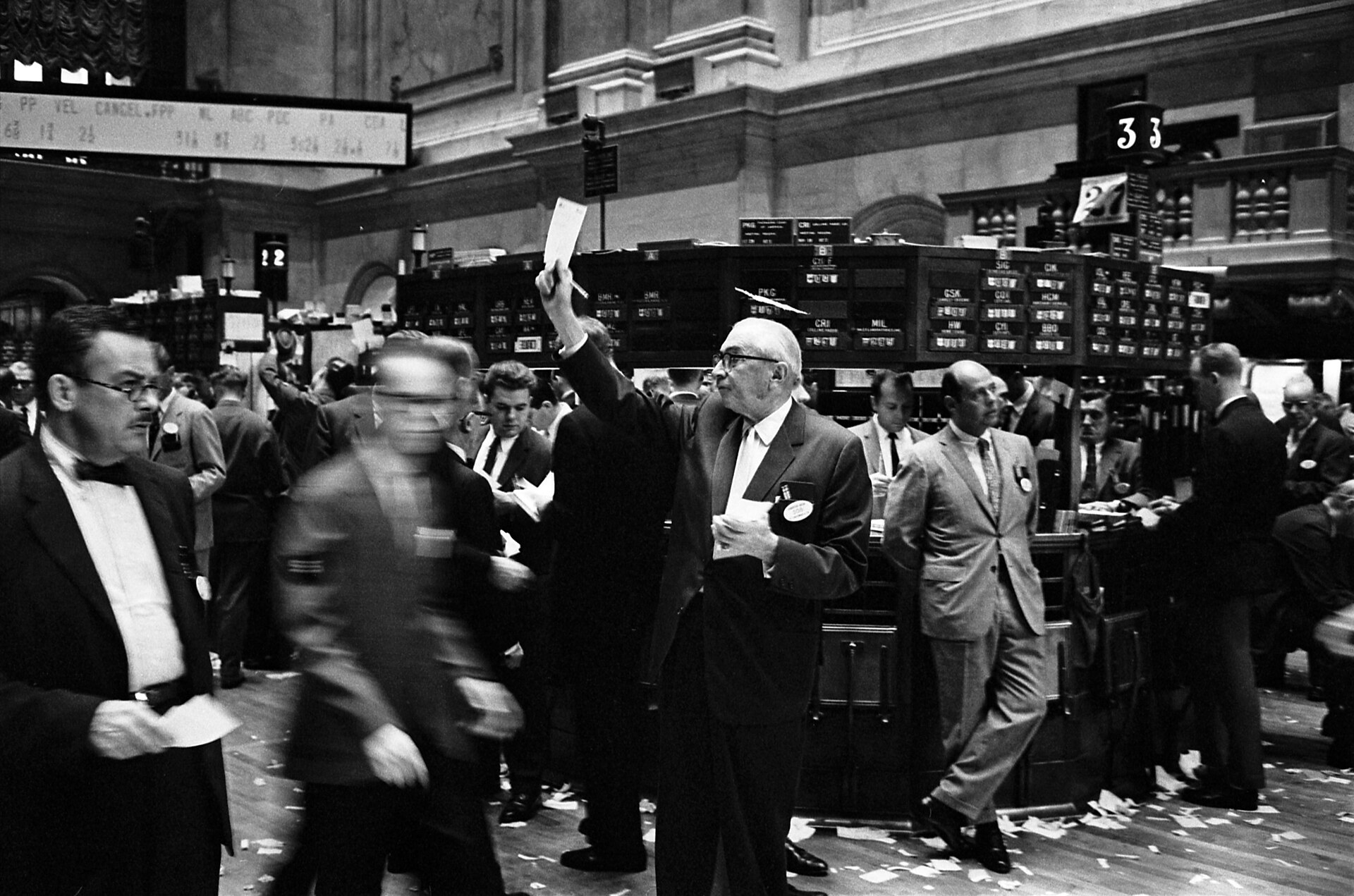
Your order then goes to a stock exchange, such as the New York Stock Exchange or Nasdaq, where it matches with a seller. The Daily Mirror describes the mechanics simply: trades match electronically, and prices update in real time based on market activity. In the United States, the NYSE typically opens at 9:30 AM and closes at 4:00 PM Eastern Time.
Size, style, and what they signal
Stocks get grouped by company size and investment style. Large companies are called large-cap stocks and are generally more stable. Smaller companies are called small-cap stocks, and while they can grow faster, they also come with more risk, the Stillman Exchange explains.
There are also growth stocks, expected to increase quickly, and value stocks, seen as undervalued and possibly due to rise over time.
These labels describe tendencies, not guarantees. A large company can still fall hard. A small company can still grow steadily.
A few common metrics help compare companies. Earnings per share, or EPS, is the profit attributable to each share. The price-to-earnings ratio, or P/E, compares the share price with earnings.
Market capitalisation is the total value of all a company's shares. Bitpanda Academy warns that no single metric tells the whole story, and advises reading the company's official reports before deciding. ## The risks that come with ownership

Owning a share means sharing the downside too. If a company performs badly or faces serious financial problems, the value of your shares can drop. In the worst case, shares can become worthless if the company goes bankrupt.
In such situations, ordinary shareholders are the last to get paid, the Daily Mirror warns.
That pecking order is the part beginners most often miss. Lenders get paid first. Bondholders and preferred shareholders come ahead of common shareholders.
Common beginner mistakes compound the risk. The Daily Mirror lists panic selling when prices drop, relying on tips from friends or social media, and putting too much money into shares of one company. Another frequent error is buying shares without knowing what the company does or how it earns money.
FAQ
Do I own part of the company if I buy one share?
Yes. One share makes you a shareholder with a fractional claim on the company's profits and assets, plus voting rights for common stock.
What is the difference between a stock and a share?
In everyday use, the two words mean the same thing. Stock usually refers to ownership in general, while a share refers to a single unit of that ownership.
Do all stocks pay dividends?
No. Some companies pay regular dividends. Others reinvest all profits into growth and pay nothing.
Dividends are never guaranteed, even from companies that have paid them for years.
Can a stock go to zero?
Yes. If a company fails and its assets do not cover its debts, common shares can become worthless. Ordinary shareholders are paid last in a wind-down.
The bottom line
A stock is ownership, not a lottery ticket. Buying one share makes you a part-owner of a real business, with a claim on its profits, a vote in its big decisions, and a place at the back of the line if it fails. Prices move with supply and demand, driven by company results, the economy, and expectations.
Start by understanding the business, keep your bets spread out, and remember that the owner mindset, patient, informed, and skeptical of tips, beats the gambler mindset every time. If you are new to the wider picture, our explainer on the difference between saving and investing is a useful next read.
Tags: stocks, shares, investing basics, ownership
Latest in Finance
- How a credit card grace period can save you money
- Buy now, pay later and your money
- The difference between saving and investing
- What beginners hear about index funds
Subscribe for one practical personal finance guide in your inbox each week.
Related stories

How your APR is divided by 365 to get daily interest
Lenders divide your APR by 365 for a daily rate, then apply it to your average daily balance. This guide walks through every step

What is the difference between APR and effective annual rate?
APR ignores compounding inside the year; the effective annual rate includes it. A 12.99% APR card really costs 13.80% a year. Worked

APY vs interest rate: what compounding does to your money
APY includes compounding; the interest rate does not. A 5% rate compounded monthly is really 5.12% APY. Here is how the math works and what