
Why Beginners Get Stronger Fast Without Visible Muscle Gains
Key takeaways
- Beginners often gain most of their early strength in the first 4 weeks, before any measurable muscle growth appears.
- The driver is neural adaptation: the nervous system learns to recruit more muscle fibres and fire them faster.
- Visible growth comes later; consistent progressive overload converts early neural gains into lasting size.
New lifters have a familiar experience. In the first month of training, the weights on the bar climb quickly, sometimes week to week, while the mirror shows almost nothing. Friends who start later catch up fast, then everyone plateaus together.
This is not an illusion, and it is not water weight. It is your nervous system learning to use the muscle you already have. Researchers call the process neural adaptation, and it explains the bulk of early strength gains.
This article looks at why beginners get stronger fast without visible muscle, including the landmark 1979 study that split neural gains from muscle growth, the four mechanisms behind the effect, and when the mirror finally starts catching up.

The first weeks are a nervous-system workout
In 1979, researchers Toshio Moritani and H. A. deVries published a study that has shaped strength science ever since.
They put volunteers through an 8-week resistance-training program and tracked two things separately: electrical activity in the muscles (a rough measure of neural drive) and arm size (a measure of hypertrophy).
During the first 4 weeks, strength rose sharply while muscle size barely moved. The electrical signals, however, grew stronger in step with the strength gains.
After roughly the first 3 to 5 weeks, the pattern flipped: muscle growth took over as the bigger contributor to further strength increases. Their paper appeared in the American Journal of Physical Medicine, volume 58, pages 115 to 130.
A 2021 review in the European Journal of Applied Physiology summed up the consensus four decades later: the initial increases in force production, meaning the first 2 to 4 weeks, are thought to be primarily underpinned by neural adaptations. Muscle morphology changes arrive later and then carry the gains forward.
Four ways your brain makes you stronger
Neural adaptation is an umbrella term for several changes in how the nervous system drives muscle. Four of them matter most for beginners.
First, better motor unit recruitment. A motor unit is one nerve cell plus all the muscle fibres it controls. Untrained people leave many of their motor units switched off during a hard lift.
Training teaches the nervous system to switch on more of them at once, which means more fibres pulling on the same bar.
Second, faster firing, known as rate coding. Nerves signal muscles with electrical pulses. The faster those pulses arrive, the harder the muscle contracts.
Early training raises firing rates, so the same muscle produces more force.
Third, cleaner coordination. Big lifts are skills. In the first weeks, the squat, bench press, and deadlift get smoother as the nervous system learns the movement pattern, wasting less effort on wobble and mistiming.
A proper warm-up helps this learning along by rehearsing the pattern before heavy sets.
Fourth, less braking from opposing muscles. When you push, the muscles on the other side of the joint naturally resist a little. Training reduces this co-contraction, so more of your effort goes into the lift instead of fighting yourself.
Why one arm can teach the other
The most elegant proof that early gains are neural is the cross-education effect. When you train only one limb, the untrained limb on the other side gets stronger too, by roughly 10 to 30%, even though it never lifted a thing and grew no new muscle.
Moritani and deVries observed this in their 1979 work, and earlier studies by Komi and colleagues found the same pattern. Since nothing changed in the untrained muscle itself, the improvement has to come from the nervous system. It learned a better motor program on the trained side and shared part of it with the other side.
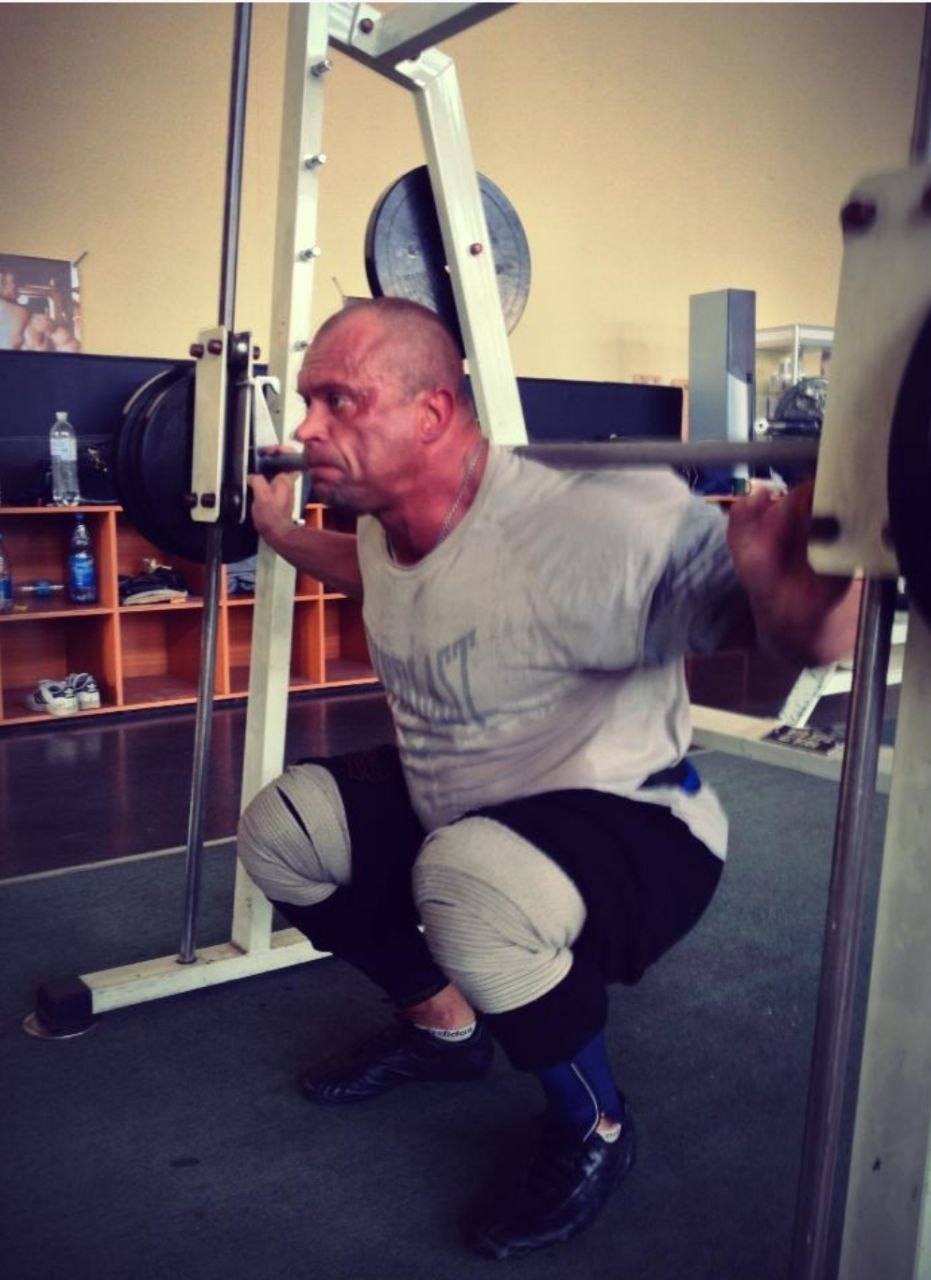
This is also why beginners should not judge a program by the mirror. Some people build muscle faster than others, but in the first month the meaningful progress is invisible: heavier weights, cleaner reps, less shaking under the bar. Those are neural gains, and they are real gains.
When the mirror starts catching up
After the first month or so, muscle growth becomes the dominant driver of strength. The nervous system has picked most of the low-hanging fruit, and further progress requires more contractile tissue.
A classic study by Keijo Häkkinen and colleagues, published in 1985, shows the handoff clearly. They put experienced lifters through 24 weeks of heavy training. Strength rose 27% across the program, but muscle fibres only grew during the first 12 weeks.
In the second 12 weeks, gains tracked increases in neural activation instead. The two systems trade the lead back and forth throughout a training career.

For the beginner, the practical message is simple. Expect fast strength gains and slow visible change in month one. Expect visible change to start arriving in months two and three if training and eating stay consistent.
If the legs feel heavy during a run or weights feel stuck, that is usually fatigue or programming, not a sign that neural adaptation has stopped working.
Frequently asked questions
How fast do beginners gain strength?
Research suggests the steepest gains come in the first 4 to 8 weeks and are mostly neural. Doubling the weight on a beginner lift in the first two months is common and does not require any measurable muscle growth.
Will I look different in the first month?
Probably not much. Measurable hypertrophy typically becomes visible after 6 to 8 weeks of consistent training. The scale and the barbell will move before the mirror does.
Does this mean beginners should train differently?
Not really. The same progressive overload that builds muscle also drives neural adaptation. Focus on learning clean technique on compound lifts, add a little weight regularly, and sleep enough. The nervous system adapts fastest when the movement pattern stays consistent.
Do neural gains ever stop?
They slow down but continue. Experienced lifters still refine recruitment and coordination, which is one reason strength can keep rising even when muscle growth stalls. Technique work and heavy singles keep feeding this pathway.
The bottom line
Beginners get stronger fast without visible muscle because the first month of training is mostly a nervous-system upgrade: more motor units recruited, faster firing, cleaner technique, and less self-braking. The landmark research dates to 1979 and still holds.
Train consistently, add weight gradually, and let the visible growth arrive on its own schedule. Your elevated heart rate after exercise is just your body doing the paperwork.
Image Credits: Wikimedia Commons / Nenad Stojkovic, Олександр Єрмоленко
Latest in Fitness
- How Warming Up Actually Prepares Your Muscles
- Why Some People Build Muscle Faster Than Others
- Why Your Legs Feel Heavy During a Run
- Why Your Heart Rate Stays Elevated After Exercise
Subscribe to the Rive News newsletter for one practical training tip every week.
Related stories

How long does it really take to build noticeable muscle?
Strength gains start in week one, but visible muscle takes 8-12 weeks for most beginners. What the Oklahoma CT-scan study measured,

Why you feel dizzy after a workout: the 5 common causes
Post-workout dizziness usually comes from a blood pressure dip, dehydration, or low blood sugar. The numbers behind each cause, and when
Why Do Knees Hurt When Squatting but Not Running?
Knees hurt when squatting but not running because deep bends multiply force on the kneecap. Learn the mechanics, common causes, fixes,