
Why Do Your Legs Feel Heavy During a Run?
Key takeaways
- Heavy legs during a run usually come from muscle fatigue, low fuel, dehydration, or a skipped warm-up.
- Muscle glycogen stores cover about 90 minutes to two hours of running before fatigue sets in.
- Heavy legs that come with pain, swelling, or one-sided symptoms deserve a prompt check by a clinician.
Heavy legs feel like running with weights strapped to your calves. Each step takes more effort than it should, your pace slips, and the run turns into a grind. The sensation is common, and most of the time it has a simple explanation.
This article explains what heavy legs mean, including muscle fatigue and fuel, warm-up and form, hydration and nutrients, and when heaviness signals something more serious.

What heavy legs feel like
Runners describe heavy legs as achy, tired, crampy, or stiff. Healthline lists those same words for people with heavy legs in general, and adds that the feeling can come with swelling, a bumpy look from varicose veins, or skin that heals slowly. During a run, the most common version is simpler: the legs feel dead, sluggish, and unwilling to turn over.
The feeling can arrive at different points. Some runners feel it in the first ten minutes, which often points to a poor warm-up or a hard session the day before. Others feel it late in a long run, which often points to fuel running low.
Where it shows up in the run is a useful clue about the cause.
Muscle fatigue and fuel
Every footstrike sends a wave of impact through the legs. Over thousands of repetitions, micro-damage to muscle fibers adds up, and the muscles must work harder to stabilize. CEP Running names muscle fiber damage, glycogen depletion, and accumulated impact as the three drivers of heavy legs in a marathon.
Glycogen is the stored form of carbohydrate in muscle, and the tank is limited. CEP Running puts the limit at about 90 minutes to two hours of running. After that, the body shifts toward burning fat, a slower fuel source.
That is when legs can feel twice as heavy as they did at the start.
Fueling during the run pushes that point later. CEP Running advises starting carbohydrate intake by mile 4 to 5 and continuing every 30 to 45 minutes, aiming for 30 to 60 grams of carbohydrates per hour. Gels, chews, and sports drinks all count.
The plan must be practiced in training, not tried for the first time on race day.
Pacing matters too. CEP Running warns that going out even 10 to 15 seconds per mile too fast creates a large fatigue debt in the second half. Running the first half at a controlled, almost easy pace keeps the legs fresher for longer.
Warm-up, form, and shoes
Skipping the warm-up is one of the fastest ways to get heavy legs. Ankle and Foot MD explains that without a warm-up, leg muscles take on stress before they are ready, and without enough oxygenated blood they must work harder to perform. Aaptiv trainer Jaime McFaden advises warming up joints and muscles with a brisk walk and leg swings before heading out.
Form breaks down as fatigue grows. McFaden says that when runners get tired, they can compromise form, and legs can feel sore or an injury can follow. Daniel Giordano, a doctor of physical therapy and co-founder of Bespoke Treatments in New York City, advises staying light on the feet and keeping the feet under the body when striking the ground.
Overstriding, where the foot lands far ahead of the body, is more stressful on the legs and makes muscles tire faster.
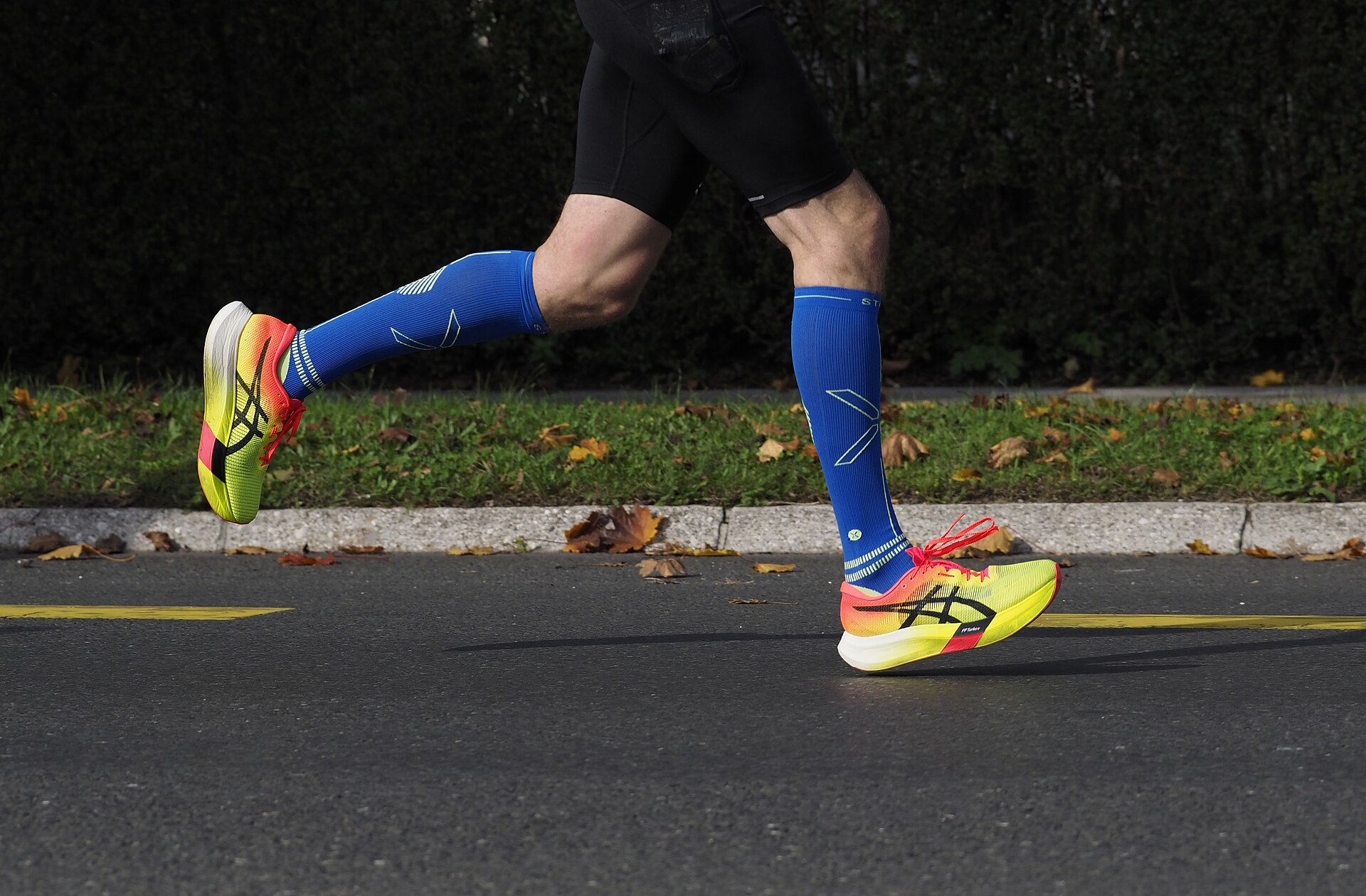
Shoes can add to the problem. Giordano says, "If your trainers are too heavy, your legs can feel heavy." He adds that a shoe without enough support or cushion could lead to excess stress on the joints, causing fatigue.
A visit to a running store with a treadmill gait check can help match a shoe to a runner's arches, sole, and pronation.
Dehydration and nutrients
Dehydration thickens the problem. Ankle and Foot MD notes that dehydration costs the body electrolytes through sweat and reduces blood volume, which makes it harder for muscles to get the oxygen they need. Giordano puts it the same way: when you are dehydrated, blood volume may deplete and lead to fatigue.
Iron matters because it is essential for producing hemoglobin, the part of the red blood cell that carries oxygen. Ankle and Foot MD explains that being iron deficient can make it harder for leg muscles to get the oxygen they need from the bloodstream.
Giordano says a lack of iron can mean a lack of hemoglobin, which can lead to a lack of oxygen to the muscles.
McFaden stresses that fueling extends beyond race day. She says runners must have enough nutrients in their bodies for long runs.
Her warning is plain: without hydration, the body burns out fast, and the same goes for nutrition.
A runner who eats and drinks well all week starts each run with a fuller tank than one who only thinks about fuel on long-run day.
Training load and recovery
Heavy legs are a common complaint in athletes, particularly runners and cyclists, according to Healthline. The cause is often overreaching: pushing a little harder than the body can handle day after day, without giving muscles time to repair. This is the core of overtraining syndrome, where heavy legs arrive alongside other health problems.
Strength training helps. CEP Running recommends two strength sessions per week during base building, with squats, lunges, single-leg deadlifts, and calf raises. McFaden agrees, saying she always includes strengthening exercises in workout routines and advises adding squats, lunges, and burpees.
Stronger legs fatigue more slowly.
Planned walk breaks also help. CEP Running notes that walk breaks of 15 to 30 seconds at aid stations give muscles brief recovery windows without slowing overall pace much.
Running easy miles the day after a long run, a shakeout run, teaches the body to keep moving on depleted muscles.

When heavy legs signal something more
Most heavy legs during a run are a training or fueling problem. A few patterns point to something that needs medical attention. Healthline lists varicose veins, peripheral artery disease, lumbar spinal stenosis, and restless legs syndrome among the conditions that can cause heavy legs.
Up to 73 percent of people around the world have varicose veins, according to Healthline, and they occur more often in women than in men.
Giordano warns that nerve issues such as peripheral neuropathy can cause a heaviness feeling in the legs, and that arthritis can have the same effect because surrounding muscles overcompensate. If heaviness comes with one-sided pain or swelling, skin color changes, sores that heal slowly, numbness, or chest symptoms, get checked promptly rather than running through it.
Healthline also notes a simple self-care step for circulation-related heaviness: elevating the legs about 6 to 12 inches above the heart can help pooled blood drain back toward the rest of the body. Compression stockings or socks can help promote blood flow as well. These are supports, not substitutes for a diagnosis.
What to do before your next run
A short checklist covers most cases of heavy legs. Warm up with a brisk walk and leg swings. Start the run at a comfortable pace and keep the stride under the body.
Drink through the day, not only during the run. Eat enough, and take fuel on runs longer than about 90 minutes. Keep two strength sessions in the weekly plan.
If legs feel heavy in the first few minutes, check the warm-up and the previous day's training before blaming fitness.
If heavy legs keep returning despite rest, fuel, and easier pacing, or if they come with pain, swelling, or one-sided symptoms, talk to a clinician. This article is for general information, not medical advice.
Why do my legs feel heavy at the start of a run?
Early heaviness often means a skipped warm-up, a hard session the day before, or sitting all day before the run. A brisk walk, leg swings, and an easy first mile usually clear it.
Why do my legs feel heavy late in a long run?
Late heaviness usually means glycogen running low plus accumulated muscle damage. Fuel with 30 to 60 grams of carbohydrates per hour, start early, and pace the first half conservatively.
Can shoes cause heavy legs?
Yes. Shoes that are too heavy or lack enough support or cushion can add stress to joints and make legs feel heavy. A gait check at a running store can help find a better match.
Should I run through heavy legs?
Mild heaviness from fatigue often eases with an easier pace or a walk break. Stop and get checked if heaviness comes with pain, swelling, numbness, one-sided symptoms, or skin color changes.
Outlook
Heavy legs are a signal, not a verdict. Most of the time they mean the muscles are tired, the fuel tank is low, or the warm-up was skipped. Fix the inputs, give the legs time to recover, and the feeling usually lifts.
When it does not lift, or when warning signs appear, a clinician can sort out whether circulation, nerves, or joints are involved.
Tags: running, heavy legs, leg fatigue, running form
Latest in Fitness
- How to Get a Stitch in Your Side While Running
- How to Start Strength Training Safely After 40
- Walking Versus Running for Fat Loss
- How to Warm Up Properly in 5 Minutes Before a Gym Session
- How to Recover Faster After a Hard Workout
Subscribe for one clear fitness explainer each week.
Related stories

How long does it really take to build noticeable muscle?
Strength gains start in week one, but visible muscle takes 8-12 weeks for most beginners. What the Oklahoma CT-scan study measured,

Why you feel dizzy after a workout: the 5 common causes
Post-workout dizziness usually comes from a blood pressure dip, dehydration, or low blood sugar. The numbers behind each cause, and when

Why Do Knees Hurt When Squatting but Not Running?
Knees hurt when squatting but not running because deep bends multiply force on the kneecap. Learn the mechanics, common causes, fixes,