
How to Start Strength Training Safely After 40
Key takeaways
- Two full-body strength sessions per week cover the major muscle groups for most healthy adults over 40.
- Start light, keep two or three good reps in reserve, and progress slowly to protect joints and tendons.
- Consistency beats complexity, and a simple plan you keep doing wins over a perfect plan you quit.
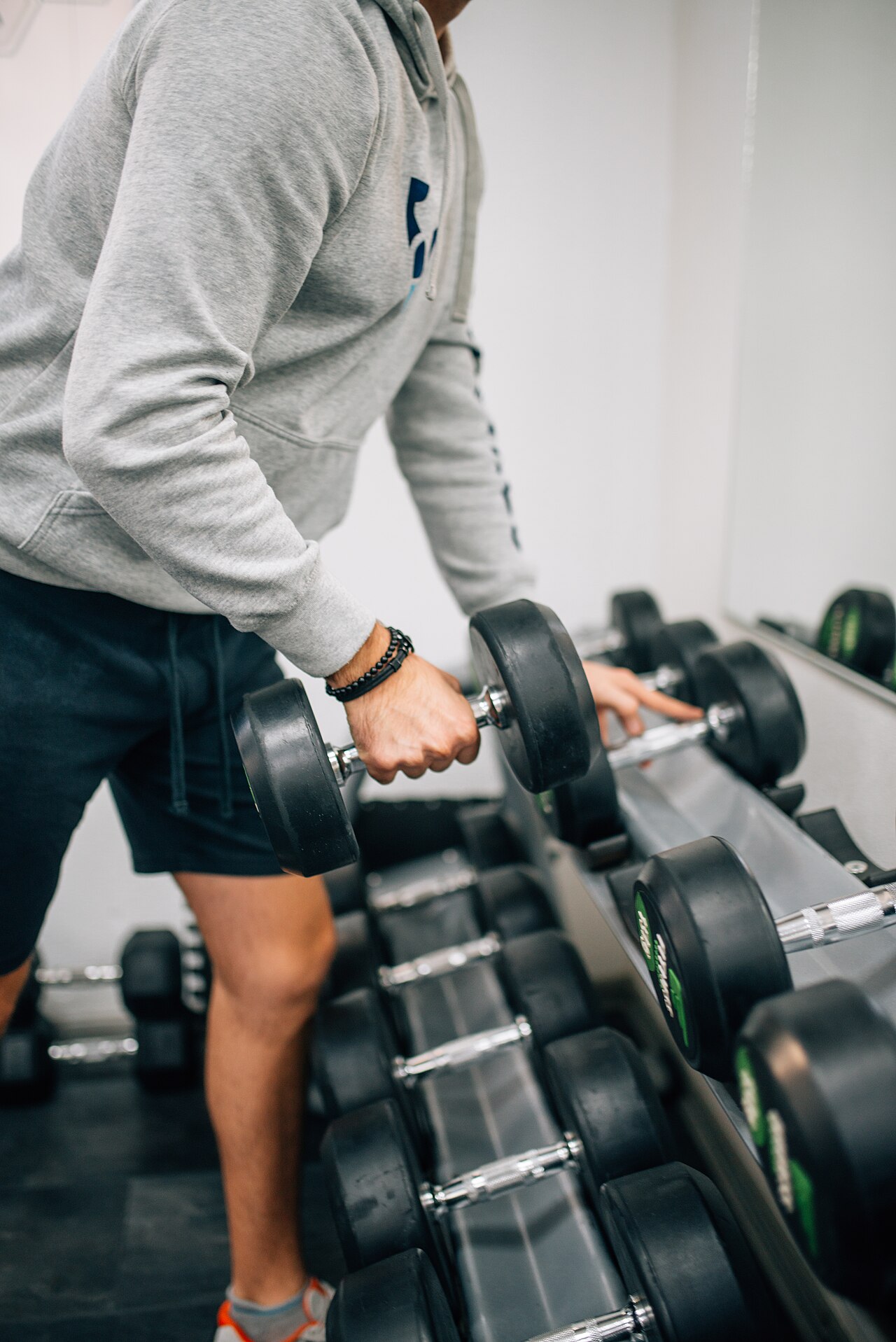
Strength training after 40 is one of the most useful habits a person can build. It supports muscle, bones, balance, and the strength needed for daily tasks like climbing stairs or carrying groceries. It does not require heavy lifting from day one, and it does not require a perfect program.
This article explains how to start strength training safely after 40, including how often to train, which movements to use, how hard to push, and how to progress. It follows current public guidance, including the American College of Sports Medicine (ACSM) position stand released in March 2026 and the CDC's physical activity guidance.
Why strength training matters more after 40
Muscle and strength decline with age when left untrained. That loss shows up in small ways first: a heavy bag feels heavier, a staircase feels longer, a jar lid feels tighter. Training reverses that drift by giving muscles a reason to stay strong.
Strength is a reserve. The stronger you are, the more margin you have between what daily life demands and what your body can deliver.
The CDC notes that physical activity supports both physical and mental health, and calls it one of the most important things a person can do for their health.
What the current guidance says
The CDC's Physical Activity Guidelines for Americans call for adults to do muscle-strengthening activities on at least 2 days per week, alongside 150 minutes of moderate-intensity aerobic activity. The CDC also says to work all the major muscle groups: legs, hips, back, chest, abdomen, shoulders, and arms.
The 2026 ACSM position stand, titled Resistance Training Prescription for Muscle Function, Hypertrophy, and Physical Performance in Healthy Adults, reviewed 137 systematic reviews covering more than 30,000 adults. Its core finding was encouraging: many different programs worked, and the biggest gains came from going from no training to some training.
ACSM's main recommendation is to train all major muscle groups with a high level of effort at least twice per week. For beginners over 40, that translates to two full-body sessions per week, with exercises chosen for the person's health, experience, and limits.
Get cleared before you start
Most healthy adults can start with light strength work. The CDC advises talking with a doctor first if you have a chronic condition such as heart disease, arthritis, or diabetes. It also advises checking in before vigorous activity if you have been inactive, have a disability, or have overweight.
That check matters more after 40, because blood pressure, joint issues, and old injuries are more common. A short visit can confirm which movements are fine, which need care, and whether any symptoms should stop a session.
Stop a session and seek care for chest pain, severe shortness of breath, dizziness, fainting, or sudden joint pain. Those symptoms are not part of normal training. Soreness the next day is common, but sharp pain during a lift is a signal to stop.
The six movement patterns to cover
A simple full-body session covers six patterns. You do not need a separate exercise for every muscle. Pick one exercise per pattern, and you have a complete workout.
The patterns are squatting, hip-dominant movement, upper-body pushing, upper-body pulling, carrying or core stability, and balance or power. A squat can be a bodyweight sit-to-stand from a chair. A hip movement can be a glute bridge or a light deadlift pattern.
A push can be a wall push-up or a dumbbell press. A pull can be a band row.
A carry can be a farmer carry with two light weights. Balance work can be a single-leg stand near a wall.
Start with movements you can perform with control. If a movement hurts a joint, swap it for a pain-free version rather than pushing through. A machine, a band, or a bodyweight version of the same pattern still trains the same muscles.
How hard should each set feel
Beginners often ask whether they must train to failure. The ACSM review found that taking every set to complete failure did not consistently improve strength or muscle growth compared with stopping before failure. For most adults, a set that ends with about two or three good repetitions left is enough.
That rule protects form. The last reps of a set are where technique breaks down, and broken technique is where injuries happen. If you finish a set and feel you could have done two or three more clean reps, you trained at the right effort.
The CDC offers a matching yardstick: do muscle-strengthening activities to the point where it is hard to do another repetition without help, with 8 to 12 repetitions per set. Beginners can start below that effort and build toward it across the first few weeks.
A simple first-week plan
Two sessions per week, with at least one rest day between them, is a sound start. Each session can run 30 to 45 minutes, including a warm-up and a cool-down. Leave two days between sessions at first if soreness runs high.
Warm up for 5 minutes with easy movement: walking, gentle cycling, or marching in place. Then do one set of each chosen exercise at a light load to rehearse the movement.
For the working sets, do 1 to 2 sets of 8 to 12 repetitions per exercise. Rest 60 to 90 seconds between sets at first.
Finish with 5 minutes of easy walking and gentle stretching for the muscles you trained.
A sample week looks like this. Monday: full-body session one. Tuesday: a walk or easy cardio.
Wednesday: rest or light mobility. Thursday: full-body session two.
Friday: a walk. Saturday and Sunday: rest or light activity.
How to progress without overdoing it
Progress comes from small, steady increases. Add a little load, one or two reps, or one extra set when the current work feels easy. Change only one variable at a time, so you can tell what caused any soreness or joint irritation.
Muscles adapt faster than tendons and joints. That gap is the main reason beginners get hurt.
A weight that feels easy for the muscles can still stress a tendon that has not caught up. Slow progress respects that gap.
A useful rule is the 10 percent check. If you can complete all sets and reps with clean form and two reps in reserve, add a small amount of load next session, often about 5 to 10 percent for upper-body moves and a little more for leg moves.
Track every session in a notebook or phone note.
Equipment: what you actually need
You do not need a gym to get stronger. The ACSM review found benefits from free weights, machines, resistance bands, bodyweight exercises, circuit training, and home-based programs. Machines were not consistently better or worse than free weights.
Bands and bodyweight work suit many beginners. Bands cost little, store easily, and let you adjust resistance by changing the band or the grip. Bodyweight moves like squats, push-ups, and glute bridges train real strength with no equipment at all.
If you join a gym, machines can help. They guide the movement path and make loading simple.
Free weights add a balance challenge that machines skip.
Power and balance deserve a slot
Strength is force. Power is force applied quickly.
Power shows up when you stand up fast, catch yourself after a stumble, or climb a step with speed. The ACSM review found power work enhanced by moderate resistance, roughly 30 to 70 percent of a one-repetition maximum, with an intent to move quickly on the lifting phase.
Safe power work for beginners stays low impact. A sit-to-stand done with fast intent, a medicine-ball throw, or a light step-up fits the bill.
Balance work pairs with power. The CDC lists walking backward, standing on one leg, and using a wobble board as balance activities.
Balance training lowers fall risk, which matters more with every passing decade.
Common mistakes after 40
Waiting for the perfect program is the first mistake. No single program suits everyone, and delay costs more than a flawed first week. A safe, simple routine started now beats a perfect routine started next month.
Doing too much too soon is the second. Extra sets, extra days, and heavy loads in week one create soreness that kills week two.
Skipping recovery is the third. Muscles need rest between sessions, and sleep matters for repair. Two hard sessions with rest between them beat four sessions stacked on tired legs.
Ignoring pain is the fourth.
Sharp joint pain, pinching, or pain that grows across sessions is not. Swap the movement, lower the load, or get the joint checked.
FAQ
How often should I strength train after 40?
Two full-body sessions per week is a sound start for most healthy adults. The CDC recommends muscle-strengthening activity on at least 2 days per week, and ACSM recommends training all major muscle groups at least twice weekly. Add a third session only after several consistent weeks.
How heavy should I lift as a beginner?
Pick a load that lets you finish 8 to 12 reps with clean form and two or three good reps left.
Do I need to feel sore for a workout to count?
No. Soreness is not a measure of progress.
The ACSM guidance is clear that excessive fatigue and soreness can hurt consistency.
Is strength training bad for joints after 40?
Controlled, progressive training supports joints rather than harming them. Stronger muscles stabilize joints and take load off them. Pain during a lift is a signal to change the movement or load, not a normal part of training.
How long before I see results?
Strength often improves within 2 to 4 weeks, mostly because the nervous system learns the movements. Visible muscle change takes longer, usually 8 to 12 weeks of steady training. Consistency across months matters more than any single workout.
Outlook
Start with two sessions, six patterns, and loads that leave reps in reserve. Add a little each week, track every session, and give joints time to adapt. If a health condition, an old injury, or new pain complicates the plan, talk with a doctor or a qualified trainer before pushing further.
Strength after 40 is not about reclaiming youth. It is about building a body that handles daily life with margin to spare. That margin grows one careful session at a time.
This article is for general information, not medical advice.
Tags: strength training, fitness after 40, muscle, exercise
Latest in Fitness
- How to warm up properly in 5 minutes before a gym session
- How to recover faster after a hard workout
- Walking vs running for fat loss
- Why legs feel heavy during a run
Subscribe for one practical fitness explainer each week.
Related stories

How long does it really take to build noticeable muscle?
Strength gains start in week one, but visible muscle takes 8-12 weeks for most beginners. What the Oklahoma CT-scan study measured,

Why you feel dizzy after a workout: the 5 common causes
Post-workout dizziness usually comes from a blood pressure dip, dehydration, or low blood sugar. The numbers behind each cause, and when

Why Do Knees Hurt When Squatting but Not Running?
Knees hurt when squatting but not running because deep bends multiply force on the kneecap. Learn the mechanics, common causes, fixes,