
Why you breathe harder exercising at high altitude
By Rive News / Research desk | Rive News / Published October 28, 2026 at 9:00 AM PKT
This article is for general information only and is not medical advice; talk to a clinician about any symptoms.
Key takeaways
- Air at altitude still holds 20.9 percent oxygen, but lower pressure delivers less per breath.
- Sensors in the blood detect falling oxygen and drive faster, deeper breathing.
- Acclimatization over days to weeks eases the strain by adding red blood cells.
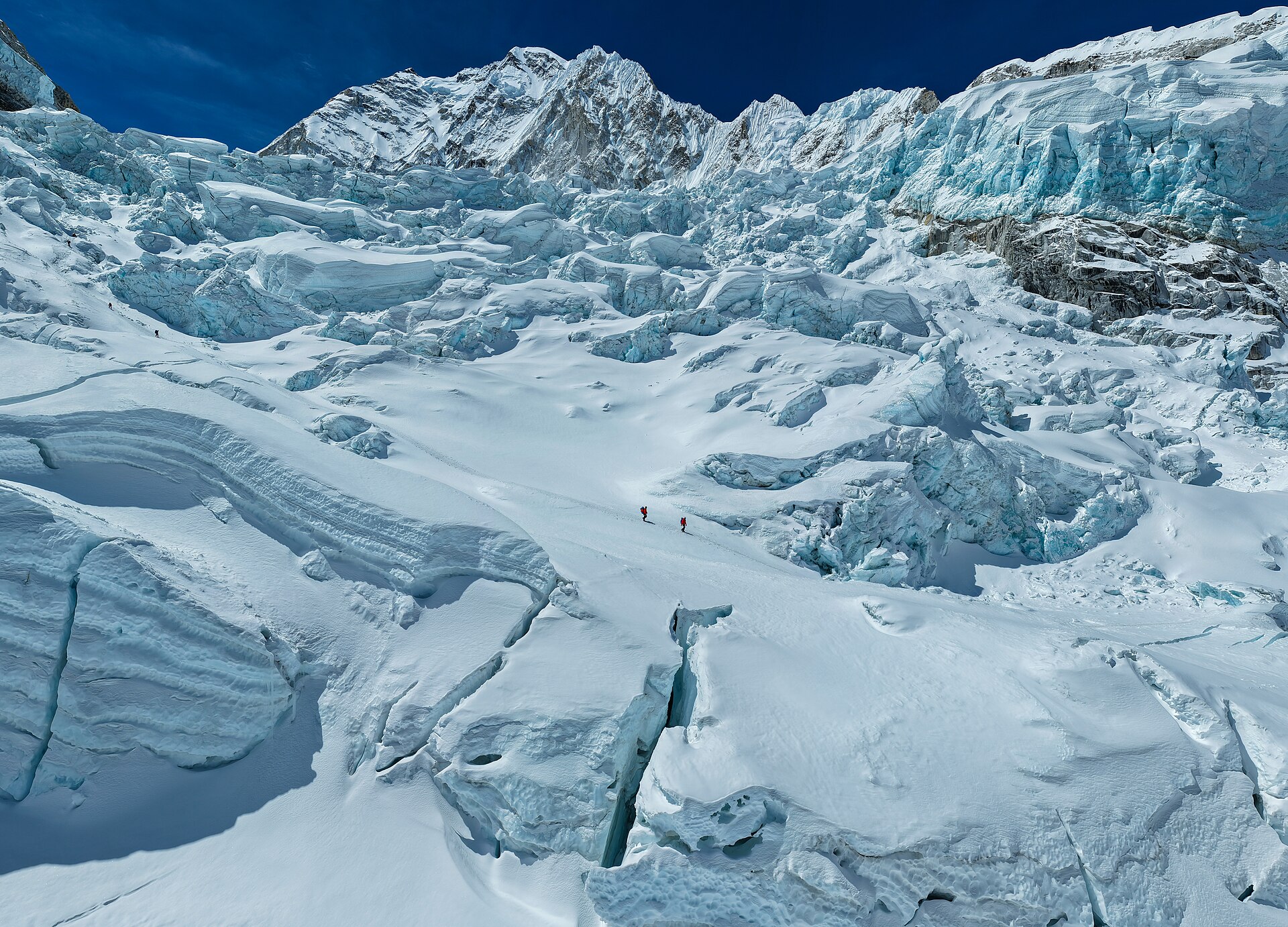
[Two mountaineers crossing the Khumbu Icefall work in thin air where every breath carries less oxygen.] Photograph: mountaineers in the Khumbu Icefall
Image Credits: Wikimedia Commons
A familiar run feels strangely hard on a mountain holiday. The legs are the same, the pace is slower, yet breathing feels desperate within minutes. The air looks the same and smells the same, so the change is easy to miss.
What changed is pressure, and pressure decides how much oxygen each breath actually delivers. This article explains the pressure drop, the body's immediate response, and the slower adaptations, including faster breathing, red blood cells, and acclimatization, that follow over days and weeks.
The air is not missing oxygen
A common misunderstanding is that high-altitude air contains less oxygen as a percentage. It does not. Air holds about 20.9 percent oxygen at sea level and the same percentage on top of Mount Everest.
What falls with altitude is total air pressure, and with it the partial pressure of oxygen.
Partial pressure is the share of total pressure contributed by one gas. At sea level, the full weight of the atmosphere presses oxygen molecules close together, so each breath packs in many of them. Higher up, the air is thinner because there is less atmosphere above.
The same 20.9 percent of a smaller total means fewer oxygen molecules per breath.
The numbers show how steep the drop is. Primary Care Notebook reports that on Mont Blanc, at 4,260 metres, oxygen partial pressure is roughly half that at sea level. On Everest, at 8,850 metres, it is roughly one third.
A runner at Mont Blanc altitude must move roughly twice as much air to take in the same oxygen as at sea level, before exercise even begins.
Why exercise makes the gap obvious
At rest, the body has slack. Breathing a little faster can cover a modest oxygen shortfall, and many people feel fine sitting at moderate altitude. Exercise removes that slack.
Working muscles demand far more oxygen per minute, and the lungs must meet that demand with thinner air.
Haemoglobin, the molecule that carries oxygen in red blood cells, also becomes harder to load. The oxygen-haemoglobin curve is S-shaped, so saturation stays fairly steady at first and then falls rapidly once pressure drops past a threshold. Primary Care Notebook notes that the sharp fall begins around 3,048 metres.
Above that height, aerobic capacity drops fast: an unacclimatised person at 4,300 metres faces about a 32 percent reduction in aerobic capacity.
Heart rate rises alongside breathing, because the heart must pump the thinner oxygen supply faster to meet demand. That is why a hill that feels moderate at sea level can leave a fit person gasping at altitude. The engine is fine.
The fuel delivery is thinner.
The sensors that drive harder breathing
The body detects the shortfall with peripheral chemoreceptors, sensors in the neck and chest that monitor oxygen in the blood. When arterial oxygen falls, these sensors fire more strongly and tell the brainstem to increase both breathing rate and depth. This response is called the hypoxic ventilatory response, and its strength varies between people.
A vigorous response helps acclimatization succeed.
Faster breathing does more than bring in oxygen. It also blows off carbon dioxide, which lowers blood acidity and produces a state called respiratory alkalosis. That alkalosis initially acts as a brake on further breathing increases.
The kidneys then compensate over days by excreting bicarbonate, letting blood pH drift back toward normal and allowing breathing to rise further. WikEM notes that this ventilatory acclimatization process reaches its maximum within 4 to 7 days at a given altitude.
This sequence explains why the first day at altitude feels worst. Breathing is already faster, but the brake is still on. A few days later, breathing is faster still, yet it feels less desperate because the body has adjusted its chemistry to allow it.
What acclimatization adds over weeks
Breathing harder is only the first adaptation. Over days and weeks, the kidneys release erythropoietin, or EPO, a hormone that stimulates the bone marrow to make more red blood cells. WikEM reports that EPO begins to rise within 2 days of ascent, though red cell mass takes days to weeks to increase significantly.
More red blood cells mean more haemoglobin carriers, so each litre of blood can transport more oxygen.
Muscles adapt too. Capillary density increases, improving oxygen delivery to muscle fibres, and mitochondria, the structures that use oxygen to make energy, become more numerous and efficient. The Front Climbing Club notes that these changes, together with extra red blood cells, gradually ease the symptoms that make altitude uncomfortable.
People who live permanently at high altitude often develop larger chest sizes and greater lung surface area as well.
Sleep is often the hardest part of acclimatization. Oxygen levels dip further during sleep, and the cycle of faster breathing and pauses can fragment rest. Poor sleep worsens fatigue and headache the next day, which is one reason the altitude where you sleep matters more than the altitude you reach during the day.
The usual guidance is to sleep no more than about 1,000 feet higher each night once above 10,000 feet.
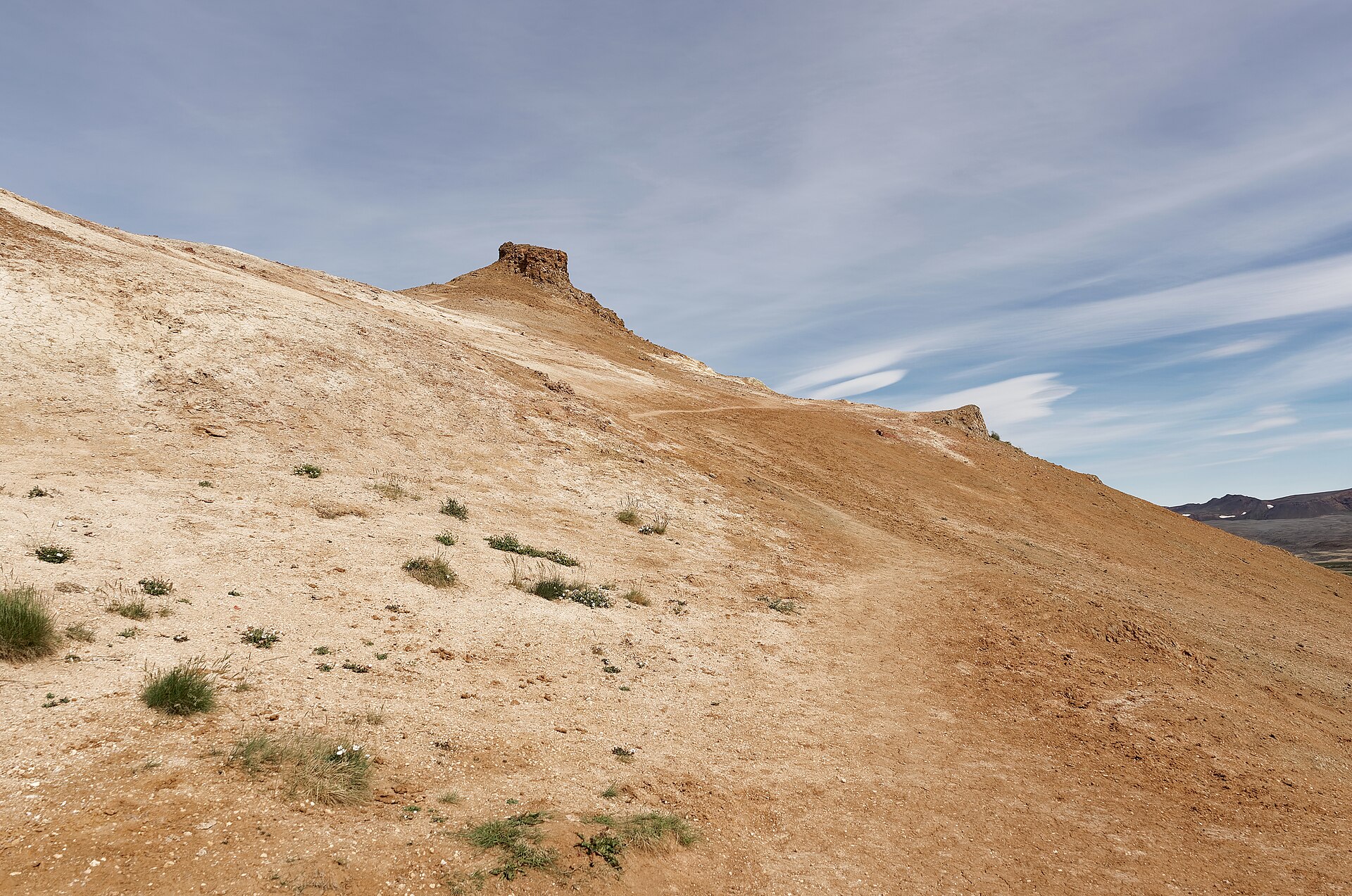
[A high mountain hiking trail shows the terrain where acclimatization matters most for walkers and runners.] Photograph: a mountain hiking trail
Image Credits: Wikimedia Commons
Why some people struggle more
Individual variation is large. Some people have a strong hypoxic ventilatory response and acclimatize smoothly. Others breathe only slightly faster at altitude and suffer more, because their oxygen levels fall further before compensation kicks in.
Fitness helps, but it does not remove the effect: a fit sea-level athlete still loses aerobic capacity at altitude, just from a higher starting point.
Rate of ascent matters as much as final height. A rapid drive to 3,500 metres hits harder than the same height reached over several days with rest stops. The body needs time for its chemical and blood adaptations to catch up.
Ignoring that timeline risks acute mountain sickness, with headache, nausea, dizziness, and fatigue, and in severe cases the life-threatening conditions of high-altitude pulmonary or cerebral edema.
Dehydration adds to the strain. Faster breathing loses more water vapour, and altitude often suppresses thirst and appetite. The Front Climbing Club notes that people at altitude may need more food and water while feeling less hungry or thirsty.
Drinking on a schedule, rather than waiting for thirst, helps keep the breathing response working properly.
Frequently asked questions
Does training at altitude make you faster at sea level?
It can, but the method matters. Athletes often use a live-high, train-low approach: sleep at altitude to gain red blood cells, but train at lower altitude to keep workout intensity high. Training only at altitude can reduce intensity so much that fitness gains stall.
Why do I breathe harder at altitude even walking slowly?
Walking raises oxygen demand above rest, and thinner air leaves less margin. The chemoreceptors respond to any shortfall, so even gentle effort triggers noticeably faster breathing until acclimatization catches up.
How long does acclimatization take?
Ventilation peaks within 4 to 7 days at one altitude, while red blood cell gains take days to weeks. Full adjustment to a new height usually needs at least a week, and higher altitudes need longer, staged ascents.
Is it dangerous to exercise hard on the first day at altitude?
It raises the risk of mountain sickness and exhaustion, especially above 2,500 metres. Keeping the first day easy, staying hydrated, and sleeping lower than the day's highest point are sensible precautions. Severe symptoms such as confusion, loss of coordination, or a persistent cough need descent and medical help.
The bottom line
You breathe harder exercising at high altitude because lower air pressure delivers less oxygen per breath, even though oxygen still makes up 20.9 percent of the air. Blood sensors detect the shortfall and drive faster, deeper breathing, while the heart pumps faster to compensate. Over days to weeks, the kidneys add red blood cells and the muscles improve their oxygen use, easing the strain.
The hard breathing is not a sign of lost fitness. It is the body doing exactly the job the mountain demands.
Tags: altitude, breathing, exercise physiology
Rive News / Research desk: The Rive News research desk writes plain-language explainers from published sources, with every key fact traceable to its source.
Related
- How to breathe properly while running without getting winded
- Why do I get out of breath so fast when running
- Why your heart rate stays high after you stop exercising
- What VO2 max is in simple terms, and why runners care
Subscribe for one clear fitness-science explainer each week.
Rive News follows a simple standards rule: no invented facts, quotes, or statistics, and every key claim carries its source.
Related stories
How long does it really take to build noticeable muscle?
Strength gains start in week one, but visible muscle takes 8-12 weeks for most beginners. What the Oklahoma CT-scan study measured,
Why you feel dizzy after a workout: the 5 common causes
Post-workout dizziness usually comes from a blood pressure dip, dehydration, or low blood sugar. The numbers behind each cause, and when
Why Do Knees Hurt When Squatting but Not Running?
Knees hurt when squatting but not running because deep bends multiply force on the kneecap. Learn the mechanics, common causes, fixes,