
Why your heart rate stays high after you stop exercising
By Rive News / Research desk | Rive News / Published October 24, 2026 at 9:00 AM PKT
Key takeaways
- An elevated heart rate after a workout is normal: your body keeps consuming extra oxygen to repay what exercise borrowed, a process called EPOC.
- Heart rate stays up to deliver that oxygen for ATP restoration, lactate clearance, temperature normalization, and muscle repair.
- Fitter people recover faster; the full recovery phase can last from about 15 minutes up to 48 hours after hard sessions.

[A runner's heart rate stays elevated after the workout ends while the body repays its oxygen debt.] Photograph: the subject
Image Credits: Wikimedia Commons
You stop running and your pulse keeps pounding. This is completely normal.
Even though you have stopped moving, your body has not finished the workout: it is now paying back what it borrowed. This article explains the oxygen debt behind the elevated heart rate, the specific recovery processes that keep your pulse up, and how long the effect lasts.
The key concept is EPOC: excess post-exercise oxygen consumption. It is the amount of oxygen your body consumes above resting rates after exercise, and your heart rate stays elevated to deliver it.
Your heart rate cannot drop instantly
During exercise, your muscles demand more oxygen and nutrients than they do at rest. To meet that demand, your heart and lungs increase their output: your heart rate climbs and your breathing quickens. When you stop, the muscle work ends, but the oxygen demand does not.
Your heart rate does not fall from 150 beats per minute back to 60 in a single moment. Over the next several minutes of cooling down, it slows gradually toward its resting rate. That gradual descent is the visible sign of recovery work happening underneath: the body still needs an increased supply of oxygen and nutrients to restore energy balance, repair tissues, and rebalance hormones.
Having an elevated heart rate after strenuous physical activity is a normal sign that you stressed your body and put in real effort. The more you exerted yourself, the greater the demand and the longer the tail of recovery.
What EPOC actually pays for
The older term "oxygen debt" described the gap between the oxygen your muscles needed during hard exercise and what your breathing could supply. EPOC is the modern, measured version: the extra oxygen consumed after exercise to settle the body's accounts. Research identifies several distinct oxygen-consuming processes during this phase, listed by Marathon Handbook's explainer.
First, the body produces more ATP to replace the muscle stores used during the workout. ATP is the cell's energy currency, and hard effort, especially sprinting and heavy lifting, spends it faster than oxygen delivery can replace it.
Second, it resynthesizes muscle glycogen from lactate, recycling the metabolic byproduct of anaerobic effort back into stored fuel. Third, it restores oxygen levels in myoglobin and hemoglobin, refilling the blood and muscle oxygen reserves.
Fourth, it returns body temperature to baseline through sweating and increased cutaneous circulation: your skin flushes because blood is being routed there to dump heat. Fifth, it removes metabolic waste products from the muscles.
Sixth, it begins repairing muscle fibers, shuttling amino acids to the muscles and assembling proteins. Each of these processes costs energy, and each demands oxygen.
Your elevated heart rate and breathing rate are what deliver that oxygen. They are both the response to the debt and a contributor to it.
The faster heart and rapid breathing are themselves energy-demanding, so they burn calories and require oxygen while they work. This feedback loop is why recovery has a real duration rather than an instant off switch.

[A dedicated jogging track: regular training improves the cardiovascular efficiency that shortens post-exercise recovery.] Photograph: Undeka_11
Image Credits: Wikimedia Commons
How long the elevated heart rate lasts
The recovery phase can last anywhere from about 15 minutes up to 48 hours, depending on exercise intensity, duration, and individual fitness level. A light jog might leave your pulse elevated for minutes. A heavy interval session or long run extends the tail into hours, with the full metabolic recovery stretching much longer.
Fitness changes the curve. Fitter individuals generally return to baseline heart rates more quickly than less fit people, because their cardiovascular systems deliver oxygen more efficiently and clear metabolic byproducts faster. This is one reason heart rate recovery speed is used as a rough marker of cardiovascular fitness.
Several factors shift your personal recovery time: the intensity and duration of the session, your fitness level, ambient heat and humidity, hydration, and even caffeine. Hot conditions add a cooling burden on top of the metabolic one, keeping the heart rate up longer. If your heart rate stays unusually high for an unusually long time after ordinary effort, or if you feel dizzy, chest pain, or faintness, see a clinician rather than waiting it out.
Your nervous system is part of the story too. During exercise, the sympathetic branch of the autonomic nervous system drives the heart faster and the airways wider to meet demand. After you stop, that activation winds down gradually rather than switching off, and while it is winding down, your pulse stays above resting.
Sweating belongs to the same recovery package. The elevated body temperature left over from exercise is shed through sweat and increased blood flow to the skin, which is why your face stays flushed while your pulse is still settling. The extra blood routed to the skin is blood the heart must keep pumping, adding one more reason the rate stays up.
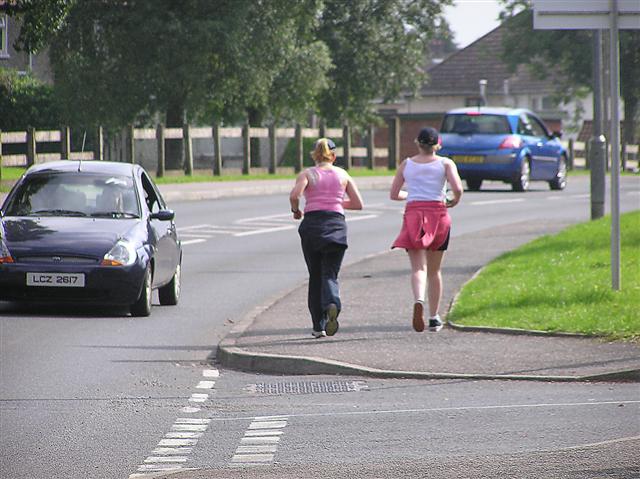
[Jogging on an open road: the intensity and duration of the session set how long the elevated heart rate lingers afterward.] Photograph: the subject
Image Credits: Wikimedia Commons
What is EPOC in simple terms?
EPOC stands for excess post-exercise oxygen consumption: the extra oxygen your body uses after exercise, above resting rates, to repay what the workout borrowed. It is the reason your heart and breathing stay elevated after you stop.
Is it normal for my heart rate to stay high for an hour?
After a hard session, yes, elevated heart rate can persist well beyond the workout, and the full metabolic recovery can last hours. What matters is the trend: it should be falling steadily. A pulse that stays flat and high for a long time after light effort deserves a clinician's opinion.
Why does my breathing stay fast too?
Your breathing rate and heart rate rise and fall together because they serve the same job: delivering oxygen to tissues and removing carbon dioxide. During EPOC, the increased breathing ensures enough oxygen is available for the recovery processes.
Does cooling down actually help?
Yes. A gradual cool-down lets the heart rate descend smoothly while circulation carries metabolic waste away from the muscles. Stopping abruptly does not harm a healthy person, but an easy cool-down makes the recovery feel better.
The bottom line
Your heart rate stays high after you stop exercising because the workout is not over for your body: it is now repaying an oxygen debt. ATP restoration, glycogen recycling, temperature normalization, waste clearance, and muscle repair all demand extra oxygen, and your heart keeps beating faster to deliver it.
The effect lasts minutes to hours depending on intensity and fitness, and a steady decline is the normal sign. Treat an elevated post-exercise pulse as expected, and see a clinician about any symptoms that concern you.
Tags: heart rate, exercise recovery, EPOC
The Rive News research desk writes fitness explainers from sports-science sources and public records. No anecdotes, no invented quotes, every mechanism traced to a named source.
Related
- Why does your heart rate stay elevated after exercise? EPOC and recovery
- How many rest days do beginners actually need?
- Why Do You Get a Stitch in Your Side While Running?
- What is the difference between flexibility and mobility?
Get a new research explainer in your inbox each morning, subscribe to the Rive News newsletter.
Accuracy is a process, not a claim: every factual statement here traces to a cited public source, and corrections are published openly.
Related stories

How long does it really take to build noticeable muscle?
Strength gains start in week one, but visible muscle takes 8-12 weeks for most beginners. What the Oklahoma CT-scan study measured,

Why you feel dizzy after a workout: the 5 common causes
Post-workout dizziness usually comes from a blood pressure dip, dehydration, or low blood sugar. The numbers behind each cause, and when
Why Do Knees Hurt When Squatting but Not Running?
Knees hurt when squatting but not running because deep bends multiply force on the kneecap. Learn the mechanics, common causes, fixes,