
How long to rest between sets when lifting weights
By Rive News / Research desk | Rive News / Published October 27, 2026 at 9:00 AM PKT
Key takeaways
- Rest 3 to 5 minutes between heavy strength sets, 2 to 3 minutes for muscle growth on compound lifts, and 60 to 90 seconds for isolation exercises.
- Shorter rest is not automatically better: resting under 60 seconds measurably reduces muscle growth when total training volume is held equal.
- The real test of any rest period is your next set: if reps, bar speed, or technique collapse, you rested too little.
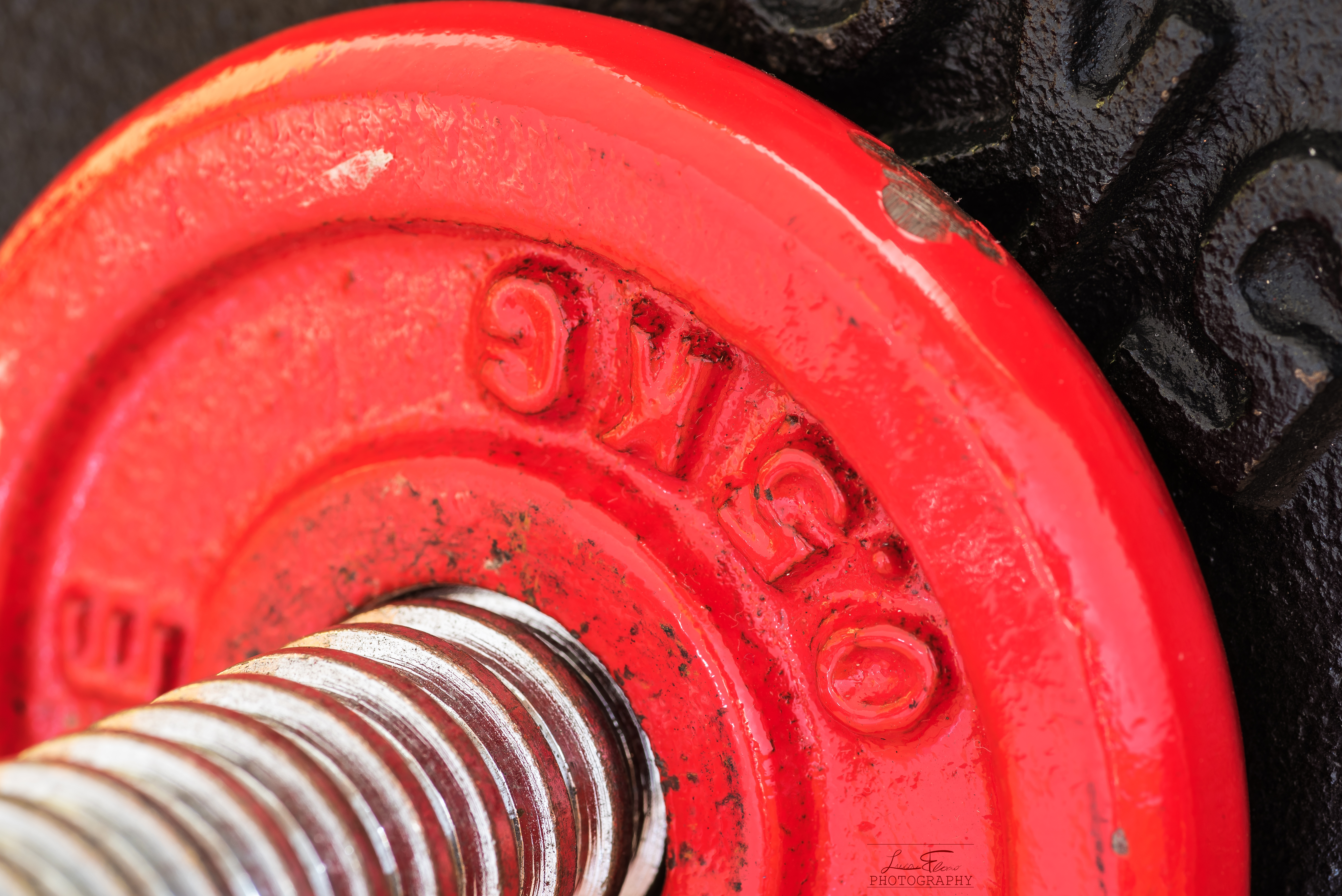
[A weightlifter holding a barbell overhead during competition at Rio 2016.] Photograph: Elle Florio via Wikimedia Commons
Image Credits: Wikimedia Commons
This article is for general information only and is not medical advice; talk to a clinician about any symptoms.
Rest between sets is the pause you take after finishing one set of an exercise before starting the next. It sounds trivial, but it decides how much weight you can lift, how many reps you complete, and how much total work your muscles do in a session. Too little rest and fatigue eats your next set, while too much rest stretches a workout past the point of usefulness.
There is no single correct rest time, because the right pause depends on your goal, the exercise, and the load. This article explains how long to rest between sets when lifting weights, including rest for strength, rest for muscle growth, rest for endurance, and how to adjust the numbers in practice.
Why rest matters at all
Heavy lifting runs mainly on the ATP-PC energy system, which fuels short bursts of maximal effort. That system takes 3 to 5 minutes to recover to roughly 95 percent of its capacity after a hard set. Starting the next set before it recovers means lifting with a partly empty tank, so reps drop and technique degrades.
Fatigue is not only muscular. Heavy sets also tax the nervous system, which coordinates force, balance, and timing.
A 2024 study by McMahon and colleagues, published in the Journal of Strength and Conditioning Research, tested this directly. Eight healthy young subjects performed 4 sets of maximal contractions with either 2-minute or 5-minute rest intervals between sets.
The 5-minute group kept more force across the session and completed more total exercise volume, 11,212 versus 9,748 newton-metres. The 2-minute group also showed larger drops in peak torque and muscle activation by the end of the session. The study was small, but its direction matches the wider literature: longer rest protects performance on demanding sets.
Rest for maximal strength
For maximal strength work, meaning heavy sets of 1 to 5 reps at 80 percent or more of your one-rep maximum, rest 3 to 5 minutes between sets. Near-maximal singles at 90 percent or above may need 5 minutes or more. A classic review of 35 studies found that 3 to 5 minutes of rest allowed more repetitions across multiple sets at 50 to 90 percent of one-rep maximum than very short rest, and generally supported larger strength gains.
Strength training punishes short rest more than any other goal. Cutting rest well below 3 minutes on heavy squats, deadlifts, or presses reduces the reps you can complete, and fewer quality reps means a weaker training stimulus. Power work follows the same rule, since explosive movements need full nervous system recovery to keep bar speed high.
If your gym time is limited, supersets of non-competing exercises can save time without cutting rest on the main lift. Pairing a press with a row, for example, lets each muscle group rest while the other works. The main lift still gets its full recovery, and the session stays compact.
Rest for muscle growth
For muscle growth, or hypertrophy, rest 2 to 3 minutes between sets of compound exercises such as squats, presses, and rows. For isolation exercises such as curls, lateral raises, and extensions, 60 to 90 seconds is usually enough, since smaller muscles and simpler movements recover faster.
The old belief that short rest builds more muscle through a bigger growth hormone spike has not held up. A landmark study by Schoenfeld and colleagues in 2016 compared 1 minute versus 3 minutes of rest over 8 weeks at equal training volume. The 3-minute group gained substantially more muscle in both the triceps and quadriceps, because longer rest let them complete more reps per set.
A 2024 systematic review and Bayesian meta-analysis of nine studies reached a compatible conclusion. It found a small average hypertrophy benefit from resting longer than 60 seconds, but no meaningful difference between rest periods beyond 90 seconds in the available data. The practical reading is simple: avoid rest under 60 seconds for growth work, then choose 2 to 3 minutes for compounds and shorter rests for isolation moves.
Rest for endurance and conditioning
Muscular endurance training deliberately uses short rest, because fatigue is part of the stimulus. For high-rep sets of 15 or more, or for circuit-style training, rest 30 to 60 seconds between sets. The goal here is not maximal force but the ability to keep producing effort while tired.
Short rest also suits finishing work at the end of a session. Drop sets, supersets, and pump sets for small muscles tolerate 45 to 90 seconds of rest well, since neural fatigue is lower and the goal is metabolic stress rather than peak performance. Keep these short rests away from your main heavy lifts, where they would cost you reps.
Endurance rest times double as a conditioning tool. If your heart rate stays elevated and your breathing stays hard between sets, you are training the cardiovascular side of lifting as well. That is a feature for endurance goals and a bug for strength goals, which is why the two need different timers.
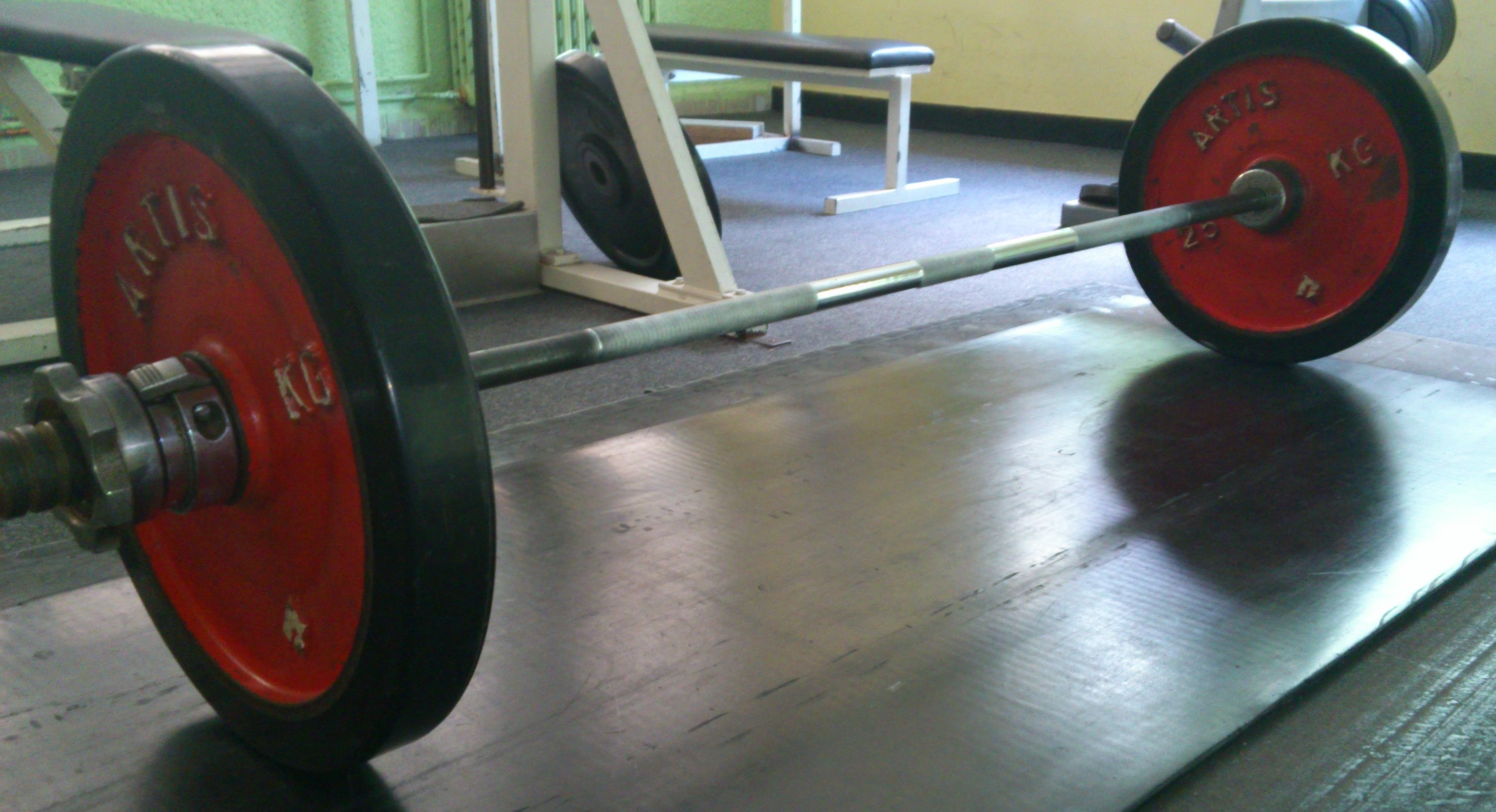
[An Olympic barbell loaded with plates, ready for a heavy set.] Photograph: Wikimedia Commons contributor
Image Credits: Wikimedia Commons
A practical rest table
Use these ranges as starting points, then adjust by how your next set feels. The numbers below reflect the consensus across the sources cited in this article.
- Maximal strength, 1 to 5 reps: 3 to 5 minutes.
- Power and speed work: 3 to 5 minutes.
- Muscle growth, compound lifts: 2 to 3 minutes.
- Muscle growth, isolation lifts: 60 to 90 seconds.
- Muscular endurance, 15 or more reps: 30 to 60 seconds.
- Supersets of non-competing exercises: 30 to 90 seconds between moves, 2 to 3 minutes between rounds.
A fixed timer also saves real time. In a 2026 study reported by Men's Fitness, 40 resistance-trained adults trained for 8 weeks with either self-chosen rest or a fixed 2 to 3 minute timer.
Gains in muscle thickness, strength, and endurance were statistically similar, but the timer group finished each workout in about 56 minutes versus 78 minutes for the self-paced group. A timer keeps rest honest without costing results.
How to adjust rest in practice
Start with the table, then watch your next set. If your target is 8 to 10 reps and short rest turns set two into five shaky reps, the timer did not make your workout harder.
Good breathing technique while lifting also helps you recover between sets. If short rest still wrecks your next set, add 30 to 60 seconds.
Exercise difficulty matters more than the muscle name. A heavy Romanian deadlift usually needs more recovery than a leg curl, and a free-weight bench press needs more than a machine press at the same effort, because stability and setup demands differ. Adjust rest to the lift, not just the goal.
Life constraints matter too. If you have 45 minutes, resting 5 minutes between every set of every exercise will cut your session short.
Prioritize full rest for your main lift, use shorter rests for accessories, and pair non-competing exercises. That keeps quality where it counts and volume where it fits.
Frequently asked questions
Is resting 5 minutes between sets too long?
Not for heavy strength work, where 3 to 5 minutes is standard. For isolation exercises or endurance circuits, 5 minutes is wasteful, since the muscle recovers long before the timer ends. Match the rest to the lift.
Does longer rest build more muscle?
Above 60 seconds, the research shows little difference in muscle growth between rest lengths when volume is equal. Longer rest helps indirectly, by letting you complete more reps, which is why 2 to 3 minutes is the practical sweet spot for growth work.
Should beginners rest longer than experienced lifters?
Beginners often need less rest, because they lift lighter absolute loads and create less fatigue per set. As loads grow, rest needs grow with them. Start with the standard ranges and extend them as your weights climb.
Can I sit down or should I stay moving between sets?
Either is fine. Light movement, such as walking or gentle stretching of uninvolved muscles, can feel better than sitting still. Avoid tiring the muscles you are about to use again, and keep the timer running either way.
The bottom line
Rest 3 to 5 minutes for heavy strength work, 2 to 3 minutes for muscle growth on compound lifts, 60 to 90 seconds for isolation moves, and 30 to 60 seconds for endurance work. Those ranges reflect what the research supports, not gym tradition. The final check is always your next set: if reps, speed, or technique hold up, your rest was enough, and if they collapse, add time before judging the program.
Tags: rest between sets, strength training, muscle growth, weightlifting
Rive News is a research desk that explains fitness, science, and everyday topics from public sources, without invented experts or first-hand claims.
Related
- How to breathe correctly when lifting weights
- How progressive overload builds muscle
- Why your muscles shake when you lift heavy weights
Subscribe for one practical explainer in your inbox every morning.
Standards: facts in this article trace to the public sources listed above; corrections are published when a source is shown to be wrong.
Related stories
How long does it really take to build noticeable muscle?
Strength gains start in week one, but visible muscle takes 8-12 weeks for most beginners. What the Oklahoma CT-scan study measured,
Why you feel dizzy after a workout: the 5 common causes
Post-workout dizziness usually comes from a blood pressure dip, dehydration, or low blood sugar. The numbers behind each cause, and when
Why Do Knees Hurt When Squatting but Not Running?
Knees hurt when squatting but not running because deep bends multiply force on the kneecap. Learn the mechanics, common causes, fixes,