
Why your muscles shake when you lift heavy weights
By Rive News / Research desk | Rive News / Published October 26, 2026 at 9:00 AM PKT
Key takeaways
- Shaking is uneven force, not weakness: tired motor units drop out and rejoin unevenly.
- The tremor grows near your limit, on holds, and on unfamiliar movements.
- Rest, lighter loads, and better sleep usually reduce it; sharp pain is a stop signal.
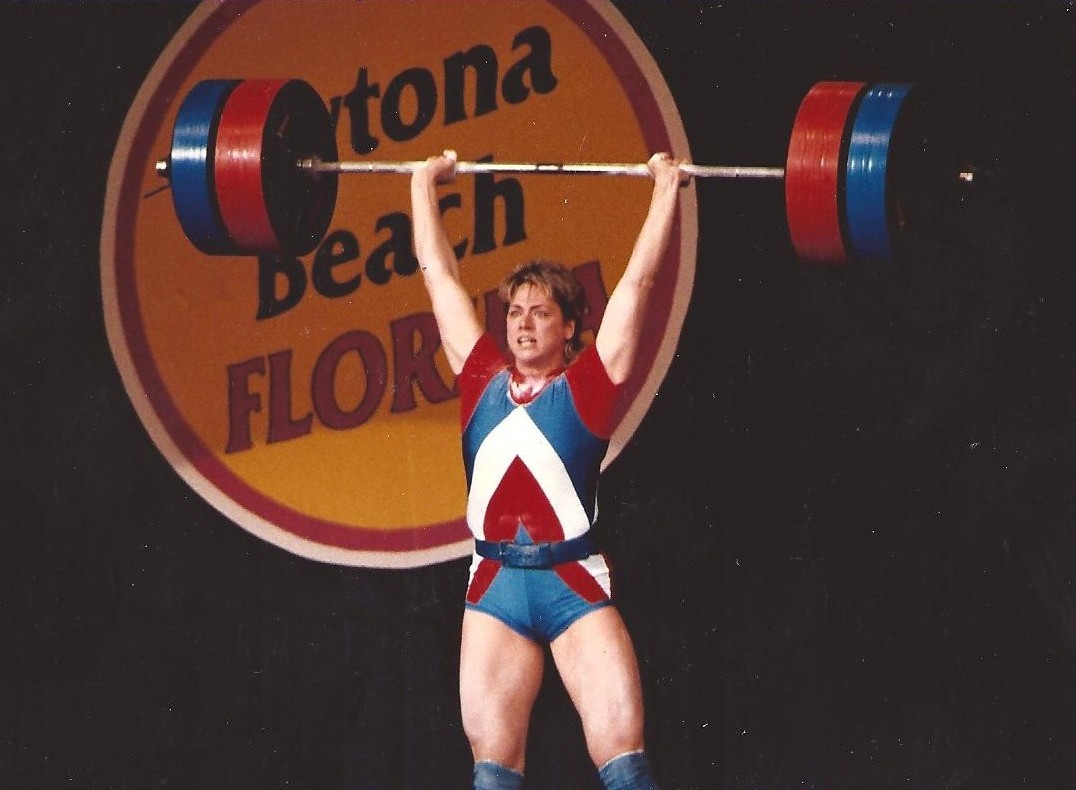
[Weightlifter Karyn Marshall lifts barbells at the 1987 weightlifting championship in Daytona Beach.] Photograph: Wikimedia Commons contributor
Image Credits: Wikimedia Commons
This article is for general information only and is not medical advice; talk to a clinician about any symptoms.
Hold a heavy weight long enough, or push a set to its final reps, and your muscles start to tremble. The shaking can feel alarming, especially the first time it happens. It usually is not a sign that something is broken.
This article explains why your muscles shake when you lift something heavy, including motor-unit recruitment, fatigue, and the energy systems behind the tremor. It also covers when shaking is normal, what reduces it, and when it is worth getting checked.
The basic unit: motor units
A muscle does not contract as one solid block. It contracts through motor units, each made of one motor neuron and the muscle fibres that neuron controls. When the brain wants force, it fires motor units.
Light work fires a few small units. Heavy work fires many units, including large ones that control many fibres at once.
Force control depends on how smoothly those units fire. When you hold a weight steady, the nervous system adjusts firing rates many times per second to keep force constant. Smooth firing gives smooth force.
Uneven firing gives a wobble, and that wobble is what you see as shaking.
According to Healthline, in its explainer on shaking after workouts, the firing of motor units provides force, but the longer you work out, the more those signals slow down and become less intense. Those changes can make muscles rapidly alternate between contractions and relaxations, resulting in tremors.
What happens as a set gets hard
Early in a set, fresh motor units fire in a coordinated pattern and force stays steady. As the set continues, individual units tire and briefly stop firing. The nervous system then recruits other units to take over, and later re-recruits the rested ones.
That swapping is not perfectly smooth.
ScienceABC describes this as motor unit drop-out: as individual motor units tire, they briefly stop firing, and the nervous system has to recruit and de-recruit units to keep the load supported. Because that recruitment is not perfectly smooth, the force the muscle generates oscillates slightly, and that oscillation is the tremor.
Two other fatigue processes add to the problem. First, energy supply falls behind demand. Muscles run on ATP, the molecule that powers contraction, and during heavy work the systems that regenerate ATP cannot quite keep up.
Second, calcium handling inside the fibre gets sloppy. Each contraction depends on calcium released from the sarcoplasmic reticulum, and as the fibre fatigues, calcium release weakens and reuptake slows, which weakens the next contraction. ScienceABC notes that modern research treats this calcium-handling failure, rather than the older lactic acid story, as a central mechanism.
Lactic acid still appears in many explanations, but it is not the main cause of the shake. Lactate clears from muscle within about an hour, and it is better understood as a fuel and a byproduct than as a poison that directly causes tremor.
Why holds shake more than moving reps
Isometric holds, such as planks, wall sits, and holding a dumbbell still, are famous for shaking. The reason is recruitment. Holding a muscle in one position for a long time activates powerful motor units that are normally reserved for strong movements, and those units are harder to fire smoothly for long periods.
Healthline makes the same point: when you hold a muscle in place for a long time, powerful motor units get activated to provide more force, and that can result in shaking in the muscles being worked. Moving reps give brief moments of lower force between phases, which helps. A hold gives no such break.
New or unfamiliar exercises shake more for a different reason. The nervous system has not yet learned the coordination pattern, so motor unit firing is less organised. Glenn Gaesser, professor of exercise physiology at Arizona State University, is quoted in the Thriving Guide as saying that with enough repetition, motor neurons will be able to produce a smooth, controlled movement.
Practice reduces shaking because coordination improves, not just because muscles get stronger.
The brain's role in the tremor
Fatigue is not only in the muscle. The central nervous system, the brain and spinal cord, also fatigues. As effort, pain, and temperature rise, the brain reduces its drive to the muscles, which protects the body but also makes force less steady.
That central fatigue explains a familiar experience: a weight that felt manageable on the first set feels impossibly heavy on the fourth, even though the muscle itself could still produce force. The signal is weaker and less consistent, so the muscle shakes more. Dehydration, low blood sugar, and electrolyte imbalance can make the problem worse, especially in long or hot workouts, because they disturb the nerve signalling and energy supply that smooth contraction depends on.
The fibre types behind the shake
According to the American Council on Exercise, cited in the Thriving Guide, muscle fibres fall into three main categories. Slow-twitch fibres suit endurance work such as walking: they resist fatigue but produce little power. Fast-twitch fibres suit explosive work such as sprinting or heavy lifting: they produce more force but tire quickly.
Moderate fast-twitch fibres sit between the two.
During a lift, the body recruits fibres in stages, starting with slow-twitch and adding faster fibres as demand rises. When the heavy, fast fibres fatigue, the body switches between fibre types to keep force up, and that switching is part of the coordination breakdown that appears as shaking. Beginners shake more partly because their recruitment pattern is less practised, and experienced lifters shake less on familiar lifts for the same reason.
When shaking is normal, and when it is not
Shaking near the end of a hard set, during a long hold, or on a new exercise is usually normal. It tends to fade with rest between sets, and it should stop soon after the workout ends. If it fades as you get stronger and more practised at a movement, that is the expected pattern.
Stop and assess if shaking comes with sharp pain, a joint giving way, numbness, or weakness that does not recover after rest. Shaking that appears at very light loads, persists for hours, or affects one side of the body only is also worth discussing with a clinician. This article cannot diagnose those cases, and no article should.
The rule is simple: tremor plus pain, or tremor that does not fit the effort, deserves professional attention rather than another set.
What reduces the shaking
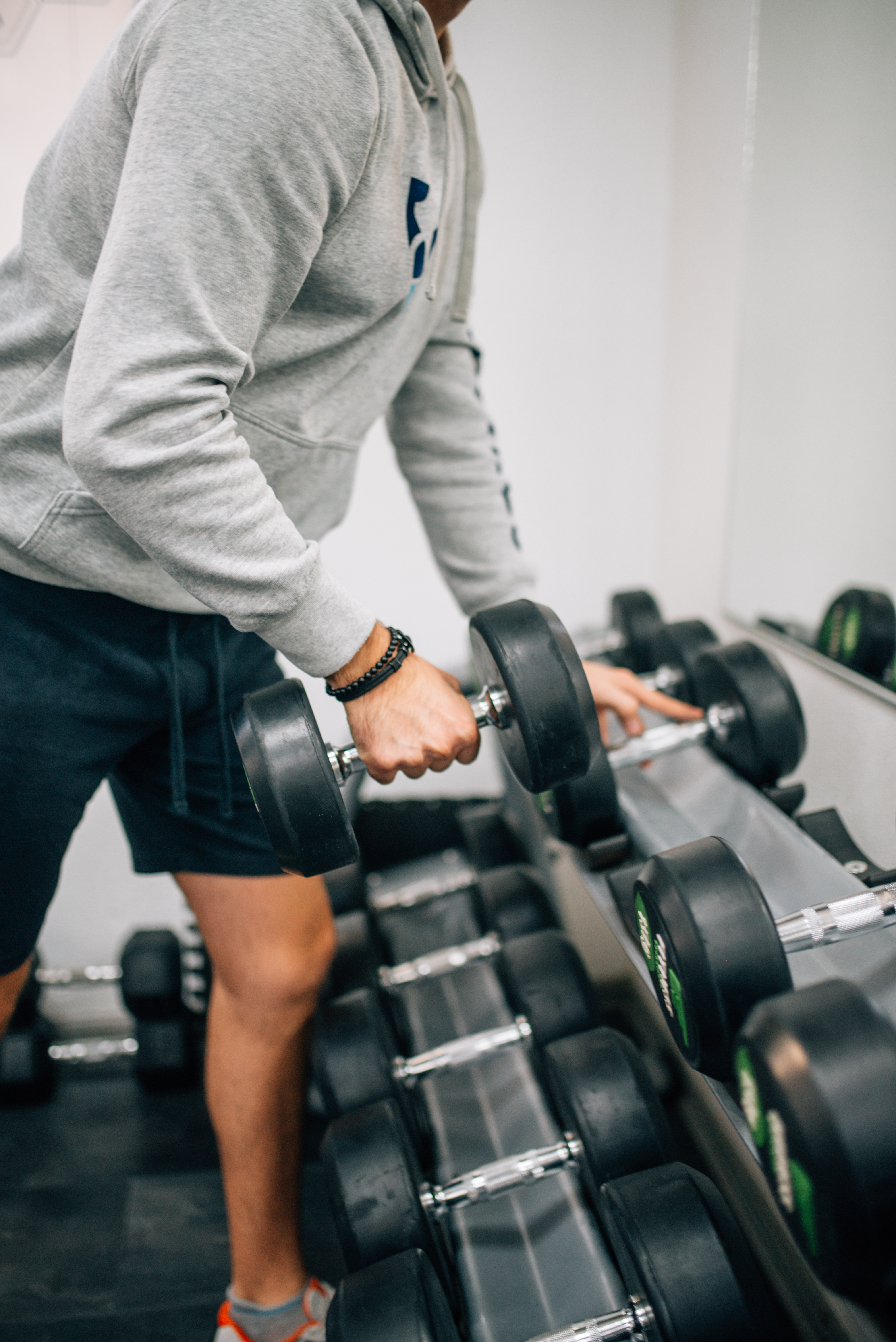
[A man lifts a dumbbell in a gym, where a lighter load allows smoother, controlled reps.] Photograph: Wikimedia Commons contributor
Image Credits: Wikimedia Commons
The most reliable fix is to stop chasing the edge of failure on every set. Leaving one or two reps in reserve keeps motor units fresher and firing more smoothly. If a weight shakes from the first rep, it is too heavy for controlled work, and a lighter load with good form will train the movement better.
Rest matters more than most lifters admit. Short rests between hard sets keep fatigue high and shaking likely. Longer rests, two to three minutes for heavy compound lifts, let motor units recover and restore smoother firing.
Sleep matters too, because central fatigue accumulates across days, not just within a workout.
Hydration and food help at the margins. Drink during long sessions, eat enough before training, and avoid training fasted if you notice shaking tied to low energy. Warm up with lighter sets of the same movement, which rehearses the coordination pattern before the heavy work starts.
Over weeks, that rehearsal is what turns a shaky new lift into a smooth familiar one.
Is muscle shaking a sign of weakness?
No. It is a sign that the load is near what your nervous system and muscles can currently sustain smoothly. Strong lifters shake too, usually on maximal or near-maximal efforts.
Why do my arms shake more than my legs?
Smaller muscle groups have less total motor unit capacity to share the load, and the tremor is more visible in the arms. Holds such as planks also concentrate the work in a small area, which makes shaking easier to see.
Does lactic acid cause the shaking?
Not mainly. Lactate rises during hard work, but modern explanations centre on motor unit drop-out, ATP supply, and calcium handling. Lactate clears within about an hour, while the coordination story explains the tremor better.
Will shaking go away as I get stronger?
Usually, yes, for a given weight and movement. As coordination improves and strength rises, a weight that once caused shaking becomes a moderate load. A new maximal weight will still shake, because the same limit applies at the new level.
The bottom line
Your muscles shake under a heavy load because tired motor units drop out and rejoin unevenly, turning smooth force into a visible tremor. Energy supply, calcium handling, and central fatigue all add to the unevenness, and holds and unfamiliar movements make it worse.
Treat shaking as information, not failure. Back off a little, rest longer, practise the movement, and watch the tremor fade as coordination and strength improve. If pain or persistent weakness comes with it, stop and get it checked.
Tags: strength training, muscle fatigue, exercise science
Rive News's research desk covers fitness and exercise science, drawing on published physiology explainers and exercise council guidance.
Related
- Why do muscles shake during exercise?
- Why do you shake after lifting heavy weights?
- How to breathe correctly when lifting weights
- Muscle soreness vs injury: how to tell
Subscribe to the Rive News newsletter for one practical explainer each week.
Rive News publishes research-based explainers; facts are checked against public sources before publication.
Related stories
How long does it really take to build noticeable muscle?
Strength gains start in week one, but visible muscle takes 8-12 weeks for most beginners. What the Oklahoma CT-scan study measured,
Why you feel dizzy after a workout: the 5 common causes
Post-workout dizziness usually comes from a blood pressure dip, dehydration, or low blood sugar. The numbers behind each cause, and when
Why Do Knees Hurt When Squatting but Not Running?
Knees hurt when squatting but not running because deep bends multiply force on the kneecap. Learn the mechanics, common causes, fixes,