
Why Do You Shake After Lifting Heavy Weights? Science Explained
Key takeaways
- Shaking after heavy lifting is fatigued motor units firing out of sync, not a sign of weakness.
- The nervous system recruits bigger, more powerful motor units for heavy loads, and they fatigue fastest.
- Shaking that stops with rest is normal; shaking with sharp pain, dizziness, or after light effort deserves medical attention.
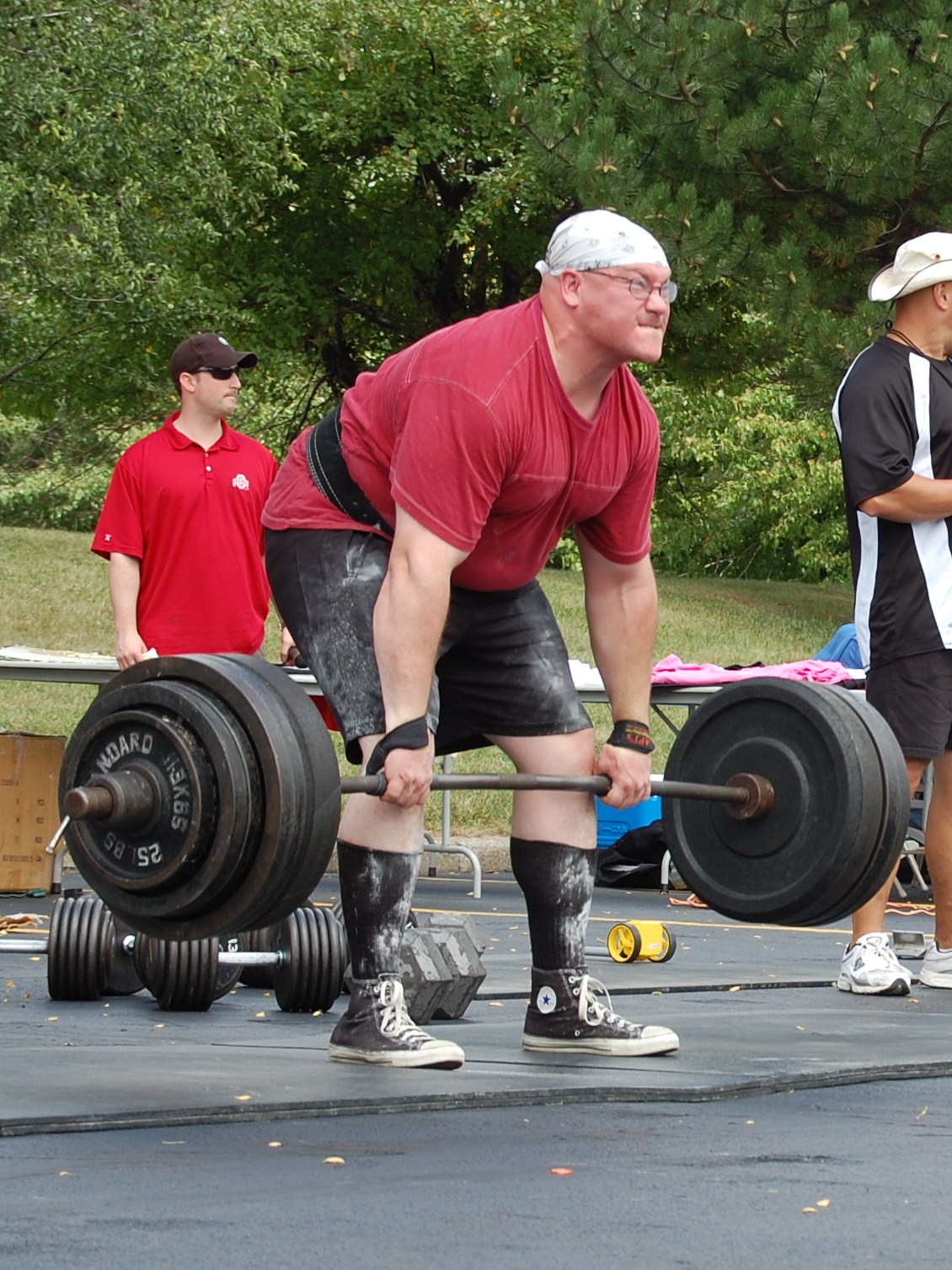
A barbell loaded with plates on a gym platform. Photograph: stu_spivack / Wikimedia Commons
You finish a heavy set, rack the bar, and your hands will not stop trembling. Your quads buzz after squats, or your arms quiver after pressing. It can feel alarming, as if something is wrong with your body.
In most cases, nothing is wrong. The shaking is your nervous system telling you exactly how hard it just worked.
This article explains why you shake after lifting heavy weights, including motor unit recruitment, central fatigue, and the fuel factors that make tremors worse. It also covers what to do about it and the signs that shaking is not normal.
Motor units: how muscles actually produce force
Smooth strength is an illusion built from many small, imperfect parts. A motor unit is one motor nerve plus all the muscle fibers it controls. Large muscles have motor units in which a single nerve controls 2,000 or more muscle cells, as Scientific American explains.
When you lift, your brain sends trains of electrical impulses down the motor nerves from the spinal cord.
These motor units do not fire all at once. Scientific American describes them as being excited in a most asynchronous fashion: while some motor units within the muscle are contracting and shortening, others are relaxing and lengthening. The massive overlap between units makes the muscle appear to contract smoothly overall.
This is why heavy lifting shakes more than light lifting. A heavy load forces the nervous system to recruit far more motor units to generate enough force, and to keep them firing at high rates. The more units involved, and the harder they are driven, the more chances for the firing pattern to lose synchronization.
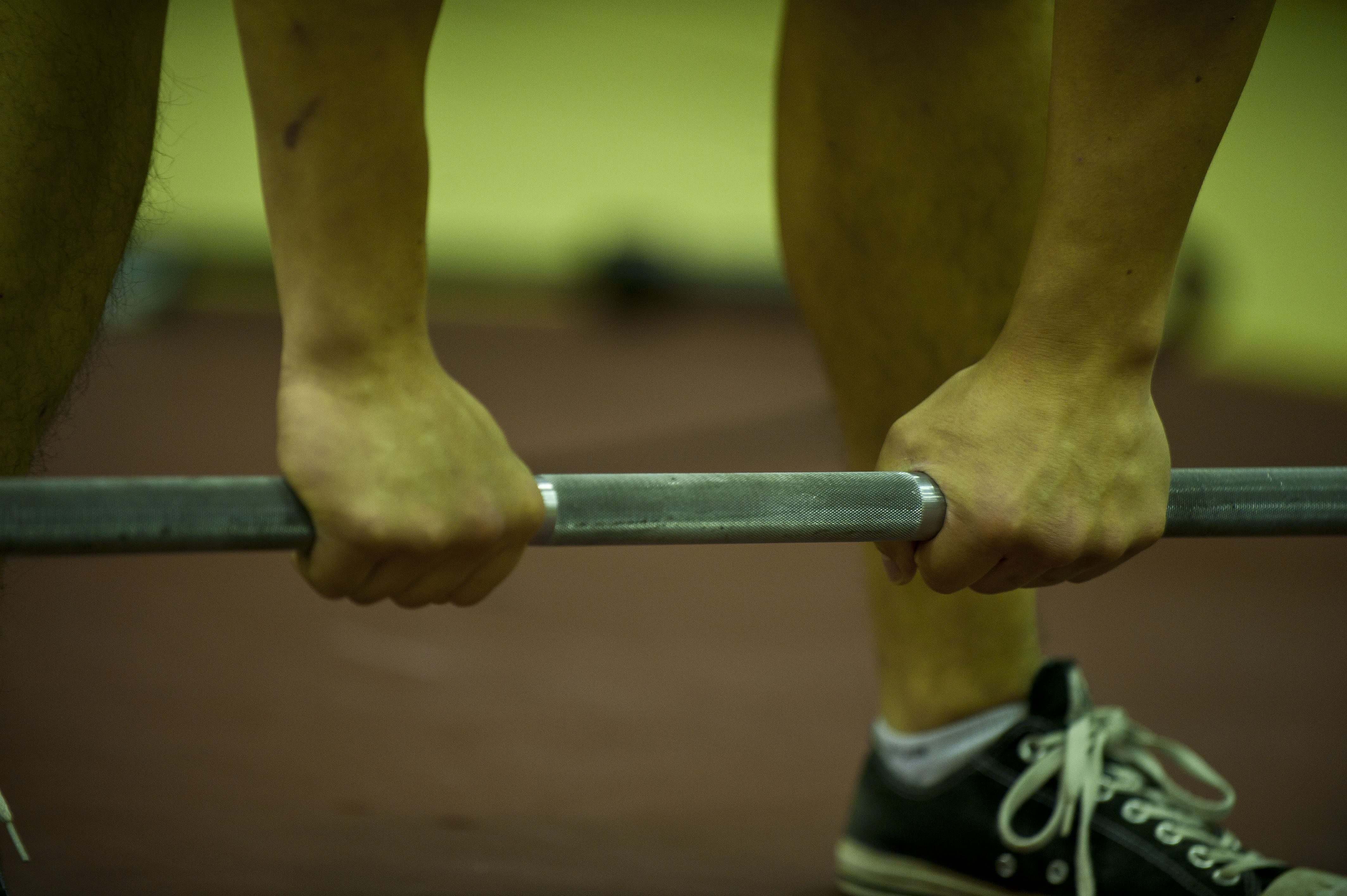
A lifter's hands grip a barbell. Photograph: Senior Airman Clayton Lenhardt, U.S. Air Force / Wikimedia Commons
Why fatigue breaks the synchronization
When muscles tire, the neat firing pattern falls apart. Scientific American explains that strenuous exercise causes some motor units to drop out of service because of fatigue, and this dropout is ultimately responsible for the trembling. Most of the fatigue happens in the spinal cord at the level of the motor nerve cell and its neural connections, though some occurs at the connection between the nerve and the muscle fiber.
The mechanism is chemical. Both areas require the synthesis and release of particular chemicals to carry electrical impulses across to the next nerve cell or muscle cell. Researchers believe these chemicals cannot be manufactured and released fast enough to keep up with intense activity, so they become depleted.
That depletion, Scientific American reports, is a big part of what fatigue means in a biochemical sense.
UdentO adds a second layer: motor unit recruitment is graded. Smaller, fatigue-resistant motor units are recruited first, followed by progressively larger and more powerful but more fatigable units as force demand rises. A heavy lift pushes the nervous system to recruit virtually every available unit.
That maximal recruitment burdens the central nervous system itself, producing what is called central fatigue: the brain and spinal cord become less able to activate motor neurons effectively, and the signals grow weaker or less frequent. Weakened, irregular signals are exactly what visible shaking looks like.
In short, heavy weights demand maximal recruitment, maximal recruitment accelerates fatigue, and fatigue desynchronizes the motor units. The tremor is the visible edge of that chain.
The fuel factors that make shaking worse
Recruitment explains most shaking, but fuel status decides how soon it starts.
Glycogen depletion. Muscles run primarily on glycogen stored in the muscle and glucose circulating in the blood. When these stores dip during a hard session, neuromuscular control suffers and shaking becomes more likely. This is why fasted training often brings the trembles earlier.
Low blood sugar. Training without enough fuel can drop blood glucose, a condition called hypoglycemia, which impairs muscle energy production and increases trembling. NASM-certified trainer Lauren Kanski told Mind Body Green that working out fed versus fasted can make a huge difference in glycogen depletion, and that muscle fibers tiring at different rates causes the irregular contractions seen as shaking.
Dehydration and electrolytes. Muscles and nerves depend on sodium, potassium, magnesium, and calcium to signal and contract properly. Sweating depletes them during long sessions, and the resulting disruption shows up as tremors and cramps.
Unfamiliar or isolated work. Shaking is not proof of weakness, but it can signal unfamiliarity. When a movement is new, the nervous system is still learning efficient recruitment patterns. Isolating small muscles, as in lateral raises or planks, also makes shaking more visible, because small muscles have fewer motor units to smooth out the fluctuations.
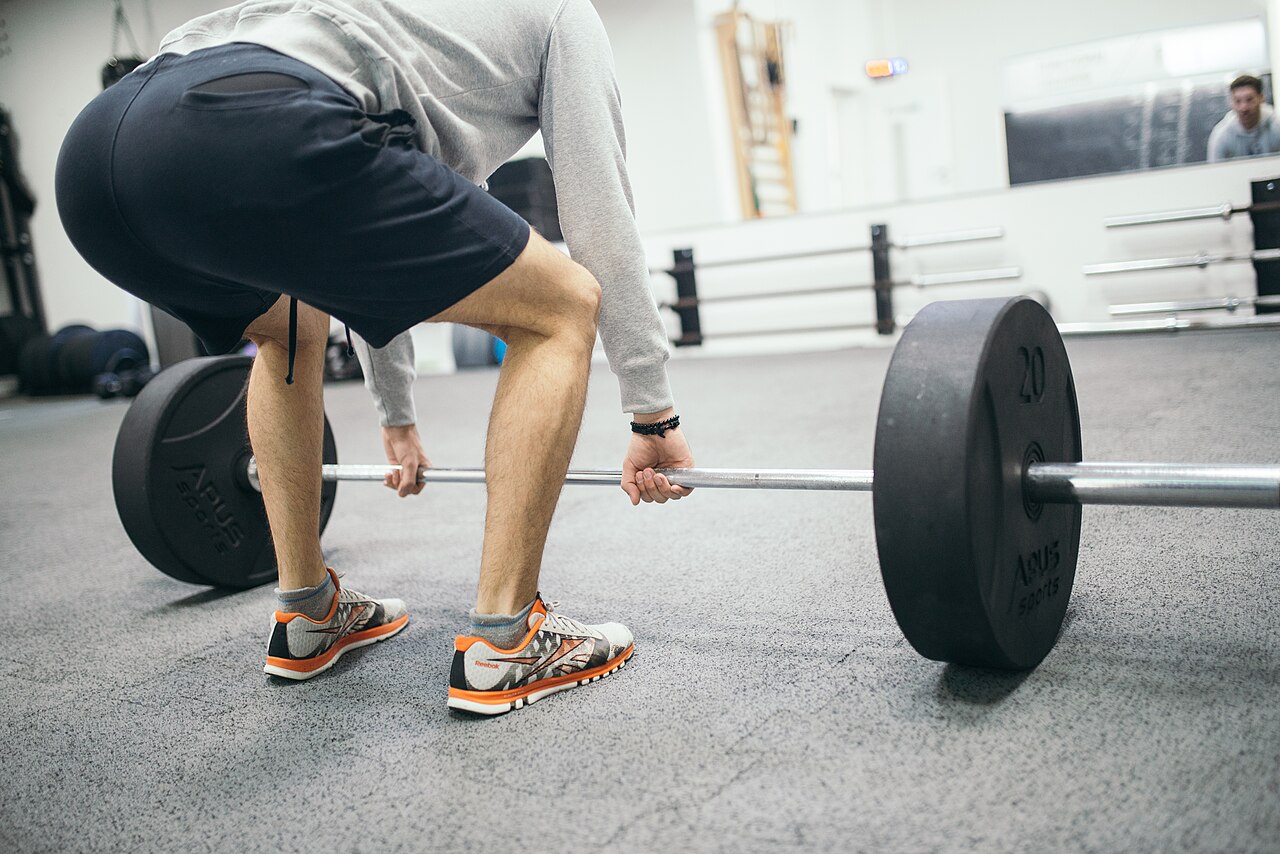
A man performs a deadlift in a gym. Photograph: Nenad Stojkovic / Wikimedia Commons
What to do about it and when to worry
For ordinary fatigue shaking, the prescription is rest and recovery. The tremor typically stops when the muscles rest. Between sets, shake out the limb, breathe, and give the motor units time to recover their chemical reserves before the next effort.
Reduce the triggers when shaking arrives too early. Eat a proper pre-workout meal one to three hours before training, hydrate through the session, and add electrolytes on long or sweaty workouts. Program deload weeks and respect sleep, since central fatigue accumulates across days, not just sets.
Technique matters too. Shaking under a load you cannot control is different from shaking after a controlled set. If the bar path wobbles dangerously or your form breaks down, the weight is too heavy for your current strength.
Drop the load and rebuild.
See a doctor if shaking comes with warning signs. Tremor that persists long after the workout, appears during light everyday effort, or arrives with sharp joint pain, numbness, dizziness, or chest discomfort is not ordinary fatigue. This article is an explainer, not medical advice; persistent or unusual tremors deserve a professional evaluation.
Image Credits: Wikimedia Commons / stu_spivack (CC BY-SA 2.0); Senior Airman Clayton Lenhardt, U.S. Air Force (public domain); Nenad Stojkovic (CC BY 2.0)
Is it normal for muscles to shake after lifting heavy?
Yes, in most cases. Shaking after heavy lifting is exercise-induced tremor: fatigued motor units firing out of sync after maximal recruitment. It typically stops with rest and is not a sign of weakness or injury.
Gym forums and coaches treat it as a normal signal of hard effort.
Why do my hands shake after deadlifts?
The grip and forearm muscles are small, with fewer motor units to smooth out firing irregularities. Heavy deadlifts demand maximal recruitment from these small muscles, and their motor units fatigue and desynchronize fastest. Small muscles always show the tremor sooner than large ones like the quads or glutes.
Does muscle shaking mean I am getting stronger?
Not directly. Shaking means you reached a level of fatigue where motor unit firing desynchronized. That often happens near the limits of your current capacity, which is where adaptation happens.
But shaking alone is not a training metric; progressive overload, good form, and recovery are what build strength.
How do I stop shaking after a workout?
Rest the muscle, hydrate, and eat, especially if you trained fasted. The tremor usually fades within minutes. If shaking starts earlier than usual in every session, check your pre-workout nutrition, hydration, sleep, and whether you need a lighter week.
Persistent shaking outside training is worth discussing with a doctor.
The bottom line
Shaking after lifting heavy weights is your nervous system running out of smooth coordination, not your body failing. Maximal recruitment of motor units, the chemical depletion of fatigue, and low fuel combine to desynchronize the firing patterns that normally make strength look effortless. Fuel up, rest between sets, respect the warning signs, and treat the tremor as information, not a verdict.
Latest in Fitness
Subscribe to the Rive News newsletter for one practical explainer every morning.
Related stories

How long does it really take to build noticeable muscle?
Strength gains start in week one, but visible muscle takes 8-12 weeks for most beginners. What the Oklahoma CT-scan study measured,
Why you feel dizzy after a workout: the 5 common causes
Post-workout dizziness usually comes from a blood pressure dip, dehydration, or low blood sugar. The numbers behind each cause, and when
Why Do Knees Hurt When Squatting but Not Running?
Knees hurt when squatting but not running because deep bends multiply force on the kneecap. Learn the mechanics, common causes, fixes,