
Why Do Your Shins Hurt When You Start Running?
Key takeaways
- Shin splints, medically called medial tibial stress syndrome, hit new runners whose training load rises faster than their tissues can adapt.
- Mayo Clinic flags five risk factors: starting a program, ramping up too fast, hills or hard surfaces, flat feet, and worn shoes.
- Rest, ice 15 to 20 minutes three to four times daily, and a gradual run-walk return fix most cases without a doctor visit.

Image Credits: Wikimedia Commons
Your shins hurt when you start running because the impact forces of running are new to your lower legs, and you are asking for more than the tissues can currently handle.
Each foot strike sends shock through the shinbone and the muscles and connective tissue attached to it. In experienced runners, those tissues have adapted over months. In new runners, they have not.
The result is the classic beginner complaint: a dull ache along the front of the lower leg that shows up during runs and fades with rest. Doctors call it medial tibial stress syndrome (shinbone stress injury). Everyone else calls it shin splints.
This article explains why your shins hurt when you start running, including what shin splints actually are, why beginners get them first, the warning signs, what to do right now, and how to come back without a relapse.
This article is for information only and is not medical advice. See a clinician if pain persists or worsens.
What shin splints actually are
Shin splints are pain along the shinbone, also called the tibia, the large bone in the front of the lower leg. That is Mayo Clinic's plain definition, and it is deliberately simple: the diagnosis is mostly about location.
The medical name is medial tibial stress syndrome. It describes an overuse injury, meaning damage that builds up from repeated stress rather than from one bad step.
Mayo Clinic says the extra activity of harder training puts stress on the muscles, tendons, and bone tissue. The connective tissue that anchors shin muscles to the bone gets irritated and inflamed from the repeated pulling.
One popular theory holds that the anterior tibialis muscle (the muscle running along the front of the shin) gets stretched and gradually tears at its attachment to the bone. The exact mechanism is still debated, but the pattern is consistent: too much load, too soon, on unprepared tissue.
It is a common injury. Published estimates put shin splints at 4 to 35 percent in at-risk groups, and one running-focused review puts the figure at 13 to 35 percent of active individuals at some point. New runners sit squarely in the highest-risk group.
Why new runners get them first
Mayo Clinic names the trigger directly: shin splints often occur in athletes when they start training harder. For a beginner, every run is "training harder" compared to the baseline of not running.
The clinic lists five risk factors, and new runners tend to collect several at once. You run, especially when starting a running program. You quickly increase how long, how often, or how hard you exercise.
You run on uneven ground such as hills, or on hard surfaces such as concrete. You may have flat feet or high arches.
Each factor multiplies the stress on the shin. A new runner in flat, worn-out shoes pounding concrete three days after buying the shoes is a textbook case.
Surface matters more than beginners expect. Hard surfaces return more impact to the leg, and hills change the angle of foot strike. A soft track or packed trail is noticeably kinder than a sidewalk.
Shoes matter too. The Insole Store's review notes that footwear should be replaced every 300 to 500 miles, and beginners often start in everyday sneakers with dead cushioning. Proper padding and arch support reduce the shinbone stress of every mile.
The early warning signs
The classic symptom is tenderness, soreness, or pain along the inner side of the shinbone, sometimes with mild swelling in the lower leg. That is Mayo Clinic's description.
Early on, the pattern is reassuring: the pain might stop when you stop exercising, and it might feel better with stretching. Many runners notice it at the start of a run, feel it fade mid-run, then feel it return near the end.
That fading is a trap. Pain that disappears mid-run is not healing; it is just warming up. The damage builds up anyway.
Mayo Clinic warns about the progression. In time, the pain can become ongoing, and ongoing pain might mean a stress reaction or stress fracture. A stress fracture is a small crack in the bone, and it needs medical care.
Red flags that separate ordinary shin splints from something worse: pain at rest, pain in one sharply localized spot on the bone, swelling that does not ease, or pain that keeps getting worse despite rest. Any of those means stop running and get checked.
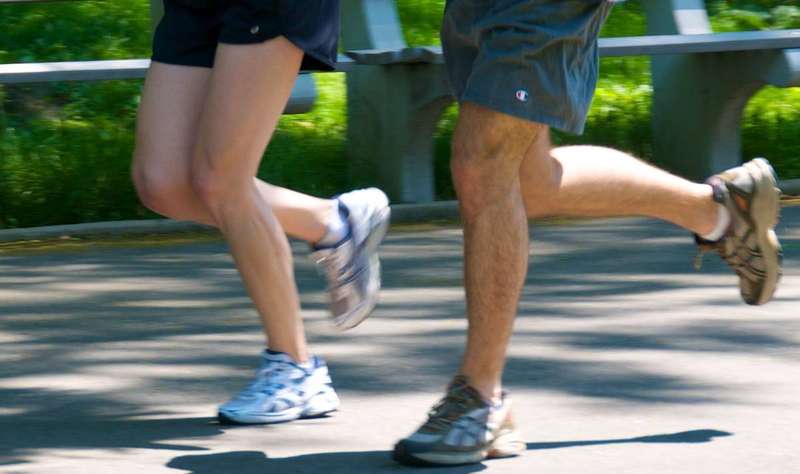
Image Credits: Wikimedia Commons
What to do right now
Most shin splints get better with simple self-care. Mayo Clinic lists the core steps, and they are refreshingly low-tech.
Rest, but do not stop moving. Avoid activities that cause pain, swelling, or discomfort. Mayo Clinic specifically says not to stop moving entirely: while healing, try low-impact exercise such as swimming, bicycling, or water running. Fitness continues while the shins recover.
Ice on a schedule. Apply ice packs to the affected shin for 15 to 20 minutes at a time, 3 to 4 times a day, for several days. Wrap the ice in a thin towel to protect the skin.
Use over-the-counter pain relief if needed. Mayo Clinic mentions ibuprofen, naproxen sodium, or acetaminophen to reduce pain. These ease symptoms; they do not fix the underlying overload, so do not use them as permission to run through pain.
Check the shoes. If your shoes are worn, flat, or designed for fashion rather than running, replace them. Proper padding and arch support are part of the treatment, not just prevention.
Call a healthcare professional if rest, ice, and pain relievers you can get without a prescription do not ease the shin pain. That is Mayo Clinic's line in the sand.
How to come back without a relapse
Returning too fast is how shin splints become a season-long saga. The fix is a structured, patient rebuild.
The widely used rule is the 10 percent guideline: increase weekly mileage by no more than about 10 percent. It is a ceiling, not a target, and beginners should stay well under it.
A run-walk progression is the safest re-entry. Alternate short running bursts with walking, and only extend the running portions when the current level is completely pain-free. Pain-free means zero pain, not pain you can tolerate.
The Insole Store's review stresses three prevention habits: gradual load progression, regular footwear replacement every 300 to 500 miles, and daily calf stretching before runs. Tight calves change ankle mechanics and increase shinbone stress with every step.
Add softer surfaces to the mix. Trails, tracks, and treadmills all beat concrete for a recovering shin.
Return of the injury is the norm if the program stays wrong, as one podiatry review puts it: conservative treatment resolves symptoms in the vast majority of cases, but the risk of recurrence stays if the training program is incorrect.
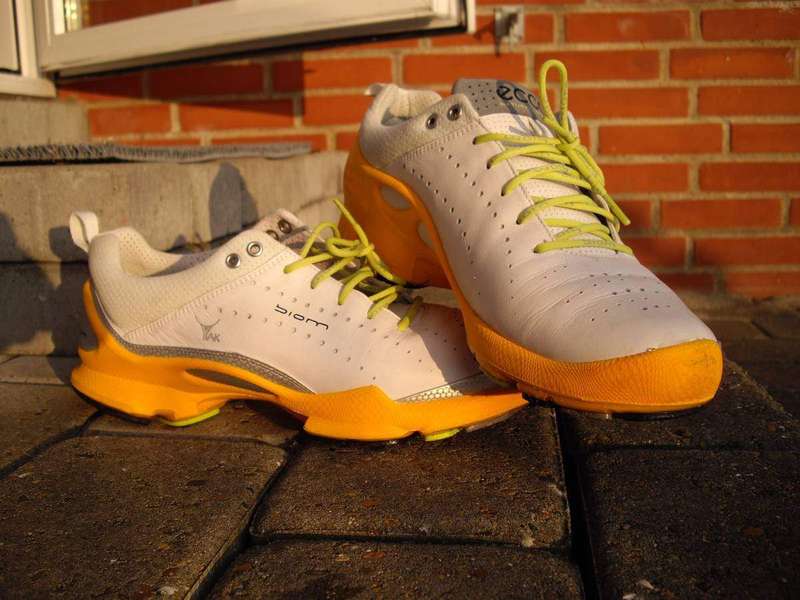
Image Credits: Wikimedia Commons
Frequently asked questions
Are shin splints a muscle or bone problem?
Both. The pain comes from stress on the muscles, tendons, and bone tissue together, per Mayo Clinic. The connective tissue anchoring shin muscles to the tibia gets irritated, and the bone itself can develop a stress reaction if overload continues.
Should I run through shin splint pain?
No. Continuing high-impact training through clear shin pain reliably worsens the condition. Switch to low-impact cross-training like swimming or cycling until the pain is fully gone, then return with a run-walk progression.
How long do shin splints take to heal?
Mild cases often improve within days to a couple of weeks of proper rest and ice. More stubborn cases need several weeks of reduced load. Pain that persists beyond a few weeks of self-care, or pain at rest, warrants a medical check.
Do I need new shoes or just better stretching?
Both help, but neither fixes overload alone. Replace worn shoes every 300 to 500 miles, stretch calves daily, and keep weekly mileage increases modest. The training load is the root cause; shoes and stretching are supporting fixes.
The bottom line
Your shins hurt because running loads tissues that have not adapted yet, and the standard beginner mistake is adding distance, speed, or days faster than the legs can handle. Shin splints are the bill for that mismatch.
Rest, ice 15 to 20 minutes three to four times a day, and cross-training will settle most cases. Then come back slowly: run-walk bursts, softer surfaces, fresh shoes, and weekly increases of about 10 percent at most. If pain persists at rest or localizes to one spot, see a clinician.
---
About the author: Rive News is the research desk behind these explainers, covering practical questions with verified facts and named sources.
Latest in Fitness
- How to Start Running When You Hate Running
- Why Do I Get Out of Breath So Fast When Running?
- Muscle Soreness vs Injury: How to Tell
- Why Do Knees Hurt When Squatting but Not Running?
Subscribe for one practical explainer like this in your inbox every morning.
Rive News follows a corrections policy: factual errors are fixed promptly and noted with an update timestamp.
Related stories

How long does it really take to build noticeable muscle?
Strength gains start in week one, but visible muscle takes 8-12 weeks for most beginners. What the Oklahoma CT-scan study measured,

Why you feel dizzy after a workout: the 5 common causes
Post-workout dizziness usually comes from a blood pressure dip, dehydration, or low blood sugar. The numbers behind each cause, and when

Why Do Knees Hurt When Squatting but Not Running?
Knees hurt when squatting but not running because deep bends multiply force on the kneecap. Learn the mechanics, common causes, fixes,