
Strength training makes bones stronger: how loading works
By Rive News / Research desk | Rive News / Published October 28, 2026 at 9:00 AM PKT
Key takeaways
- Bones are living tissue that remodels in response to the loads placed on it.
- Muscle pulls during lifting signal bone-building cells to lay down new bone.
- Two to three resistance sessions per week are the standard adult recommendation.
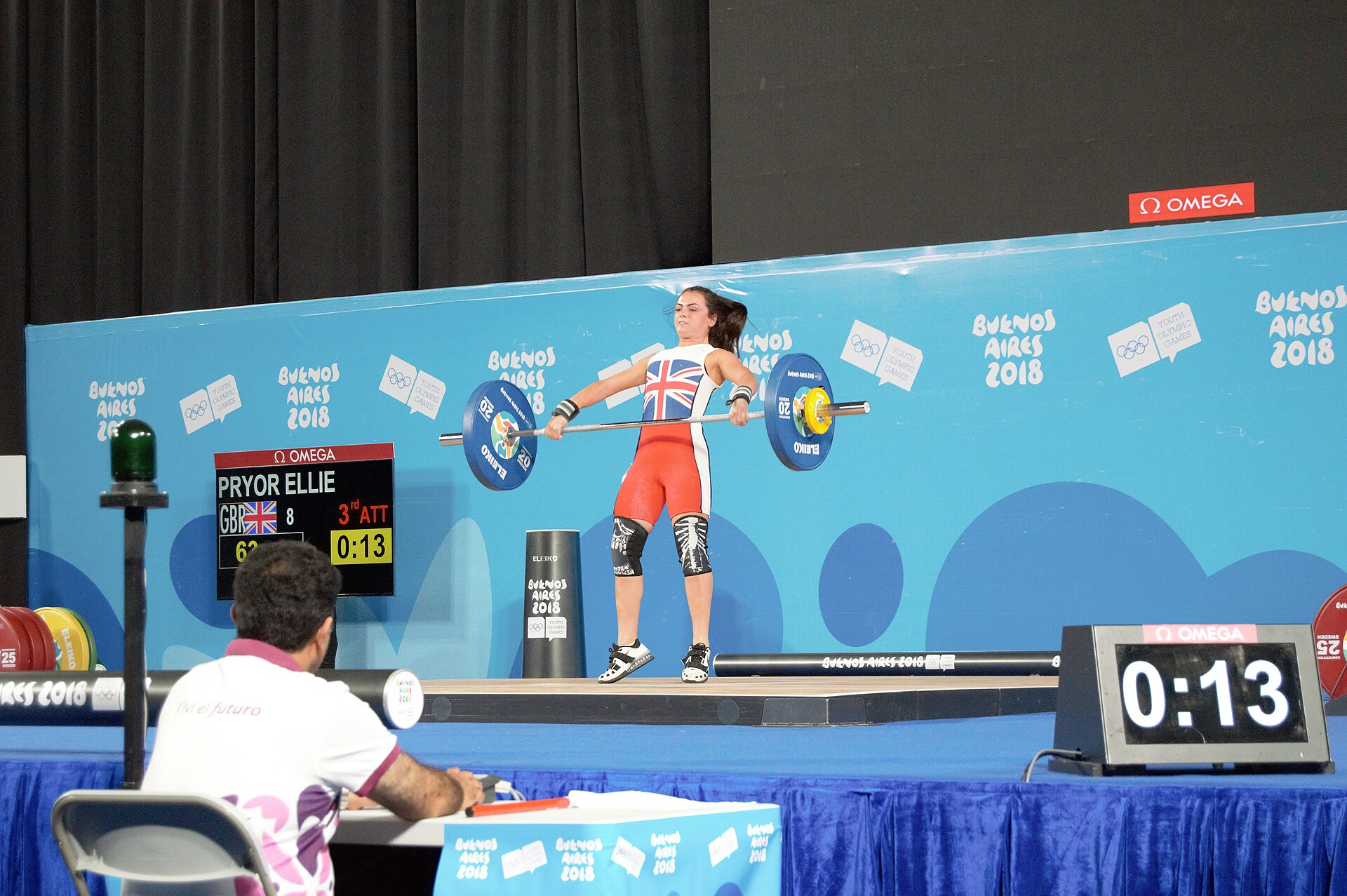
[A weightlifter competing in the girls 53 kg group at the 2018 Youth Olympic Games.] Photograph: the subject
Image Credits: Wikimedia Commons
Strength training makes bones stronger because bone is living tissue that adapts to physical stress. When muscles pull hard against bone during a lift, the skeleton receives a mechanical signal that it needs to be sturdier at exactly the loaded spots.
This article explains how that signal works, which cells carry it out, what the evidence shows for different ages, and how much training the major guidelines recommend. This article is for general information only and is not medical advice; talk to a clinician about any symptoms.
Bone is not a fixed frame
Bone looks solid and finished, but it is constantly being broken down and rebuilt. Two cell types run this cycle: osteoblasts build new bone, and osteoclasts clear away old bone.
The balance between those two cell types decides whether a bone gains density, holds steady, or thins over time. Loading tips that balance toward building, while long periods without loading tip it toward loss.
Astronauts in weightlessness and people confined to bed both lose bone quickly, and that loss shows how much the skeleton depends on daily mechanical input. The same principle works in reverse: add load, and the skeleton invests in extra material.
How a lift becomes a bone signal
Every repetition starts with a muscle contracting and tugging on the bone where its tendon attaches. That tug bends the bone very slightly, far too little to see or feel, but enough for the bone to notice.
Deep inside the bone, a third cell type called osteocytes acts as the sensor network. Osteocytes detect the strain and pass chemical messages that recruit osteoblasts to the loaded area.
The osteoblasts then lay down new bone matrix, which later hardens with minerals such as calcium. Over weeks and months, the bone becomes denser and thicker along the lines of force it experiences most.
This principle is known as Wolff's law, named after the nineteenth-century surgeon Julius Wolff. In plain terms, bone adapts to the loads placed upon it, growing stronger where stress is greatest and thinning where stress disappears.
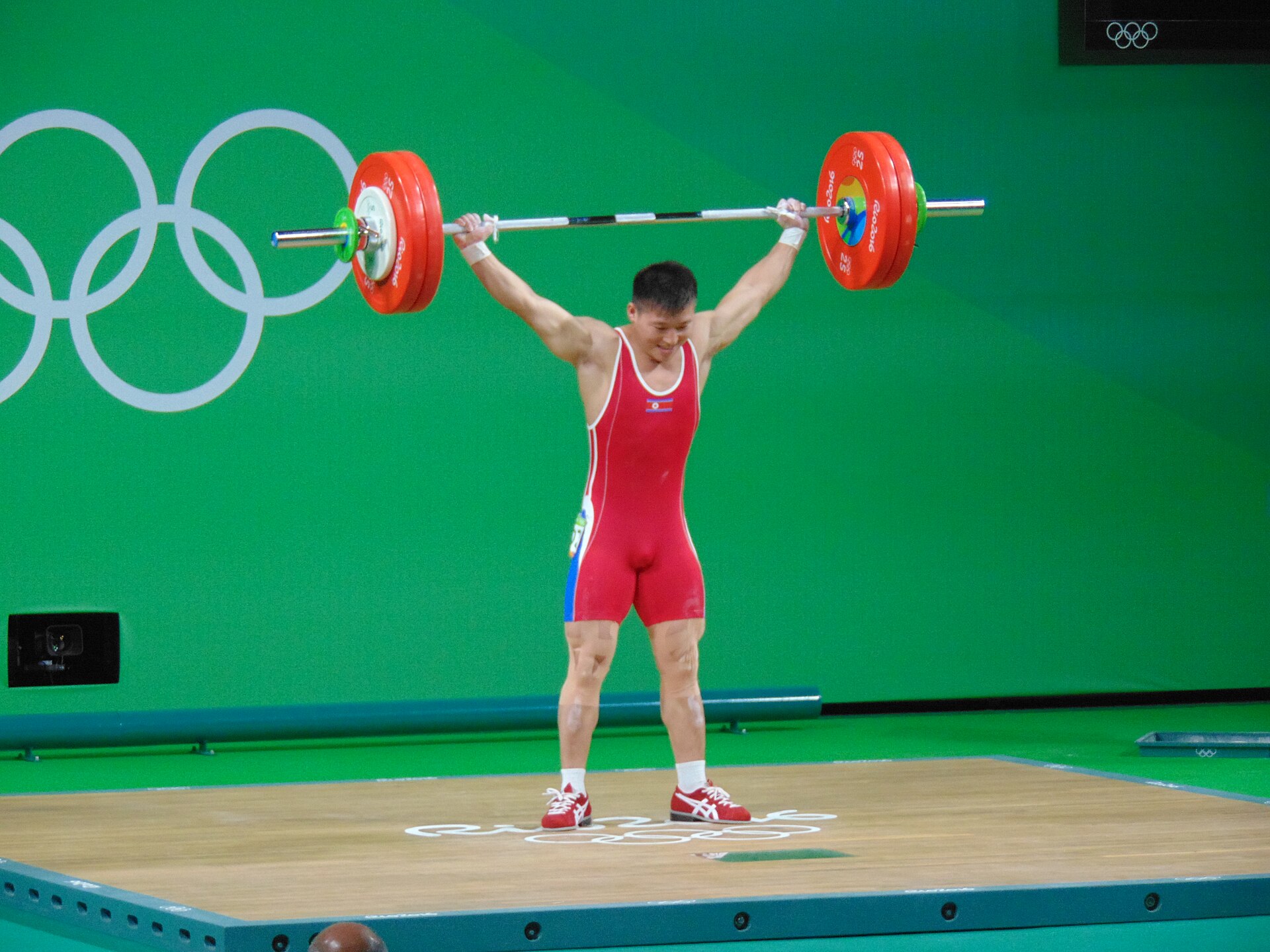
[A weightlifter competing in the men's 69 kg event at Rio 2016.] Photograph: the subject
Image Credits: Wikimedia Commons
What the research shows
The American College of Sports Medicine recommends weight-bearing endurance activity three to five times per week and resistance exercise two to three times per week to preserve bone health in adults. That recommendation appears in a published review of physical activity and bone health.
A separate position statement on osteoporosis management recommends resistance training at least two or three times per week for older adults with low bone density. The recommended dose in that statement is one set of 5 to 12 repetitions across 3 to 10 exercises covering the major muscle groups, at 50 to 85 percent of a one-repetition maximum, sustained for 3 to 12 months.
The LIFTMOR trial, published in 2017, tested high-intensity resistance and impact training in postmenopausal women. The trial found improvements in bone density at the spine and hip, the two sites where fractures cause the most harm.
Results are not uniform, and reviews are candid about that fact. That review notes that exercise effects on bone density vary across studies and that the ideal prescription is still being refined.
Still, the direction of the evidence is consistent: loading preserves bone, and in younger and early postmenopausal groups it can add bone. Reviews of premenopausal women report bone strength gains of one half to two and a half percent from sustained weight-bearing resistance exercise.
Age changes the goal, not the mechanism
For most people, bone mass peaks during the third decade of life, according to the National Institutes of Health. Childhood and adolescence are therefore the window when loading builds the largest possible reserve.
Young people who exercise regularly generally reach a higher peak bone mass than those who do not. That reserve matters because the skeleton draws on it for the rest of life.
After the peak, the goal shifts from building to defending. After menopause, women typically lose bone mass at roughly 1 to 2 percent per year, with faster loss in the first years after menopause.
In older adults, research finds that sustained activity generally prevents further bone loss even when it no longer adds much new bone. That prevention still matters, because a smaller loss means a stronger skeleton at eighty than at seventy would otherwise be.
Strength training also protects bones indirectly, through muscle and balance. Stronger legs and better balance reduce the chance of a fall, and most fractures in older adults start with a fall rather than with a bone breaking on its own.
Which kinds of training load bone best
Not all exercise loads the skeleton equally. Swimming and cycling are excellent for the heart, but they place little impact or resistance load on bone, so they do less for density.
The strongest bone stimulus comes from exercises that combine resistance with impact or high muscle force. Proper squat form matters for squats, deadlifts, presses, and weighted step-ups, which all pull hard on the bones of the hips, spine, and legs.
Jumping and hopping add impact loading, which is why guidelines often pair resistance work with some impact activity. Tennis and jogging count as weight-bearing endurance activities, while brisk walking provides a milder load.
Progression matters as much as the exercise choice. Bones adapt to a given load and then stop improving, so weights and difficulty need to rise gradually over months.
A sensible starting point for a beginner is two sessions per week covering the major muscle groups, with rest days between sessions. Anyone with diagnosed osteoporosis should get individual guidance first, since very heavy spinal loading needs supervision in that group.
Frequently asked questions
Does walking alone strengthen bones?
Walking helps, but it is a mild stimulus. Brisk walking and hiking on uneven ground load bone more than gentle strolling, and adding resistance sessions gives a clearly stronger effect.
How long does it take to see a bone benefit?
Bone remodels slowly, so measurable density changes usually take several months. Trials that show gains typically run for 6 to 12 months of consistent training.
Can older adults still build bone?
Older adults can usually slow or stop bone loss, and some studies show small gains, especially in the first year of training. The bigger win at older ages is fewer falls, which prevents the fractures that low density makes dangerous.
Is lifting heavy weights required?
Heavy loads produce a stronger signal, but moderate loads done consistently still help. Guidelines for older adults start at 50 to 60 percent of a one-repetition maximum, which is a weight that allows 10 to 15 controlled repetitions.
The bottom line
Strength training makes bones stronger because the skeleton treats muscle force as building instructions. Osteocytes sense the strain, osteoblasts add new bone where it is needed, and the result is a denser skeleton along the loaded lines.
Two to three sessions per week, covering the major muscle groups and progressed gradually, matches the standard adult recommendation. Starting earlier builds a bigger reserve, but starting later still defends what remains, and that defense is worth having.
Tags: strength training, bone health, osteoporosis
The Rive News research desk writes plain-language explainers from published research and public guidance, with sources listed for every article.
Related
- How long it takes to build noticeable muscle
- How to start strength training safely after 40
- Muscular endurance and strength: how they differ in training
Subscribe to the Rive News newsletter for one research-backed explainer each week.
Rive News publishes general information explainers; claims are attributed to their sources, and corrections are published when an error is found.
Related stories
How long does it really take to build noticeable muscle?
Strength gains start in week one, but visible muscle takes 8-12 weeks for most beginners. What the Oklahoma CT-scan study measured,
Why you feel dizzy after a workout: the 5 common causes
Post-workout dizziness usually comes from a blood pressure dip, dehydration, or low blood sugar. The numbers behind each cause, and when
Why Do Knees Hurt When Squatting but Not Running?
Knees hurt when squatting but not running because deep bends multiply force on the kneecap. Learn the mechanics, common causes, fixes,