
Why muffins get tough when you overmix the batter
Key takeaways
- Stirring develops gluten: two wheat proteins, glutenin and gliadin, link into elastic strands when hydrated and agitated.
- An overdeveloped gluten network traps gas bubbles and shrinks them, creating dense crumb, tunnels, and a chewy bite.
- Mixing just 10 to 15 strokes after combining wet and dry ingredients keeps gluten weak and muffins tender.
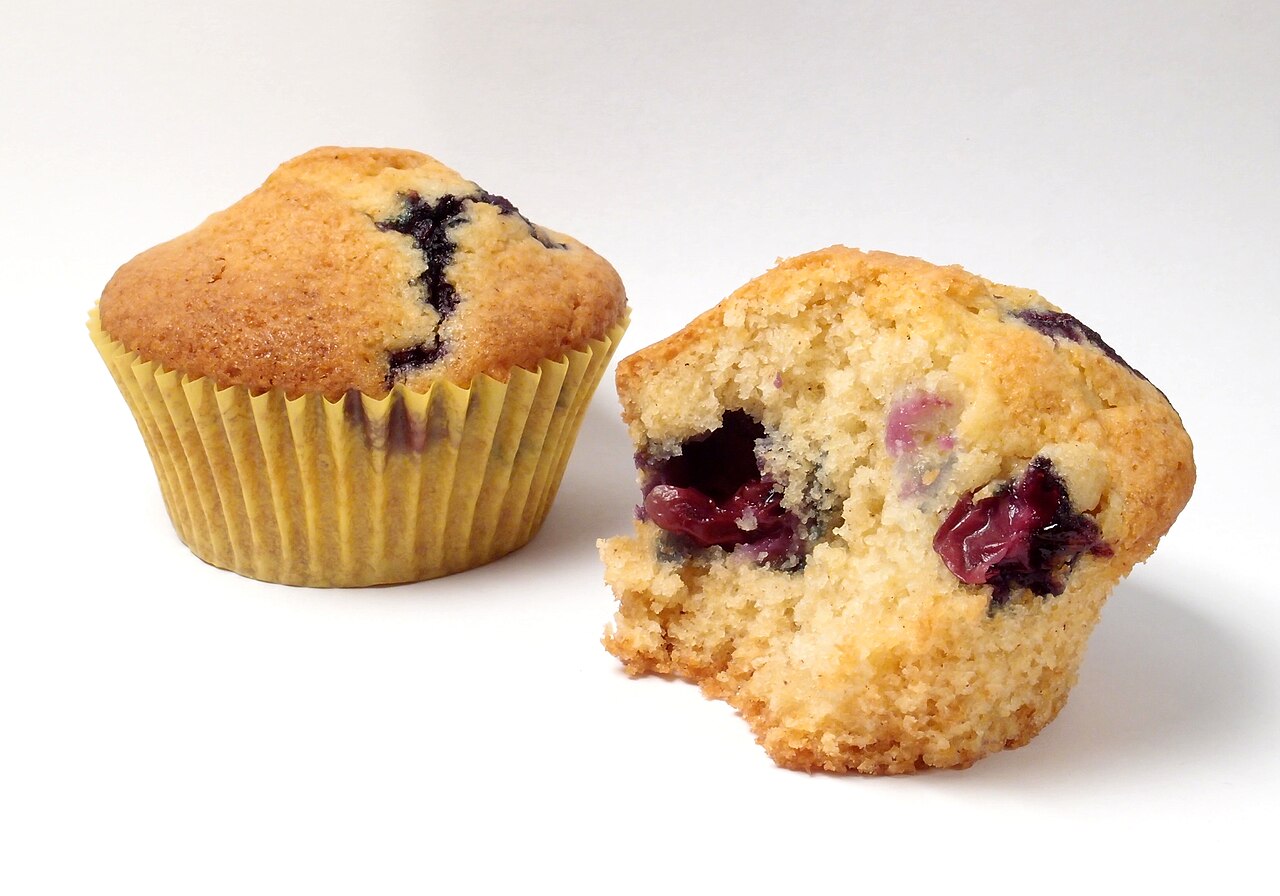
Tender muffins come from minimal gluten development: the batter should stay lumpy, never smooth. Image Credits: Wikimedia Commons
Every muffin recipe carries the same warning: mix until just combined, do not overmix. The reason is food physics.
Flour contains two storage proteins, glutenin and gliadin, that sit quietly apart until water arrives. Stirring forces them together, and they link into gluten, an elastic network that gives bread its chew. In a muffin, that same network is the enemy of tenderness.
This article explains why muffins get tough when you overmix the batter, including how gluten forms, what the batter tells you, and how to fix it next time.
Gluten: structure you want in bread, not muffins
Gluten forms when the two proteins naturally present in wheat flour, glutenin and gliadin, combine with water and undergo mechanical action like mixing or kneading. Glutenin provides elasticity and strength, while gliadin contributes extensibility and flow. Together they create gluten's stretchy, web-like network that traps gases and provides structure, according to MyKitchenMates.
That network is a virtue in bread. Professional bakers knead bread dough for 8 to 15 minutes specifically to develop strong gluten networks that trap carbon dioxide from yeast.
But muffins, pancakes, and quick breads demand minimal gluten development. These baked goods rely on tenderness rather than chewiness, and overmixing creates the tough, rubbery texture that contradicts their intended eating experience.
The effect is most pronounced in recipes designed for minimal structure. Muffins rely on chemical leavening and gentle handling, and their ideal crumb depends on uneven protein distribution and weak networks. Uniform, fully developed gluten works against that goal.
What overmixing does inside the batter
The more you stir, the more protein strands link together, and the stronger and more elastic the network becomes. As mixing continues, the strands align in the same direction, and elasticity rises. The batter becomes stronger but also more resistant to expansion, notes Headcount Coffee's food-science team.
During baking, this resistance restricts gas bubble growth. Baking powder and baking soda release gas while the muffins bake, and the batter needs to expand around those bubbles.
In a lightly mixed batter, gas bubbles expand freely. In an overmixed batter, the strong gluten network channels the gas into long tunnels instead of even pockets, which is why overmixed muffins show three classic signs: dense or chewy texture, tunnels in the crumb, and peaked tops instead of rounded ones.
Moisture distribution changes too. Gluten networks bind water tightly, pulling it away from starch granules that would otherwise swell and soften during baking. This competition reduces tenderness even further, producing muffins that feel dry despite adequate hydration.
Heat then locks everything in place. Gluten proteins in flour start changing around 140°F and fully set by 180°F.
Once baking begins, starches gelatinize and proteins coagulate, freezing the gluten network exactly as it exists at that moment. If the network is already overdeveloped, no later process can reverse it.
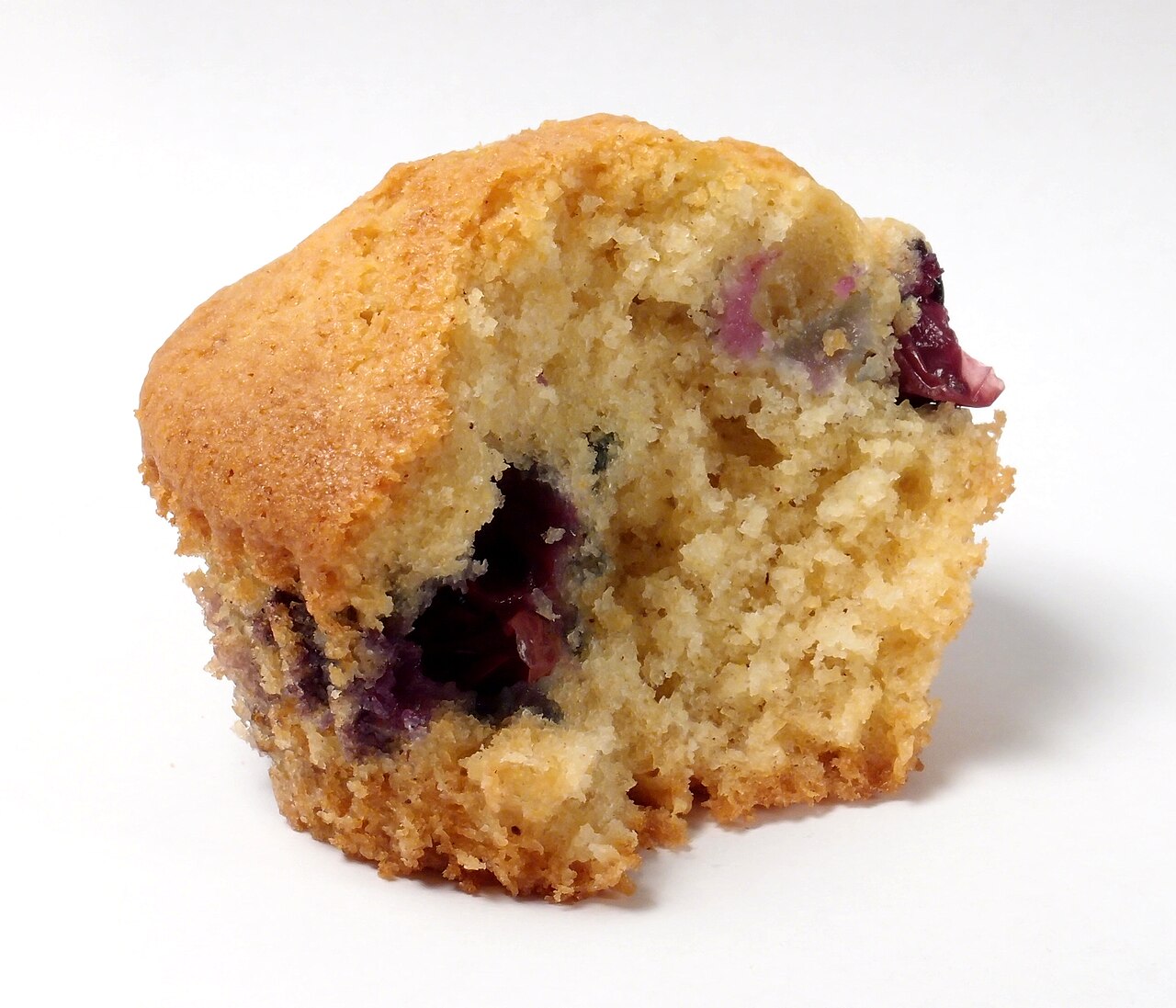
The crumb tells the story: even air pockets mean gentle mixing, tunnels and density mean too much stirring. Image Credits: Wikimedia Commons
Reading the batter before it bakes
You can spot trouble before the muffins reach the oven. A properly mixed muffin batter looks rough and lumpy, with small soft flecks of flour still visible. When you lift the spatula, it should fall off in soft blobs.
An overmixed batter looks smooth, glossy, and stretchy. When you lift the spatula, the batter forms long, unbroken strands that cling and stretch instead of breaking cleanly. That rope-like behavior is advanced gluten polymerization: the batter has started behaving like bread dough, and the muffins will follow.
Fat and sugar offer some protection. Butter coats flour particles and physically blocks protein connections, and sugar competes with flour for moisture, which limits how much gluten can form.
But they cannot fully counteract prolonged agitation. Overmixing eventually overwhelms these barriers, especially in lean batters where flour and liquid dominate.
The 10-to-15-stroke method
The fix is a technique, not a new recipe. Combine the dry ingredients in one bowl and the wet in another, then fold them together with a spatula using only 10 to 15 strokes.
Stop when the flour is just moistened. Lumps are fine, and small dry-looking flecks are acceptable. They hydrate in the oven.
Flour choice matters as well. All-purpose flour contains 10 to 12 percent protein, a moderate level that balances versatility with control.
Cake flour, at 7 to 9 percent protein, naturally limits gluten formation and gives extra-tender results. Bread flour, at 12 to 14 percent protein, virtually guarantees tough muffins even with careful mixing.
Avoid the electric mixer for the final combination. It delivers far more shear force than a hand spatula, and it is easy to overshoot in seconds.
If the batter still looks uneven after 15 strokes, walk away for a minute rather than stirring more: the flour keeps hydrating on its own. The same restraint applies to other quick batters, as covered in our guide to why bread goes stale faster in the refrigerator and the science of the Maillard reaction.
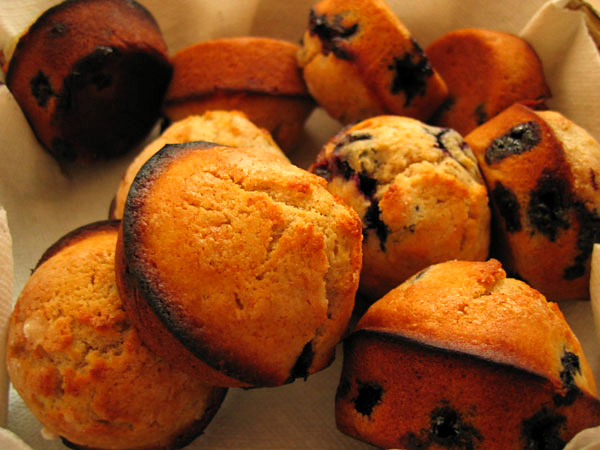
A short, gentle mix gives domed tops and an open crumb instead of tunnels. Image Credits: Wikimedia Commons
Can I fix muffins that are already tough?
You cannot un-mix a batter or undo gluten development once baked. Warm them and serve with butter to soften the bite, and use the 10-to-15-stroke method on the next batch.
Why do my muffins have tunnels inside?
Tunnels form when an overdeveloped gluten network forces expanding gas into long channels instead of round pockets. The leavening agents, baking powder and baking soda, release the gas normally, but the tight protein structure redirects it.
Is lumpy batter really okay?
Yes. Small soft lumps of flour hydrate fully in the oven's heat. Smoothing them out is exactly what builds the excess gluten that makes muffins tough.
Does resting the batter help?
A short rest of 5 to 10 minutes lets flour hydrate passively without mechanical action, which can help. It will not reverse gluten that is already overdeveloped.
Which flour is best for tender muffins?
Cake flour, with 7 to 9 percent protein, limits gluten formation most. All-purpose flour works well with gentle mixing. Bread flour should stay in the bread recipes.
The bottom line
Tough muffins are not a mystery and not a bad recipe. They are the mechanical consequence of stirring too much, which turns flour's quiet proteins into a strong elastic network that fights tenderness at every step: it resists bubble growth, binds water away from starch, and sets hard in the oven.
Count your strokes, keep the lumps, and let the oven do the rest. For your next bake, our explainer on the difference between baking soda and baking powder covers the other half of muffin chemistry.
Latest in Food & Cooking
- Baking soda vs baking powder: the real difference
- Why bread goes stale faster in the refrigerator
- The Maillard reaction in simple terms
- Why onions make you cry (and how to stop it)
One practical kitchen-science tip in your inbox each week. Subscribe to the Rive News newsletter.
Related stories
Why Does Bread Go Stale Faster in the Refrigerator?
Bread goes stale faster in the fridge because starch recrystallizes fastest near 4°C. Here is the retrogradation science and the right way
Baking soda and baking powder: what's the difference?
Baking soda is pure sodium bicarbonate; baking powder adds two dry acids for double-acting lift. Learn when to use each, plus exact
What Is the Maillard Reaction in Simple Terms?
The Maillard reaction is the browning chemistry between amino acids and sugars above 140 C that creates the crust, color, and rich flavor