
Baking soda and baking powder: what's the difference?
Key takeaways
- Baking soda is pure sodium bicarbonate; it only releases lift when it meets an acid in the recipe.
- Baking powder is baking soda plus two dry acids, so it releases gas twice: once when wet, again in the oven's heat.
- Swapping works in a pinch, but it is not equal: 1 teaspoon of baking powder roughly replaces 1/4 teaspoon of baking soda.

Photograph: Intropin/Wikimedia Commons
Image Credits: Wikimedia Commons
Baking soda is the simplest leavener in the kitchen. It has one ingredient, sodium bicarbonate, and it is a base that reacts the moment it meets an acid.
Baking powder looks like the same white powder, but it is a complete leavening system in a can. It contains baking soda plus the acids it needs, so it can work in recipes that have no acidic ingredients at all.
This article takes a closer look at both leaveners, including what baking soda is, what baking powder adds to the mix, how each one works in the oven, and when to use which (plus how to substitute one for the other).
What is baking soda?
Baking soda is sodium bicarbonate, NaHCO3. That is the entire ingredient list.
As a base, it reacts when it touches acids such as buttermilk, yogurt, lemon juice, vinegar, or brown sugar, according to HowStuffWorks. The reaction releases carbon dioxide, CO2, the same bubbles you saw in the grade-school vinegar volcano. In a batter, those trapped bubbles are called chemical leavening, and they are what make the cake rise.
There is one catch. The reaction starts immediately, the instant soda meets acid. That is why recipes using baking soda need to get into the oven fast.
HowStuffWorks notes that batters made with baking powder can wait about 20 minutes before baking without losing lift. Baking soda batters cannot.
Too much soda causes its own trouble. If there is not enough acid in the recipe to neutralize it, the leftover soda tastes soapy or metallic, according to Baking Soda Recipe. The typical rate is about 1/4 teaspoon per cup of flour.

Photograph: Gauzecard/Wikimedia Commons
Image Credits: Wikimedia Commons
What is baking powder?
Baking powder starts with the same sodium bicarbonate. Then it adds two dry acids and a little starch, usually cornstarch, to keep everything from reacting in the can.
The two acids do different jobs. According to NC State News, the first acid, monocalcium phosphate, reacts with the soda as soon as liquid hits the batter.
The second acid, either sodium acid pyrophosphate or sodium aluminum sulfate, waits until it is both wet and hot. That means it starts working after the batter goes into the oven. This two-stage release is why most baking powder is labeled "double acting.
".
Because the acid is built in, baking powder does not need an acidic ingredient in the recipe. The typical rate is about 1 teaspoon per cup of flour, according to Baking Soda Recipe.
Baking powder has a shorter pantry life than soda: about 6 to 12 months after opening, versus 1 to 3 years for baking soda, according to Baking Soda Recipe. To test a can, stir a spoonful into a third of a cup of hot water. Vigorous fizzing means it is still active.
How each one works in the oven
The chemistry is one simple idea: base plus acid makes gas. Baking soda brings the base and borrows the acid from the recipe. Baking powder brings both, in dry form, and wakes them up with liquid and heat.
Picture two cakes side by side. The soda cake starts rising in the mixing bowl and keeps its single burst going into the oven. The double-acting powder cake rises once during mixing and gets a second push in the oven's heat, which makes the timing more forgiving for slow bakers.
That is also why some recipes call for both. Each one is doing a separate job, according to Baking Soda Recipe. The powder handles most of the leavening, while a smaller dose of soda neutralizes extra acid from ingredients like buttermilk and helps the crust brown.
Baking soda vs baking powder: key differences
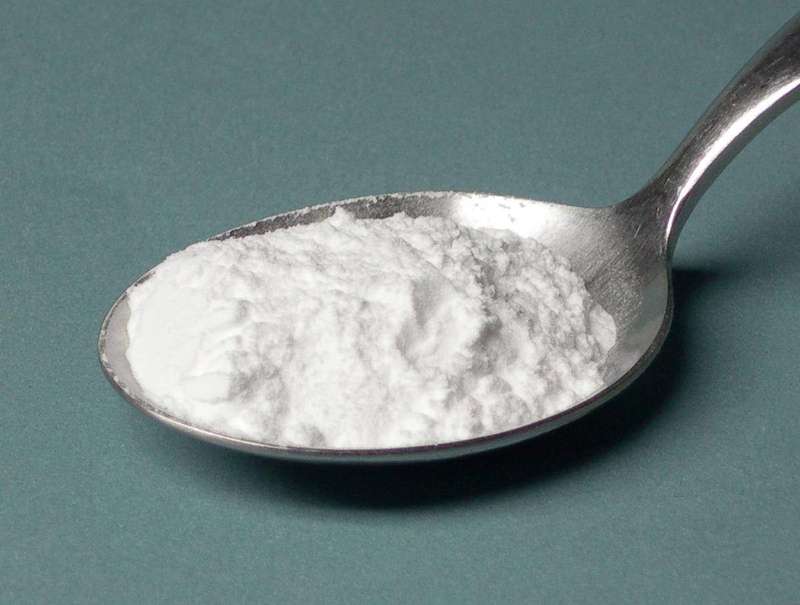
Composition. Baking soda is 100 percent sodium bicarbonate. Baking powder is sodium bicarbonate plus two acids plus a drying starch.
Needs acid in the recipe? Baking soda: yes. Baking powder: no.
Leavening action. Baking soda reacts once, immediately. Double-acting baking powder reacts twice, at room temperature and again in the oven.
Flavor risk. Unneutralized soda can taste soapy or metallic. Excess powder can taste metallic too, but it is less likely in normal amounts, according to Baking Soda Recipe.
Freshness check. Stir soda into vinegar; stir powder into hot water. Both should fizz.
Photograph: Rainer Zenz/Wikimedia Commons
Image Credits: Wikimedia Commons
When to use which, and how to substitute
Match the leavener to the recipe's acids. If the batter already contains buttermilk, yogurt, cocoa, molasses, or brown sugar, baking soda is the natural fit. If the batter is neutral, with milk, water, or eggs, baking powder is the safer pick.
Swapping is possible with a little math, per Baking Soda Recipe. To replace 1 teaspoon of baking powder, use 1/4 teaspoon of baking soda plus 1/2 teaspoon of cream of tartar. To replace 1 teaspoon of baking soda, use 3 teaspoons of baking powder, but expect tradeoffs: the result can taste flatter and brown less.
One homemade shortcut deserves a warning. Baking soda mixed with cream of tartar behaves like single-acting baking powder, because it has no heat-reactive acid. It works for quick batters, but the batter needs to bake right away.
FAQ
Can I use baking powder instead of baking soda in banana bread?
You can, at three times the volume, but the flavor changes. Part of banana bread's taste comes from the soda reacting with the natural acids in ripe bananas, according to Baking Soda Recipe. The powder version rises fine but tastes flatter.
Why does my recipe call for both baking soda and baking powder?
They are not redundant. The baking powder does most of the lifting, while the baking soda neutralizes extra acid and improves browning, according to Baking Soda Recipe.
How do I know if my baking powder is still good?
Drop a spoonful into a third of a cup of hot water. If it fizzes vigorously, it is still active, according to Baking Soda Recipe. If the reaction is weak, replace the can.
What happens if I just leave the leavener out?
Expect a flat, dense result. Chemical leaveners are the main source of lift in quick breads, muffins, and cakes, which have no yeast to do the job.
The bottom line
Baking soda is a base waiting for an acid. Baking powder is the same base with its acids preloaded. Use soda when the recipe brings its own acid, use powder when it does not, and respect the freshness test before you trust an old can.
It is a good idea to check the dates on both cans before your next bake. Fresh leaveners are the cheapest insurance a baker can buy.
---
Rive News's research desk writes practical explainers backed by public sources and expert guidance.
Related stories
- What is proper squat form? A step-by-step guide
- How to handle toddler tantrums without yelling
- Foods toxic to dogs: the list, with reasons
Subscribe to the Rive News newsletter for one practical explainer every week.
© 2026 Rive News. All rights reserved.
Related stories

Why Does Bread Go Stale Faster in the Refrigerator?
Bread goes stale faster in the fridge because starch recrystallizes fastest near 4°C. Here is the retrogradation science and the right way

What Is the Maillard Reaction in Simple Terms?
The Maillard reaction is the browning chemistry between amino acids and sugars above 140 C that creates the crust, color, and rich flavor
Onions make you cry: the chemistry and how to stop it
Cutting an onion releases syn-propanethial-S-oxide, a gas that turns to mild acid on your eyes. The chemistry behind the tears