
Onions make you cry: the chemistry and how to stop it
Key takeaways
- Cutting an onion releases syn-propanethial-S-oxide, a gas that irritates the eyes and triggers reflex tears.
- The gas exists only after you cut: an intact onion keeps the sulfur compounds and enzymes sealed in separate cell compartments.
- Chilling the onion, using a sharp knife, and blocking the gas with goggles or a fan are the prevention tricks with real chemistry behind them.
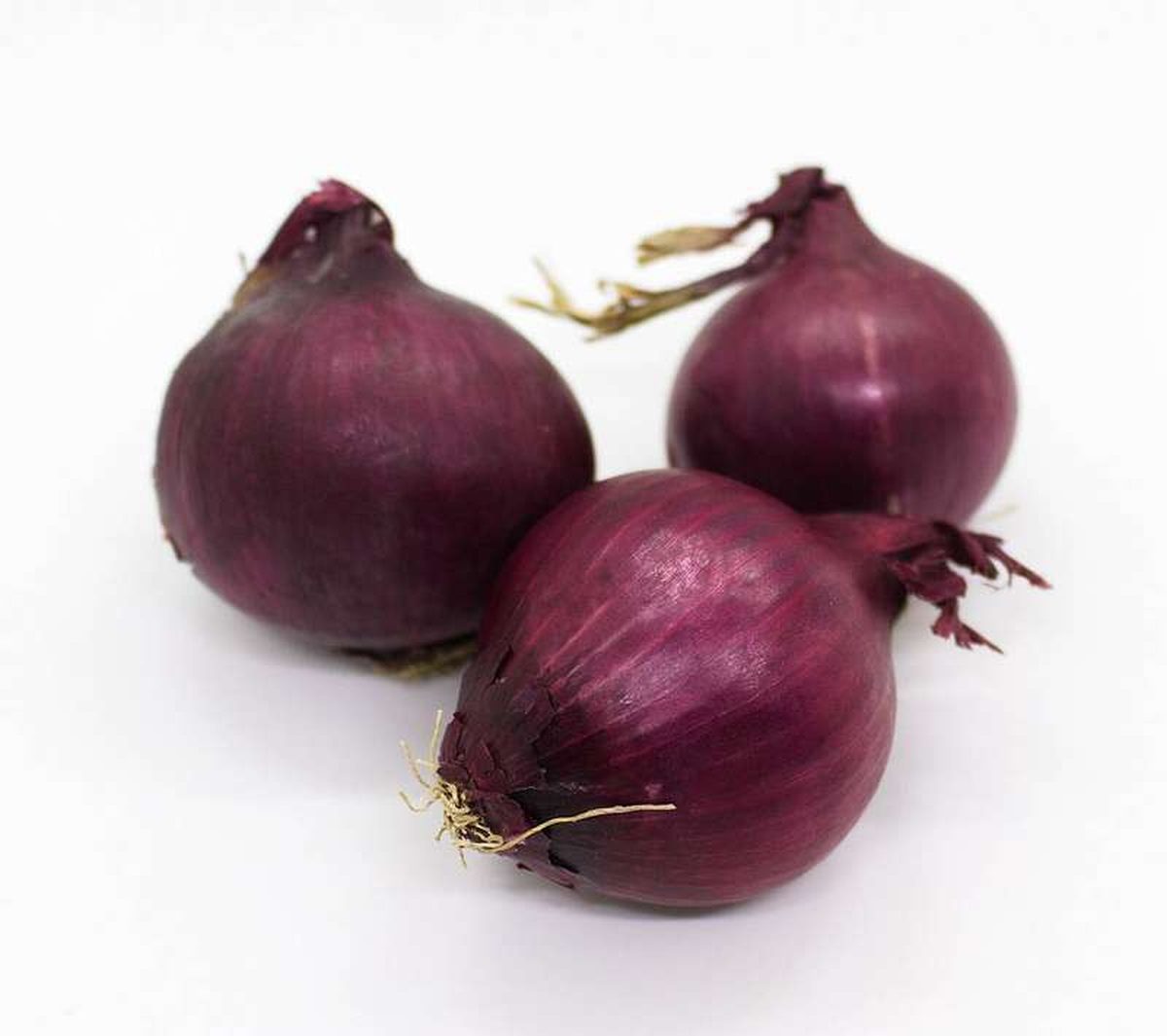
Onions make you cry because of syn-propanethial-S-oxide, a chemical irritant released when the onion's cells are cut open. It drifts up into your eyes, where it pushes the tear glands to release tears. The tears are a defense response, not an emotional one.
Here is the part most people miss: the tear gas does not exist inside a whole onion. You build it with your knife, in a split second, the moment the blade breaks the cell walls. This article explains why onions make you cry, including what makes onions release their tear gas, why the gas targets your eyes, and which prevention tricks actually work.
What makes onions release their tear gas
An onion stores sulfur taken from the soil inside its cells, partly as a defense against pests. While the onion is whole, the chemicals that cause tearing are kept sealed in separate compartments, so a whole onion cannot make you cry.
The trouble starts the moment a knife breaks those compartments open. An enzyme called alliinase mixes with sulfur compounds and produces an unstable sulfenic acid.
Then a second enzyme, lachrymatory-factor synthase, reshapes that acid into the real payload: syn-propanethial-S-oxide, a gas. The Library of Congress lays out this four-step sequence in its science reference answer on the topic.
That second enzyme was unknown until 2002. Japanese researchers led by Imai and colleagues identified lachrymatory-factor synthase and published the finding in Nature, proving it, not alliinase alone, was the true culprit. The gas itself has been studied far longer: its molecular formula was found in 1956, and chemist Eric Block and co-workers pinned down its structure in 1979, according to the American Chemical Society.
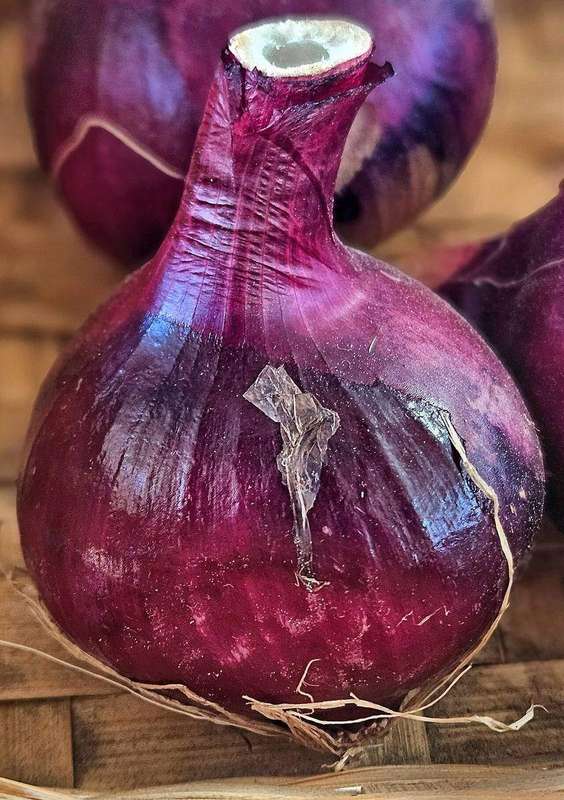
Block, who wrote the leading book on onion chemistry, describes the onion's design as an evolved chemical defense system. As he told NPR Illinois, each onion cell holds a sealed sac filled with enzymes.
Bite or cut into the bulb, the sacs break open, and a whole chain of chemical processes happens in an instant. The onion, in other words, is trying to make you stop eating it. Most of us are not deterred.
Garlic mostly escapes this because its chemistry takes a different path. Its sulfenic acid condenses into sulfur compounds, which give garlic its strong smell and flavor, instead of being turned into the tear gas. The lachrymatory-factor step is unique to onions and a couple of other alliums (the onion family), Live Science reports.
Why the gas targets your eyes
Syn-propanethial-S-oxide turns to vapor very quickly and rises from the cutting board. That speed is how it reaches your eyes, according to Live Science.
Once there, it dissolves in the moisture covering the eye's surface. That reaction forms a mild acid, which irritates the sensitive nerves in the eye's clear front layer. Your eyes respond with reflex tears, the protective kind that wash an irritant away rather than express an emotion.
"Your eyes start tearing up to get rid of the irritant," Silvaroli told Live Science. The whole loop, from cut to tears, takes seconds. And because the amount of acid produced is tiny, the effect is irritating but not harmful, as ScienceAlert's explainer notes.
Which prevention tricks actually work
Not all kitchen folklore survives contact with the chemistry. Here are the tricks that have a real mechanism behind them, roughly in order of effectiveness.
Wear goggles or run a fan. This is the most direct fix. Goggles physically block the vapor from reaching your eyes, and a fan blows the compound's vapors safely away, according to ThoughtCo's science writer Anne Marie Helmenstine, Ph.D. It looks silly. It works completely.
Chill the onion first. Refrigerating the onion before cutting slows the enzyme reactions and changes the chemistry inside the bulb, Helmenstine explains. A cold onion releases less gas, and the gas that does form rises more slowly. Thirty minutes in the fridge is enough to notice a difference.
Use a sharp knife. A dull blade crushes and tears cells, breaking far more of them than a sharp edge does. Fewer broken cells means less enzyme mixing, which means less tear gas. Science communicators at My Curious Body note this as one of the three factors that genuinely cut down tears, alongside cold and water.
Cut under water or on a wet board. The gas dissolves in water, so a wet cutting surface captures some of it before it goes airborne. Cutting the onion fully underwater works too, though it is awkward for anything beyond a quick dice.
Cook the onion. Cooking switches off the enzyme, so cooked onion cannot make you cry even though the smell stays strong, Helmenstine notes. Useful knowledge, though it does not help when the recipe starts with raw dice.
What about the old stainless-steel trick? Wiping your fingers on stainless steel can reduce the sulfur smell on your hands, but it does nothing for the airborne gas and your eyes.
Holding a match in your mouth or breathing through your mouth has no chemical basis at all. For more on the science of what heat does to food, see our explainer on why you should rest meat after cooking.
Is the onion gas harmful to your eyes?
No. The amount of acid formed on the eye's surface is minuscule, so the effect is irritating but not damaging, according to ScienceAlert. Your tears flush it out within moments.
Why doesn't garlic make me cry the same way?
Garlic's sulfenic acid takes a different chemical path, condensing into the sulfur compounds behind garlic's strong flavor instead of becoming tear gas. The lachrymatory-factor synthase step that creates syn-propanethial-S-oxide is unique to onions and a couple of other alliums, Live Science explains.
Do sweet onions make you cry less?
Pungency varies by type, and milder sweet onions generally release less of the irritant. But any onion with working enzyme chemistry will produce some tear gas when cut, so chilling and a sharp knife still help.
Does cooking an onion stop the tears?
Yes, for the cook. Cooking switches off the tear enzyme, so a cooked onion cannot produce the gas even though its strong smell remains, according to ThoughtCo.
The bottom line
Onions make you cry because cutting them mixes sealed sulfur compounds with enzymes, building syn-propanethial-S-oxide in an instant. The gas rises, meets your eye moisture, and your reflex tears flush it out. It is plant chemical warfare, perfected long before kitchens existed.
The practical move is simple: chill the onion, sharpen the knife, and wear goggles or run a fan if you are cutting more than one. The chemistry is not negotiable, but the tears are optional.
---
Tags: Onions, Cooking tips, Food science, Kitchen hacks
Rive News's research desk covers travel, money, and everyday science with sourced explainers. No PR, no sponsored placements.
Latest in Food & Cooking
- Baking soda and baking powder: what's the difference?
- Why Does Bread Go Stale Faster in the Refrigerator?
- Why Should You Rest Meat After Cooking? The Science of Juiciness
Subscribe for one sourced explainer every morning.
Rive News (c) 2026. Corrections: reply to any article and we fix verified errors within 48 hours.
Related stories

Why Does Bread Go Stale Faster in the Refrigerator?
Bread goes stale faster in the fridge because starch recrystallizes fastest near 4°C. Here is the retrogradation science and the right way

Baking soda and baking powder: what's the difference?
Baking soda is pure sodium bicarbonate; baking powder adds two dry acids for double-acting lift. Learn when to use each, plus exact

What Is the Maillard Reaction in Simple Terms?
The Maillard reaction is the browning chemistry between amino acids and sugars above 140 C that creates the crust, color, and rich flavor