
Why Should You Rest Meat After Cooking? The Science of Juiciness
Key takeaways
- Resting works through carryover cooking plus falling internal pressure, which lets fibers hold onto liquid instead of expelling it.
- A steak is roughly three-quarters water, and heat squeezes that water out as muscle proteins contract.
- The popular "juices redistribute" story is only half true. Researchers find no tidy reverse migration of liquid.
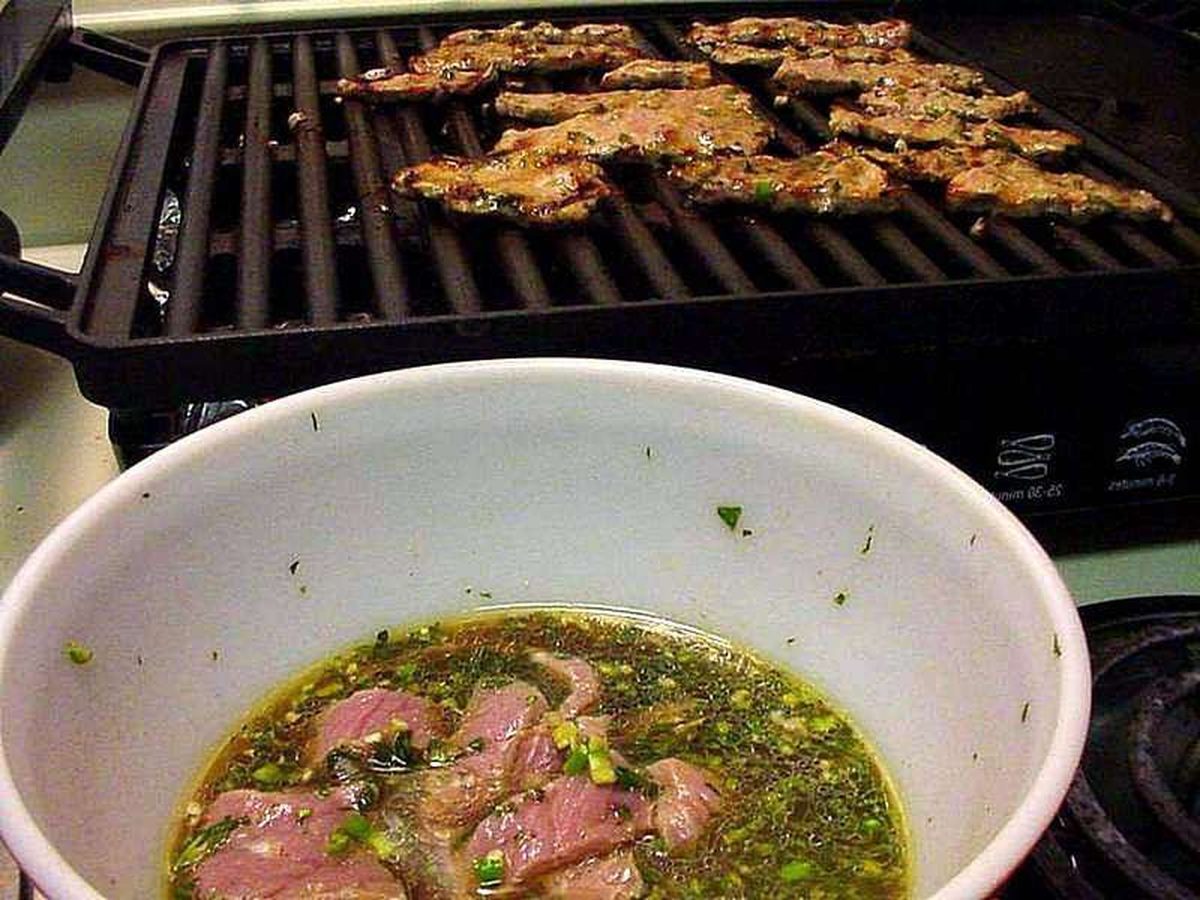
"Let it rest" is the most repeated instruction in cooking and one of the least explained. Everyone has seen the evidence: cut a steak straight off the heat and a pink pool spreads across the board.
Wait ten minutes and the same steak barely weeps. Something real is happening in those minutes, but the usual explanation, that the juices "redistribute," is more slogan than science.
The real story involves heat that keeps moving after the flame is off, pressure that builds and releases inside the muscle, and proteins that squeeze and relax. This article explains what is actually inside a piece of meat, what heat does to it, what changes while it rests, and how long different cuts need.
What is actually inside a piece of meat
A raw steak is roughly three-quarters water. That water is not pooled like a glass of it. It is held inside long, thin muscle fibers bundled together like a packed handful of drinking straws.
The trapped water, carrying dissolved proteins, salts, and flavor compounds, is what you taste as juiciness. Lose it, and you are chewing dry fibers.
One myth is worth retiring first: the red liquid is not blood. Almost all blood leaves the animal at slaughter.
The pink liquid on the plate is water mixed with myoglobin, a protein that ferries oxygen through muscle and turns red when its iron meets air. More myoglobin means darker meat, which is why beef runs deep red while chicken breast runs pale.
Myoglobin also explains the rare-to-well-done color ladder. It denatures, changing shape and losing its red color, at around 140°F (60°C), a consensus point in meat science also documented by Harold McGee in On Food and Cooking. The redness of a rare steak is a pigment doing its job, not undercooked gore.
What happens when heat hits muscle
When muscle fibers heat up, the proteins inside them contract and stiffen. As they tighten, they squeeze. Picture a wet sponge being wrung out: water that was comfortably held inside gets pushed, pressurized, and shoved toward the cooler middle of the cut.
A steak fresh off the heat is a sponge under tension, brimming and waiting for an exit. Cutting is the exit.
Two things make the problem worse. First, the outer layers are far hotter than the center, so the squeeze is uneven and violent at the edges. Second, the hotter the meat gets, the more the fibers contract and the more water they expel.
This is why the longer you cook meat, the drier it gets, and why resting cannot rescue a steak you already pushed past its ideal temperature. Past a certain point, the fibers have lost so much water that there is nothing left to hold.
Searing does not fix this. The old idea that a hard sear "seals in the juices" was tested by weighing seared and unseared steaks. The seared steaks lost as much moisture, in some tests more: 13% versus 19% weight loss in one comparison cited by food writers. A crust adds flavor and texture, but it is not waterproof.
What changes during the rest
The moment meat leaves the heat, two things happen at once.
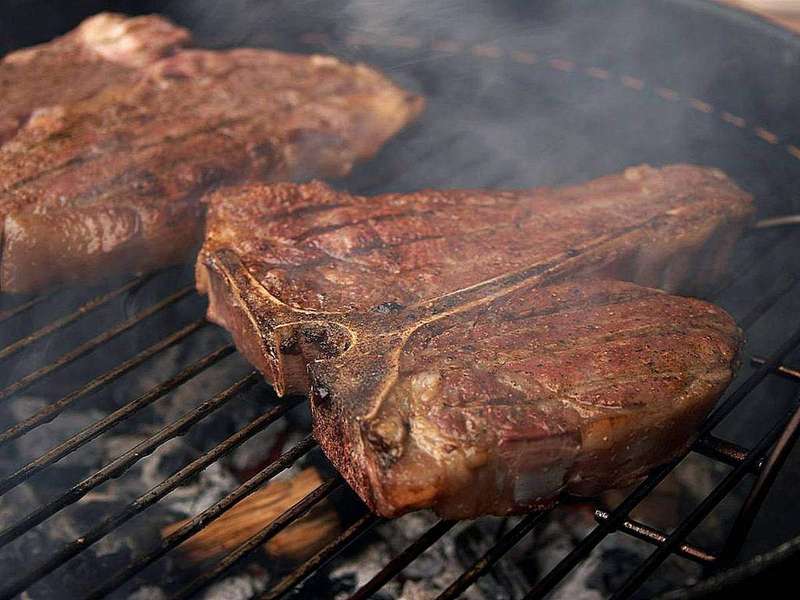
The first is carryover cooking. The hot outer layers keep dumping heat into the cooler center, so the internal temperature keeps climbing even with no flame under it: by a few degrees in a steak, by ten to fifteen degrees in a big roast.
This is why experienced cooks pull meat before it hits the target temperature. The rest finishes the cooking for free, gently, without the overcooked grey band that comes from leaving it on the heat too long.
The second is the part everyone gets slightly wrong. As the meat cools from the surface inward, the violent squeezing of the fibers eases. Internal pressure drops.
The juices, which thicken slightly as they cool, become less inclined to run. The fibers relax enough to hold onto more of what they were forcibly expelling. Slice now, and far less escapes.
Here is where the popular story needs a correction. When researchers track moisture in cooled muscle, they do not find the juices flowing neatly back to where they started. What they find is subtler: relaxing pressure and rising viscosity mean the liquid simply stops trying to leave, and the fibers recover some of their grip on it.
"Redistribution" describes the result you see on the board. "De-pressurization" describes the cause. The juicier slice is real. The folksy explanation just is not quite.
How long to rest different cuts
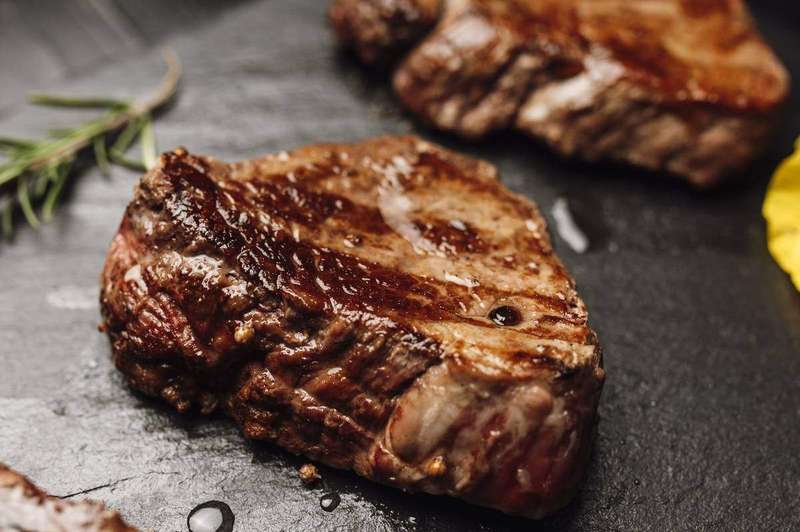
Bigger and thicker means longer. The center of a roast holds more pressure and more heat than a thin steak, so it needs more time to settle. A few rules of thumb circulate among cooks: five minutes per inch of thickness, ten minutes per pound, or roughly one-third of the total cooking time, the guideline food writer J. Kenji López-Alt settled on after his Food Lab steak tests at Serious Eats. They roughly agree with each other.
A practical guide: steaks and chops need 5 to 10 minutes, with thin cuts at the lower end and thick ribeyes or pork chops at the higher end. A whole chicken needs 15 to 20 minutes, long enough that carving stays clean and the breast does not dry out.
Beef and pork roasts need 15 to 30 minutes depending on size. Turkey and other large roasts need 30 to 45 minutes. Big birds carry over the most heat and stay hot the longest.
One more move matters: pull the meat early. Take a steak off about 5°F below your target temperature, and a large roast 10 to 15°F below.
Carryover does the rest. A thermometer beats a timer every time, because every cut, oven, and kitchen carries over differently.
And skip the tight foil wrap. The instinct to swaddle resting meat in foil to keep it hot traps steam against the surface and turns a hard-won crust soft and soggy. If you tent at all, lay the foil on loosely, like a little roof, so steam can still escape.
Should you cover meat with foil while it rests?
Not tightly. A tight wrap traps steam and softens the crust. Rest uncovered on a warm spot, or tent foil loosely so heat loss slows without steaming the surface.
Does resting work for chicken and turkey too?
Yes, and it matters more for large birds, which carry over the most heat. A whole chicken needs 15 to 20 minutes of rest. A turkey needs 30 to 45 minutes. The same pressure-release physics applies to poultry.
What if I already overcooked the meat?
Resting will not save it. Once muscle fibers have contracted hard enough to expel most of their water, there is nothing left for them to reabsorb. Resting is the final step of cooking, not a repair tool.
Does searing seal in the juices?
No. Weighed tests show seared steaks lose as much moisture as unseared ones, sometimes more. Searing builds flavor and crust through browning. Resting is what keeps the juice inside.
The bottom line
Resting meat is not kitchen superstition. Carryover heat finishes the cooking gently, falling internal pressure lets the fibers relax their grip on the liquid, and the result is a visibly juicier slice.
Just retire the tidy story about juices flowing back where they came from. The physics is more interesting than the slogan. Match the rest to the cut, pull it a few degrees early, and let the thermometer, not the clock, make the call.
Rive News is the research desk behind this publication's explainers, covering the science of everyday life.
Get one science explainer like this in your inbox every morning. Subscribe to the newsletter.
Related stories

Why Does Bread Go Stale Faster in the Refrigerator?
Bread goes stale faster in the fridge because starch recrystallizes fastest near 4°C. Here is the retrogradation science and the right way

Baking soda and baking powder: what's the difference?
Baking soda is pure sodium bicarbonate; baking powder adds two dry acids for double-acting lift. Learn when to use each, plus exact

What Is the Maillard Reaction in Simple Terms?
The Maillard reaction is the browning chemistry between amino acids and sugars above 140 C that creates the crust, color, and rich flavor