
What to plant in autumn for spring flowers: bulbs, depths and timing
Key takeaways
- Plant daffodils in September and October, and wait until October or November for tulips, when cooler soil cuts the risk of tulip fire disease.
- Set every bulb two to three times its own height deep, pointed end up, in soil that drains freely.
- Daffodils and crocuses usually return year after year, while many tulips fade after their first spring and are worth replanting.
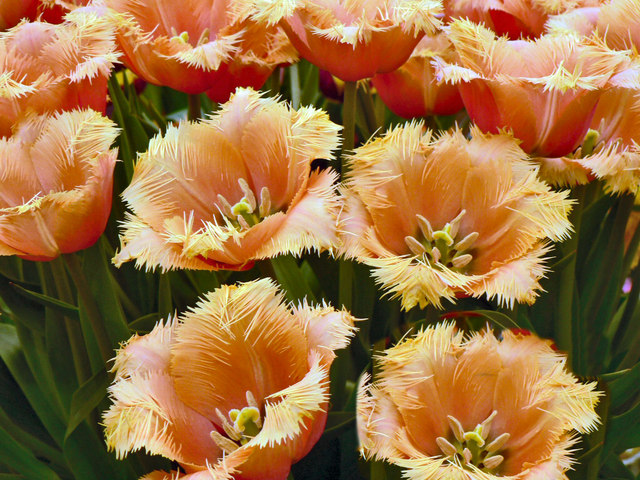
Frilly tulips in full bloom at a spring garden show, the payoff for an autumn planting session.
Image Credits: Wikimedia Commons, uploaded by GeographBot
Autumn is when next spring's garden is decided. Spring-flowering bulbs such as daffodils, tulips and crocuses go into the ground months before you see a single petal, because they need the cold weeks of winter to trigger their roots and flower buds.
The work itself is simple. Bulbs already contain the food they need for their first flowering, so the gardener's job is mostly timing, depth and drainage.
This article explains what to plant in autumn for spring flowers, including the most reliable bulbs to choose, the exact planting window for each one, how deep and how far apart to set them, and how to look after them over winter.
What to plant in autumn for spring flowers: the most reliable bulbs
Daffodils are the safest first choice. They flower from March into early May, tolerate ordinary soil and come back year after year in most gardens, according to UK growing guides. Plant them in generous drifts through borders, under deciduous trees or even in grass, where they naturalise happily.
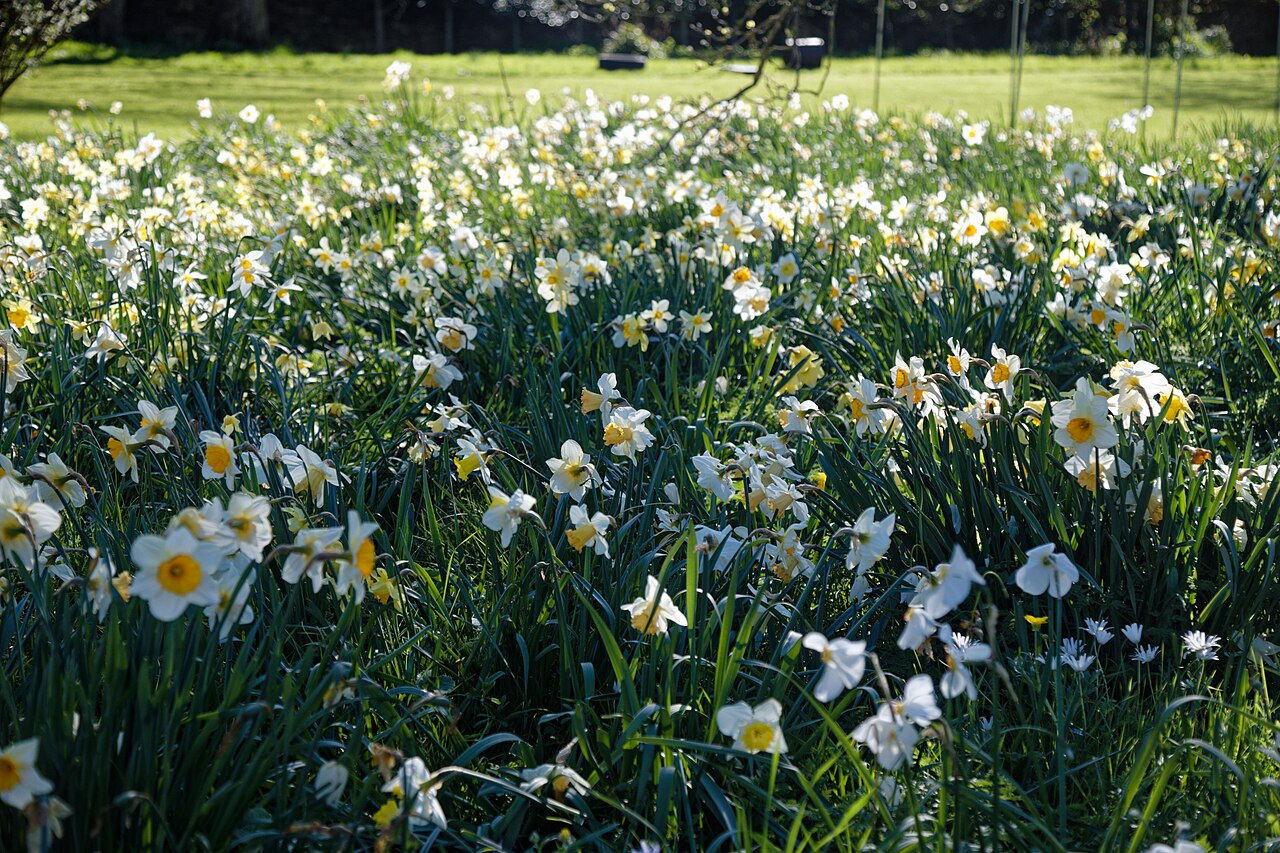
White daffodils in flower, the reliable result of a September planting.
Image Credits: Wikimedia Commons, uploaded by Acabashi
Tulips bring the boldest colour, from soft creams to near-black, and flower through April and May. They prefer full sun and free-draining soil, and many modern varieties give their best display in their first spring. Species tulips and a few perennial types return more reliably, but most border tulips fade after year one.
Crocuses are small but valuable. Their goblet-shaped flowers open close to the ground in purple, white, yellow and striped mauve, and they are often the first real nectar source for early pollinating insects. They suit sunny borders, gravel, containers and short grass, and look best planted in loose groups rather than neat rows.
Two more worth considering are alliums, with tall architectural flower heads that pollinators love, and hyacinths, whose scent can carry across a garden on a still spring day. Both follow the same autumn timing as daffodils.
When to plant, bulb by bulb
September to October is the window for daffodils. Planting early gives the roots time to establish before the soil cools, and early planting is linked to better first-year flowering. Crocuses, hyacinths, alliums and fritillaries share this early-autumn slot.
Tulips are the exception: plant them in October or November, once the soil has cooled. November planting is ideal in most of the UK.
The delay reduces the risk of tulip fire disease, a fungal problem that attacks leaves and flowers in warm, wet autumns. If your soil stays heavy or wet, late planting matters most.
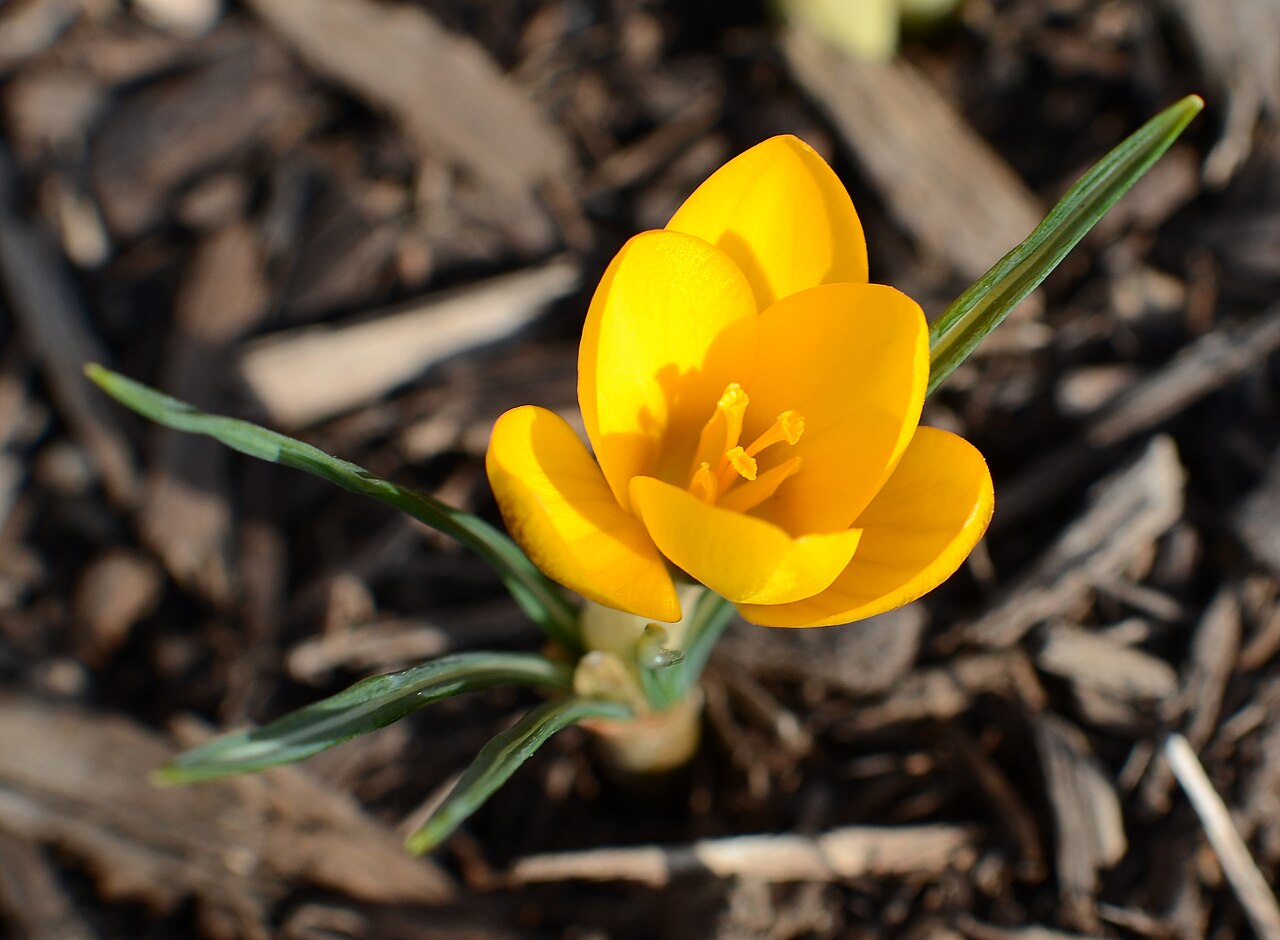
Crocus flowers opening in early spring, planted the previous September or October.
Image Credits: Wikimedia Commons, uploaded by Юрий Д.К.
Avoid planting into waterlogged ground at any point in the season. Bulbs rot quickly when they sit in standing water, and no variety recovers from a soggy start.
How deep and how far apart
The rule endorsed by the RHS and repeated across horticultural guides is simple: plant each bulb two to three times its own height deep. A bulb that is 5cm tall goes in about 10 to 15cm deep, measured from the base of the bulb to the soil surface.
Depth matters more than most gardeners expect. Planting too shallow is one of the most common reasons bulbs stop flowering after a year or two. Shallow bulbs dry out in summer, are easier for squirrels to dig up, and tend to split into small offsets that never flower.
Space bulbs two to three times their own width apart in borders, which leaves room for the daughter bulbs that form around the parent. In pots, plant them slightly closer together for a fuller display, and make sure the container has drainage holes.
Set each bulb with the pointed end facing up. If you cannot tell which end is up, lay the bulb on its side: the shoot will find its way regardless.
Soil preparation is mostly about drainage. On heavy clay, fork grit or sharp sand into the base of each planting hole and stay at the shallower end of the depth range.
On light, sandy soil, plant a little deeper so bulbs do not dry out. If a sudden frost is forecast right after planting, a mulch of bark or compost helps, though established bulbs are hardy.
Water thoroughly once after planting to settle the soil around the bulbs and start root growth. After that, autumn rain usually provides enough moisture.
Looking after bulbs over winter
Once planted, hardy spring bulbs need very little. The main winter job is keeping pots from sitting in puddles. Raise containers on pot feet and check that drainage holes stay clear, because wet compost rots bulbs faster than any frost.
In borders, avoid walking on the planting area and resist the urge to dig to check progress. The shoots will appear in their own time, often from late winter.
When flowers finish in spring, leave the leaves alone for about six weeks. The foliage feeds the bulb for next year's flowers, and cutting it early is the most common reason daffodils come back blind, all leaves and no blooms. Wait until the leaves die back fully before mowing grass that has bulbs in it.
Daffodils, crocuses and snowdrops can stay in the ground to multiply. Tulips are the main exception: most varieties decline after the first year unless lifted, dried and stored over summer.
Many gardeners simply replant fresh tulip bulbs each autumn for a guaranteed display. If your established plants ever show brown tips on their leaves, that is usually a separate care issue rather than a bulb problem.
Frequently asked questions
Can I plant spring bulbs in December?
Yes, if the ground is not frozen or waterlogged. Late planting is better than no planting, especially for tulips, which prefer November anyway. The display may be slightly smaller in the first year, but bulbs are remarkably forgiving.
What happens if I plant bulbs too shallow?
Shallow bulbs dry out in summer, get found by squirrels, and often split into small offsets that produce leaves but no flowers. If you suspect last year's planting was shallow, lift and replant at two to three times the bulb's height.
Do bulbs need feeding when planted?
Not really. The bulb carries its own food for the first flowering. A light scattering of general-purpose fertiliser around the planting area does no harm, but good drainage matters far more than feeding.
Can I plant bulbs in lawns and grass?
Yes, and daffodils and crocuses are the best choices for it. Plant in drifts, and wait until the leaves have fully died back before mowing, which is usually six weeks after flowering. Bare patches on the lawn are a good place to start, since the soil is already disturbed.
The bottom line
Autumn planting is a small investment with a long payoff. Get daffodils in during September and October, hold tulips until the soil cools in October or November, plant everything two to three times its own depth, and give bulbs drainage above all else. Do that, and next spring's colour takes care of itself.
Rive News is the site's research desk, covering practical home and garden topics from public horticultural sources.
Latest in Gardening
- Why your plant's leaves are turning brown at the tips
- How to protect plants from a sudden frost
- Fixing bare patches in your lawn
- Why seedlings fall over and die
Subscribe for one practical home and garden tip every morning.
© 2026 Rive News. Reporting follows public-source verification standards.
Related stories
What Is Companion Planting and Does It Work?
Marigolds work as a nematode cover crop, but the basil flavor claim failed repeated tests. An honest evidence review of what companion
Determinate vs. indeterminate tomatoes: growth, pruning, and harvest differences
Determinate tomatoes grow to a set size and ripen all at once, while indeterminate types vine all season. That one difference shapes
How to improve clay soil for gardening
Gypsum will not fix ordinary clay soil, say extension experts. What actually works: 2 to 3 inches of compost, mulch, better drainage,