
Why do roses get black spot and how to prevent it?
Key takeaways
- Black spot is a fungal disease caused by Diplocarpon rosae, the most common rose disease in the world.
- It strikes in warm, humid weather, spreads by splashing water, and overwinters on fallen leaves.
- Prevention works: sanitation, watering at the base, good airflow, and resistant varieties.
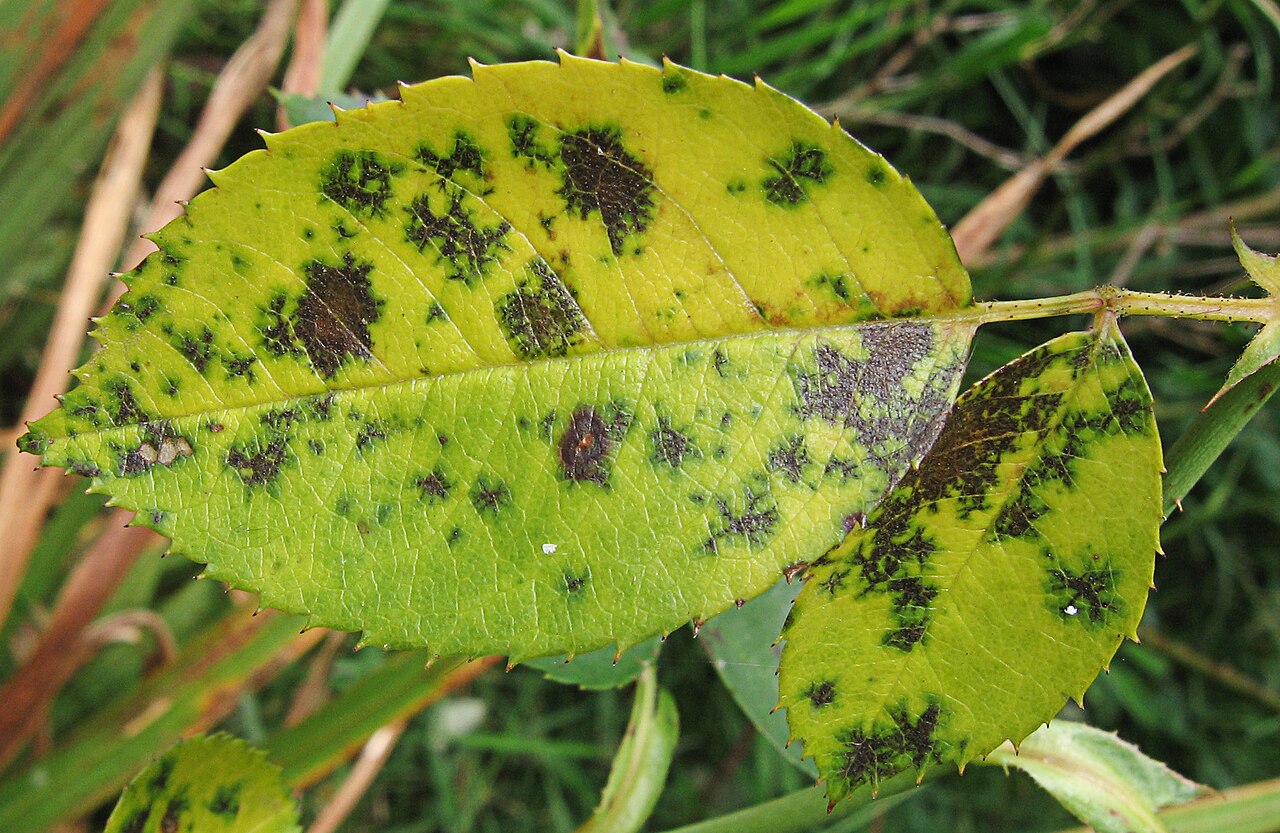
Black spot is a fungal disease of roses that shows up as dark, circular patches on the leaves. Left alone, infected leaves yellow and fall, and repeated attacks weaken the bush so badly that it blooms less and becomes vulnerable to other problems.
The culprit is a fungus called Diplocarpon rosae, and it is the most common disease affecting garden roses worldwide, according to Agri Farming. It thrives in exactly the weather roses love: warm and damp. That is why the disease is so familiar to gardeners in humid regions.
This article explains why roses get black spot, how to recognize it, what to do when it appears, and how to prevent it from coming back. It covers what to do during the growing season and what to plant for long-term protection.
What black spot looks like
The disease has a specific look that sets it apart from sunscald or nutrient spots. Black spot shows up as round or irregular dark patches with feathery, uneven edges, according to Agri Farming. Spots start small, around a quarter of an inch across, and expand to about half an inch.
A yellow ring often forms around each spot as the infection matures. The fungus attacks only the top surface of the leaf, never the underside. Infected leaves frequently yellow between the spots and drop off the plant, and the infection usually starts on the lower leaves and works its way up.
On young canes, look for raised purple spots, according to Ward Upham, a horticulture specialist writing for the Kansas State University turf blog.
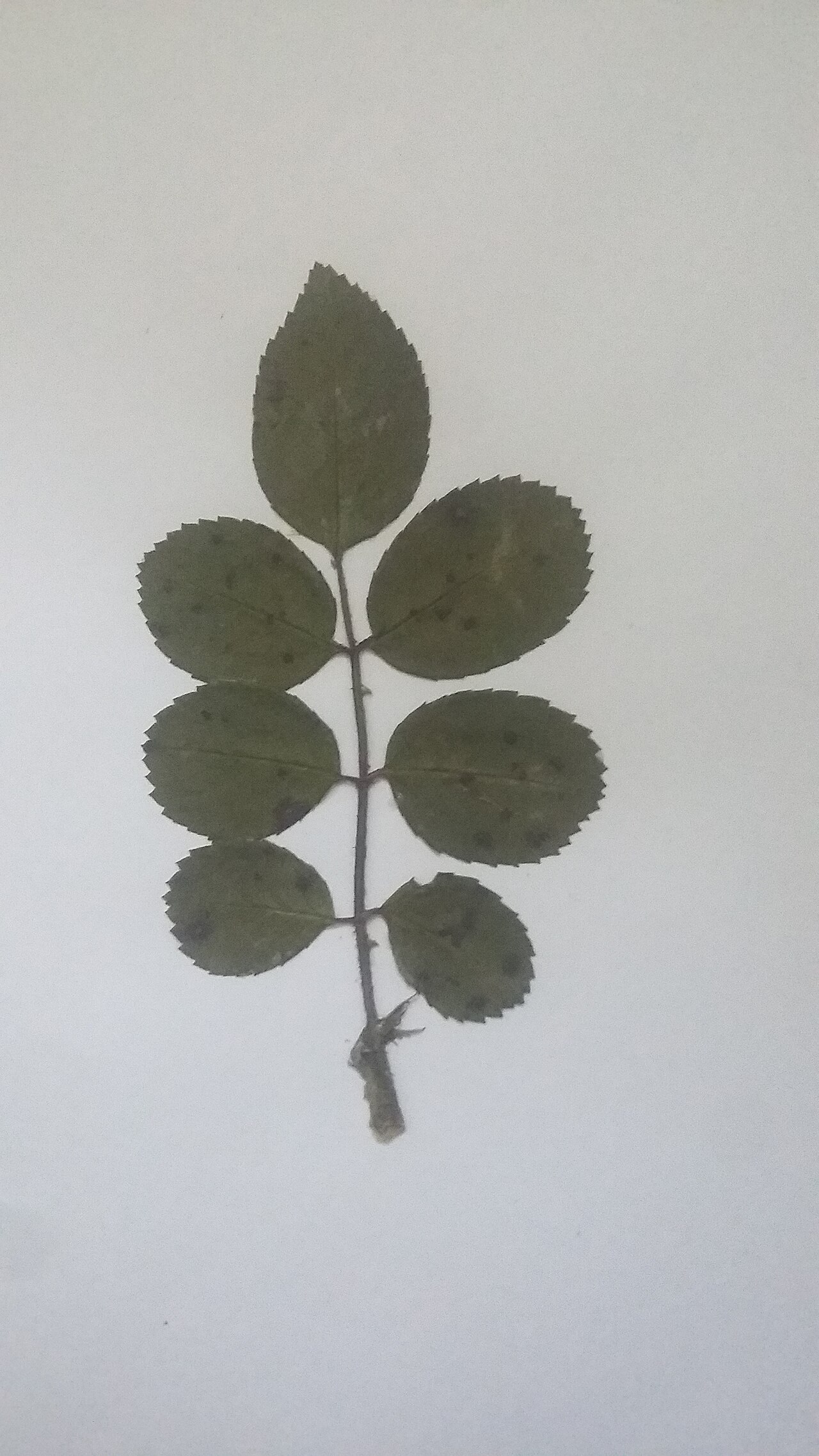
Heavy, repeated infection can defoliate a bush completely. Ashridge Trees notes that a severe case can eventually kill a bush after three or four years of constant infection, because the plant cannot photosynthesize effectively.
Why roses get it: the conditions the fungus needs
Black spot is most severe when the air is humid, the temperature sits between 75 and 85 degrees Fahrenheit, and leaves stay wet for six hours or more, according to Upham. Newly expanding leaves are the most vulnerable, and the fungus spreads primarily through splashing water.
That combination explains the seasonal pattern. Warm rain, overhead watering, and dense plantings that keep foliage damp all invite infection. The spores overwinter on fallen leaves and infected canes, then attack again from spring onward, according to Ashridge Trees.
There is even a historical wrinkle. Ashridge Trees reports that black spot has become more common in the UK in recent decades as air pollution fell, because sulfur pollution from earlier eras acted as a natural fungicide that suppressed the fungus. Cleaner air has been good for lungs but easier on the disease.
Some roses are simply more susceptible than others. Gardeners who refuse to spray should not plant highly susceptible varieties, Upham warns, and instead choose types bred for resistance.
How to treat an infection
There is no cure for black spot, but it can be managed, according to the Akron News Reporter. Start with sanitation.
Prune away all infected leaves and branches, rake up every fallen leaf and plant part, and bag the debris for the trash. Leaving debris on the soil guarantees reinfection.
Do this work when the weather is dry. Spores spread rapidly when exposed to moisture, so pruning or cleaning during humid weather can make things worse, the same source notes.
Then consider fungicide. The most effective conventional options contain the chemical mancozeb, applied three times spaced about 10 days apart, according to the Akron News Reporter. K-State's Upham recommends a 10-to-14-day spray schedule with products containing tebuconazole, myclobutanil, triticonazole, or chlorothalonil, and stresses keeping irrigation water off the foliage.
Organic options exist. Neem oil and copper fungicide are among the most environmentally friendly treatments, according to the Akron News Reporter, and should be applied after cleanup, following label directions. Contact fungicides need reapplying every 7 to 10 days or after rain, since they protect only the leaf surface, The Tech Edvocate notes.
How to prevent black spot next season
Prevention starts with water habits. Water at the base of the plant in the morning so foliage dries quickly, and consider drip irrigation, which keeps water off the leaves entirely. Never water overhead late in the day.
Airflow is the next lever. Space roses so air moves through them, prune for an open shape, and plant in full sun.
These steps limit how long leaves stay wet, which is the single biggest risk factor. Gardeners dealing with summer-stressed plants already know how much microclimate matters.
Cleanliness continues into autumn. Collect and bin fallen leaves rather than mulching over them, since disturbance lets spores rise again in spring, Ashridge Trees advises. Prune out infected canes before young foliage appears.
Choose resistant varieties when planting new roses. Agri Farming points to Knock Out and Drift roses as low-maintenance options for humid climates. Ashridge Trees lists Ballerina, Buff Beauty, Lucky, and Silver Anniversary among the most disease-resistant modern varieties, while older shrub roses and wild species are largely immune when well grown.
If one rose suffers black spot year after year while its neighbors stay healthy, Ashridge Trees suggests the simplest fix: remove and replace it with a resistant variety. Some battles are not worth fighting.
Frequently asked questions
Can black spot kill a rose bush?
Usually it only weakens the plant, but a severe, unmanaged case can defoliate a bush completely and kill it after three or four years of constant infection, according to Ashridge Trees. Weakened plants also suffer more winter injury and pest problems.
Is it safe to compost infected rose leaves?
No. Home compost piles rarely get hot enough to kill the spores, so infected leaves and prunings should go in the trash, not the compost. Bagging the debris for municipal collection breaks the reinfection cycle.
When should I start preventive spraying?
Begin when leaf buds open in spring and continue on a 7-to-14-day schedule through the season, depending on the product. Next spring, a preventive application of neem oil, copper, or potassium bicarbonate at bud break is the standard recommendation, according to the Akron News Reporter.
Does black spot spread to other plants?
Diplocarpon rosae attacks roses, so your tomatoes and vegetables are safe from this particular fungus. General garden hygiene still helps: protecting garden beds from pests and keeping foliage dry are habits that pay off across the whole garden.
The bottom line
Roses get black spot because the fungus Diplocarpon rosae exploits warm, wet foliage, and the spores return each spring on fallen debris. There is no cure, but the disease is highly manageable: sanitize, water at the base, improve airflow, spray on schedule if needed, and plant resistant varieties. Moisture control is the theme, indoors and out, and the same discipline that drives humidity control in the house keeps rose beds healthier too.
Start this week by clearing fallen leaves from under your roses and checking that your watering hits the soil, not the leaves. That one habit prevents more infections than any spray.
By Rive News, Research desk. Rive News reports on everyday topics from public sources and documented expert guidance.
Related stories

What Is Companion Planting and Does It Work?
Marigolds work as a nematode cover crop, but the basil flavor claim failed repeated tests. An honest evidence review of what companion

Determinate vs. indeterminate tomatoes: growth, pruning, and harvest differences
Determinate tomatoes grow to a set size and ripen all at once, while indeterminate types vine all season. That one difference shapes

How to improve clay soil for gardening
Gypsum will not fix ordinary clay soil, say extension experts. What actually works: 2 to 3 inches of compost, mulch, better drainage,