
How to Save Tomato Seeds for Next Year: A 5-Step Guide
Key takeaways
- Save seed only from open-pollinated or heirloom tomatoes. Hybrid (F1) seeds will not grow true to the parent.
- Ferment the seeds in their own juice for 2 to 5 days at room temperature, then rinse: viable seeds sink and dead ones float.
- Dry seeds for about two weeks, store them cool and dark, and they stay viable for at least five years.
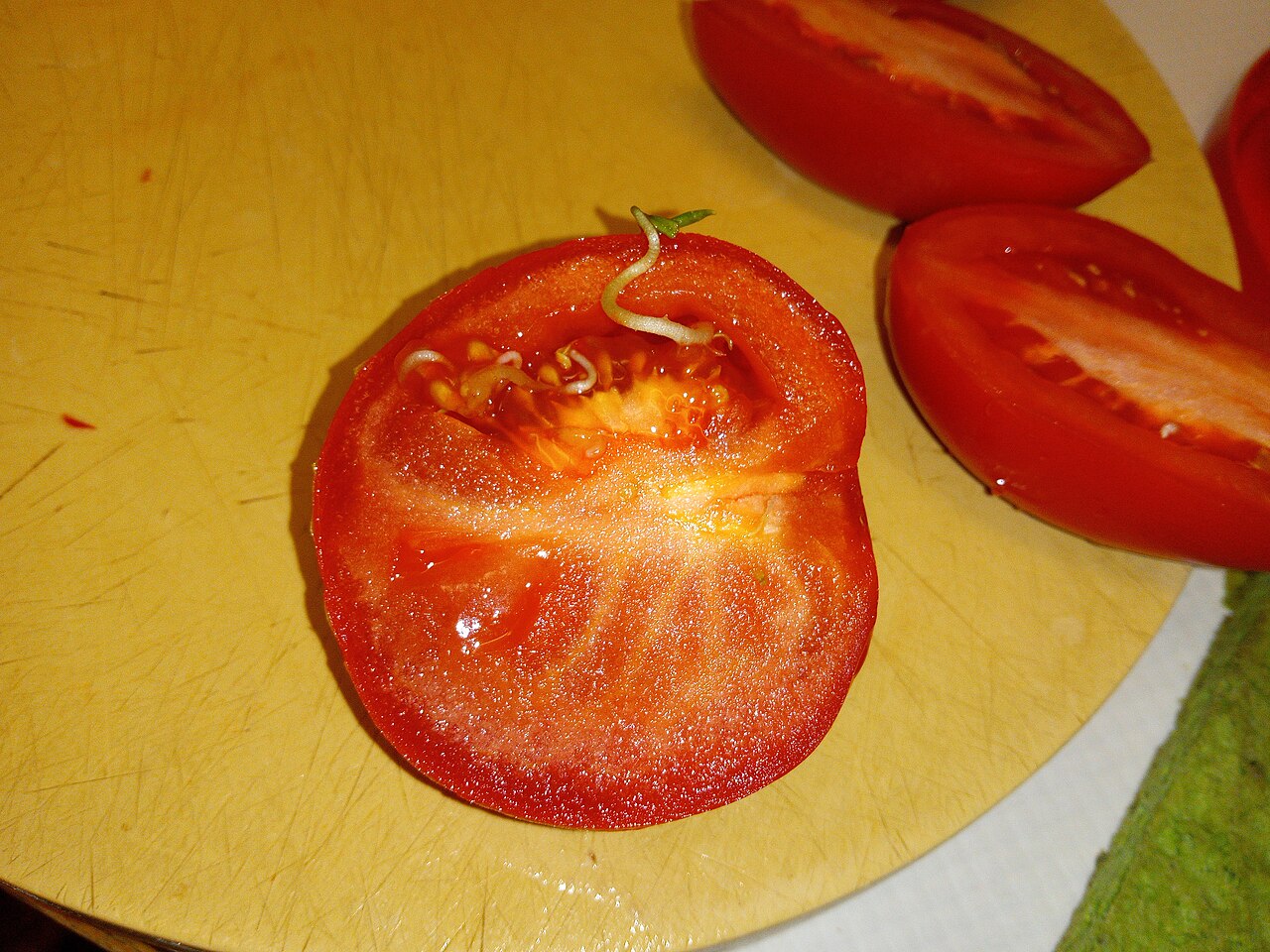
A tomato cut open to reveal seeds sprouting inside the fruit, a reminder of how readily tomato seeds germinate. Photograph: Gayest Frogs/Wikimedia Commons
Image Credits: Wikimedia Commons
Saving tomato seeds is one of the easiest garden skills to learn, and it costs nothing. A single great tomato can give you enough seed for next year's entire crop, and for the year after that too.
There is one catch that trips up beginners: tomato seeds come wrapped in a slippery gel that stops them from sprouting inside the fruit. You have to dissolve that gel first, and the traditional way to do it is fermentation.
This article explains how to save tomato seeds for next year: which tomatoes to choose, how the fermentation step works, how to dry and store the seeds, and what to do with hybrids.
Which tomatoes to save seed from
This is the step that matters most, so get it right before you touch a jar. Save seed only from open-pollinated or heirloom varieties. These breed true, meaning the plants that grow from your saved seed will look and taste like the tomato you saved them from.
Do not save seed from hybrids. Most modern commercial varieties are hybrids, labeled F1 on the packet. As the Akron Beacon Journal's garden column explains, seeds from hybrids contain unpredictable mixtures of genes and rarely grow into plants exactly like their parents, so you would have to buy hybrid seed fresh every year from a seed company.
Common hybrid examples include Big Beef, Celebrity and Early Girl. When in doubt, check your original seed packet or look the variety up on a seed company site. If F1 appears near the name, it is a hybrid and not a seed-saving candidate.
Pick fully ripe, healthy fruit from your strongest plants. The Beacon Journal recommends collecting at least five ripe tomatoes per variety, preferably from a couple of different plants, which keeps the genetics diverse. Skip any fruit that is diseased or rotting, since it can carry pathogens into your seed stock.
Tomatoes are naturally self-pollinating, so different varieties planted near each other almost always stay true. That makes tomatoes one of the most forgiving crops for beginner seed savers.
How the fermentation step works
Cut the tomato horizontally and squeeze the pulp, gel and seeds into a small glass or plastic container. A spoon works fine. You do not need to add water at first. The seeds can ferment in their own juice.
Set the container at room temperature for two to five days. West Virginia University Extension specifies three to five days with no added water, stirred once a day to loosen seeds from the pulp, though other extension sources give two to four days. The exact time depends on warmth: hotter rooms ferment faster.
During fermentation a layer of white mold will form on the surface and the mixture will smell sour. This is normal and expected. The mold and the acids it produces break down the gelatinous coating around each seed, the coating that contains germination inhibitors. Fermentation also kills some seed-borne diseases.
When fermentation is done, the viable seeds sink to the bottom while pulp, mold and dead seeds float on top. Add water to the jar, swirl it, and pour off the floating debris. Montana State University Extension describes the same test: sound, viable seeds settle out while nonviable seeds float.
Strain the remaining seeds through a fine sieve and rinse them under running water two or three times until they are clean. Spread them out while still wet so they do not clump.
Drying and storing your seeds
Spread the rinsed seeds in a single layer on a paper plate or a glass dish. Avoid paper towels, since seeds can stick to the fibers as they dry. Keep them at room temperature, out of direct sun, and let them air-dry for about two weeks, according to WVU Extension.
Stir or separate the seeds occasionally during drying so air reaches all sides. They are done when they snap rather than bend. Rushing this step is the most common cause of moldy seed in storage.
Once fully dry, put the seeds in a labeled paper envelope or small coin envelope. Write the variety name and the date on every envelope while you still remember. WVU Extension then suggests sealing the envelopes in a plastic bag and storing everything in a cool, dry place.
For long-term storage, the refrigerator or freezer is best. The Beacon Journal notes that tomato seeds kept cool and dry stay viable for about four or five years, while WVU Extension says properly stored seed lasts at least five years. Either way, one afternoon of seed saving can cover several seasons.
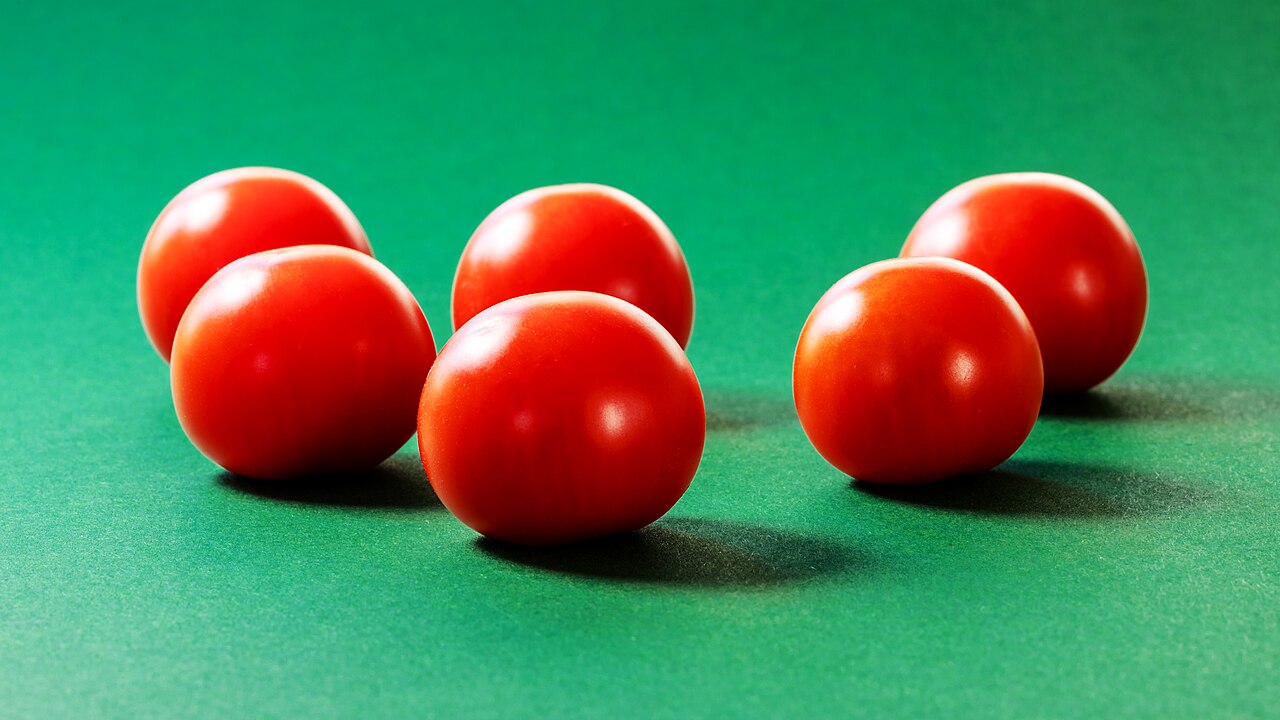
Ripe tomatoes on the vine. Choose fully ripe, healthy fruit from your strongest plants for seed saving. Photograph: Dietmar Rabich/Wikimedia Commons
Image Credits: Wikimedia Commons
What to do with hybrid varieties
If your favorite tomato is a hybrid, you have two honest options. The first is to simply buy fresh seed each year. Hybrid seed is inexpensive, and the variety's disease resistance and uniformity are the reason you liked it.
The second is to experiment. Save the seed and grow it out to see what you get: the offspring will vary, with some resembling the parent and most not. Treat it as a fun experiment, not a reliable crop plan, and never give saved hybrid seed to a friend without telling them it came from an F1.
Either way, do not let the hybrid question stop you from saving seed from your heirlooms and open-pollinated varieties. Brandywine, Cherokee Purple, Roma and the hundreds of other non-hybrid varieties all breed true and reward the small effort.
If you are starting those seeds indoors next spring, saved seed sows exactly like purchased seed, and a quick germination test on a damp paper towel will confirm viability before planting day.
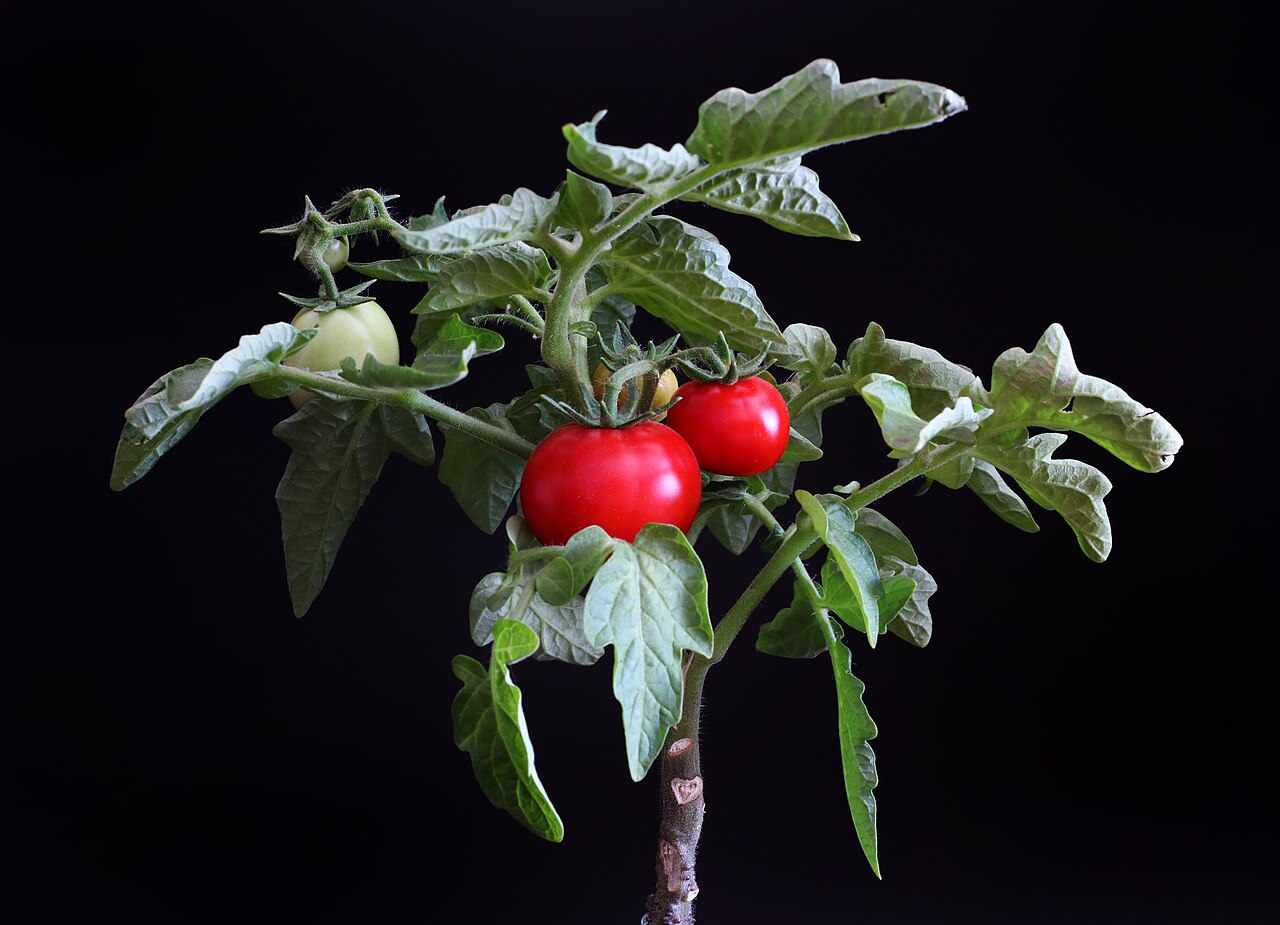
A healthy tomato plant in a garden bed. Vigorous, disease-free plants produce the best seed. Photograph: George Chernilevsky/Wikimedia Commons
Image Credits: Wikimedia Commons
Frequently asked questions
How long does it take to ferment tomato seeds?
Two to five days at room temperature. Stir daily. Fermentation is done when a mold layer forms on the surface and the viable seeds sink to the bottom after you add water.
Can you save seeds without fermenting them?
You can smear seeds on paper and dry them, but germination is worse and disease risk is higher. Fermentation removes the germination-inhibiting gel and kills some pathogens, so it is worth the few days.
How long do saved tomato seeds last?
At least four to five years when stored cool and dry, according to extension sources. Refrigeration in sealed envelopes extends that further. Test old seed on a damp paper towel before sowing.
Will seeds from store-bought tomatoes grow?
Sometimes, but it is a gamble. Many grocery tomatoes are hybrids that will not breed true, and you do not know what variety you are getting. Save seed from named varieties in your own garden instead.
The bottom line
Pick ripe fruit from non-hybrid plants, ferment the seeds for a few days, rinse off the floaters, dry for two weeks, and store cool and dark. Five steps, one afternoon, years of free seed.
Start with your best-tasting tomato this season. By next spring you will be planting its children, and that is one of the most satisfying loops in gardening.
Rive News's research desk covers gardening topics from university extension publications and established growing guides.
Subscribe to the Rive News newsletter for one practical explainer like this every morning.
Related stories

What Is Companion Planting and Does It Work?
Marigolds work as a nematode cover crop, but the basil flavor claim failed repeated tests. An honest evidence review of what companion

Determinate vs. indeterminate tomatoes: growth, pruning, and harvest differences
Determinate tomatoes grow to a set size and ripen all at once, while indeterminate types vine all season. That one difference shapes

How to improve clay soil for gardening
Gypsum will not fix ordinary clay soil, say extension experts. What actually works: 2 to 3 inches of compost, mulch, better drainage,