
Why Do Your Hands Shake After Too Much Coffee?
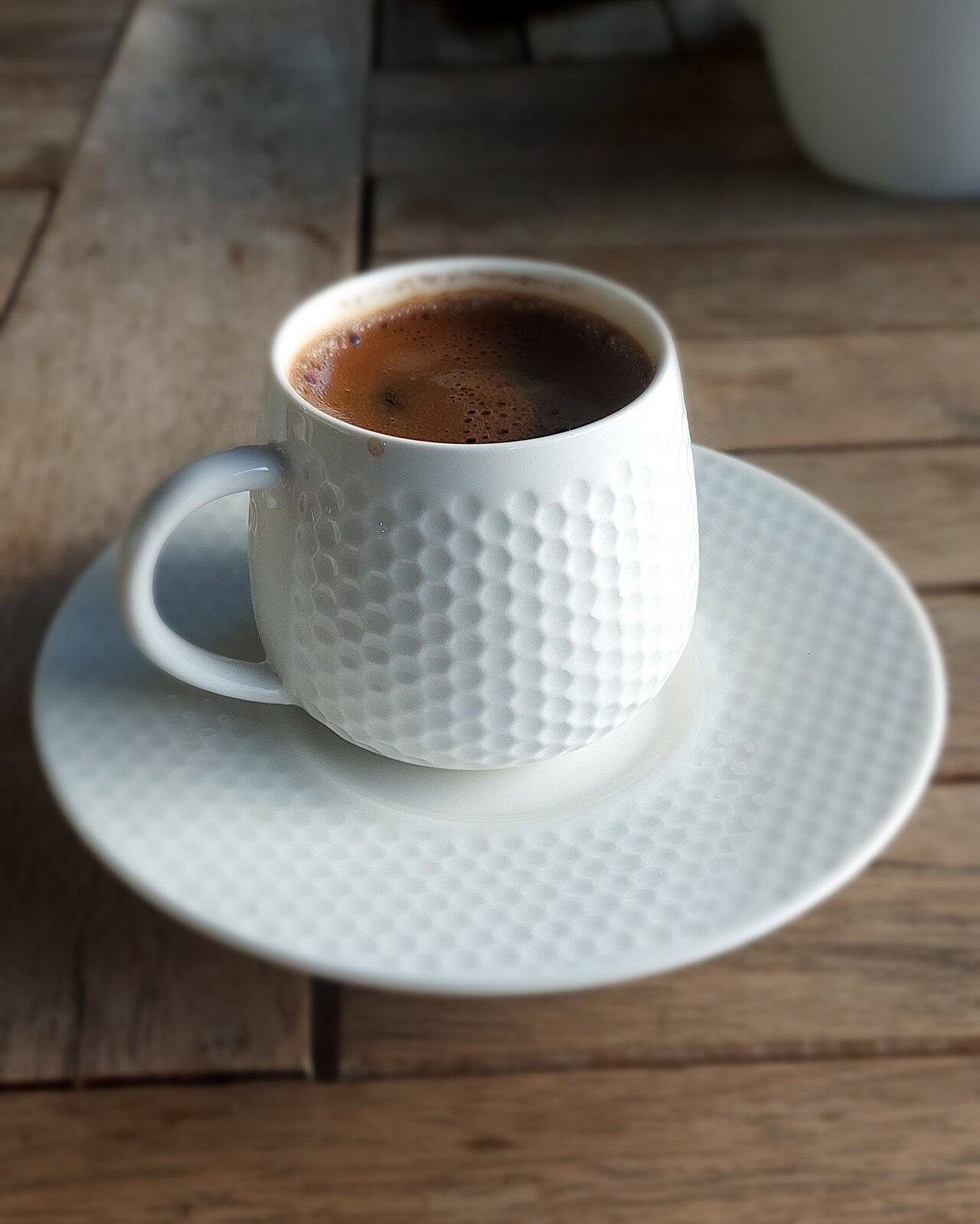
You are not imagining it. One cup too many and your fingers tremble when you reach for anything. The pen wobbles and your whole hand seems to vibrate on its own, one of the most common signs of too much caffeine.
The short version: caffeine removes your brain's brake pedal and steps on the gas at the same time. Your nervous system reads that as a mild emergency and arms your muscles for a threat that never arrives.
This article explains why your hands shake after too much coffee, including how caffeine triggers the tremor, the dose where it usually starts, and what actually calms it down.
Key takeaways
- Caffeine blocks adenosine, the brain's "slow down" signal, while boosting adrenaline and cortisol, which primes muscles for fight or flight.
- Many people start feeling jittery around 200 mg of caffeine at once, about two standard cups, with 400 mg a day a widely cited ceiling.
- The tremor fades as caffeine breaks down, a process that takes about 5 hours for half of it to clear; food, water, and movement speed recovery.

Caffeine blocks the brake and presses the gas
Caffeine is a central nervous system stimulant, and its main move is blocking adenosine receptors in the brain. Adenosine is the chemical that tells you to slow down and feel sleepy as the day goes on. With those receptors occupied, your brain never gets the memo to relax, according to Frequent Coffee's review of coffee jitters.
Blocking adenosine does more than keep you awake. It triggers the release of adrenaline and increases the activity of stress hormones like cortisol. Your nervous system reads the chemical spike as a stressor, Chef's Resource explains, and forces your body into a mild fight-or-flight state where heart rate climbs, muscles tense, and small hand and face muscles start firing too eagerly.
The result is a tremor: involuntary, rhythmic muscle contractions caused by the overlap of a revved-up nervous system and muscles on high alert. Drink 4 Good notes that caffeine-driven twitches show up first in the small muscles around the eyes, face, fingers, and feet because those motor units are the most easily excited. That is why the eyelid flicker and the shaky hands so often arrive together.
The dose where the jitters usually start
There is no universal threshold, but the pattern is consistent. Many people start to feel jittery after about 200 milligrams of caffeine at once, roughly two standard cups of coffee, Frequent Coffee reports. Past that point the nervous system has more stimulation than it can comfortably regulate, and the hands are usually the first place it shows.
The widely cited daily ceiling is 400 milligrams for healthy adults, per Chef's Resource. That is about four 8-ounce cups of brewed coffee. The Cleveland Clinic's guide to caffeine overdose lists tremor alongside agitation, vomiting, and fast or irregular heartbeat as signs of too much, Drink 4 Good reports.
Several factors move your personal threshold. Drinking coffee on an empty stomach accelerates absorption, creating a steep caffeine spike that hits harder and faster. Poor sleep raises baseline nerve excitability, so tired people shake at doses they would normally handle, and genetics play a role too: the CYP1A2 gene determines how quickly your liver processes caffeine.
Why the hands, specifically
Hands shake because they are precision instruments. Fine motor control depends on constant tiny corrections between nerves and muscles, and that system is the first to show noise when stimulation rises. Larger muscle groups absorb the extra signaling without visible shaking; the fingers cannot hide it.
Caffeine-induced tremors are typically bilateral, affecting both hands, and they appear during action, such as reaching for an object, rather than at rest. That pattern is reassuring in one sense: it usually resolves within hours as the caffeine wears off, and it does not follow the resting-tremor pattern that neurologists watch for other conditions.
There is also a blood-sugar angle. Caffeine can affect insulin sensitivity and glucose metabolism, and blood-sugar dips add their own shakiness on top of the adrenaline effect. A jittery hand after coffee on an empty stomach is often fighting two causes at once.
What actually calms the shakes
Time is the main cure. Caffeine's half-life is roughly 5 hours, meaning half of what you drank is still in your system five hours later, per Chef's Resource. The feeling subsides as your body breaks the caffeine down.
Food helps in the meantime. Eating something slows further absorption and stabilizes blood sugar, taking the edge off the tremor. Water helps too, since coffee is mildly diuretic and dehydration makes nerve excitability worse.
Gentle movement works better than sitting still. A short walk helps your body burn through the excess adrenaline instead of letting it pool into trembling hands. Frequent Coffee suggests light exercise for exactly this reason: movement gives the fight-or-flight chemicals a job to do.
If you suspect caffeine is the cause of ongoing tremors, trying a 3 to 5 day break and watching for change is a reasonable test. Replace coffee with water or herbal tea during the period and compare.
Coffee jitters: questions people ask
How much caffeine causes shaky hands?
Most people feel it around 200 mg at once, about two cups, though genetics, sleep, and food change the threshold. The commonly cited daily limit for healthy adults is 400 mg.
How long do coffee jitters last?
Usually a few hours. With a caffeine half-life of about 5 hours, most of the shakiness fades well within the day.
Why do my hands shake but nothing else does?
Small hand and finger muscles are the most easily excited motor units, so fine tremor shows there first while larger muscles absorb the extra signaling silently.
Can decaf cause jitters?
A typical decaf still carries a few milligrams of caffeine, far below the 200 mg range where jitters usually start. Full jitters from decaf alone would be unusual.
When should shaky hands worry me?
See a clinician if tremors persist for days after stopping caffeine, occur at rest, or come with weakness, dizziness, or speech changes. Occasional caffeine jitters that fade within hours are a different matter.
The bottom line
Your hands shake after too much coffee because caffeine blocks adenosine while spiking adrenaline and cortisol, overstimulating the nerves that control fine finger movement. Around 200 mg at once is the usual tipping point. Eat, hydrate, take a walk, and wait out the 5-hour half-life; the tremor almost always fades on its own.
This article is for general information only and is not medical advice.
Latest in Health
- What Happens to Your Body When You Skip Breakfast
- Why Your Heart Rate Stays Elevated After Exercise
- Why Does Your Stomach Growl When You Are Hungry
Subscribe for one practical health explainer in your inbox every morning.
Related stories
ADHD linked to fourfold dementia risk in Pitt study of 187,000 adults
Adults with ADHD face four times the risk of dementia, a University of Pittsburgh study of 187,000 adults published in JAMA Psychiatry

Why Do Athletes Get Cramps Despite Drinking Water?
Muscle cramps strike even well-hydrated athletes because sweat drains electrolytes that plain water cannot replace. Here is why water alone

Do bananas actually prevent muscle cramps?
A medium banana has 422 mg of potassium, but the evidence says it cannot stop cramps. Here is what the research shows, and what actually