
Why does your jaw click when you open your mouth wide?
Key takeaways
- A jaw click is usually the joint's cartilage disc slipping forward and snapping back as the jaw opens.
- Clicking with full, pain-free opening is common and often needs no treatment beyond one assessment.
- If the click stops and the jaw locks, the disc may be stuck: that change deserves prompt professional assessment.
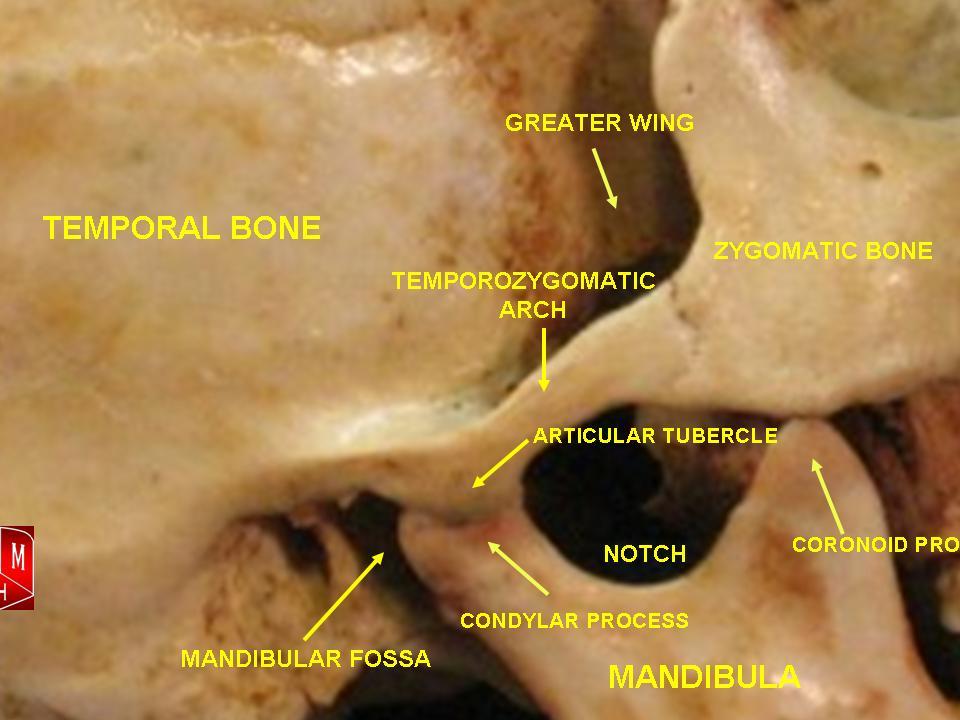
The temporomandibular joint. A small cartilage disc inside it is responsible for most clicking sounds. Image: Anatomist90
Image Credits: Wikimedia Commons / Anatomist90, Dithkar, Monicacolli
This article is an educational explainer, not medical advice. If jaw pain, locking, or reduced opening persists, see a dentist or doctor.
Why does your jaw click when you open your mouth wide? The reason is mechanical. It often starts innocently: a small pop when you bite into a sandwich, or a click you can hear when you yawn wide.
The sound is not coming from your teeth. It is coming from the temporomandibular joint, the most complex joint in your body, and it has a specific mechanical cause.
This article explains why your jaw clicks when you open your mouth wide: the parts inside the joint, what the disc does when it slips, the difference between a harmless click and a warning sign, and when to get it checked.
The joint's moving parts
The temporomandibular joint is the hinge where the lower jaw meets the temporal bone of the skull, just in front of each ear. You have two of them, and unusually for a joint, they must work as a matched pair every time you speak, chew, or swallow.
Between the rounded end of the jawbone, called the condyle, and the socket above it sits a small oval of fibrous cartilage called the articular disc. Think of it as a tiny shock-absorbing cushion that glides forward with the condyle as the mouth opens and slides back as it closes, as Acibadem International explains.
The joint capsule, a fibrous sleeve around the joint, is looser above the disc, which lets the joint glide forward, and tighter below it, where the jawbone hinges. Inside, a thin synovial membrane makes the fluid that feeds the disc and lets the surfaces slide, according to MyChiro's TMJ assessment guide.
Why does your jaw click when you open your mouth wide? The disc mechanics
In a healthy joint, the disc stays seated on top of the condyle throughout the movement. In the earliest stage of disc displacement, the disc rests slightly forward of where it should be when the mouth is closed.
As you open, the condyle slides forward, catches the back edge of the displaced disc, and snaps up onto it. That recapture is the click.
On closing, the disc may slip forward again, sometimes producing a quieter second sound. Clinicians call this pattern disc displacement with reduction, meaning the disc returns to its normal position during movement, as both Acibadem International and Vellore Dental describe.
Why does the disc slip forward in the first place? Several routes lead there.
Overactivity of the lateral pterygoid muscle can pull the articular disc forward, disrupting the normal condyle-disc relationship, according to the Bristol Museums' TMJ explainer. Muscle imbalances around the joint make the condyle's movement erratic, and asymmetrical loading of the joint components can manifest as clicking or popping noises.
Trauma is another route. A direct blow to the face, a whiplash injury, or even repetitive microtrauma from dental procedures can disrupt the joint's biomechanics. Stress plays a supporting role too: stress leads to clenching, which increases internal pressure on the joint and makes the mechanical snap of the disc louder and more painful, per Vellore Dental.
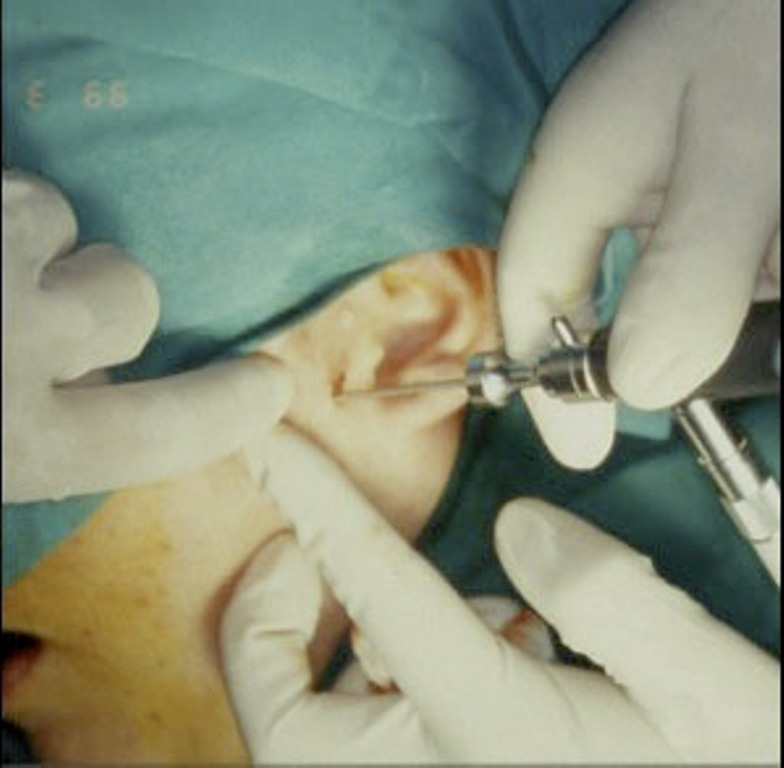
An arthroscopic view inside the temporomandibular joint, showing the structures the disc moves between. Image: Dithkar
When the click is harmless
Here is the reassuring part that scare pages skip. Clicking with full, pain-free opening is common and may never need treatment, though one assessment is worthwhile, according to MyChiro. A disc that clicks back into place was found in about 11 percent of people in one assessment sample they cite.
Joint noises on their own, without pain, locking, or limited movement, are frequently just a mechanical quirk of the joint. Many people click for years with no progression. The joint is built to tolerate the disc's momentary displacement as long as the disc keeps reducing, meaning it keeps snapping back into place.
That said, a baseline check is sensible. A dentist or TMJ-aware clinician can confirm that the click is the simple with-reduction pattern and rule out bite or structural issues that are easy to address early.
When the click stops: the locked joint
The change that matters is not the click appearing. It is the click disappearing while opening shrinks. If a displaced disc stops being recaptured on opening, it stays bunched in front of the condyle like a rug caught under a door.
The condyle cannot glide forward past it, so the mouth opens only partway, typically with a deviation toward the affected side. This is disc displacement without reduction, commonly called closed lock, as Acibadem International explains.
Closed lock often announces itself suddenly: a yawn or a large bite, then a jaw that opens to roughly two fingers' width and no more. Vellore Dental calls this the danger zone of ignoring a clicking jaw, because the disc can thicken, lose elasticity, and stop returning to its place.
In early stages, MRI shows the disc still able to return during movement, accompanied by clicking and instability. Later, it cannot.
A new reduction in opening is the change to have assessed promptly, per MyChiro. Early intervention for a locked joint is far simpler than late treatment.
Other causes of jaw sounds
Disc displacement is the primary cause, but not the only one. The Bristol Museums' explainer lists several contributors worth knowing:
- Muscle imbalance. Overactive or weak muscles around the joint create erratic condyle movement, which can displace the disc and produce sounds.
- Arthritis. Degenerative changes roughen the joint surfaces, adding grinding or crunching sounds rather than clean clicks.
- Ligament laxity. Loose ligaments let the joint move beyond its ideal range, which can produce popping.
- Bite changes. A shifting bite alters how the condyles seat, changing the forces on the discs.
The quality of the sound gives clues. A single clean click on opening suggests disc displacement with reduction.
Grinding or multiple small noises suggest surface changes. But sound alone never diagnoses the joint: the pattern of opening, pain, and history completes the picture.
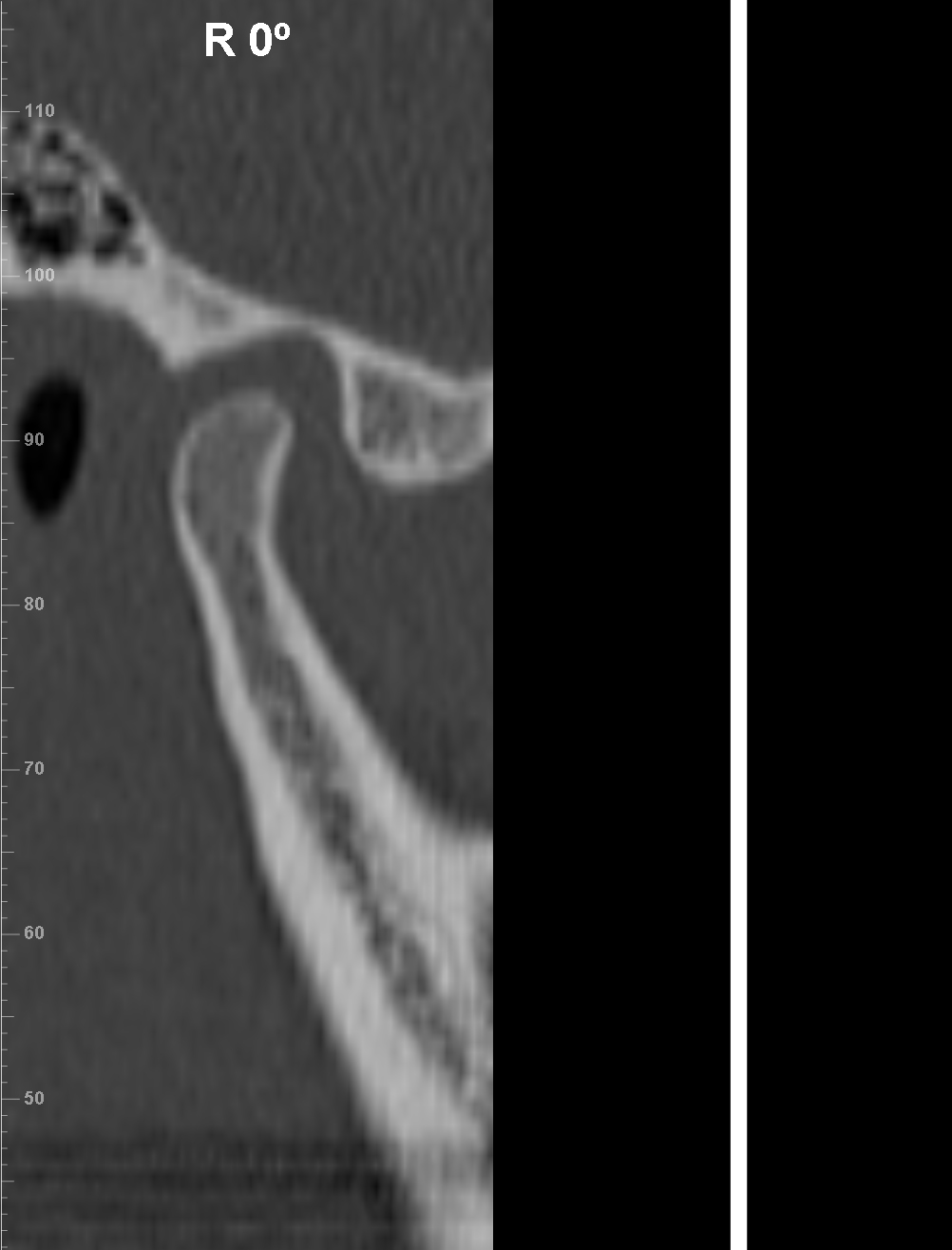
A diagram of the temporomandibular joint structures. The disc must glide with the condyle for silent, smooth movement. Image: Monicacolli
What you can do about a clicking jaw
For a painless click with full opening, conservative habits are the whole program. Avoid extreme opening: cut large foods into pieces instead of biting into whole apples, which take the jaw close to its widest opening. Do not chew gum for hours, since sustained chewing loads the joint.
Manage clenching, especially during stressful work, because clenching raises internal joint pressure. Keep both sides working evenly and avoid cradling the phone between shoulder and jaw.
Heat or cold on the joint, gentle jaw-stretching exercises, and an awareness of posture all help irritated joints settle. Night grinding is a common aggravator; if you wake with a sore jaw or your dentist notes wear on your teeth, a night guard is worth discussing.
See a professional promptly if you notice any of these: the click stops and opening shrinks, the jaw locks open or closed, pain develops or worsens, the jaw deviates to one side when opening, or chewing becomes difficult. These are the signs that the simple with-reduction pattern may be progressing.
Frequently asked questions
Is a clicking jaw always TMJ disorder?
No. A click is a mechanical sign that the disc is momentarily displaced, but clicking with full, pain-free opening is common and often needs no treatment. It becomes a disorder worth treating when pain, locking, or limited movement join the picture.
Can a clicking jaw fix itself?
Sometimes the click comes and goes as muscle tension and inflammation fluctuate. But a displaced disc rarely reseats permanently on its own. Conservative habits can keep a painless click stable for years, while ignoring a progressing one risks closed lock.
Why does my jaw click on only one side?
The two joints work as a pair but can develop problems independently. One-sided clicking usually means the disc on that side is the one slipping forward, often because of uneven muscle activity or one-sided chewing habits.
Should I stop opening my mouth wide if it clicks?
Avoid forcing extreme opening, such as wide yawns or giant bites, which strain the joint. Normal wide opening during eating and speaking is fine. The goal is to avoid the strain that irritates the joint, not to immobilize it.
The bottom line
Your jaw clicks when you open wide because the cartilage disc inside the joint has slipped slightly forward and the jawbone snaps back onto it as you open. That is disc displacement with reduction, and with full, pain-free opening it is usually a harmless quirk worth one professional check. The warning sign is the opposite of what most people expect: if the click stops and your jaw will not open fully, the disc may be stuck, and that deserves prompt assessment.
Latest in Health
- Why your teeth feel fuzzy in the morning
- Why your fingers wrinkle in water like prunes
- What happens to your body when you skip breakfast
- Why your mouth goes dry when you feel nervous
Subscribe to the Rive News newsletter for one research-backed explainer every morning.
Related stories
ADHD linked to fourfold dementia risk in Pitt study of 187,000 adults
Adults with ADHD face four times the risk of dementia, a University of Pittsburgh study of 187,000 adults published in JAMA Psychiatry

Why Do Athletes Get Cramps Despite Drinking Water?
Muscle cramps strike even well-hydrated athletes because sweat drains electrolytes that plain water cannot replace. Here is why water alone
Do bananas actually prevent muscle cramps?
A medium banana has 422 mg of potassium, but the evidence says it cannot stop cramps. Here is what the research shows, and what actually