
Why Do Joints Crack and Is the Sound Harmful?
Almost everyone has heard it: the sharp pop of a knuckle, a knee on the stairs, a neck turned too far. Grandparents warn that cracking your knuckles will give you arthritis. The science, built up over decades of studies, tells a different story.
The pop is not bone grinding on bone. It is physics inside your joint fluid, and large studies have consistently failed to connect it to arthritis. This article explains why joints crack, whether the sound is harmful, and which joint noises actually deserve a doctor's attention.
Key takeaways
- The pop comes from a gas cavity forming in synovial fluid, a process called tribonucleation, confirmed by real-time MRI in 2015.
- Large studies, including one measuring exposure in "crack-years," found no link between habitual cracking and hand arthritis.
- A painless pop is harmless; cracking paired with pain, swelling, or grinding signals something different and needs checking.
What makes the pop
Every synovial joint in your body is a sealed capsule filled with synovial fluid, a thick liquid that lubricates the joint and absorbs shock. That fluid carries dissolved gases, mainly nitrogen, oxygen, and carbon dioxide, Science Insights reports.
When you pull, bend, or twist a joint to crack it, you stretch the capsule and drop the pressure inside. At a critical point, the dissolved gas rapidly comes out of solution and forms a visible cavity, or bubble. For decades, scientists assumed the pop was that bubble collapsing.
A 2015 study using real-time MRI of a finger being cracked overturned that idea, Science Insights reports. The sound happens at the moment the gas cavity forms, not when it collapses, and the cavity stays visible in the joint well after the crack. The process is called tribonucleation: two surfaces resisting separation until they pull apart rapidly and create a gas pocket.
This is also why you cannot crack the same joint twice in a row. The gas needs roughly 15 to 20 minutes to redissolve into the synovial fluid before the cavity can form again. Until then, the joint is in a refractory period and simply will not pop.
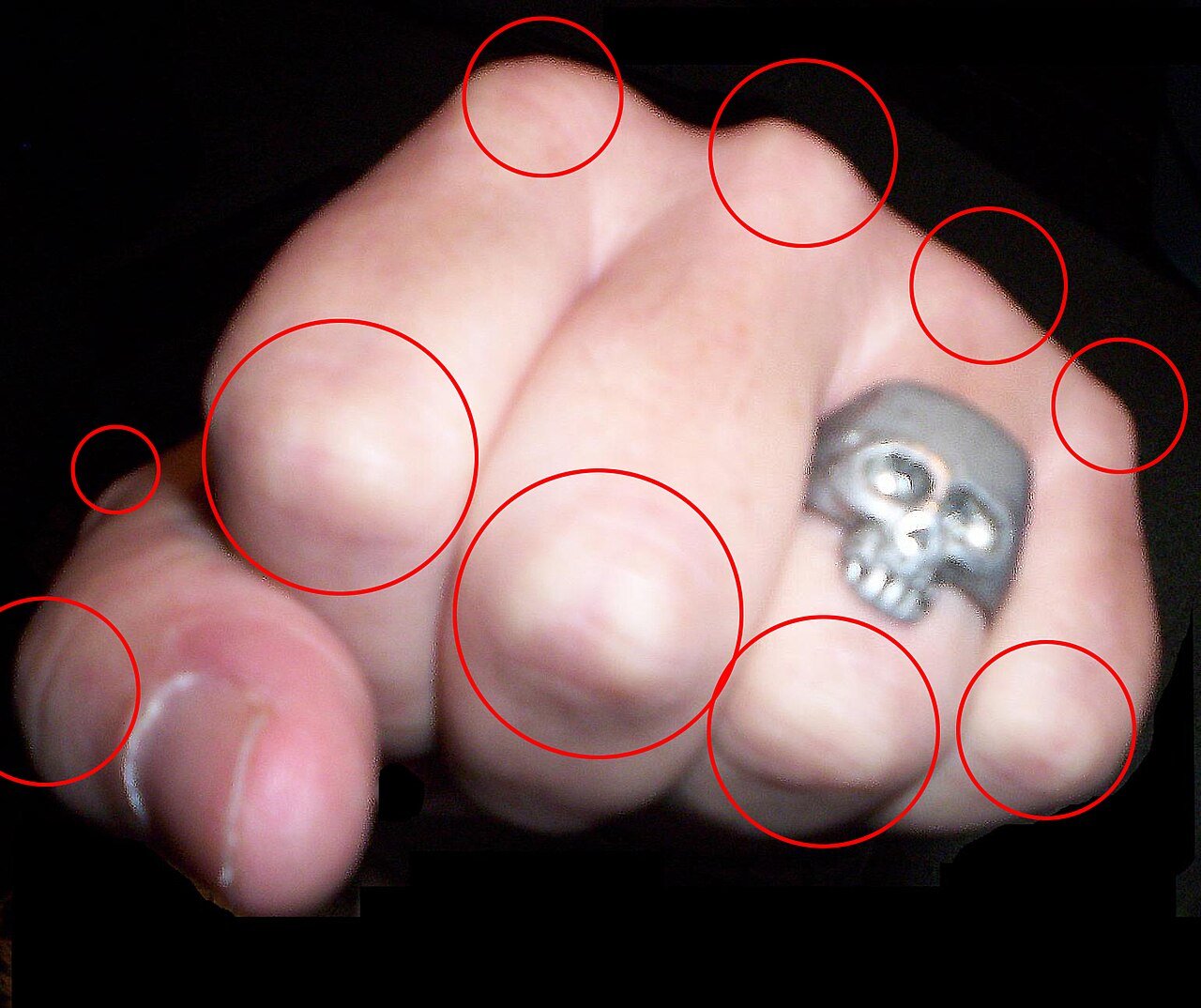
The arthritis question, answered by data
The belief that cracking causes arthritis is one of the most persistent health myths. The evidence against it spans decades and multiple study designs.
The most famous test was a personal one: Donald Unger cracked the knuckles of only one hand for 60 years and left the other alone, then compared them for arthritis. Both hands were identical, with no arthritis in either, Seniors Info reports. One man is an anecdote, but larger studies agree.
A 1998 study in the American Journal of Public Health examined 215 people and found no link between knuckle cracking and hand arthritis. A 2011 study in the Journal of the American Board of Family Medicine compared adults with and without hand osteoarthritis and, after accounting for age, sex, family history, and manual labor, found no association with habitual cracking, MedIndia reports.
The strongest design measured exposure in "crack-years," multiplying daily cracking frequency by years of the habit, in people aged 50 to 89. Across every finger joint type, there was no significant correlation between crack-years and osteoarthritis, Science Insights reports. The real predictors of hand arthritis were family history, which roughly tripled the risk, and age. Cracking was not a significant factor at any frequency or duration.
What the pop does not mean
A painless crack is a harmless physiological event. But it is not the same as every joint noise, and the distinction matters. Creaking, grinding, or catching sensations have a different name, crepitus, and can come from rough cartilage or tendons moving over bone.
People with arthritis may hear more cracking, which is where the myth gets its fuel. Damaged cartilage creates extra noise, so cracking can be a symptom of an arthritic joint without being its cause. The Times of India health section makes exactly this distinction: cracking does not cause arthritis, but increased cracking with pain and stiffness can flag joint degeneration that was already underway.
A small caveat appears in the ultrasound literature: some studies found habitual crackers had slightly more hand swelling and slightly weaker grip strength, though the findings are inconsistent and do not show joint damage. Aggressive, forceful cracking is also a different habit from gentle pops and can strain ligaments over time.
Which joint sounds need a doctor
The rule is simple: pain, swelling, locking, or a grinding sensation paired with the noise is worth a medical opinion. A clean pop on its own is not. Red flags include a joint that cracks and then swells, a knee that catches or gives way, or any noise that arrived after an injury.
Neck and back cracking deserve extra care for a different reason. Self-manipulating the spine with forceful twists carries risks that gentle knuckle popping does not, and a physiotherapist or doctor can assess whether a habit is stressing the joint. The pop itself remains harmless; the force behind it is the variable.
Joint cracking: questions people ask
Does cracking your knuckles cause arthritis?
No. Multiple large studies, including a 2011 Journal of the American Board of Family Medicine study and a 1998 study of 215 people, found no link between habitual cracking and arthritis.
Why can't I crack the same knuckle twice right away?
The gas bubble needs about 15 to 20 minutes to redissolve into the synovial fluid. Until then the joint is in a refractory period.
Is the popping sound my bones grinding?
No. Real-time MRI in 2015 showed the sound happens when a gas cavity forms in the synovial fluid, a process called tribonucleation, not when bones hit each other.
Is cracking your neck the same as cracking knuckles?
The mechanism is similar, but the spine is a different neighborhood. Forceful self-manipulation of the neck can strain tissues, so gentler habits and professional advice are smarter there.
Should I stop if cracking hurts?
Yes. Pain with cracking is a different symptom from a painless pop and deserves a medical check, especially with swelling or reduced movement.
The bottom line
Joints crack because a gas cavity forms in the synovial fluid when pressure drops inside the joint capsule, and the pop is harmless. Decades of research find no connection to arthritis. Keep the pops gentle, and see a doctor only if the noise comes with pain, swelling, or locking.
This article is for general information only and is not medical advice.
Latest in Health
- Why Your Fingers Wrinkle in Water Like Prunes
- What Causes Night Leg Cramps and How to Stop Them
- Does Warming Up Actually Prepare Your Muscles
Subscribe for one practical health explainer in your inbox every morning.
Related stories
ADHD linked to fourfold dementia risk in Pitt study of 187,000 adults
Adults with ADHD face four times the risk of dementia, a University of Pittsburgh study of 187,000 adults published in JAMA Psychiatry

Why Do Athletes Get Cramps Despite Drinking Water?
Muscle cramps strike even well-hydrated athletes because sweat drains electrolytes that plain water cannot replace. Here is why water alone

Do bananas actually prevent muscle cramps?
A medium banana has 422 mg of potassium, but the evidence says it cannot stop cramps. Here is what the research shows, and what actually