
Why Do Babies Calm Down When You Walk While Holding Them
Key takeaways
- In a 2013 study of 12 infants under 6 months, babies carried by a walking caregiver immediately stopped crying and moving, with a rapid drop in heart rate.
- The calming effect, called the transport response, requires walking; sitting still while holding produced more crying and kicking in the same babies.
- Touch and motion signals trigger the response, and a parasympathetic shift slows the heart, a pattern conserved across mammals.
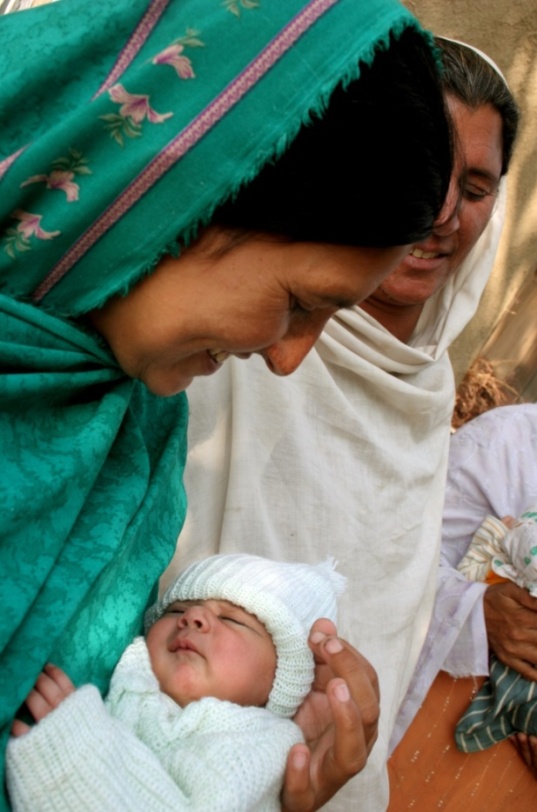
A mother holding her newborn baby. Photograph: Wikimedia Commons
Image Credits: Wikimedia Commons
The transport response is an infant calming reflex that fires when a baby is carried by a moving caregiver. A seated cuddle does not trigger it in the same way; walking does. The baby goes still, stops crying, tucks into a compact posture and the heart rate falls.
This article explains why babies calm down when you walk while holding them, including what the 2013 carrying study measured, why walking works when sitting does not, the brain and body mechanics behind the response, how it fades with age, and what caregivers can do with the knowledge.
This article is general information, not medical advice. If you are worried about your baby's crying or development, talk to your pediatrician.
What the carrying study measured
The clearest evidence comes from a study published in 2013 in the journal Current Biology by Gianluca Esposito, Kumi Kuroda and colleagues at the RIKEN Brain Science Institute in Japan. The team recruited 12 healthy human infants aged between 1 and 6 months and recorded their heart rate, movement and crying while they were held or carried by their mothers, as reported by phys.org on June 21, 2013.
The setup was simple. Each mother was asked to do three things in sequence for about 30 seconds each: hold the baby while seated, carry the baby while walking, and lay the baby in a crib.
The order was randomised. Then the researchers compared what happened in each condition.
The results were sharp. When mothers simply held their babies while seated, the infants cried and kicked more often, with an associated elevated heart rate. About half the infants were crying in the initial holding condition.
When the mother stood up and started walking, the infants became significantly calmer and adopted a characteristic compact posture in their mothers' arms, according to the phys. org report of the study.
The calming was fast and multi-channel. The carried infants immediately stopped voluntary movement and crying and exhibited a rapid decrease in heart rate, the paper's results section states. The mothers walked at a mean cadence of about 79 footsteps per minute, with a range of roughly 60 to 120 steps per minute, which is an ordinary walking pace, not bouncing or jogging.
Why walking works when sitting does not
The key finding is that stillness is not the active ingredient. Parents often assume that any holding should calm a baby, and feel they are doing something wrong when a seated cuddle fails. The study shows the opposite: for young infants, walking is the switch and sitting is just the absence of the switch.
The reason sits in the sensory channels involved. The researchers found that somatosensory and proprioceptive input signalling is required to induce the calming response.
In plain terms, the baby needs to feel the rhythmic movement of being carried and the sense of the body being transported. Sitting still removes those signals, so the calming circuit never activates.
The downstream mechanics run through the parasympathetic nervous system and the cerebellum, the paper reports. The parasympathetic branch, which drives rest-and-digest functions, mediates the cardiac output, meaning the heart slows.
Cerebellar functions mediate the motor output, meaning the body goes still. The result is a coordinated set of central, motor and cardiac regulations, not just a distracted baby but a physiologically calmed one.
This also explains why jiggling a baby in a chair or bouncing on a gym ball sometimes works and sometimes does not. Rhythmic, locomotion-like movement approximates the walking signal.
Dead stillness does not. If you have ever noticed that a baby falls asleep in the carrier on a walk but wakes the moment you stop moving, you have met the transport response at its boundary.
A response conserved across mammals
One of the most striking parts of the research is that it is not a human quirk. The same team showed that mouse pups display a nearly identical calming response during maternal carrying: immobility, diminished ultrasonic vocalisations and decreased heart rate.
Like human infants, mouse pups become still, cease vocalisation and show a slower heart rate when carried, the phys. org summary notes.
The researchers argue this is an evolutionarily conserved component of mammalian mother-infant interaction. A mother carrying her young through the world, whether a cat moving kittens or a human walking with a baby, benefits when the infant cooperates: going still and quiet makes the infant easier and safer to transport. In mouse experiments, the loss of the calming response hindered the mother's ability to rescue pups, which suggests the response has genuine functional significance rather than being a side effect.
Later work extended the picture. A review in Frontiers in Psychology in 2015 confirmed the pattern across mammalian species, and a 2022 study by Ohmura and colleagues found that carrying was more effective at helping infants fall asleep than holding while seated. The effect is consistent across laboratories and species, which is why developmental scientists treat the transport response as a real mechanism rather than a parenting myth.
How the response changes with age
The transport response is strongest in the first months of life and fades as the baby grows. The 2013 study focused on infants under 6 months of age, and the calming response during carrying is described as most pronounced in that window.
This makes sense from the biology. The response evolved to help a caregiver move a helpless infant.
Once a baby can crawl and then walk, being carried everywhere is no longer the default mode of transport, and the infant's own locomotion takes over. Older babies still enjoy being carried, but the dramatic instant calm of the newborn weeks gives way to more selective soothing.
For parents in the thick of the early months, the practical lesson is reassuring rather than prescriptive. Walking with a crying young infant is not spoiling the baby or failing to settle them properly.
It is activating a wired-in mammalian system. When the baby does not calm even while being carried, or cries inconsolably for long stretches, that is a different situation, and it is worth checking with a paediatrician, especially to rule out evening crying patterns or other medical causes.
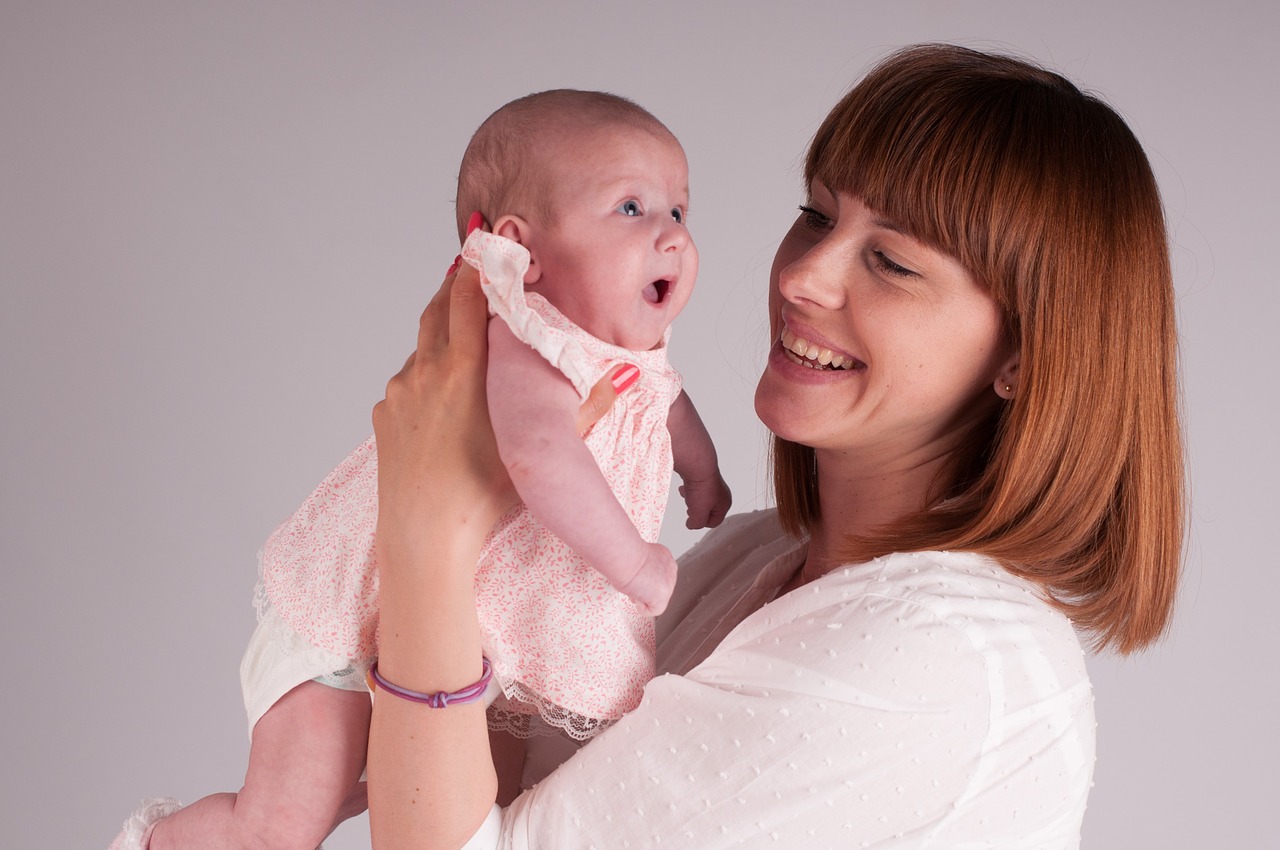
A mother and newborn sharing a quiet moment. Photograph: Wikimedia Commons
Image Credits: Wikimedia Commons
What caregivers can do with this knowledge
First, reframe the fussy evening. When a young baby cries more while you sit with them than when you move, nothing is wrong with you or the baby.
The physiology favours movement. A slow walk around the room, a stroll outside, or a baby carrier on an errand all deliver the signal the infant's nervous system is waiting for.
Second, match the motion to the mechanism. The research points to rhythmic, walking-like transport as the effective input.
Aim for a steady pace rather than frantic bouncing. Many parents find that a carrier frees the arms while keeping the baby against the chest, where the motion and warmth combine.
Third, know the limits. The transport response calms, but it does not fix hunger, a wet nappy, gas or illness. Work through the basics first: feed, change, check temperature and comfort.
If walking settles the baby, you have your answer. If nothing settles the baby for extended periods, seek professional advice rather than blaming the technique.
Fourth, use it to protect your own rest. A 2022 study found carrying helped infants fall asleep more effectively than seated holding.
Getting a young infant to sleep in a carrier on a walk, then transferring them to the crib, is a strategy grounded in measured physiology, not guesswork. The science of smiling in sleep and other infant sleep quirks follow similar rules: the newborn nervous system runs on reflexes that parents can learn to read.
Finally, expect it to pass. By the second half of the first year, most babies respond more to distraction, play and routine than to being carried while walking. Enjoy the walks while they work, and transition to new soothing strategies, from introducing solid foods routines to calm bedtime rituals, as your baby grows.
Does bouncing work as well as walking?
Rhythmic bouncing approximates the locomotion signal, so it often helps, but the study tested actual walking. Dead stillness is what fails. A steady walk remains the most reliable trigger.
At what age does the transport response fade?
It is strongest in infants under 6 months, the age group the 2013 study tested. The effect weakens as babies become mobile and no longer depend on being carried everywhere.
Is it spoiling the baby to walk them to sleep?
No. The calming is a measured physiological response involving heart rate and movement, not a habit the baby is learning. Responding to a newborn's cues builds security, not dependence.
Why does my baby calm in the carrier but cry when I stop?
Stopping removes the movement signal that activates the response. It is the same reason a baby falls asleep in a moving car and wakes when the engine stops: the input changed, not the baby.
Does the effect work for fathers and other caregivers?
The mechanism is about movement and contact, not about who provides it. Any caregiver walking at a steady pace while holding the infant can trigger the response.
The bottom line
Babies under about 6 months calm down when carried by a walking caregiver because evolution wired a transport response into mammalian infants: movement signals through the skin and body trigger a parasympathetic slowdown of the heart and a stilling of the body. Sitting still removes the signal, which is why a seated cuddle can fail where a slow walk succeeds. Walk with confidence when your young baby is fussy, check the basics of hunger and comfort first, and expect the magic to fade naturally as your baby grows.
Latest in Parenting
- Why Your Baby Cries at the Same Time Every Evening
- Why Babies Smile in Their Sleep
- Introducing Solid Foods: Baby-Led Weaning vs Puree
- How to Handle Toddler Tantrums Without Yelling
Subscribe for one evidence-based parenting insight every week.
Related stories
Why babies cry more in the evening: the witching hour explained
The witching hour is the fussy evening stretch most newborns hit daily. Why overtiredness, cluster feeding, and overstimulation stack up
When Do Babies Start Sleeping Through the Night by Month?
Most babies sleep through the night between 3 and 6 months, with regressions at 4 and 8 to 10 months. See the month-by-month table
Why Your Baby Wakes Up the Second You Put Them Down
Newborns wake when put down as the startle reflex, light sleep, and lost warmth hit at once. It is normal and peaks early, fading