
Why Do Babies Cry Harder When a Stranger Holds Them
Key takeaways
- Stranger anxiety begins around 6 months, peaks between 8 and 12 months, and usually fades between 15 and 18 months.
- The crying is a sign of healthy attachment: the baby now recognises caregivers and treats unfamiliar faces as a potential threat.
- Object permanence, developing around 9 to 10 months, sharpens the reaction, because the baby knows you still exist somewhere else.
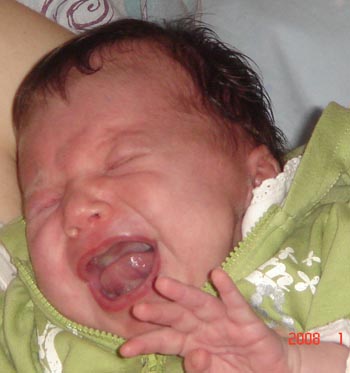
A crying baby. Photograph: Wikimedia Commons
Image Credits: Wikimedia Commons
Stranger anxiety is a wariness or distress that babies show around unfamiliar people, typically starting in the second half of the first year. It is not a flaw in the baby or a failure of socialisation. It is a developmental milestone, as predictable as rolling over.
This article explains why babies cry harder when a stranger holds them, including the stranger-anxiety timeline, how attachment creates the reaction, the role of object permanence, why being held (not just seen) makes it worse, and how caregivers can ease the phase.
This article is general information, not medical advice. If you are worried about your baby's development or behaviour, talk to your paediatrician.
The stranger-anxiety timeline
The pattern is one of the most consistent findings in developmental psychology. Stranger fear becomes evident between 6 and 8 months of age, when infants gain the ability to discriminate between familiar and unfamiliar people, according to developmental study summaries. The anxiety shows its beginning around six months, reaches its peak between eight and twelve months, and gradually disappears between fifteen and eighteen months.
That arc has a distinctive shape. Before 6 months, most babies are cheerful generalists.
A newborn will typically accept being held by almost anyone, because the brain has not yet built reliable categories for familiar versus unfamiliar faces. Then the categories form, and the baby who once cooed at every visitor starts studying a stranger's face, tensing, and crying when picked up.
The peak at 8 to 12 months is sometimes called eight-month anxiety in the developmental literature. Around eight months, a reaction of resistance and anxiety when approached by a stranger is commonly seen, with the baby showing distress, withdrawing, or crying, according to a research review on stranger anxiety. The reaction then eases across the second year as the child's cognitive and social toolkit expands.
Separation anxiety runs on a closely related schedule. It begins around 4 to 8 months of age, when infants protest being separated from parents, and by 11 to 12 months babies can anticipate a parent's departure by reading the parent's behaviour. The two anxieties often arrive together, which is why the same baby may both cling at daycare drop-off and scream when a relative reaches for them.
How attachment creates the reaction
Stranger anxiety is a direct result of attachment, and that makes it good news disguised as a problem. In the first months, consistent responsive care builds a secure attachment: a special emotional bond that gives the baby feelings of safety and security, as developmental psychology notes summarise. Once that bond exists, the baby has something to compare strangers against.
A securely attached infant uses the caregiver as a secure base, a reliable point of comfort to return to when encountering unfamiliar people, animals or sounds. Research suggests that secure attachment in infancy predicts social competence and problem-solving capacity later in life. The flip side of that security is selectivity: a baby who knows exactly what safety feels like can tell when it is absent.
The classic demonstration of attachment's mechanics comes from Harry Harlow's mid-twentieth-century studies with infant monkeys. The monkeys preferred a soft cloth surrogate mother over a wire one that provided food, showing that contact comfort, not feeding, was the core of the bond. Human studies built on this: Mary Ainsworth's Strange Situation procedure, developed in the late 1960s and 1970s, classified attachment patterns by watching how infants reacted to brief separations and reunions, and securely attached babies were the ones who used the parent as a base while showing wariness of the stranger.
Temperament adds variation on top of the pattern. Some babies are slow to warm up by nature and show stronger stranger reactions; others are bolder. The timeline is typical, but the intensity varies child to child, and both ends of the range are normal.
Why object permanence sharpens the fear
Around 9 to 10 months, babies develop object permanence: the understanding that things continue to exist when out of sight. Before this, a hidden toy simply ceases to exist for the baby. After it, the hidden toy is somewhere, and the baby looks for it.
Object permanence transforms stranger anxiety from a vague unease into a specific fear. The baby now knows that the parent still exists somewhere else while this unfamiliar person holds them.
Being carried away by a stranger is no longer just odd; it is separation from the known safe person, who is definitely out there somewhere. That is why the peak of stranger anxiety coincides so neatly with the emergence of object permanence.
The cognitive growth also explains why reassurance strategies start working better after the first birthday. A 14-month-old can hold a mental model: the parent left, the parent will return.
An 8-month-old cannot yet build that model reliably, so no amount of explanation helps. Physical contact with the familiar caregiver, a consistent goodbye ritual, and letting the baby warm up at their own pace are the tools that match the baby's actual cognitive stage.
Why being held makes it worse
Noticing a stranger and being held by one are different experiences, and the second reliably produces harder crying. The reasons stack up.
First, holding removes the baby's control. A baby who can watch a stranger from a parent's arms, or from across the room, can regulate the encounter by looking away or turning in.
Being lifted into unfamiliar arms removes that escape route. The baby studies the stranger's face, the face tightens, and crying begins, a sequence developmental texts describe as typical.
Second, holding brings unfamiliar sensory input all at once: a different smell, a different voice timbre, a different way of being supported. Newborns learn their caregivers through exactly these channels, so a stranger's version of each one reads as wrong at a sensory level before any thinking happens.
Third, being held by a stranger often coincides with the parent stepping back, which adds separation anxiety to stranger anxiety. Two stressors at once produce more than double the distress. This is why the standard advice works: let the stranger approach slowly, stay within the baby's sight, and let the baby initiate contact rather than having the stranger scoop them up.
Context matters enormously. The same baby who screams when a stranger grabs them at a party may happily play beside that person at a second meeting, once the face has moved from the unfamiliar category to the familiar one.
Stranger anxiety is not about specific people; it is about the category. Familiarity dissolves it.
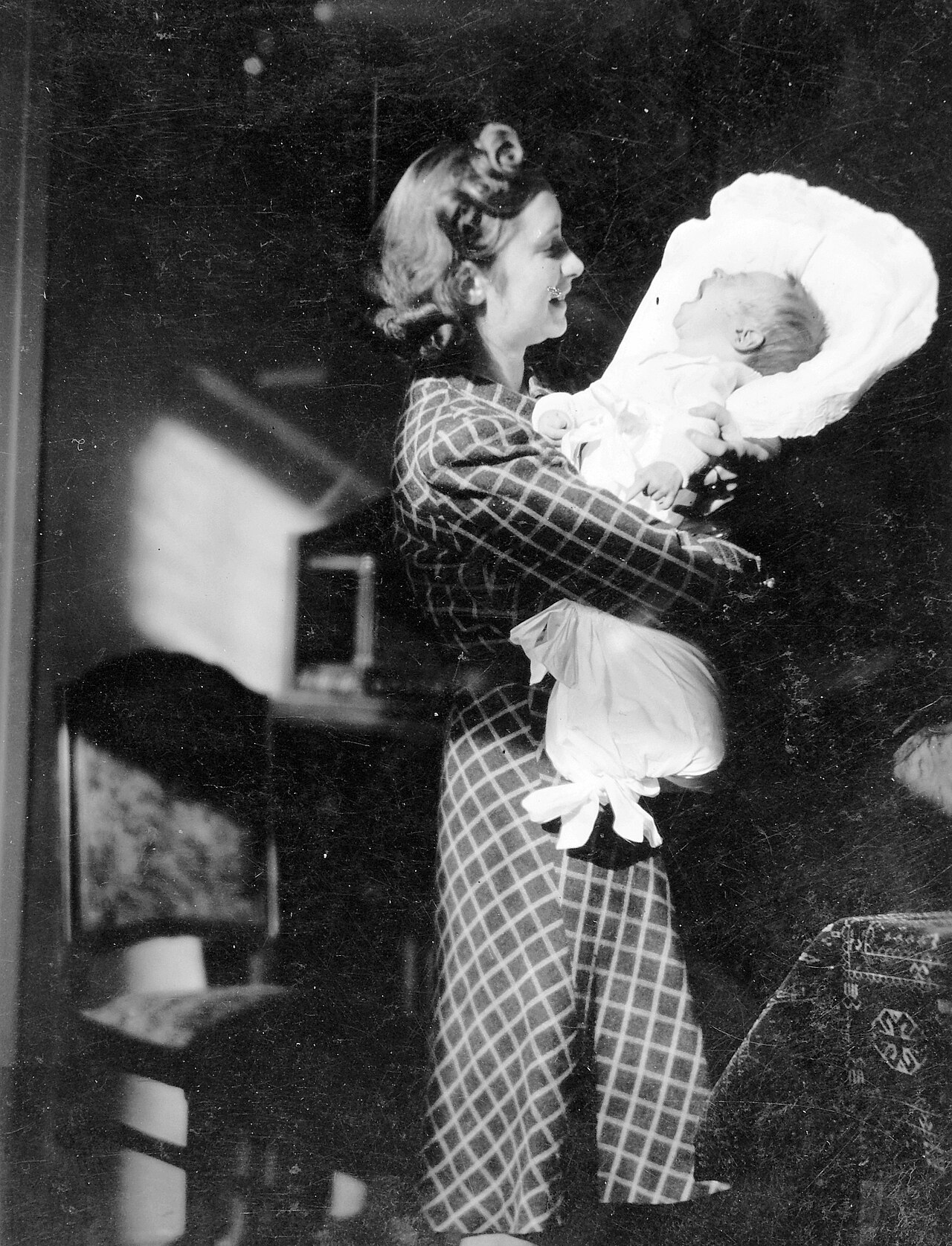
A mother holding her crying newborn. Photograph: Wikimedia Commons
Image Credits: Wikimedia Commons
Easing the phase for everyone
Start by normalising it. A baby who cries with strangers is not being rude, and the parents are not doing anything wrong.
The behaviour peaks around 8 to 10 months and declines over the second year, as attachment research summarises. Knowing the timeline turns a worry into a phase.
Give the baby time and control. Ask visitors to approach slowly, talk softly first, and offer a toy rather than reaching for the baby. Let the baby watch from your arms for a while.
Many babies warm up within minutes when the stranger stops trying to hold them. Forcing contact backfires; patience converts strangers into familiar faces.
Keep yourself calm and available. Providing comfort during stressful interactions, such as physical contact or verbal reassurance, helps alleviate the baby's distress, the developmental literature notes.
If the baby cries when handed over, take them back promptly. Each rescue teaches the baby that their signals work and that you are a reliable secure base, which is exactly what builds the confidence that eventually ends the phase.
Build familiarity gradually for recurring strangers like grandparents or caregivers. Short, positive, repeated exposures work better than one long forced visit. Video calls help too: a face seen regularly on screen becomes familiar faster.
Watch for the exceptions. Stranger anxiety that is extreme, that persists well past 18 months, or that comes with a general lack of social interest is worth discussing with a paediatrician.
In most cases, though, the crying is the system working as designed. A baby who cries at the same evening time every day may have a different pattern worth checking, but a baby who cries specifically with strangers at 9 months is textbook.
Is stranger anxiety a sign of poor socialisation?
No. It appears in well-socialised babies and is considered a healthy developmental milestone. It reflects the baby's new ability to tell familiar from unfamiliar, not a lack of social experience.
Should I force my baby to be held by relatives?
It is better not to. Forced contact increases distress and can make the baby warier next time. Letting the baby warm up at their own pace builds genuine familiarity faster.
Why was my baby fine with strangers at 4 months but not at 9?
At 4 months the familiar-unfamiliar categories had not formed yet. By 9 months the baby discriminates faces, has formed a strong attachment, and is developing object permanence. The reaction is new because the abilities are new.
Does stranger anxiety mean my baby is insecurely attached?
The opposite. Stranger anxiety is a direct result of having formed an attachment. Securely attached babies show it; it is one of the signs the bonding process worked.
When should I talk to a paediatrician?
If intense stranger fear persists well beyond 18 months, if your baby shows little social interest in anyone, or if you are simply worried. As with smiling in sleep and other developmental questions, your paediatrician sees the whole picture.
The bottom line
Babies cry harder when strangers hold them because, from about 6 months, their brains can tell familiar from unfamiliar, their attachment to caregivers gives them a standard for safety, and emerging object permanence tells them the safe person is somewhere else. The phase peaks at 8 to 12 months and fades by about 18 months. Stay close, let strangers earn familiarity slowly, and treat the tears as proof the attachment system is doing its job.
Latest in Parenting
- Why Your Baby Cries at the Same Time Every Evening
- Why Babies Smile in Their Sleep
- Introducing Solid Foods: Baby-Led Weaning vs Puree
- How to Handle Toddler Tantrums Without Yelling
Subscribe for one evidence-based parenting insight every week.
Related stories
Why babies cry more in the evening: the witching hour explained
The witching hour is the fussy evening stretch most newborns hit daily. Why overtiredness, cluster feeding, and overstimulation stack up
When Do Babies Start Sleeping Through the Night by Month?
Most babies sleep through the night between 3 and 6 months, with regressions at 4 and 8 to 10 months. See the month-by-month table
Why Your Baby Wakes Up the Second You Put Them Down
Newborns wake when put down as the startle reflex, light sleep, and lost warmth hit at once. It is normal and peaks early, fading