
When do babies start teething: symptoms and timeline by month
Key takeaways
- Most babies get their first tooth between 6 and 10 months, though discomfort can start weeks earlier, according to the American Academy of Pediatrics.
- The lower front teeth come first, followed by the upper front teeth. A full set of 20 primary teeth usually arrives by age 2.5 to 3.
- Teething causes drooling, chewing, and fussiness, but does not cause true fever or diarrhea, pediatric sources report.
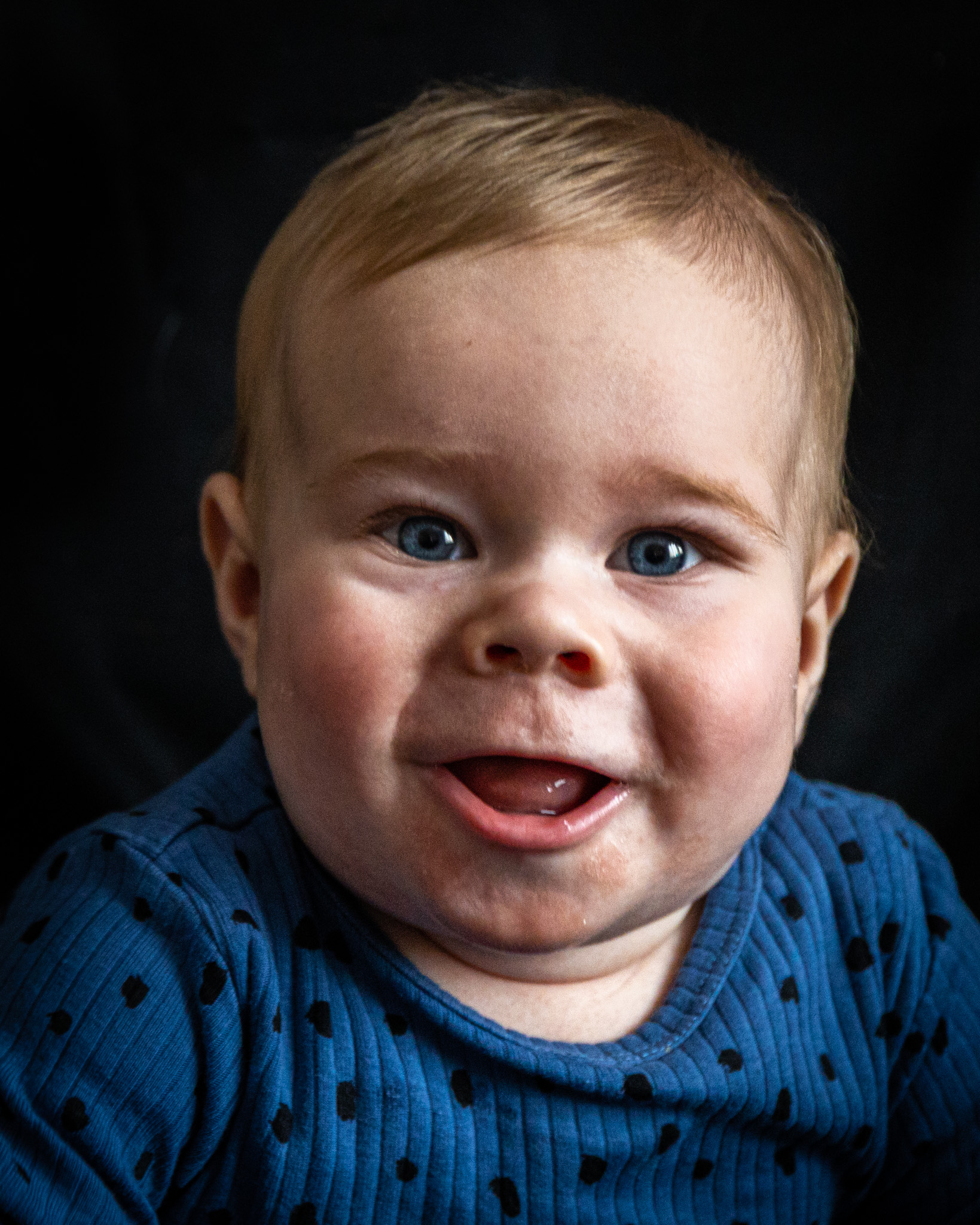
Teething is the process by which a baby's primary teeth push through the gums. Babies are born with all 20 primary teeth already formed inside their jaws, waiting their turn to emerge, according to the American Academy of Pediatrics (AAP) on HealthyChildren.org.
The wait can feel long for tired parents watching for that first white bud.
This article explains when babies start teething. It covers the full tooth-by-month eruption timeline, the most common teething symptoms, what teething does not cause, safe soothing methods backed by pediatric sources, and when to call your pediatrician.
When do babies usually start teething?
A baby's first tooth typically makes its appearance between 6 and 10 months of age, according to HealthyChildren.org. That range is wide on purpose: every baby follows a personal schedule, and early or late arrival is usually normal.
Some babies start earlier. Discomfort can begin weeks or even months before the first tooth appears, possibly as early as 3 months, the AAP says. Nemours KidsHealth gives a slightly wider window, noting teething can begin as early as 3 months but the first tooth usually breaks through between 4 and 7 months.
Rarely, babies are born with a tooth or one emerges in the first weeks of life. KidsHealth says this is usually not a concern unless it interferes with feeding or poses a choking risk.
The drooling and hand-chewing of a 3-month-old is usually just normal mouth exploration, not teething.
The full tooth-eruption timeline by month
The 20 primary teeth follow a rough order used as a guide. Timing varies, and steady progress matters more than the exact sequence.
3 to 5 months: the buildup. No teeth yet for most babies, though gum discomfort and hand-chewing can start as early as 3 months, according to the AAP.
5 to 7 months: bottom front teeth. The first to emerge are the lower central incisors, the two front teeth on the bottom jaw, according to the AAP. The NHS gives a similar guide: the bottom front incisors usually appear around five to seven months.
7 to 9 months: top front teeth. The upper front teeth, the central and lateral incisors, usually follow 4 to 8 weeks after the lower front teeth, according to KidsHealth.
9 to 12 months: the lower side teeth. About a month later, the lower lateral incisors appear, the two teeth flanking the bottom front teeth, KidsHealth reports.
12 to 16 months: first molars. Next to break through are the first molars, the broad back teeth used for grinding food. The NHS lists first molars after the incisors in its eruption order.
16 to 24 months: canines. The eyeteeth, the pointy teeth in the upper jaw between the incisors and molars, come next, according to KidsHealth.
24 to 36 months: second molars and a full set. The second molars arrive last. The NHS says children should have all 20 baby teeth by the time they are two and a half years old, while the AAP and KidsHealth put the milestone at about age 3.
If teeth come in much slower than this guide, KidsHealth advises speaking to a doctor.
Common teething symptoms
In a large prospective study of 125 infants published in the journal Pediatrics, researchers tracked 475 tooth eruptions across 19,422 child-days. Symptoms clustered during an 8-day window: the 4 days before a tooth emerged, the day of emergence, and the 3 days after.
Symptoms statistically linked to teething in that study included:
- Drooling. Babies drool noticeably more as each tooth nears the surface. HealthyChildren.org notes you may see much clearer spit than usual.
- Chewing and biting. Teething babies put toys, fingers, and other objects in their mouths and bite down on them, according to the AAP.
- Fussiness and irritability. Swollen, tender gums cause mild pain, which makes some babies crankier than usual.
- Gum rubbing and sucking. Babies instinctively press on their own sore gums.
- Facial rash. The AAP says drool contains small bits of food that can irritate the delicate skin around the mouth, causing a rash.
- Wakefulness. Sleep can get lighter or more disrupted during the teething window. If night wakings persist well beyond a tooth's emergence, these strategies for weaning night feedings and keeping sleep routines steady can help.
- Ear rubbing. The study found ear rubbing was statistically associated with teething, likely from shared nerve pathways in the face.
- Slightly raised temperature. A mild temperature elevation was associated with teething in the study.
Symptoms tend to come in short waves: each tooth typically causes discomfort for just over a week, not continuously for months.
What teething does not cause
Some of the most feared symptoms are ones teething cannot take credit for. This distinction matters, because blaming a real illness on teething can delay needed care.
True fever. Extensive studies show teething does not cause fever, according to HealthyChildren.org. In the AAP's prospective study, fever over 102°F was not significantly associated with tooth emergence, and no teething child in the study had a fever of 104°F. A slight temperature rise is possible, but a true fever has another cause. The NHS agrees, stating there is no evidence that teething causes fever or diarrhea.
Diarrhea. Teething does not change how a baby's gut works, the AAP states. Diarrhea during the teething phase is a possible sign of infection, so call the pediatrician if it lasts more than a day.
Excess crying. Teething discomfort is generally not severe enough to make a baby cry more than usual, according to HealthyChildren.org. Unusual crying may mean the child is sick.
Diaper rash and colds. Teething does not weaken the immune system. Mouthing objects, not the teeth, is what exposes babies to more germs, according to the AAP.
A fever during the teething phase probably has another cause, KidsHealth advises, so contact your doctor.
Safe ways to soothe teething discomfort
Pediatric sources agree on a set of drug-free first steps. They also agree on which popular remedies to skip.
Chilled teethers and washcloths. Rubber and plastic teething toys can safely soothe aching gums, the AAP says. KidsHealth suggests a wet washcloth placed in the freezer for 30 minutes, taken out before it becomes rock hard so it does not bruise swollen gums. Chill rings in the refrigerator, not the freezer.
Gum massage. Wash your hands, then rub the sore spots with your fingertip or knuckle, the AAP advises. KidsHealth agrees: a clean finger massaged gently over the gums brings relief.
Cold water for older babies. If your child is over 6 months old, the AAP suggests a sippy cup filled with cold water. Many cups have soft, rubbery spouts babies can chew on. For babies already eating solid foods, chilled soft fruit can be offered too, always with supervision.
Wipe away drool. Gently wiping the face with a cloth prevents the chin rash that drool can cause, KidsHealth says.
Pain medication only with guidance. If a baby seems very uncomfortable, ask your pediatrician about acetaminophen, the AAP says. KidsHealth adds that ibuprofen is only for babies older than 6 months. Never place aspirin against the tooth, and never rub alcohol on the gums.
Several remedies carry real risks and should be avoided. The AAP warns that benzocaine products can cause a serious, sometimes fatal blood condition called methemoglobinemia, and that lidocaine products have been linked with heart problems, seizures, and even death.
Alcohol applied to gums is absorbed into an infant's bloodstream and can cause seizures.
Homeopathic teething tablets or gels may contain dangerous ingredients such as belladonna. Liquid-filled teethers can tear and leak. Amber teething necklaces pose choking and strangulation risks, and KidsHealth warns never to tie any teething ring around a baby's neck.
When to call your pediatrician
Most teething passes with comfort measures. Certain signs mean the pediatrician should be involved:
- Fever of 100.4°F (38°C) or higher, since teething does not cause true fever.
- Diarrhea lasting more than a day, or vomiting.
- Refusal to eat or drink, or unusual sleepiness.
- Crying that is far beyond the baby's usual fussiness.
- Symptoms that persist well past the one-week window around a tooth's emergence.
- No teeth at all by the first birthday, or teeth coming in much slower than the usual timeline.
The American Dental Association recommends a first dentist visit by age 1, or within 6 months after the first tooth appears, according to KidsHealth. Wiping the gums can begin even before the first tooth.
Frequently asked questions
At what age do babies start teething?
The AAP gives 6 to 10 months as typical. KidsHealth says 4 to 7 months. Discomfort can begin as early as 3 months, before any tooth is visible.
Which teeth come in first?
The two bottom front teeth, called the lower central incisors, almost always come first. They are followed by the four upper front teeth, then the teeth flanking the bottom front teeth, then molars and canines, according to KidsHealth and the AAP.
How long does teething last?
Each tooth typically causes discomfort for just over a week. All 20 teeth usually arrive by age 2.5 to 3, so the process stretches over about two years, though it is not constant pain.
Does teething cause fever or diarrhea?
No. The AAP states that extensive studies show teething does not cause fever, and the NHS says there is no evidence linking teething to fever or diarrhea. A slight temperature rise can occur, but a true fever, vomiting, or persistent diarrhea has another cause and warrants a call to the doctor.
Are teething gels and amber necklaces safe?
The AAP advises against benzocaine and lidocaine teething gels because of serious risks, including methemoglobinemia and seizures. KidsHealth warns that amber teething necklaces can cause strangulation or choking. Cold teethers and gentle gum massage are the safer options.
Outlook
Teething is one of the longest-running milestones in early childhood, and knowing the timeline takes some of the worry out of it. The lower front teeth arrive around 6 months, the rest follow in a predictable order, and all 20 primary teeth are usually in place by age 3. Drooling, chewing, and fussiness are the hallmarks. Fever and diarrhea are not.
Comfort measures like chilled teethers, gum massage, and cold water for babies over 6 months carry the endorsement of pediatric authorities. Risky shortcuts, from numbing gels to amber necklaces, do not. When symptoms fall outside the teething pattern, a pediatrician visit settles the question fast.
This article is for information only and is not medical advice. Talk to your pediatrician if your baby's symptoms seem severe, if fever or diarrhea appears, or if you are unsure whether teething is really the cause.
Related stories

Why babies cry more in the evening: the witching hour explained
The witching hour is the fussy evening stretch most newborns hit daily. Why overtiredness, cluster feeding, and overstimulation stack up

When Do Babies Start Sleeping Through the Night by Month?
Most babies sleep through the night between 3 and 6 months, with regressions at 4 and 8 to 10 months. See the month-by-month table

Why Your Baby Wakes Up the Second You Put Them Down
Newborns wake when put down as the startle reflex, light sleep, and lost warmth hit at once. It is normal and peaks early, fading