
When children learn to share and why it is so hard
By Rive News / Research desk | Rive News / Published October 27, 2026 at 9:00 AM PKT
Key takeaways
- Children typically begin to show readiness for sharing between ages 3 and 4, but the skill is often not fully developed until ages 7 or 8.
- Sharing is hard because it demands empathy, impulse control, and an understanding that a given-away thing can come back.
- Toddlers can share when an adult asks, but spontaneous sharing of a valued toy remains rare even through the preschool years.
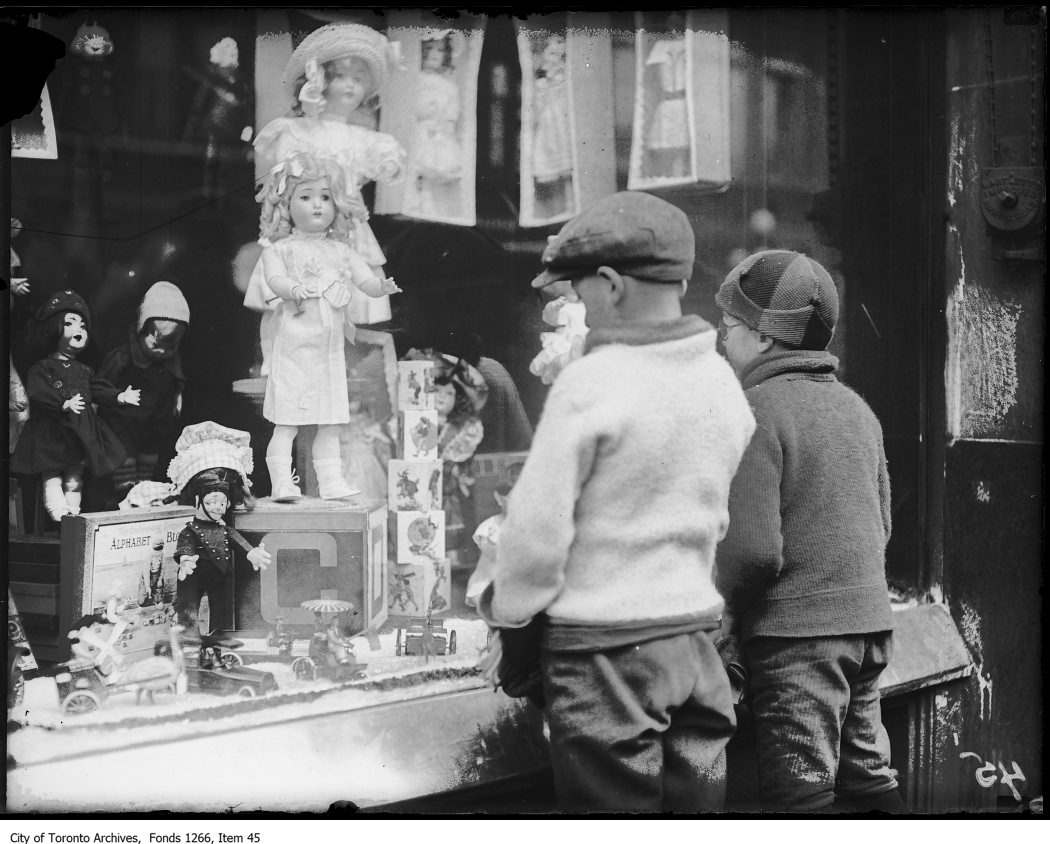
Children looking at toys in a shop window. Photograph: the children shown
Image Credits: Wikimedia Commons
What learning to share really means
Sharing looks simple from the outside: one child hands something to another. Inside the child's mind, it is one of the hardest social tasks of early childhood, because it asks a young brain to do several difficult things at once.
A child who shares must notice another person's feelings, hold back their own impulse to keep the toy, and trust that the toy will come back. None of those skills arrives fully formed.
This article explains when children learn to share and why it is hard, including the ages at which sharing appears, the cognitive skills behind it, why toddlers struggle, and what adults can do that genuinely helps.
The ages when sharing appears
Children often learn to share between 3.5 and 4 years old, according to Happiest Baby's summary of developmental research. That range surprises many parents, since a national survey cited in the same article found that 43 percent of parents expect sharing before age 2, and 71 percent expect it before age 3.
The Justice Resource Institute gives a similar picture. It states that children do not have the skills to share or take turns until age 3 or 4, and that they cannot take turns without adult help until around age 5.
Even at 4, sharing is far from finished. Happiest Baby notes that while sharing becomes easier to understand by age 4, the concept is often not fully ingrained until age 7 or 8.
Earlier forms do exist. Research reviewed by Brownell and colleagues in Infancy in 2009 found that infants share food and give toys to adults by 12 to 18 months of age. By age 2, children show and offer toys to one another in play, but that sharing is infrequent unless an adult requests it.
The gap between these stages matters. A 2-year-old who hands a block to a parent on request has not learned the same skill as a 6-year-old who splits snacks fairly without being asked.
Sharing and taking turns are different skills
Adults often use the word sharing for two different actions. True sharing means giving part of something to someone else, like handing over some crackers while keeping the rest.
Taking turns means giving something away completely for a period, then getting it back. A child who waits for a swing is taking turns, not sharing in the strict sense.
Taking turns is easier to teach because it contains a promise: the thing returns. Young children can grasp "your turn, then my turn" before they grasp giving something away for good.
The Justice Resource Institute draws this line clearly. It notes that children cannot truly share, meaning play with one toy at the same time, until preschool or kindergarten, even though turn-taking can be practiced earlier.
Using the right words helps. Saying "taking turns" when a turn is what is meant teaches the child that waiting ends, which makes waiting bearable.
Why sharing is so hard for young children
The first barrier is perspective. Babies and toddlers are naturally self-focused, and they do not yet understand that other people have feelings separate from their own.
A toddler holding a toy car cannot yet model the other child's disappointment. The reasoning runs closer to "it is cool, I want it, therefore I should have it," as the Justice Resource Institute puts it.
The second barrier is impulse control. Even a child who understands fairness may grab before thinking, because the brain systems that pause an impulse mature slowly through early childhood.
The third barrier is fear of loss. Young children often treat giving as losing, because they lack a firm grasp that shared things return. A toy handed over can feel gone forever, which makes sharing feel threatening rather than generous.
The fourth barrier is value. Research shows that children share low-value items far more readily than prized ones. In one classic experiment cited by Brownell and colleagues, 3- to 5-year-old children shared only one piece of food with peers while keeping 10 pieces for themselves.
That result is not selfishness in the adult sense. It is a young mind weighing a real cost, the loss of something valued, against an abstract benefit, another child's happiness.
What changes as children grow
Between ages 3 and 4, several developments converge. Language grows, children play more cooperatively instead of side by side, and they begin to notice that others have feelings too.
Calgary's Child magazine, quoting psychologist Nicole Sheldon, describes this window: between 3 and 4 years of age, children move from parallel to more cooperative play, and once a child senses their own feelings and sees that others have feelings, they are ready to begin learning about sharing.
Counting ability also plays a role. A 2022 study noted in developmental coverage found that children who could count were nearly twice as likely to share fairly as children who could not, suggesting that fairness needs number sense as well as goodwill.
By ages 5 and 6, children take turns with less adult help and begin to share spontaneously more often. By ages 7 and 8, fairness rules become internal, and children start to care about equal shares even when no adult is watching.
None of this arrives on a birthday. Individual children vary widely, and a child who shares easily at home may struggle in a busy playground where excitement and competition run higher.
What actually helps children learn to share
Modeling beats lecturing. Children who regularly see adults share food, tools, and time absorb the pattern long before they can explain it.
Practicing turn-taking in low-stakes moments builds the skill without a crisis. Games with short turns, cooking together, and passing a ball back and forth all teach waiting and returning.
Naming feelings gives children the vocabulary sharing requires. Saying "your friend looks sad because she wanted a turn" connects the action to its effect, which is the core of empathy.
Short, clear language works better than long explanations. "One block for you, one block for Sam" teaches fairness concretely, while abstract talks about generosity pass over young heads.
Forced sharing, by contrast, can backfire. Developmental coverage notes that forced sharing can instill negative feelings, while voluntary sharing fosters generosity. A child ordered to hand over a beloved toy learns that sharing means losing, which is the opposite of the intended lesson.
Adults can also protect the times when sharing is not required. A child visiting a playground with their own toys is not obliged to surrender them to strangers, and a special comfort toy can reasonably stay private.
How to handle the hard moments
When a child grabs a toy, the calm response names what happened and offers a path forward. "You wanted the truck, and now Maya is upset" states the situation without shaming.
Offering a timer or a visible turn order makes waiting concrete. Young children cannot judge five minutes, but they can watch sand run through a timer or count turns on fingers.
Redirecting works well with toddlers, who are easily distracted. Offering an equally interesting toy often ends the standoff faster than a debate about fairness.
For repeated struggles, reduce the pressure rather than raising it. Fewer children, shorter playdates, and duplicate toys all lower the number of sharing demands per hour, which lets practice succeed.
Praise the specific act, not the child's character. "You gave her two blocks when she asked" teaches more than "you are such a good sharer," because it names the behavior to repeat.

Children's toys arranged together. Photograph: the toys shown
Image Credits: Wikimedia Commons
When to worry, and when not to
Refusing to share at age 2 or 3 is normal development, not a character flaw and not a parenting failure. The skill is still forming, and most children grow into it with time and practice.
Most variation is also normal. Some 4-year-olds share generously while others still struggle, and both can be developing typically.
A conversation with a pediatrician makes sense if a child shows broader social difficulties alongside sharing struggles. Examples include little interest in other children, difficulty reading emotions well past age 5, or aggression that escalates rather than eases with age.
Sharing is one social skill among many. A child who struggles to share but plays cooperatively, shows concern when others are hurt, and takes turns sometimes is building the foundations at their own pace.
Frequently asked questions
At what age do children start sharing?
Readiness typically appears between the ages of three and four, with prompted sharing possible from age two. Spontaneous, fair sharing usually develops between the ages of five and eight.
Should I force my child to share?
Forcing a child to hand over a toy can teach that sharing means losing. Modeling, turn-taking practice, and praising voluntary sharing build the skill more reliably.
Is it normal for a 3-year-old to never share?
Reluctance at 3 is normal, since empathy and impulse control are still developing. Occasional sharing when asked is a good sign, even if spontaneous sharing is rare.
Do some children just share later than others?
Yes, and temperament matters. Cautious or strongly attached children may need more time, and sharing comfort varies by setting, toy value, and how tired or hungry the child is.
The bottom line
Children learn to share in stages, not in a single moment. Prompted giving appears in toddlerhood, readiness for real sharing arrives around ages 3 to 4, and fair, spontaneous sharing matures toward ages 7 to 8.
The difficulty is not a flaw to correct but a set of skills still under construction: empathy, impulse control, fairness, and trust that shared things return. Adults help most by modeling sharing, practicing turns, naming feelings, and keeping the stakes low enough for practice to succeed.
Tags: child development, sharing, toddlers
Rive News's research desk covers everyday science and practical how-to topics, drawing on public sources and developmental research.
Related
- What is the difference between a tantrum and a meltdown
- How to handle toddler tantrums without yelling
- How to handle sibling rivalry without taking sides
- Why kids ask why constantly: the developmental science
Subscribe for one practical explainer each morning.
Standards: facts are drawn from cited public sources; corrections are published when an error is found.
Related stories
Why babies cry more in the evening: the witching hour explained
The witching hour is the fussy evening stretch most newborns hit daily. Why overtiredness, cluster feeding, and overstimulation stack up
When Do Babies Start Sleeping Through the Night by Month?
Most babies sleep through the night between 3 and 6 months, with regressions at 4 and 8 to 10 months. See the month-by-month table

Why Your Baby Wakes Up the Second You Put Them Down
Newborns wake when put down as the startle reflex, light sleep, and lost warmth hit at once. It is normal and peaks early, fading