
Why kids ask why constantly around age four
By Rive News / Research desk | Rive News / Published October 26, 2026 at 9:00 AM PKT
Key takeaways
- Four-year-olds ask why in chains because they are learning causes, not collecting facts, and each answer becomes the next question.
- Children keep asking when an answer is vague or circular, and they usually settle when an answer names a real cause.
- The why phase peaks between ages 2 and 5, as language growth and causal reasoning develop together.
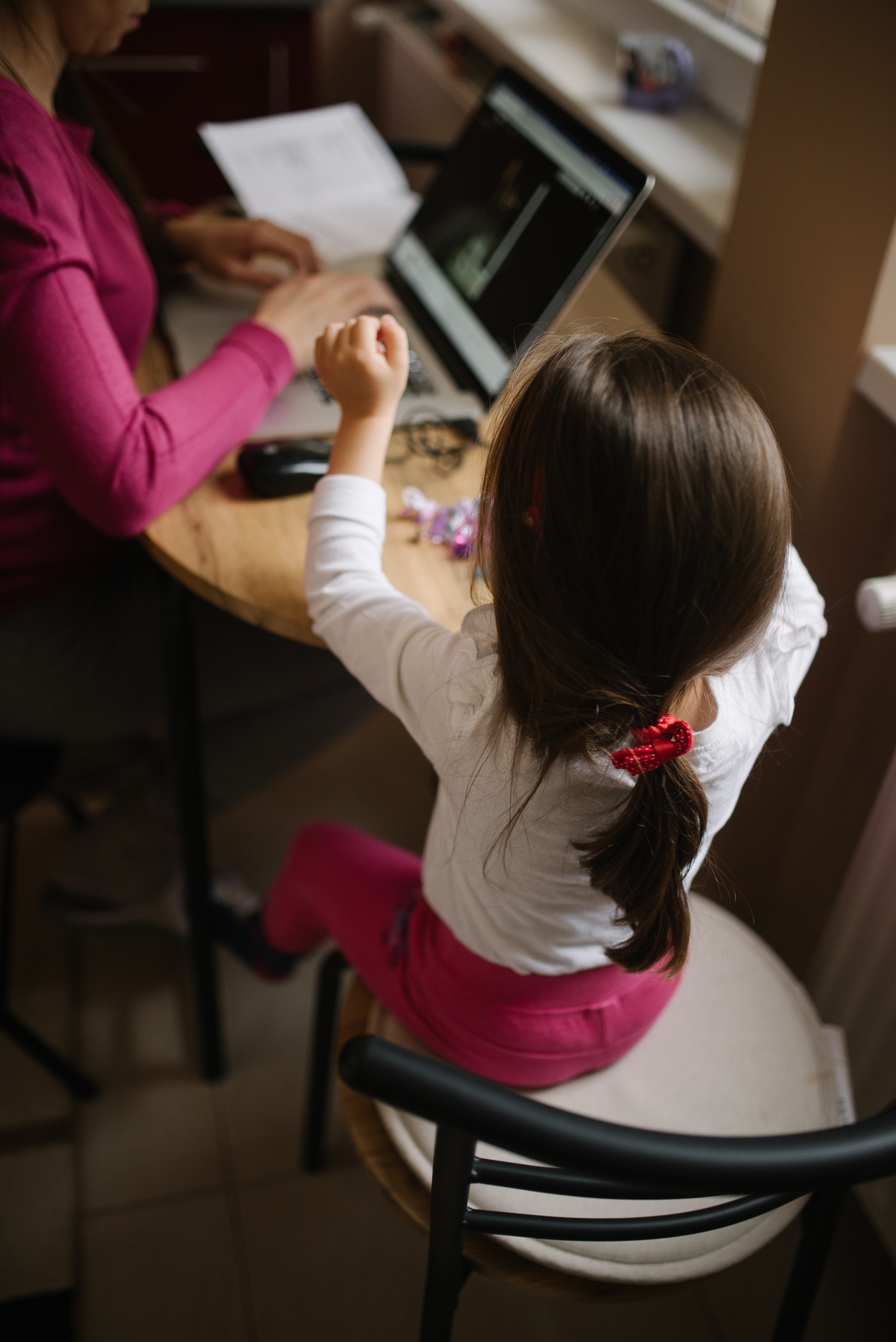
[A child playing at home during the day, in the kind of ordinary moment when why questions arrive in chains.] Photograph: the subject
Image Credits: Wikimedia Commons
A four-year-old can ask why the sky is blue, why dogs bark, why bedtime exists and why you just said "because" all within ten minutes. Parents often hear the stream as stalling or testing. The research behind it tells a different story.
This article explains why kids ask why constantly around age four, including how causal reasoning develops, why children reject weak answers, and how parents can answer in ways that help.
The why phase has a developmental timetable
Question asking does not arrive all at once. It builds with language, and it changes shape as children grow.
Early questions are mostly "what" questions: what is that, what is it called. Those questions collect names for things.
Between ages 2 and 5, question asking rises fast. Laura Dimler, a developmental researcher writing on the topic, notes that it peaks as children start connecting cause and effect and developing more abstract thinking. The questions shift from "what is that" to "why does that happen" and then to "how does that work."
By age four, most questions are explanatory in nature. A child no longer just wants the name of a thing.
The child wants the reason behind it. That shift marks a real change in thinking, not just a larger vocabulary.
The timetable fits a classic account of child development. Jean Piaget, the Swiss psychologist who studied how children build their understanding of the world, placed ages 4 to 5 in the preoperational stage, a period he described as intuitive: children feel sure about what they know but are not yet aware of where that knowledge comes from. Asking why is how they start checking.
Why questions are how children learn causes
A why question is a tool for finding causes. When a child asks why rain falls, the child is not asking for the word "rain." The child is asking what makes rain happen.
When the answer names clouds, the next why asks what makes clouds. Each answer becomes a link in a chain.
Developmental psychologists call these chains causal chains. A child who learns that rain comes from clouds, clouds from evaporated water and evaporation from heat has built a four-step model of the water cycle, all through persistent questioning.
The questions look repetitive from the outside. From the inside, each one adds a link.
Children are also selective about when they ask. They ask most when they are confused or curious about how something works, and they ask less about things they already understand.
That selectivity shows the questions are not random noise. They target gaps in the child's model of the world.
The same selectivity shows in what satisfies them. A study at the University of Michigan, reported by Scary Mommy, found that preschoolers who received a real explanation were often satisfied and either agreed or asked a follow-up question. Children who received an unsatisfying answer repeated the same question until they got one that made sense.
That pattern matters for parents. A child who asks the same why five times is usually not ignoring the answer. The child is signalling that the answer did not yet name a cause the child can use.
Language and reasoning grow together
Why questions sit at the meeting point of two kinds of growth. Language growth gives children the words to ask.
Reasoning growth gives them something to ask about. Each feeds the other.
Conversations rich in causal explanations teach children the shape of a good answer. When adults answer with "because X leads to Y," children learn to expect causes, and they start asking follow-up questions that are more precise. The habit of explanation is contagious in both directions.
Vocabulary grows through the same exchanges. A why conversation exposes a child to words and sentence structures that a simple naming game would not.
Alison Gopnik, a developmental psychologist at the University of California, Berkeley, has described young children as the research and development department of the human species. The phrase captures the point: children are not small, irrational adults. They run hypotheses, collect data from answers, and update their model of the world.
The brain work behind this runs through regions that develop fast between ages 2 and 7, including the prefrontal cortex, which supports reasoning and planning. Why questions are one of the main tools children use to build that architecture. Every real answer helps wire up a connection between a cause and its effect.
Why "because I said so" backfires
Short dismissals feel efficient, but they usually cost more time than they save. A child given a circular answer has learned nothing about the cause, so the gap in understanding stays open. The child asks again, rephrases the question, or asks a related one, because the original need is still unmet.
That is not defiance. It is the same filter at work: an answer that does not identify a cause fails the child's test, so the child keeps testing. Parents who notice the pattern often find that a single clear answer ends a chain that five dismissals could not.
A clear answer does not need to be long or technical. It needs three things: a cause, a link and a stopping point.
"Rain falls because clouds get heavy with water, and gravity pulls the drops down" names a cause, links it to the effect and gives the child something to build on. If the child asks why clouds get heavy, answer that link too, or say honestly that you will look it up together.
Honest ignorance beats a made-up answer. Children who are told "I don't know, let's find out" learn that not knowing is normal and that answers can be checked. Children given a confident but wrong answer learn a false cause that later teaching must undo.
Why questions are not only about facts
Not every why is a request for information. Some whys test boundaries, some seek attention, and some delay bedtime. Parents learn to tell these apart by context.
A why asked while staring at a puddle is usually genuine curiosity. A why asked for the tenth time at lights-out may be a bid for five more minutes awake.
Even the boundary-testing whys carry learning. "Why do I have to wear shoes" teaches a child about rules, reasons and negotiation, not just about shoes. Answering it with a real reason, rather than authority alone, shows the child that rules can have reasons worth hearing.
Attention-seeking whys also deserve a real response, though a shorter one. A child who asks why to start a conversation is practising social skills as much as reasoning. A brief, warm answer followed by a question back, such as "what do you think," keeps the conversation going and hands the child a turn at reasoning.
The practical rule is simple. Treat the first why as genuine, answer it with a cause, and watch what the child does next.
A satisfied child moves on or asks a sharper follow-up. A child who repeats the same question needs a better cause, not a louder dismissal.
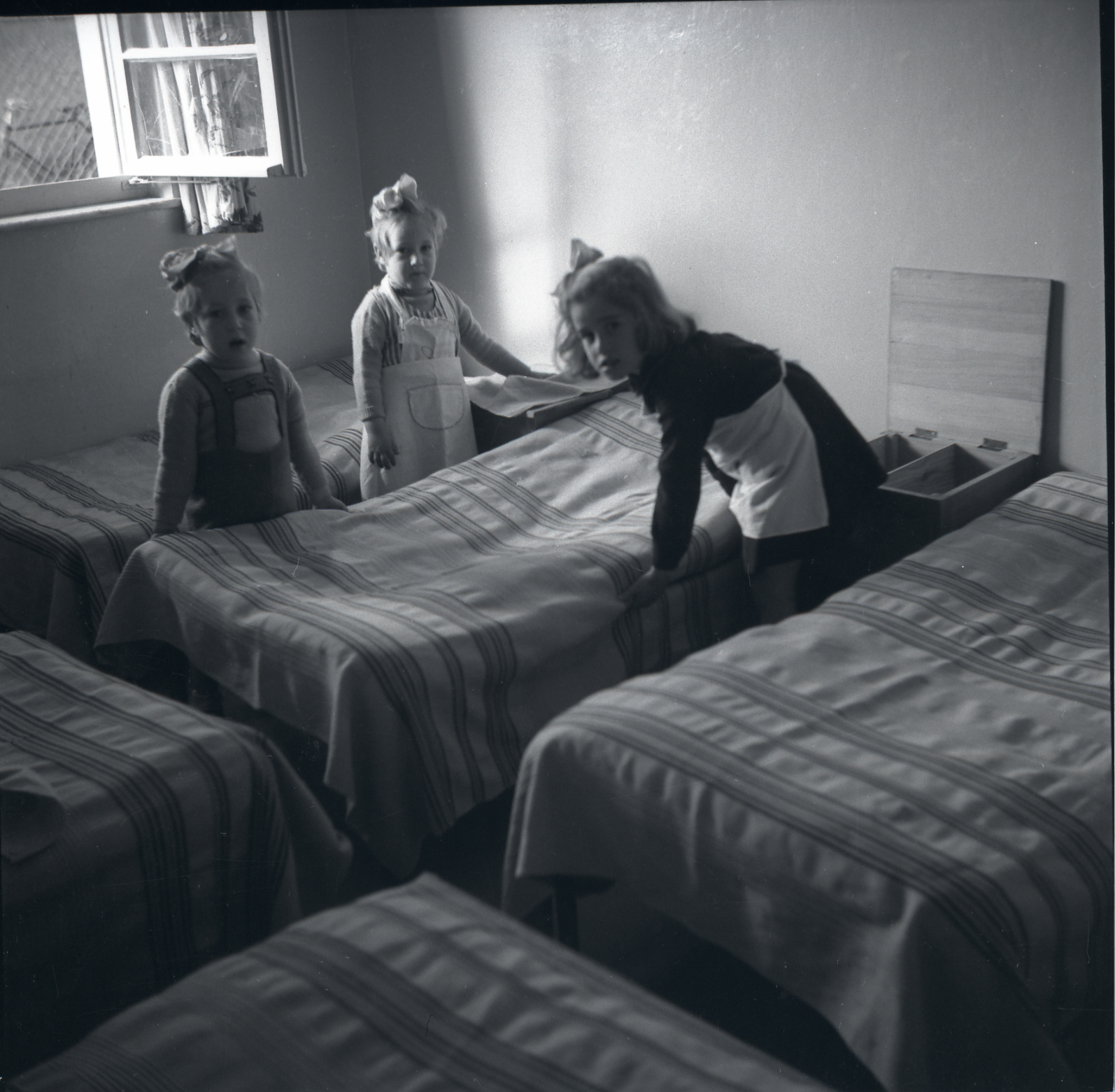
[Children in a kindergarten, a setting where why questions are part of daily learning.] Photograph: the subject
Image Credits: Wikimedia Commons
How to answer without burning out
Answering dozens of whys a day is tiring, and no parent answers them all well. A few habits make the load lighter without shutting the child down.
Answer in one or two short sentences. Long lectures lose a four-year-old's attention and invite a new chain before the first one ends. A short causal answer respects the child's attention span and leaves room for a follow-up.
Turn some questions back. "Why do you think the sky looks blue" invites the child to offer a theory, which is reasoning practice in itself. Praise the theory, then add the missing piece.
Pick your moments. Answer fully when you can give attention, and briefly when you cannot. A short answer now plus a fuller one later beats a dismissal now and a forgotten question later.
When the why phase fades
The why phase does not end suddenly. As children enter school, their questions become more specific and more tied to what they are learning.
They ask fewer whys overall, and more hows and what-ifs. That change is normal, not a loss of curiosity.
Research firm Gallup has reported that children ask fewer questions as they grow, a trend that often tracks with lower engagement in school.
Parents sometimes worry that answering every why spoils a child or makes the child dependent. The evidence points the other way.
Children who are allowed to ask while solving a task do better at it, and they use smarter, more concept-based questions to get there. The why phase builds independence by teaching children how to find causes for themselves.
Frequently asked questions
At what age do children ask the most why questions?
Question asking rises fast between ages 2 and 5 and peaks as children connect cause and effect. By age four, most questions seek explanations rather than names.
Why does my child repeat the same why question?
Children repeat a question when the answer did not name a cause they can use. A University of Michigan study found preschoolers kept asking until they received a satisfying explanation.
Should I answer every why question my child asks?
Answer as many as you can with short, causal answers, and be honest when you do not know. A delayed real answer teaches more than an instant dismissal or a made-up answer.
Is it normal if my four-year-old asks why all day?
Yes. The why phase is a normal stage of language and reasoning development, and it usually fades into more specific questions as children enter school.
The bottom line
Four-year-olds ask why constantly because their language and their causal reasoning are growing at the same time, and why questions are the tool that joins them. Each answer adds a link to a chain of causes, and children keep asking until an answer names a cause that holds.
Short, honest, causal answers feed that growth, while dismissals only restart the chain. The phase is noisy, but it is the sound of a mind learning how the world works.
Tags: child development, why questions, preschool, language development
Rive News is a research desk that writes plain-language explainers from public sources, with no individual byline and no invented expertise.
Related
- What is desirable difficulty in learning?
- Why does teaching someone else help you learn?
- How do flashcards work best: recognition vs recall
- What is active recall and how to use it for studying
Subscribe to the Rive News newsletter for one practical explainer each week.
Rive News publishes explainers from public sources; corrections are noted on the article page.
Related stories
Why babies cry more in the evening: the witching hour explained
The witching hour is the fussy evening stretch most newborns hit daily. Why overtiredness, cluster feeding, and overstimulation stack up
When Do Babies Start Sleeping Through the Night by Month?
Most babies sleep through the night between 3 and 6 months, with regressions at 4 and 8 to 10 months. See the month-by-month table

Why Your Baby Wakes Up the Second You Put Them Down
Newborns wake when put down as the startle reflex, light sleep, and lost warmth hit at once. It is normal and peaks early, fading