
Why Do Kids Demand the Same Bedtime Story Every Night?
Key takeaways
- Children demand the same bedtime story because predictability feels safe and gives them a rare sense of control.
- Repeated readings build vocabulary faster than new books, since kids stop decoding the plot and start learning words.
- Research shows even toddlers reproduce actions better and remember novel words longer after repeated readings.
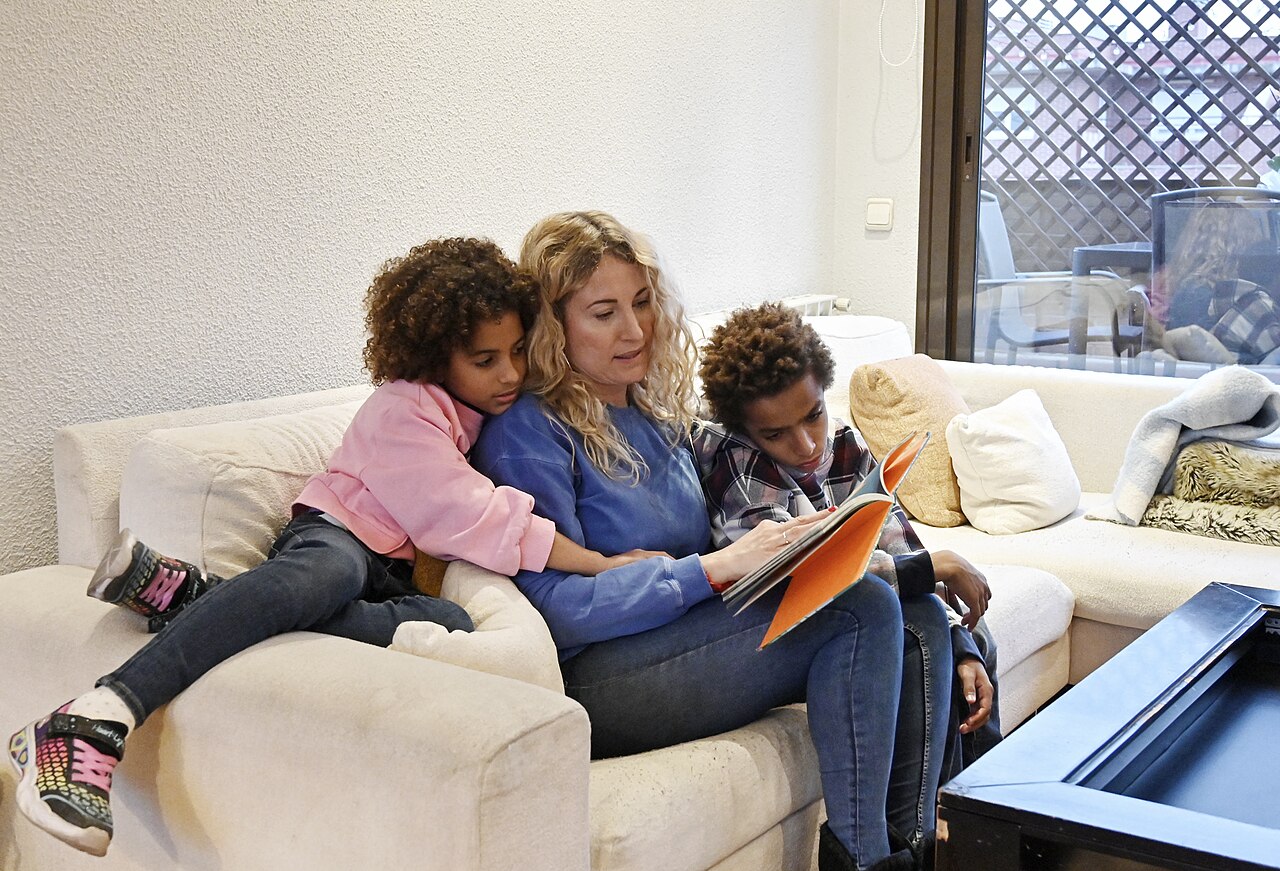
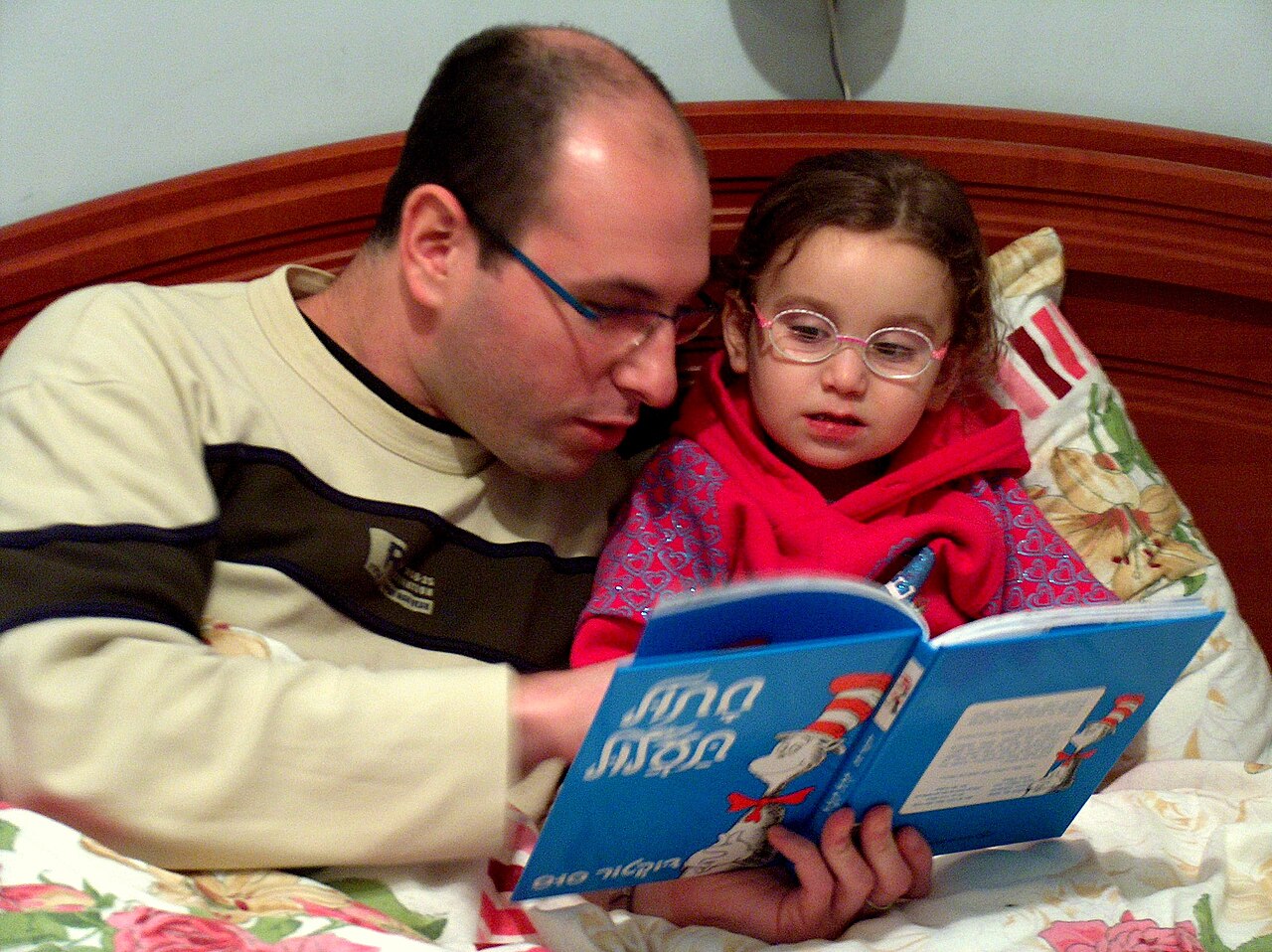
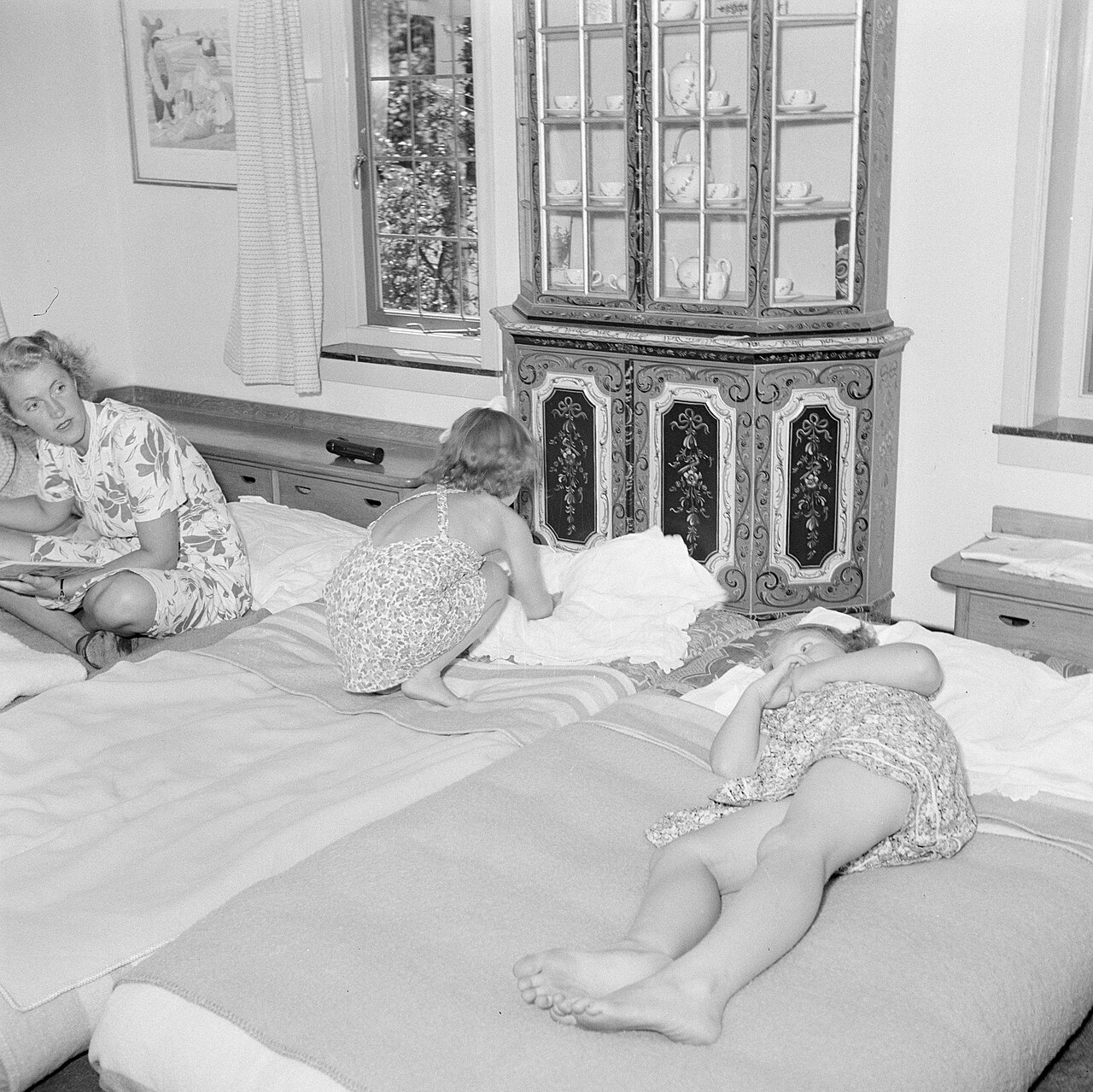
Image Credits: Wikimedia Commons / Oscar del Pozo / European Commission, Ldorfman, Willem van de Poll
The routine is familiar to every parent of a small child: bath, pajamas, teeth, and then the story. You own a shelf of books, but your child wants the same one.
Night after night. Week after week. Sometimes for months, and sometimes twice in one evening.
It can feel mind-numbing for the adult. But child development researchers say the repetition is doing serious work: building vocabulary, strengthening memory, teaching prediction, and calming the nervous system before sleep. This article explains why kids demand the same bedtime story every night, from the psychology of predictability to the language research behind repeated reading.
Predictability feels like safety
Young children live in a world where adults control nearly everything: when they eat, where they go, when the lights go out. Developmental psychologists point out that routines give children something they rarely get elsewhere, a sense of agency and control.
A systematic review of 170 studies conducted between 1950 and 2020 found that family routines are linked to positive child development across the board, including better cognitive, emotional, social, and physical health, and that routines offer protection in stressful environments. Researchers are still mapping the exact mechanisms, but the pattern is consistent.
The bedtime story sits at the emotional center of the routine. A warm bed, a loving parent, and a familiar story form a constant the child can count on. As developmental psychologist Aliza Pressman, author of Your Essential Guide to Raising Good Humans, told PopSci, children start to recognize that the pictures and words are connected, and they get cues for bedtime, safety, and connection all at once.
Reading the same book over and over, especially when the child chooses it, makes a small person feel a bit bigger in a world run by grown-ups.
There is also a physiological layer. During the day, children can experience elevated levels of the stress hormone cortisol in response to new or frightening situations. Settling into a safe place and hearing a familiar story lets those levels fall, which is part of why the same story works as a sleep cue night after night.
Repetition is a learning strategy, not a rut
To an adult, the fiftieth reading feels like stagnation. To a preschooler, it is a rich learning experience that keeps changing. Each pass through a familiar story frees up mental bandwidth for something new.
The logic is straightforward. The first time a child hears a story, most of their attention goes to following the plot: who is this character, what happens next.
Once the plot is known, that effort drops, and attention shifts to details missed earlier: new words, sentence structures, the emotions on a character's face. Developmental psychologists describe this as children devoting less attention to the storyline and more to learning language.
What repeated-reading studies measured
The research backing is unusually consistent. Studies summarized by the University of Wollongong found that being read the same story four times rather than two improved 1.5- and 2-year-olds' accuracy in reproducing the actions needed to make a toy rattle.
Doubling video-demonstration exposure for 12- to 21-month-olds improved their memory of the target actions. For children aged three to five, repeated readings of the same storybook helped them learn novel words.
A particularly elegant study, reported by Mental Floss, tested this directly.
Two groups of 3-year-olds heard stories containing made-up words like "sprock" or "coodle" in four places. One group heard the same story three times; the other heard three different stories using the same made-up words, so every child heard each word 12 times total.
The same-story group remembered the words both immediately and after a delay of several days. The different-stories group could not remember words learned the week before. Same exposure, completely different retention, because the familiar story let children focus on the words instead of the plot.
What the vocabulary research shows
Repeated reading has been studied as a vocabulary intervention for decades. Research published in the Journal of Educational Psychology found that repetition lets children become more familiar with words, concepts, and ideas, making vocabulary easier to retain over time.
Developmental psychologist Monique Sénéchal ran a landmark study, "The Differential Effect of Storybook Reading on Preschoolers' Acquisition of Expressive and Receptive Vocabulary," published in the Journal of Child Language. Testing single-reading, repeated-reading, and questioning conditions, she found that repetitive reading improved both receptive vocabulary (words children understand) and expressive vocabulary (words they can say), especially when adults encouraged children to participate by answering questions or naming objects in the pictures.
A review in Frontiers in Psychology reached the same conclusion from the other direction: repeated readings consistently outperform single readings for vocabulary learning, precisely because children spend less effort on the storyline and more on the language. The technique is so well established that it has been built into the design of educational television. Five consecutive days of watching the same Blue's Clues episode increased 3- to 5-year-olds' comprehension of the content and their interaction with the program, compared with watching it once.
Prediction, logic, and the pleasure of knowing
There is a cognitive thrill in the repetition that adults underestimate. A child who knows a story by heart gets to do something powerful: predict.
When a parent reads The Monster at the End of This Book, a child who has heard it once will anticipate that the narrator, Grover, is the titular monster. They have predicted an outcome from existing knowledge.
Virginia Walter, an associate professor of education and information studies at UCLA, told Parents.com (via Mental Floss) that this rehearsal of prediction builds logic skills. Children practice forecasting events from patterns, and that awareness of patterns transfers to other domains, including early science and math thinking.
Deborah Wells Rowe, a professor of teaching and learning at Vanderbilt University's Peabody College, adds that these predictable shared routines become launch pads for learning. The familiar frame of a beloved story is something children build understanding on over time, and each reading can reveal a fresh layer, much as adults discover new things returning to a favorite novel years later.
When repetition becomes a problem (rarely)
For the vast majority of children, demanding the same story is healthy and temporary. Children naturally shift toward novelty-seeking as they encode enough information; even infants move on to new faces once a familiar one is fully learned. The favorite book eventually gets retired on its own schedule.
The one thing worth watching is whether the demand for sameness extends rigidly into everything, meals, clothes, routes, play, alongside distress at tiny changes. On its own, a beloved bedtime book is not a warning sign. But if inflexibility is broad and intense, it is worth mentioning to a pediatrician, since strong insistence on sameness can be one feature among others that clinicians assess.
Otherwise, the expert advice is refreshingly simple: just go with it. Let them choose the book. Read it the same way, voices and all, because the ritual is the point.
You are not being boring. You are running a vocabulary program, a memory workout, and a calm-down routine in about ten minutes flat.
Frequently asked questions
Is it bad that my toddler wants the same book every night?
No. Research consistently shows repeated reading builds vocabulary and comprehension faster than constantly switching books. The familiarity also provides comfort and predictability before sleep. Child development experts recommend going along with it.
At what age do kids stop wanting the same story?
It varies, but the intense repetition phase usually peaks between ages two and five, when vocabulary is exploding and memory systems are still developing. Children naturally shift toward novelty as they encode more of the world. Most retire a favorite book on their own within weeks or months.
Should I read it exactly the same way each time?
Consistency helps. The predictable wording, voices, and pacing are part of what makes the ritual calming and learnable. That said, pausing to ask questions or name objects in the pictures boosts the vocabulary benefit, according to Sénéchal's research.
What if my child wants the same story multiple times in one night?
That is normal too, especially during phases of rapid learning or mild anxiety. Setting a gentle, predictable limit ("two readings, then lights out") preserves the routine's calming effect without turning bedtime into a negotiation marathon.
The bottom line
Kids demand the same bedtime story every night because repetition does three jobs at once: it makes the world feel predictable and safe, it frees mental energy for learning words instead of decoding plots, and it trains the prediction skills that underlie logic. The research is clear that the fiftieth reading is still teaching. So read it again, voices and all.
Latest in Parenting
- Why toddlers ask the same question over and over
- Why toddlers copy swear words instantly
- Why the word "mine" explodes around age two
- Why babies suddenly prefer one parent over the other
Subscribe to the Rive News newsletter for one practical parenting explainer every morning.
Image Credits: Wikimedia Commons / Oscar del Pozo / European Commission, Ldorfman, Willem van de Poll
Related stories
Why babies cry more in the evening: the witching hour explained
The witching hour is the fussy evening stretch most newborns hit daily. Why overtiredness, cluster feeding, and overstimulation stack up
When Do Babies Start Sleeping Through the Night by Month?
Most babies sleep through the night between 3 and 6 months, with regressions at 4 and 8 to 10 months. See the month-by-month table

Why Your Baby Wakes Up the Second You Put Them Down
Newborns wake when put down as the startle reflex, light sleep, and lost warmth hit at once. It is normal and peaks early, fading