
Why Do Toddlers Ask the Same Question Over and Over? 5 Reasons
Key takeaways
- Toddlers repeat questions because language, thinking, and impulse control develop at different speeds, so the answer needs several passes to stick.
- Each repetition strengthens the brain connections for speech and comprehension; it is practice, not a sign the child ignored the first answer.
- Consistent, patient answers give the child a sense of security, while the repetition usually fades as the child grows.
Every parent of a toddler knows the loop. You answer the question, clearly and patiently. Three minutes later the same question comes back, word for word.
Then again. It is tempting to conclude the child was not listening, or worse, is testing you on purpose. Developmental science says something more interesting is happening: the repetition is the learning.
A toddler's brain is doing several jobs at once, and repeating the question is how it multitasks. This article explains the five real reasons toddlers ask the same question over and over, from language practice to impulse control, what the research says about answering them, and how to respond without losing your patience or the plot.
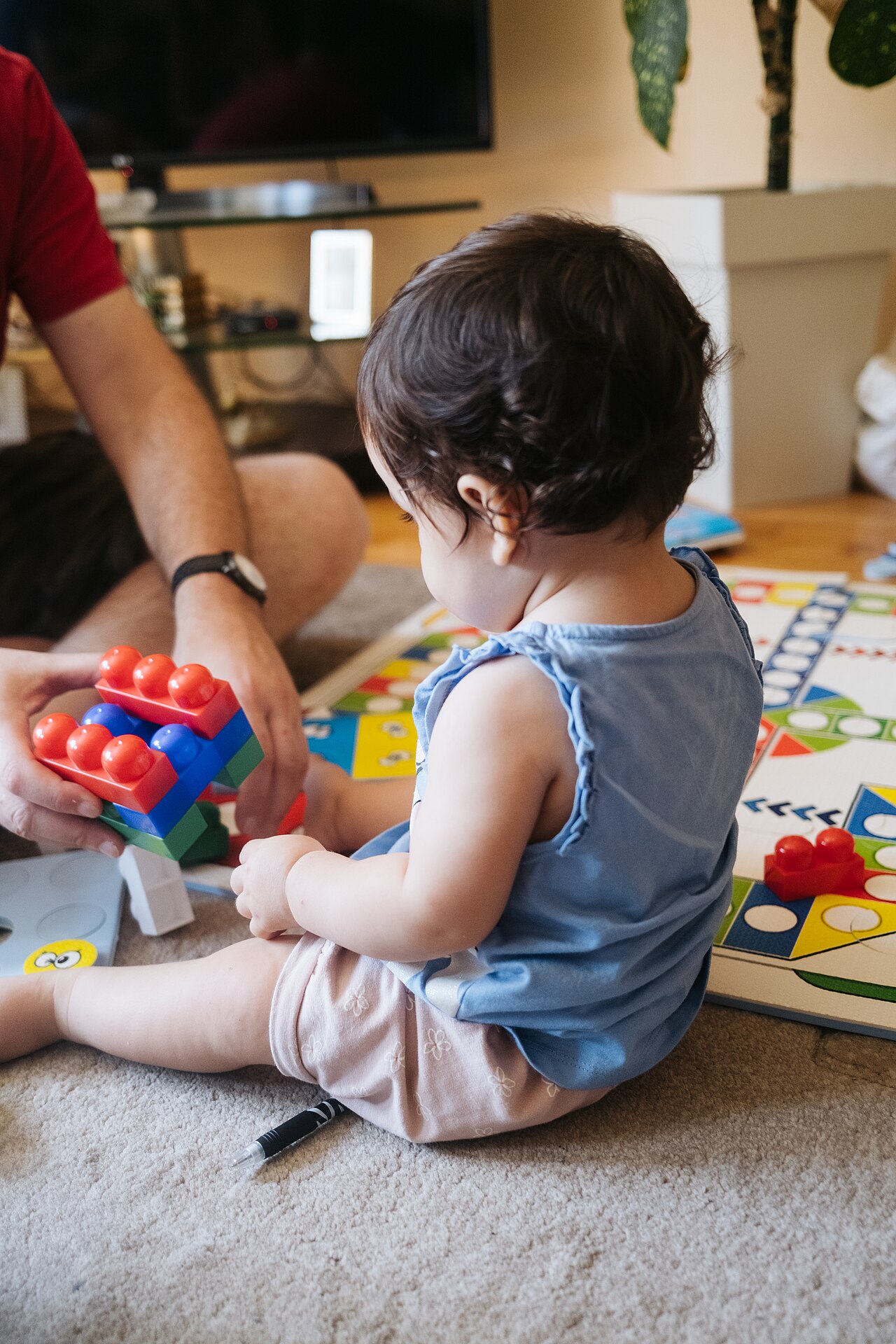
A child playing with colorful building blocks with an adult in a cozy living room. Photograph: Shixart1985
Image Credits: Wikimedia Commons / Shixart1985, Markus Spiske
Their brain is developing on several tracks at once
The first reason is that toddlers are not single-tasking. Dr. Jarret Patton, a pediatrician who spoke to Romper about this exact behavior, explains that young children work on speech development, physical development, and intellectual development simultaneously.
When different areas of the brain are making gains at the same time, a child may need extra time for new information to sink in. The repetition is not a failure of attention; it is the sound of several systems catching up with each other.
That multitasking explains why the same question can feel brand new to the child each time it is asked. On the first ask, the child may have been processing the pronunciation. On the second, the meaning.
On the third, how the answer connects to what they already know. An early childhood education researcher at Universitas Negeri Surabaya puts it this way: repetitive questioning shows children practicing verbal skills and expanding vocabulary while also checking whether the new information aligns with their existing understanding.
The practical takeaway is to engage more, not less. Patton suggests answering in a fuller, more descriptive way that works both the intellectual and speech components at once.
If the child asks "What's that?" about an apron, try this: "It's an apron; it keeps my clothes clean when I cook." The richer answer gives the brain more to chew on per pass.
Repetition is how language skills get built
The second reason is pure practice. Each time a toddler repeats a question or demand, the neural connections supporting speech and comprehension get a little stronger, according to the Times of India. This is the same principle behind drilling multiplication tables or practicing scales: repetition lays down the pathways.
This also explains why toddlers repeat questions even after receiving a perfectly good answer. Part of what they are testing is the effectiveness of their own language, not just the information.
They are learning that words have power, that a spoken question can make things happen. Every answered repetition confirms that the tool works.
Adults sometimes hear this as nagging. Reframe it as rehearsal. The child is running a drill, and the drill needs an audience.
Related behaviors follow the same logic: children cover their ears at hand dryers and copy swear words instantly for the same underlying reason, a brain tuned to notice and repeat novel input.
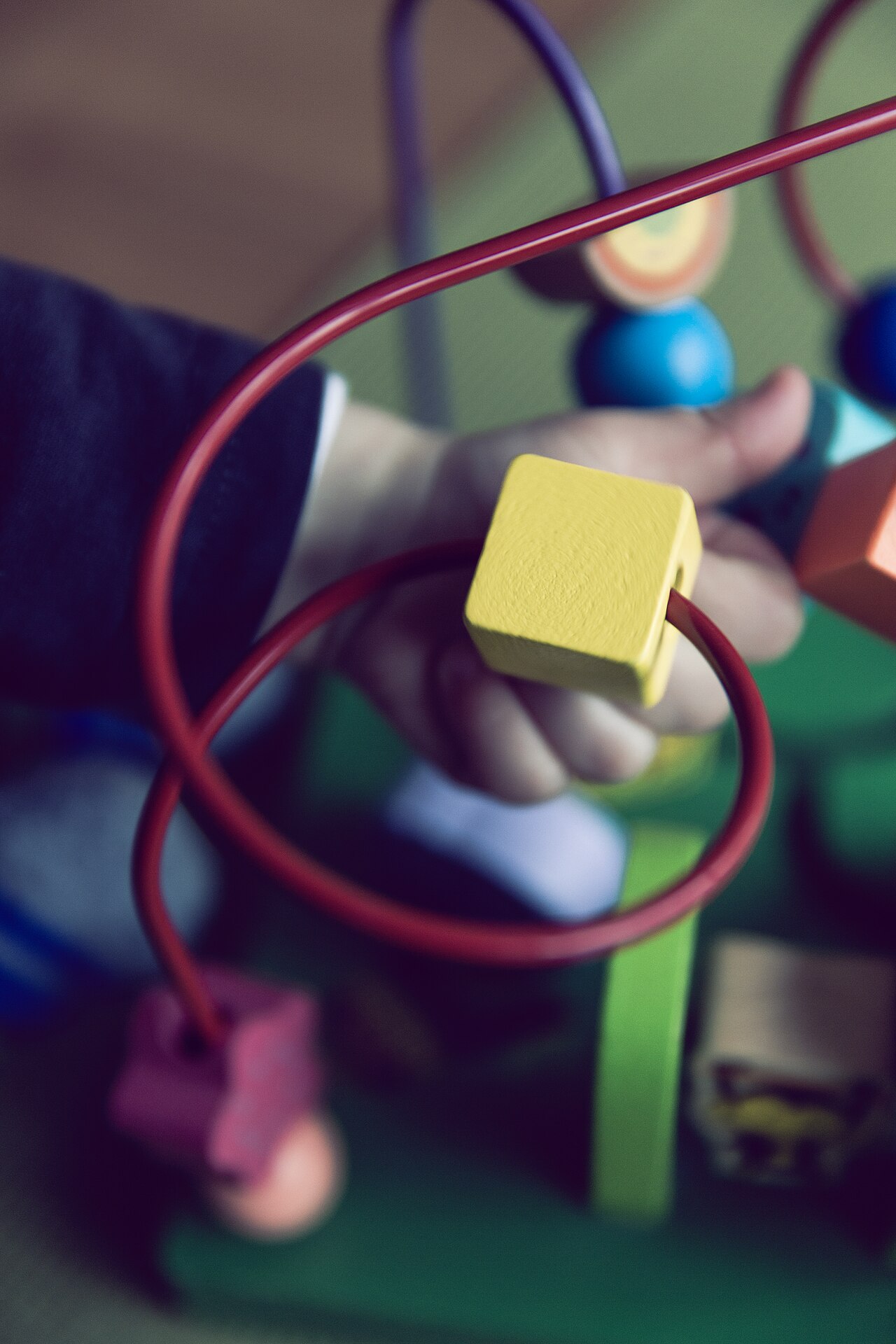
A toddler playing with a wire bead toy. Photograph: Markus Spiske
They are checking whether the answer stays the same
The third reason is about control and predictability. Toddlers live in a world where adults decide nearly everything: the schedule, the food, the movements, the choices. Repeating a question is one of the few levers a small child has for testing whether the world is stable.
By asking again, the child checks whether the answer remains consistent. A consistent answer delivers a sense of security and safety. An inconsistent one breeds uncertainty, and uncertainty breeds more repetition.
The Parenting Style Blog notes that children between ages two and five keep asking partly to test response consistency even after receiving a complete and reasonable answer. This is not stubbornness; it is quality control.
This is also why mixed messages from different caregivers can supercharge the loop. If one parent says yes and the other says maybe, the child has discovered that answers are negotiable, and the rational strategy is to keep asking. Consistency across caregivers shortens the cycle more than any clever technique.
Their impulse control is still under construction
The fourth reason is neurological and humbling for parents: the brain areas responsible for self-control and impulse regulation are still developing in toddlers. Even when a child fully heard and understood the answer, the brain may not have the capacity to suppress the urge to ask again. The thought recurs, so the question recurs.
The Times of India describes this as a genuine capacity limit, not a choice. The child may not fully retain the previous response, or the impulse to voice the thought may simply overpower the memory of having voiced it before.
Expecting a two-year-old to ask once and move on is expecting a finished brain. The wiring for "ask, absorb, drop it" is years from complete.
This is the reason punishment and exasperation never work on repetition. Scolding a toddler for asking again targets a behavior the child cannot yet regulate. Calm consistency, a short answer repeated gently, works better because it matches the developmental reality.
Sometimes the question is really about connection
The fifth reason has nothing to do with the words at all. Sometimes a toddler repeats a question to keep you engaged.
The back-and-forth is the point: the question guarantees attention, eye contact, and emotional connection with the caregiver. The child is not after the object or the action; they are after you.
The answers that actually work
This is also where timing gets tangled. Toddlers struggle with abstract time concepts like "later," "soon," or "not now." A vague answer can generate a fresh round of asking, not because the child is defiant but because the answer did not parse.
Concrete answers, "after lunch," "when the song ends," give the question loop something to close on. The bedtime water request right after lights-out is the classic version of this pattern, a question that is really a bid for more contact.
Common questions about toddler repetition
Patton adds a reassuring endpoint: the stage is not forever. Children repeat questions less as they age, and by first grade frequent repetition of the same questions should have faded. If it has not, that is the point to discuss it with the child's teacher and pediatrician, not a reason for alarm before then.
How should I answer when my toddler asks the same question again?
Answer the same way, briefly and warmly. Many child development writers suggest flipping the question back once, asking the child what they think or what you said last time.
This turns the loop into a recall game instead of a demand.
Is it bad to get frustrated?
No, frustration is normal. What matters is the pattern over time. If you catch yourself snapping, it is worth building in a reset, stepping away for a minute or tag-teaming with another adult, rather than aiming for perfect patience every time.
Should I change my answer to stop the repetition?
Usually not. Changing the answer to quiet the child teaches them that persistence changes outcomes, which lengthens every future loop. Consistency is the faster exit.
When should repetition worry me?
If a school-age child still frequently repeats the same questions, or if repetition comes with other developmental concerns, talk to your pediatrician. For toddlers, it is within the normal range.
Do all toddlers do this?
Most do, though intensity varies. Some children run the loop internally and ask less; others externalize everything. Neither pattern is a report card on parenting.
The bottom line
Toddlers ask the same question over and over because their brains are developing on multiple tracks, each repetition practices language, the loop tests whether answers are consistent, impulse control is still under construction, and sometimes the real goal is connection. None of this is defiance, and none of it is a sign the child ignored you.
Answer consistently, answer a little more richly than feels necessary, and trust that the loop has an expiration date. For the harder moments, the strategies in handling toddler tantrums without yelling and understanding why toddlers say no to everything draw on the same developmental logic.
Latest in Parenting
- Why Kids Ask Constantly: The Developmental Reason
- How to Handle Toddler Tantrums Without Yelling
- Why Toddlers Say No to Everything
- Why Toddlers Copy Swear Words Instantly
Subscribe for parenting explainers grounded in developmental research, not guilt.
Related stories
Why babies cry more in the evening: the witching hour explained
The witching hour is the fussy evening stretch most newborns hit daily. Why overtiredness, cluster feeding, and overstimulation stack up
When Do Babies Start Sleeping Through the Night by Month?
Most babies sleep through the night between 3 and 6 months, with regressions at 4 and 8 to 10 months. See the month-by-month table

Why Your Baby Wakes Up the Second You Put Them Down
Newborns wake when put down as the startle reflex, light sleep, and lost warmth hit at once. It is normal and peaks early, fading