
Why do kids get scared of the dark around age three? Development explains
Key takeaways
- Fear of the dark often starts around age three, peaks between four and six, and is a sign of a developing imagination, not a problem.
- Nearly 75 percent of children ages four to twelve report nighttime fears, so a scared three-year-old is in crowded company.
- The fear fades because logic eventually catches up with imagination, usually by ages seven to nine.
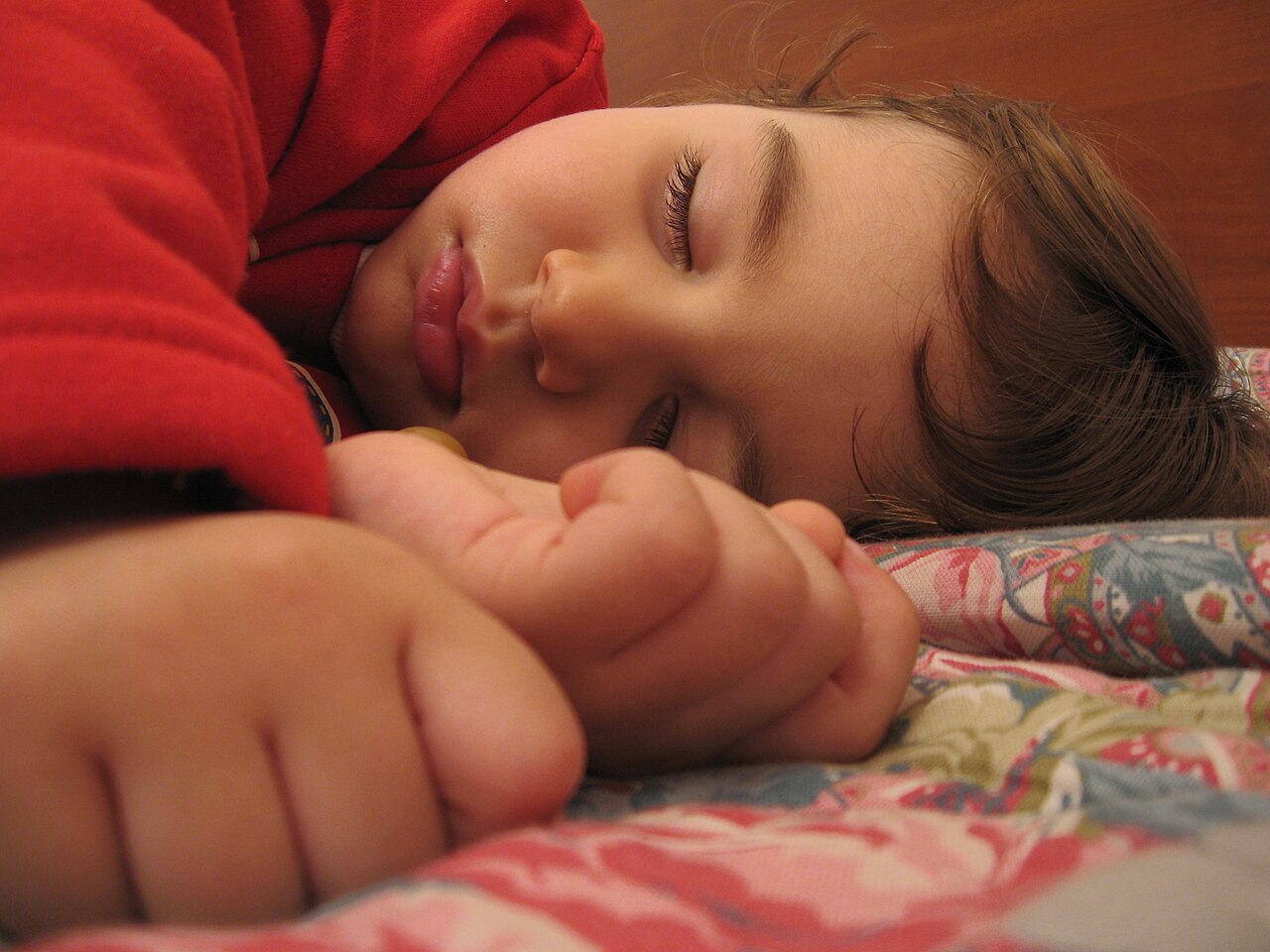
A sleeping child: fear of the dark strikes before sleep, while a child is awake. Photograph: Alessandro Zangrilli / Wikimedia Commons
Nothing in your home changed No move, no scary movie, no new sibling
Parents often describe it as arriving overnight
The timing is not a coincidence Fear of the dark most commonly appears right around the third birthday, and the reason is wired into how a preschooler's brain develops
Their imagination outgrew their logic, and the dark is where that gap becomes visible
This article explains why the fear arrives around age three, including how imagination develops ahead of reasoning, what shadows do to a young brain, and the steps that help a child through it.
Imagination arrives before logic can manage it
Between the ages of two and three, toddlers begin to picture things that are not in front of them. That is a wonderful skill for play and the reason a child can picture a monster in an empty room. The ability to imagine develops before the ability to reason through fear, so a pictured threat feels real.
Between about three and five, imagination expands further Children invent whole stories and play at being lions
What they cannot yet do reliably is hold the difference between what they can imagine and what is real, especially at night, when they are tired and alone
Developmental researchers note this as a textbook gap. The same brain that invents fairies in the garden also invents shadows that move and monsters with teeth. You cannot have one without the other, and the fear is, in a strange way, a developmental milestone.
The magical thinking of this stage compounds the problem Children engage in magical thinking and struggle to differentiate reality from fantasy, and in the dark, with limited visibility, their imaginations run wild, turning shadows into monsters or soft sounds into unseen threats
It removes the visual evidence that would normally keep it in check
Why the dark is the perfect fear machine

A nightlight gives the brain the visual information it needs to stop inventing monsters. Photograph: J.Doniyorovich / Wikimedia Commons
Darkness removes information, and a three-year-old's brain fills the gap with the most dramatic option A chair becomes a person
Shadows distort familiar shapes, and toddlers tend to conclude the worst when their brains cannot make sense of what they see
Bedtime also doubles as a separation During the day, a toddler can check that a parent still exists by yelling from the bathroom
Falling asleep means letting go of the parent they are deeply attached to, so the fear carries anxiety about separation as well as about the dark itself
This is why the fear so often appears at bedtime rather than during daytime visits to dark rooms. The dark plus separation plus fatigue is a combination that would unsettle anyone whose reasoning tools were still under construction.
Memory plays a role too Toddlers have longer memories than babies, and a single scary experience, like a frightening scene in a show, can stay with them for weeks
Overtiredness makes everything sharper: being overtired triggers a rise in cortisol, the stress hormone, which heightens anxiety and makes bedtime fears feel much bigger than they are
The numbers: how common and when it passes
If a parent feels alone in this, the numbers say otherwise. According to Children's Hospital Colorado, nearly 75 percent of children between ages four and twelve report having nighttime fears. Fear of the dark, technically called nyctophobia, is one of the most common among them.
The timeline is remarkably consistent. It often starts around age three, peaks between ages four and six, and most children work through it by ages seven to nine with consistent, calm support. Those ages line up exactly with the window when imagination is at its most powerful and logical reasoning is still catching up.
Earlier fears belong to earlier stages Loud noises, separation, and strangers dominate the toddler years Around three to five, the dark, monsters, and imaginary creatures take over
By five and six, more real-world worries appear, such as getting hurt, burglars, or getting lost The theme of the fear always tracks the child's expanding understanding of the world
Night terrors are a different thing entirely and are worth distinguishing. They typically happen in the first third of the night during deep non-REM sleep, and the child does not remember them in the morning. Fear of the dark happens before sleep, while the child is awake and remembering.
What actually helps a scared three-year-old

There is no developmental case against a nightlight. Photograph: Andy Oakley / Wikimedia Commons
The first rule is to take the fear seriously without feeding it Dismissing it as silly leaves the child alone with the feeling
Calm, brief reassurance lands in between
A small light helps, and there is no developmental case against it. A nightlight does not prolong the fear; it gives the brain the visual information it needs to stop inventing monsters. Many children outgrow the nightlight on their own once logic catches up.
The bedtime routine matters more than the darkness itself Connection before separation reduces the anxiety that amplifies the fear
Developmental psychologist Dr. Gordon Neufeld has noted that for young children, bedtime represents a separation, so resistance often comes from anxiety rather than disobedience
Stories work when they are the right kind A bedtime story gives the imagination, the same imagination that invented the monster, something else to build with
Stories where the child is brave and in charge rewrite the script the fear is running
Screen limits pay off here When children are asked what scares them about the dark, they often point to things they have seen on TV or online, according to Dr. Benjamin Mullin of Children's Hospital Colorado Limiting screens, especially in the hour before bed, reduces how much scary imagery stays active in a child's mind at night
When fear of the dark is not just a phase
For most children, this fear is a normal developmental stage that passes. There are cases where it deserves professional attention. Talk to your pediatrician if a fear is intense and lasts many months, if it stops a child from doing ordinary things such as going to school or sleeping at all, if it comes with frequent stomach aches or panic, or if it follows a genuinely frightening real event.
Daytime anxiety that interferes with play, preschool, or separation from caregivers is another signal worth raising. A fear that is spreading into daylight hours and shrinking a child's world is different from a bedtime-only monster. Most of the time, though, the monster moves out on its own, usually by ages seven to nine, leaving behind a brain with a stronger imagination and better tools for managing it.
FAQ
At what age does fear of the dark usually appear?
It often starts around age three and peaks between ages four and six, though some children experience it earlier or later. Most children work through it by ages seven to nine with consistent, calm support.
Is fear of the dark a sign of a deeper problem?
Usually no. It is almost always a normal developmental phase tied to imagination growth outpacing logical reasoning. It only becomes a concern if it is persistent over many months, spreads into daytime functioning, or follows a frightening real event.
Should I get rid of the nightlight?
There is no need to rush. A nightlight gives the brain visual information that stops it from inventing monsters, and most children drop it on their own as reasoning catches up. Removing it too early can intensify the fear for no developmental benefit.
How is fear of the dark different from night terrors?
Fear of the dark happens before sleep while the child is awake and remembering. Night terrors typically happen in the first third of the night during deep non-REM sleep, and the child usually has no memory of them in the morning.
The bottom line
Kids get scared of the dark around age three because that is when imagination outruns logic The brain can picture a monster before it can reason the monster away, and darkness removes the visual evidence that would settle the argument Nearly three-quarters of children ages four to twelve report nighttime fears, so this phase is crowded, normal, and temporary
Calm reassurance, a nightlight, connection before bed, and consistent routines carry most children through until reasoning catches up If the fear persists for months or spills into daytime life, that is the moment to talk to a pediatrician
Latest in Parenting
- When evenings turn fussy: the science of the witching hour
- Calm responses that work when toddlers test limits
- Why babies smile in their sleep
- Preparing your child for the first day of school
Image Credits: Wikimedia Commons / Alessandro Zangrilli, J.Doniyorovich, Andy Oakley
Subscribe to the Rive News newsletter for one research-backed parenting explainer every week.
Related stories

Why babies cry more in the evening: the witching hour explained
The witching hour is the fussy evening stretch most newborns hit daily. Why overtiredness, cluster feeding, and overstimulation stack up
When Do Babies Start Sleeping Through the Night by Month?
Most babies sleep through the night between 3 and 6 months, with regressions at 4 and 8 to 10 months. See the month-by-month table

Why Your Baby Wakes Up the Second You Put Them Down
Newborns wake when put down as the startle reflex, light sleep, and lost warmth hit at once. It is normal and peaks early, fading