
Why kids love playing with a cardboard box more than the toy
By Rive News / Research desk | Rive News / Published October 28, 2026 at 9:00 AM PKT
Key takeaways
- A box wins on versatility: it can become many things, while a detailed toy usually stays one thing.
- Research with 66 children found generic objects helped extend pretend play because they could stand in for multiple objects.
- Object substitution, pretending one thing is another, builds problem solving and social play.
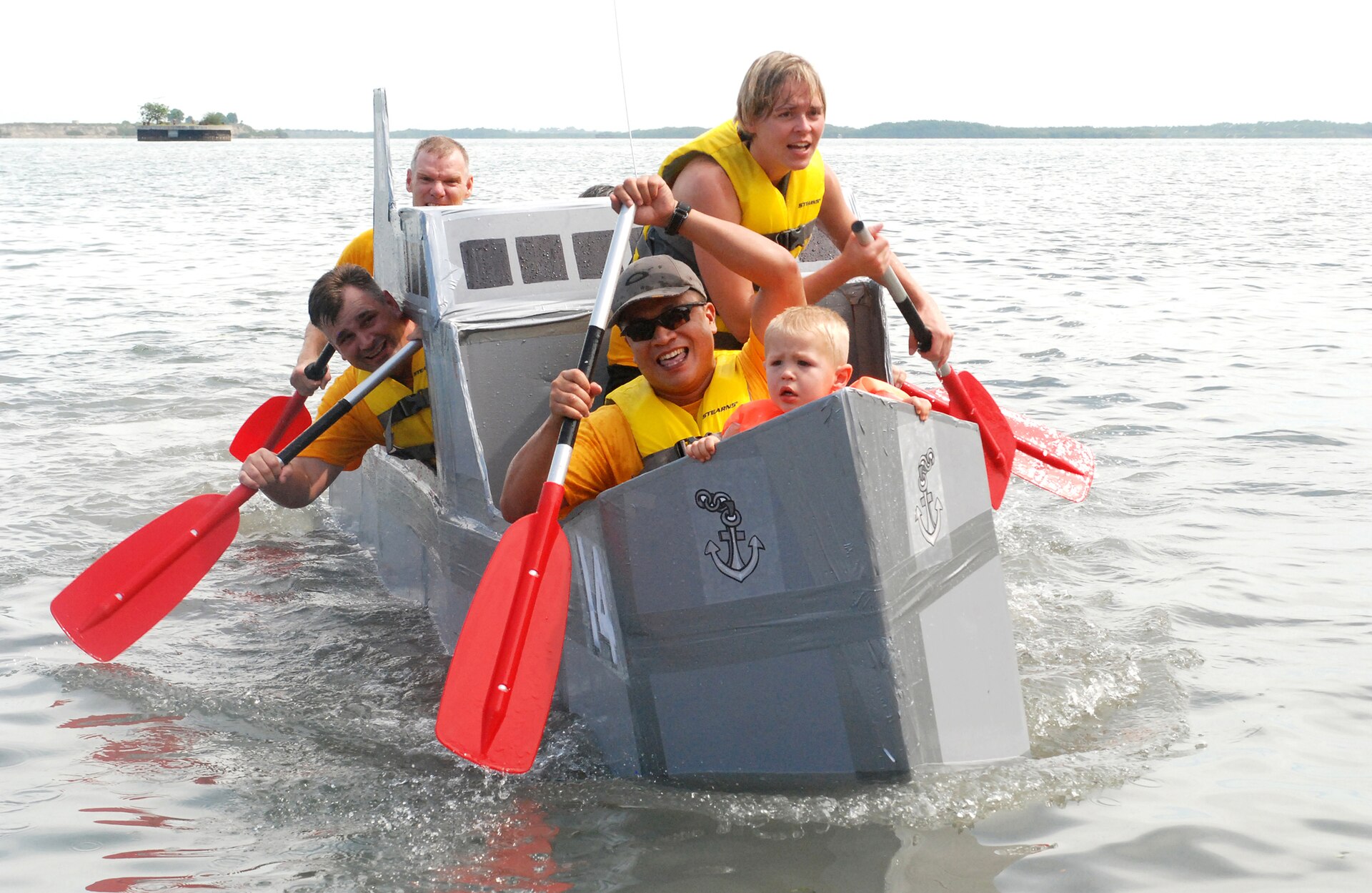
[Adults and a young child paddling a cardboard box boat at a regatta.] Photograph: cardboard box boat crew
Image Credits: Wikimedia Commons
A cardboard box can be a house, a car, a boat, a shop, or a hiding place. A toy spaceship, however detailed, usually stays a spaceship for as long as a child plays with it.
This article explains why children often pick the box, what researchers found when they tested that choice, and how parents can use simple materials without buying more toys.
The box is not limited to one idea
The core answer is simple. A plain box has few fixed features, so a child can assign it a new meaning in each game.
A detailed toy already has a meaning built in. Its lights, sounds, and shape tell the child what it is supposed to be, which leaves less room for invention.
University of Alabama researcher Dr Sherwood Burns-Nader put it this way: "The inclusion of generic objects like sticks and boxes may allow children to extend their play because the generic objects can be used as multiple things."
That extension matters. A longer game gives a child more chances to solve problems, negotiate roles with friends, and build a story that changes as it goes.
The box also gives a child control. With a toy that sings or moves on its own, the toy leads the play, while with a box, the child leads.
What the research actually tested
The University of Alabama study, published in the journal Infant and Child Development, looked at object substitution during pretend play. Object substitution means using one object to stand in for another, such as pretending a box is a car.
The team worked with 66 children and four primary objects. Two were round and two were rectangular, and in each pair one object was plain while the other was marked to look like something specific.
Children could pick objects to use as part of a story. The researchers found that generic objects with few details helped children extend their play, because a plain object could become several different things.
Co-author Dr Jason Scofield summarised the finding in a way parents may find reassuring: "Children don't necessarily like the box better than the toy, but they can do more things with the box because it's not limited."
That distinction is worth keeping. The study does not prove children dislike toys. It shows that when the goal is inventing a story, an object without a fixed identity is more useful.
Shape still mattered in the study. An object had to resemble the thing it stood in for closely enough to work, so a long stick could be a sword but a round object could not easily become a book.
Why open-ended play helps development
Pretend play with generic objects exercises several skills at once. A child must hold an idea in mind, such as "this box is a boat", while acting on it in the real world.
That gap between idea and object is where imagination does its work. Each time a child reassigns a meaning, they practise flexible thinking.
Social play benefits too. Burns-Nader noted that pretend play such as object substitution has benefits including increased socialisation and problem solving.
When two children share a box, they must agree on what it is. That negotiation is itself a social skill, and it often matters more than the game that follows.
Physical play counts as well. A large box invites climbing in, pushing, stacking, and hiding, which builds coordination and spatial awareness in a way a small electronic toy rarely does.
Educators at The Children's Home in Cincinnati made a similar point. Carolyn Brinkmann, director of early childhood services there, said: "An empty box is full of possibilities and provides kids with an opportunity for creativity and make-believe play."
She added that a large box can become a house, a car, or a place to hide when children feel overwhelmed. That last use matters, since a box can also be a quiet retreat.
Why detailed toys still have a place
None of this means detailed toys are useless. A toy with a clear purpose can teach a specific skill, such as matching shapes, building a structure, or learning a song.
Some children also prefer detailed toys at certain ages or for certain games. A child who wants to re-enact a favourite story may want figures that look like the characters.
The box advantage shows up most clearly in free play, when no adult has set the goal. When a child sets the goal, an open object serves that goal better.
Age matters too. The University of Alabama researchers noted that the pull of generic objects was especially strong at preschool age, when pretend play peaks.
Older children may use boxes differently, turning them into building materials for a project rather than a single pretend object. That shift still relies on the same quality: the box takes whatever meaning the child gives it.
How to offer box play without clutter
Parents do not need a cupboard full of boxes. One large, sturdy box is enough to start, and smaller boxes can serve as props.
Safety comes first. Remove staples, tape, and sharp edges, and keep boxes away from heaters and open flames, since cardboard burns easily.
Let the child decide what the box becomes. An adult who labels it as a car has already narrowed the game, while a child who chooses may turn it into a shop, a cave, or a rocket.
Crayons, string, and cushions extend the play without fixing it. As assistant preschool teacher Ashley Thompson put it: "Our young learners will take a few crayons and string and can magically transform a box into a jet, a car, a fort or even a train."
When the box falls apart, that is not failure. Broken pieces can become walls, wings, or new props, and rebuilding is part of the game.
One caution is worth noting. A box that has held food, chemicals, or heavy goods may carry residue, so choose clean boxes from safe sources.
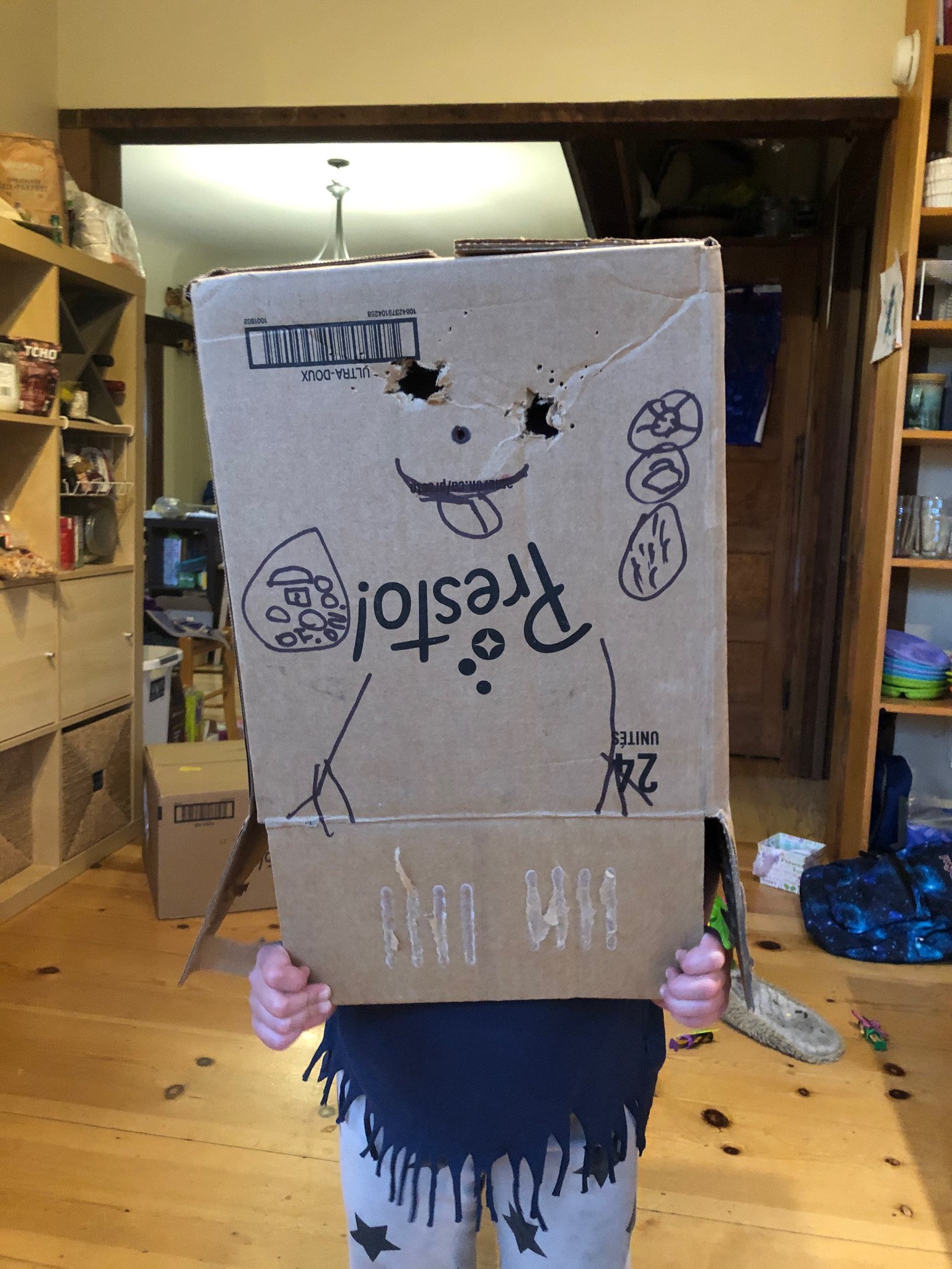
[A child wearing a decorated cardboard box as a costume indoors.] Photograph: child in a cardboard box costume
Image Credits: Wikimedia Commons
The bottom line
Kids love the box more than the toy inside it when they want to invent, because the box can be anything and the toy can only be itself. Research on object substitution backs that up: generic objects extend play by letting children assign new meanings again and again.
That does not make toys a waste of money. It means the most valuable plaything in a room is often the one with the fewest instructions attached.
Next time a child ignores a new toy for its box, it is worth letting the game run. The child is not being ungrateful, they are choosing the tool that lets their imagination do the most work.
Tags: play, imagination, child development
Rive News / Research desk writes plain-language explainers drawn from published research and reputable education sources.
Related
- What parallel play is and why it matters
- Why toddlers line up toys in rows
- Why children invent imaginary friends
Subscribe to Rive News for one plain-language explainer each week.
Rive News follows published sources and corrects errors when readers point them out.
Related stories
Why babies cry more in the evening: the witching hour explained
The witching hour is the fussy evening stretch most newborns hit daily. Why overtiredness, cluster feeding, and overstimulation stack up
When Do Babies Start Sleeping Through the Night by Month?
Most babies sleep through the night between 3 and 6 months, with regressions at 4 and 8 to 10 months. See the month-by-month table
Why Your Baby Wakes Up the Second You Put Them Down
Newborns wake when put down as the startle reflex, light sleep, and lost warmth hit at once. It is normal and peaks early, fading