
What is parallel play and why it matters
By Rive News / Research desk | Rive News / Published October 26, 2026 at 9:00 AM PKT
Key takeaways
- Parallel play means children play side by side, each absorbed in their own activity.
- It usually appears around age 2 and is a normal step toward social play.
- Children learn by watching and copying nearby peers long before they cooperate.
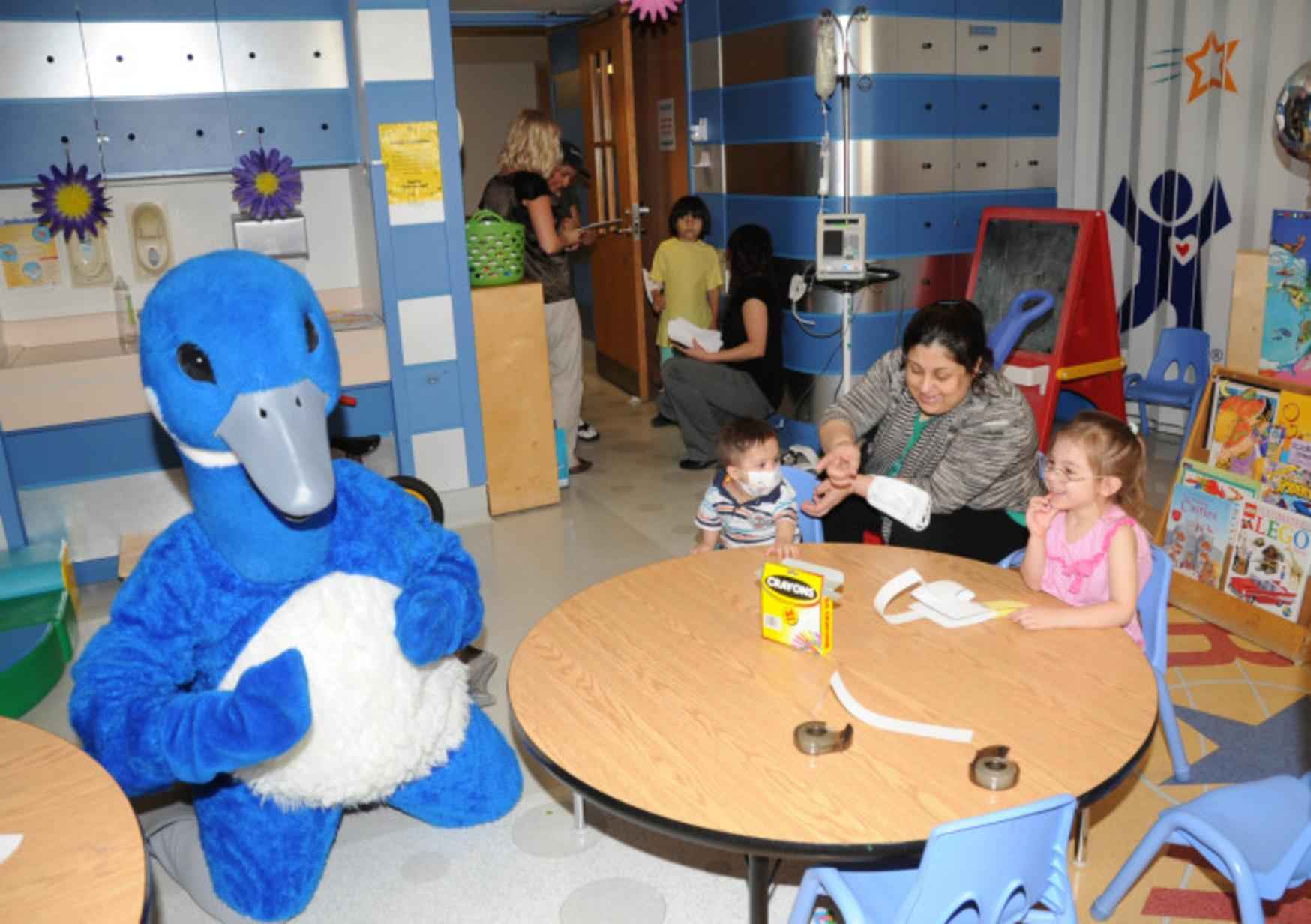
[Children playing in a kindergarten classroom, the kind of setting where side-by-side play happens every day.] Photograph: Wikimedia Commons contributor
Image Credits: Wikimedia Commons
Two toddlers sit on the same rug, each stacking their own blocks. They do not share. They do not build one tower together.
They barely talk to each other. Yet they chose to sit side by side, and each keeps glancing at what the other is doing. That is parallel play, and it is one of the most useful stages in early childhood.
Parallel play is the stage where children play beside each other rather than with each other. They may use similar toys, copy a movement they just saw, or talk aloud without expecting an answer. The play looks solitary from a distance, but the social part is real: the child has chosen company and is learning from it.
This article explains where parallel play sits in the sequence of play development, what children actually gain from it, how adults can support it, and when it is worth asking a professional about a child's social development.
Where parallel play fits
Mildred Parten Newhall identified six stages of social play in 1932, and her sequence is still the standard frame used by educators today. The stages run from unoccupied play, where infants make random movements and explore their own bodies, through solitary play, where a child plays alone with little interest in others, and onlooker play, where a child watches others without joining in.
Parallel play is the fourth stage. It typically appears from around age 2, with some sources placing it between 2 and 4 years. After it come associative play, around ages 3 to 4, where children share activities and materials but still lack a common goal, and cooperative play, from around age 4, where children work together toward shared goals and take on roles.
The order matters because each stage builds on the one before it. A child who is comfortable playing beside others has already learned to tolerate shared space, shared noise, and shared materials. Those are the raw materials of cooperation.
Skipping straight to "play nicely together" asks a toddler to run before they have practised standing next to someone.
What children learn without seeming to learn
The first gain is social comfort. A toddler in parallel play gets used to another child being close without the pressure of interaction. They learn the rhythm of a room full of children: the noise level, the movement, the unspoken rule that the rug belongs to everyone.
That comfort is what later makes joining a game feel safe rather than overwhelming.
The second gain is observation. Children in parallel play watch each other constantly, even while appearing absorbed in their own toys. They see a peer stack a block a new way, hear a new word for a toy, or watch how another child reacts when a tower falls.
Imitation follows observation, and imitation is one of the fastest ways toddlers pick up language and motor skills.
The third gain is independence with company. Parallel play lets a child practise doing their own thing while other people are around. That balance, autonomy plus social presence, is the same balance adults use in a shared office or a library.
The child is not ignoring peers. They are learning that they can be themselves near other people.
Emotional learning happens here too. A child playing beside a peer feels frustration when their own tower falls, joy when it stands, and curiosity about the tower next door. Those feelings arise in a social setting, which gives adults a chance to name them and help the child practise handling them before the stakes of shared play arrive.
How to spot it and how to support it
Parallel play is easy to recognise once you know the pattern. Two or more children are in the same space, often with the same kind of toy, but each follows their own plan. There may be glances, copying, or side comments, but no joint goal and no negotiation about rules.
If one child leaves, the other's play continues unchanged.
Adults can support it simply by providing the right setup. Put out duplicate toys so children do not have to fight over a single coveted item. Two sets of blocks, two dolls, or two cars remove the main cause of conflict at this stage.
Keep the space calm and predictable, since parallel play thrives on routine.
Resist the urge to force interaction. Telling two toddlers to share one tower or play one game pushes them into associative play before they are ready, and the usual result is tears or withdrawal. A better move is narration: describe what each child is doing out loud.
"You are building a tall tower, and Sara is building a long road." That kind of talk models language and shows children that their separate play is noticed and valued.
Playdates for toddlers work best when they are short and low-pressure. An hour with duplicate toys and a snack beats a long structured afternoon. The goal is time spent comfortably near peers, not a performance of friendship.
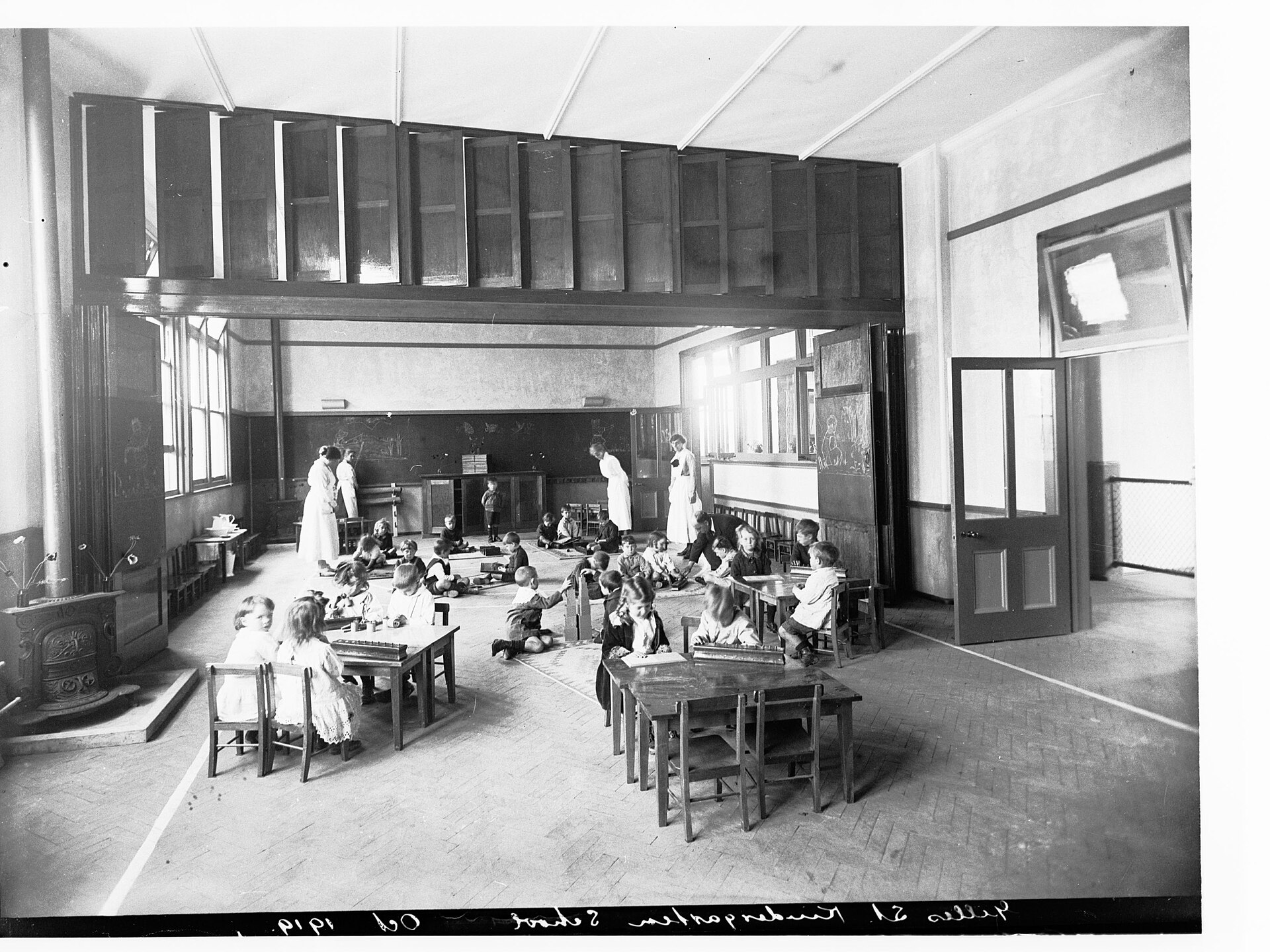
[Children at play in a kindergarten garden, an outdoor setting where side-by-side play comes naturally.] Photograph: State Library of Queensland, via Wikimedia Commons
Image Credits: Wikimedia Commons
What parallel play is not
Parallel play is not a sign that a child is antisocial. Parents sometimes worry when their toddler ignores other children at the park, but at age 2, playing beside others is exactly the social behaviour expected. The child is not rejecting peers.
They are engaging with them in the way their age allows.
It is also not the same as solitary play. In solitary play, the child plays alone and shows little interest in what others are doing. In parallel play, the child has chosen to be near others and is absorbing information from them, even without direct interaction.
The difference is awareness, not just proximity.
Nor is it a stage every child passes through on the same timetable. Parten's stages describe a typical sequence, not a strict schedule. Some children linger in parallel play longer, especially if they are cautious by temperament or have had less group experience.
Others move quickly into associative play. Variation within the broad age ranges is normal.
When to ask a professional
Most children move from parallel play toward more interactive play during ages 3 and 4. A conversation with a paediatrician or early childhood professional is worth having if a child shows little interest in other children well past age 4, rarely imitates peers, avoids eye contact consistently, or loses social skills they once had. Those observations on their own do not point to any particular cause, and many have ordinary explanations, but they are the kind of pattern a professional can assess properly.
This article describes general developmental patterns only. It cannot assess any individual child, and it does not replace professional advice about a child's development.
Frequently asked questions
At what age does parallel play start?
It typically appears around age 2, with sources placing it between ages 2 and 4. It follows onlooker play and comes before associative play.
Should I make my toddler share during parallel play?
No. Forcing sharing pushes a child into a stage they may not be ready for. Duplicate toys let children play beside each other without conflict, which is the point of this stage.
Is parallel play normal for a 3-year-old?
Yes. Many 3-year-olds still spend much of their time in parallel play, especially in new settings or with unfamiliar children. It fades gradually as associative play grows.
How is parallel play different from playing alone?
In parallel play, the child plays near others, watches them, and may copy them. In solitary play, the child plays alone with little interest in what others are doing.
The bottom line
Parallel play looks like nothing much: two toddlers, two sets of blocks, no shared plan. Underneath, it is a child learning to be comfortable near others, to watch and copy, and to keep their own activity going in company. That is the foundation cooperative play is built on.
Give toddlers duplicate toys, calm space, and time, and let the stage do its work. The friendships and teamwork come later, on top of the comfort learned here.
Tags: child development, parallel play, toddlers, play stages
Rive News's research desk covers everyday science and practical how-to topics, summarising public sources for general readers.
Related
- Why babies love peekaboo at a certain age: the brain science
- Why do children need routines to feel safe and calm?
- How to handle sibling rivalry without taking sides
- What to do when your child refuses to go to school
Subscribe for one practical explainer each morning.
Rive News publishes general information explainers; claims are attributed to the public sources listed above.
Related stories
Why babies cry more in the evening: the witching hour explained
The witching hour is the fussy evening stretch most newborns hit daily. Why overtiredness, cluster feeding, and overstimulation stack up
When Do Babies Start Sleeping Through the Night by Month?
Most babies sleep through the night between 3 and 6 months, with regressions at 4 and 8 to 10 months. See the month-by-month table
Why Your Baby Wakes Up the Second You Put Them Down
Newborns wake when put down as the startle reflex, light sleep, and lost warmth hit at once. It is normal and peaks early, fading