
Why children invent imaginary friends and what it means
By Rive News / Research desk | Rive News / Published October 27, 2026 at 9:00 AM PKT
Key takeaways
- Imaginary friends are common in preschoolers and usually signal healthy imagination, not loneliness or trouble.
- Companions let children rehearse friendships, practise empathy, and handle big feelings in a safe setting.
- Most imaginary friends fade by age 8 or 9 as real friendships and school life take over.
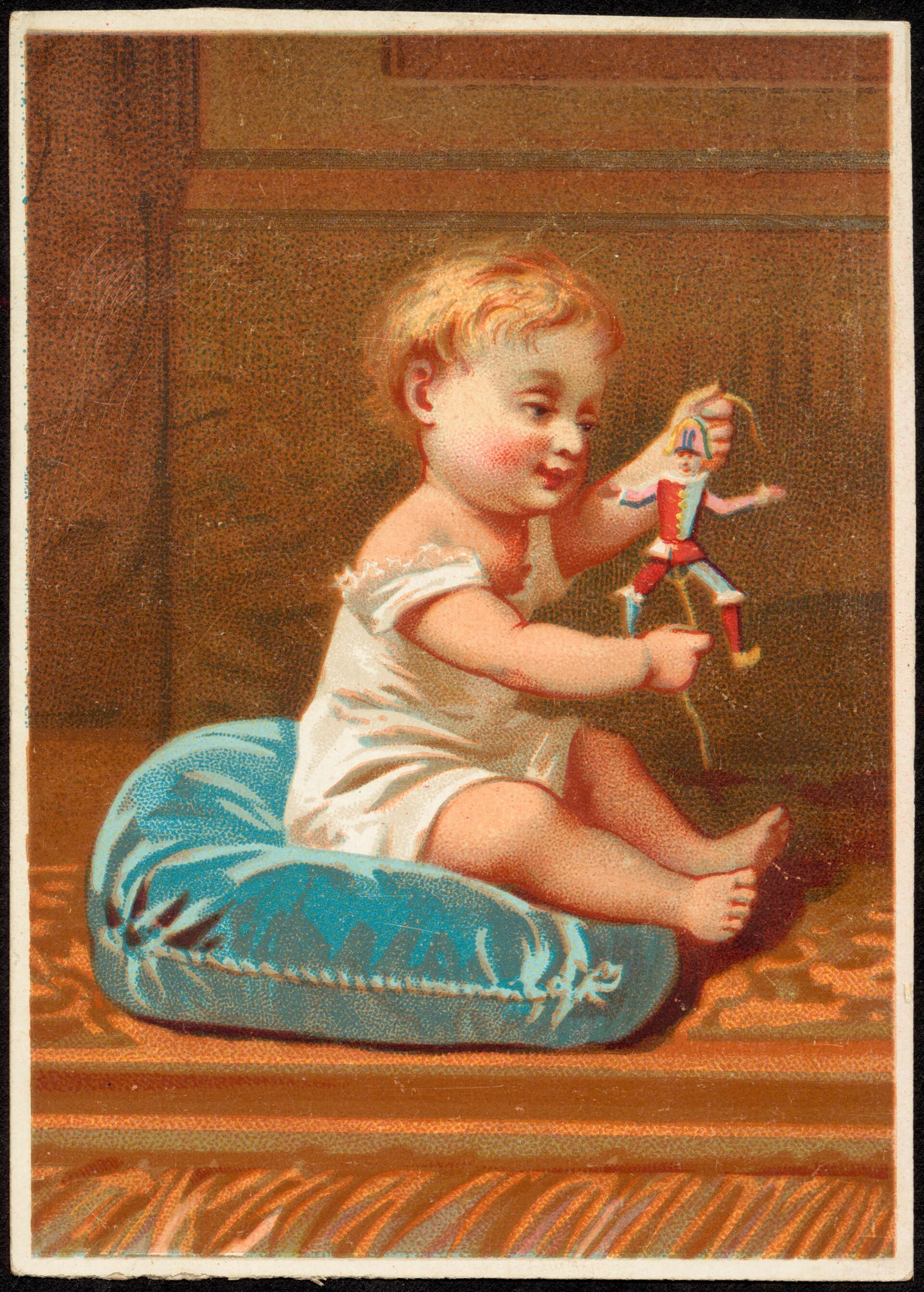
[A child playing with a doll.] Photograph: Wikimedia Commons contributor
Image Credits: Wikimedia Commons
An imaginary friend is a companion a child invents and treats as real, whether an invisible character, a stuffed animal with a personality, or a pretend version of the child. The companion has a name, preferences, and reactions, and the child talks to it, plays with it, and sometimes blames it.
Far from being a warning sign, this kind of play is a normal part of early childhood. This article explains imaginary friends, including how common they are, why children invent them, what skills they build, and when parents should simply let play run its course.
How common imaginary friends are
Imaginary friends are far more common than the old stereotype suggests. Developmental research puts prevalence somewhere between 37 percent and 65 percent of children, depending on how researchers define the phenomenon and the ages they study.
Psychologist Marjorie Taylor of the University of Oregon estimates that as many as 65 percent of children up to age 7 have had an imaginary friend at one time or another, according to New Scientist.
The stereotype of the friendless only child inventing a companion out of desperation does not survive contact with the research. Imaginary friends appear just as often in children with siblings and across different backgrounds.
Only children and firstborns are somewhat more likely candidates, New Scientist notes, perhaps because they spend more early years without a ready playmate at home. Girls are more likely to invent an invisible companion, while boys more often transform themselves into a character.
The peak years are the preschool years, roughly ages 3 to 5. Children at that age are just beginning to see themselves as separate from their parents, and they are making their first real friendships.
Why children invent them
Fun comes first. Most children start an imaginary companion because inventing one is enjoyable, and the companion is always available for a game, a chat, or a story.
Control comes a close second. Childhood is full of rules set by adults, and an imaginary friend is one relationship the child creates and directs entirely. The child decides what the friend likes, what it says, and when it appears.
Bushra Khan, an emotional well-being coach at Wellth, told The National: "Children might invent imaginary friends for various reasons, and it is not always indicative of trauma or underlying issues."
Companionship matters too, but not in the way people assume. A child with plenty of real friends may still invent one, because an imaginary friend offers a different kind of company: one that never argues, never leaves, and always agrees to play the same game again.
Emotional rehearsal is another quiet function. Children project difficult feelings onto the companion, announcing that the friend is scared of the dark or does not want to go to school. That distance makes a big feeling easier to talk about.
Boredom plays a part as well. A companion fills empty stretches of a day, turning a long car ride or a quiet afternoon into a scene with a cast.
What skills imaginary friends build
The most studied benefit is theory of mind, the understanding that other people have beliefs, desires, and intentions different from one's own. Work by Marjorie Taylor suggests that children who play with imaginary friends develop theory of mind earlier than those who do not.
Holding a companion in mind is demanding work. The child must remember the friend's name, tastes, and moods, and predict how the friend would react to a new situation. That is practice in seeing the world from another point of view.
Language benefits follow. Researchers have found that 4 to 8-year-olds with imaginary friends produce more complex sentences than children of the same age without them, New Scientist reports.
Social practice is the most visible gain. A child who negotiates with an imaginary friend, apologises to one, or explains a game to one is rehearsing the same moves real friendships require, in a setting where mistakes cost nothing.
Creativity and private speech grow alongside. Studies reviewed in a 2023 paper on only children link imaginary companions to higher scores on creativity measures, more private speech, and better reasoning and inference skills.
Self-esteem gets a boost as well. In pretend play the child is often the authority figure, the one who knows the rules and corrects the friend. For a small person with little control over daily life, that role is reassuring.
When imaginary friends fade
Most imaginary friends vanish by the time a child is 8 or 9. School life, real friendships, and changing social norms take over, and the companion quietly stops appearing.
Sometimes the ending is dramatic. New Scientist recounts a boy who, after attending a funeral, announced the death and burial of his imaginary companion the next day, having discovered a useful device for disposing of people.
More often the friend simply goes away one day, never to return. Parents may notice the empty chair at dinner is suddenly just a chair, with no announcement at all.
A companion that persists into later childhood is not automatically a problem either. Older children may keep a private imaginary world as a creative outlet, and the key question is whether the child can tell pretend from real life.
Children who invent companions generally know the difference. They may insist the friend is real during play, yet still understand that adults cannot see it, and they adjust their behaviour accordingly.
Parents can support the play without overdoing it. Asking about the friend, setting a place for it, or joining a game for a few minutes signals respect for the child's imagination. Arguing that the friend is not real usually ends the conversation, not the play.
If a child seems distressed, withdrawn, or unable to distinguish fantasy from reality in daily life, a paediatrician or child psychologist can help sort out what is ordinary play and what needs support. Everyday curiosity about why children behave as they do also shows up in questions like why kids ask why constantly around age four.
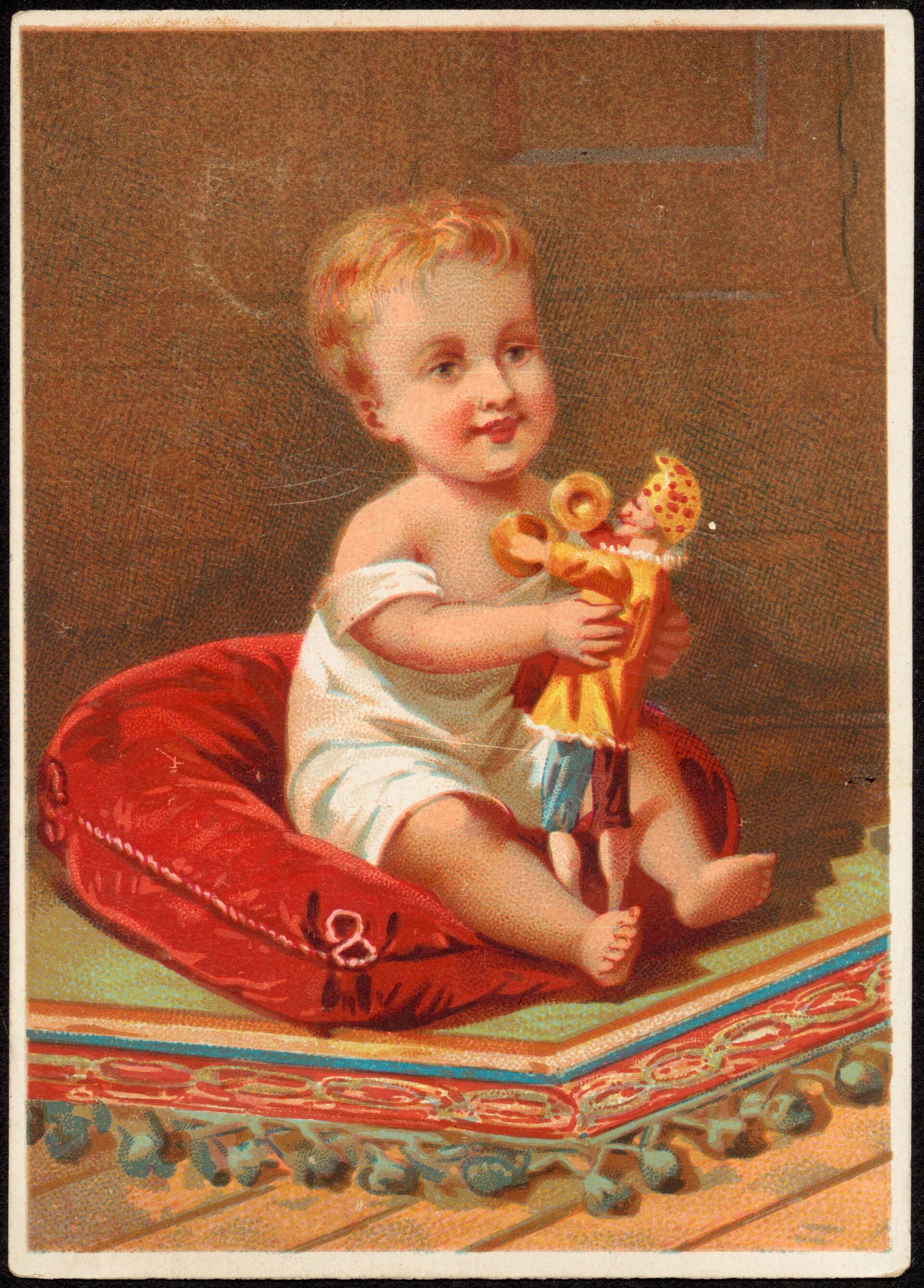
[A child playing with a doll.] Photograph: Wikimedia Commons contributor
Image Credits: Wikimedia Commons
Frequently asked questions
Are imaginary friends a sign my child is lonely?
No, research shows imaginary friends appear just as often in children with siblings and active social lives. Companions usually reflect imagination and social practice, not a shortage of real friends.
At what age do children usually invent imaginary friends?
The peak is the preschool years, roughly ages 3 to 5, when children are developing independence and making their first friendships. Some companions appear earlier, and others arrive during big changes such as starting school.
Should I play along with my child's imaginary friend?
Brief, respectful play is fine, and asking about the friend shows interest in your child's world. There is no need to treat the companion as real all day, and correcting the child mid-game usually shuts down the play rather than helping.
When do imaginary friends usually disappear?
Most fade by age 8 or 9 as school and real friendships take over. Some end suddenly, others drift away quietly, and both patterns are normal.
Should I worry if my older child still has an imaginary friend?
Not on its own, since older children may keep imaginary worlds as creative play. Talk to a paediatrician if the child seems distressed, withdrawn, or unable to separate fantasy from everyday reality.
The bottom line
Children invent imaginary friends because play is how they learn friendship, empathy, and emotional control. A companion gives a child a safe partner for rehearsing social life, a voice for big feelings, and a rare corner of childhood fully under their own command.
The research is reassuring: companions are common, linked to real cognitive and social gains, and usually gone by age 8 or 9. Enjoy the stories while they last, ask a curious question now and then, and let the friend fade on the child's own schedule. Parents navigating other milestones may also find how to help a shy child make friends useful.
Tags: imaginary friends, child development, pretend play
The Rive News research desk writes plain-English explainers from published sources, with every key claim traceable to a named guide or institution.
Related
- Why kids ask why constantly around age four
- How to Help a Shy Child Make Friends
- Why Do Kids Ask the Same Question Repeatedly After Answers?
- Why do children need routines to feel safe and calm?
Subscribe to the Rive News newsletter for one practical parenting explainer each week.
Rive News publishes explainers based on public sources; corrections are noted promptly when a source is updated.
Related stories
Why babies cry more in the evening: the witching hour explained
The witching hour is the fussy evening stretch most newborns hit daily. Why overtiredness, cluster feeding, and overstimulation stack up
When Do Babies Start Sleeping Through the Night by Month?
Most babies sleep through the night between 3 and 6 months, with regressions at 4 and 8 to 10 months. See the month-by-month table

Why Your Baby Wakes Up the Second You Put Them Down
Newborns wake when put down as the startle reflex, light sleep, and lost warmth hit at once. It is normal and peaks early, fading