
Why do kids negotiate bedtime every single night? The hidden reasons
Key takeaways
- Bedtime stalling is usually separation anxiety wearing a bedtime costume, plus a nightly test of where the limits sit.
- The fear of missing out drives a lot of resistance: children worry sleep will make them miss family life.
- Routine creep, where the wind-down grows longer each night, tips toddlers into overtiredness and makes stalling worse.
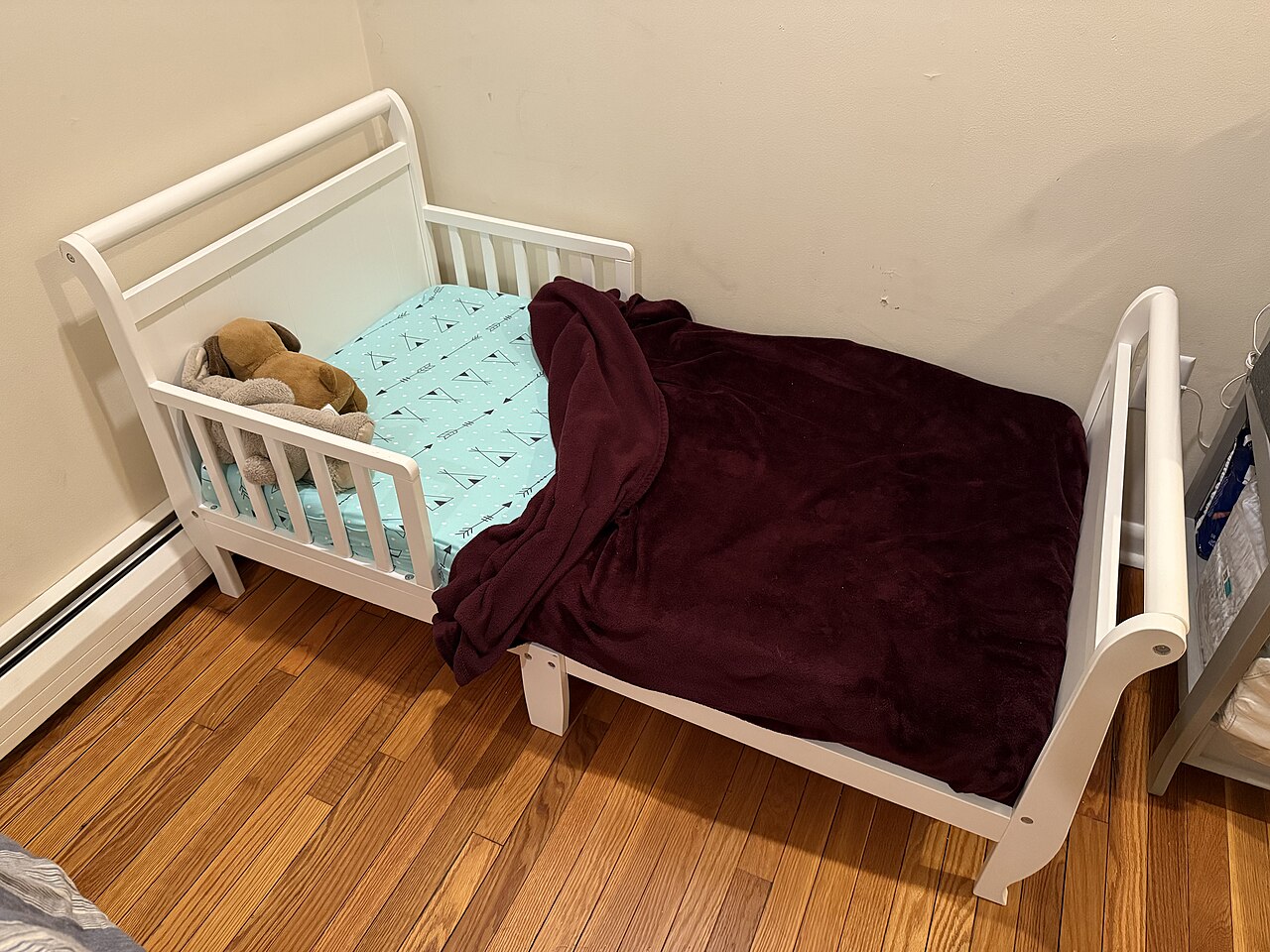
The nightly negotiation happens here, at the bedroom door. Photograph: Famartin / Wikimedia Commons
One more glass of water One more hug One more book, and this time the long one
A sudden and urgent need for the toilet A monster that definitely was not there five minutes ago
This is one of the most common toddler behaviors there is
The question parents really ask is not how to stop it tonight It is why the same negotiation restarts tomorrow, as if tonight never happened
Understanding which current is running on a given night changes everything about how to respond
This article explains why kids negotiate bedtime every single night, including the separation underneath the stalling, how limits get tested, and the practical fixes that shorten the nightly talks.
Separation is the real issue, not sleep

Bedtime is the longest separation of a toddler's day. Illustration: Harriet M. Bennett / Wikimedia Commons
For a toddler, bedtime means the end of contact with a parent for the night. That is the longest stretch of separation in their day. Many stalling tactics are really just separation anxiety in disguise: the extra hug, the "stay five more minutes," the sudden need to know where the parent will be.
The child is not being difficult about sleep They are being anxious about being apart, and sleep is the timer running out on the parent's availability This reframes the whole negotiation
The requests are not about water or books They are bids for more contact before the separation begins
This is also why the stalling clusters around the moment of lights-out Everything before that moment is still togetherness
Recognizing it as anxiety rather than defiance changes the response from frustration to strategy
Bedtime is the perfect place to test limits
Toddlers are, developmentally, deeply invested in figuring out where the actual edges of the rules are. This is not defiance for its own sake. Working out cause and effect and their own influence over the world is a core piece of toddler development.
Bedtime is a predictable, low-stakes place to run that experiment every single night What happens if I ask for water What happens if I get out of bed
What happens if I ask again tomorrow The negotiation repeats because the experiment repeats A toddler who negotiates, calls a parent back, and pops up for one more thing is usually testing the edges
Here is the mechanism that keeps the loop alive A response that changes from night to night, sometimes the parent caves, sometimes they do not, actually teaches the toddler that testing the limit is worth the effort, since it might work
The calm, steady limit is what lets the experiment conclude
This pattern was described decades ago in sleep literature In Dr. Richard Ferber's account of the problem of limit setting, requests like "one more story" or "another kiss" seem benign but can ruin the evening if endlessly repeated The problem tends to occur more in toddlers and older children than in infants, and the interactions usually happen before sleep rather than during the transition to sleep itself
The fear of missing out keeps them bargaining
As children grow, their curiosity expands, and the world becomes an exciting place to explore. The fear of missing out is a significant driver of bedtime resistance, according to HumanUp's guidance, which is informed by authorized content from Dr. Funke Afolabi-Brown, a sleep medicine physician.
Young children cannot tell time and do not always notice when they are tired. They can hear the household continuing without them, or imagine it continuing, and the temptation to be part of whatever is happening outside their room can be overwhelming. They start making demands to get a parent to come back in with whatever else they want.
For toddlers and preschoolers, stalling often looks like the last hug, the extra book, the sudden thirst Children this age are testing limits and want some say in their own day
For older children, stalling can come from worries that surface at bedtime, screens that leave them wound up, or a bedtime that no longer fits how sleepy they actually are
Routine creep turns a short wind-down into an hour
On the consult floor, sleep consultants see one pattern constantly: routine creep. A child pushes, a tired parent adds one more book or one more song to keep the peace, and the wind-down quietly grows longer every night. The longer routine tips the child into overtiredness, which makes the next night harder, and the loop feeds itself.
A bedtime set too late for the day the child has had leaves them wired and resistant Timing sits underneath most of it
A very tired nervous system can tip into a stress-hormone-driven second wind that makes settling harder, not easier
The opposite error exists too. A toddler who is undertired, with bedtime scheduled too early relative to nap and wake windows, will stall for a simpler reason: they are not sleepy yet, and no amount of routine consistency will make lying quietly in the dark appealing. Before assuming the resistance is purely behavioral, it is worth checking the child's actual sleep schedule against typical needs for their age.
What actually shortens the negotiation

Two books, same order, every night: routine takes the air out of stalling. Illustration: Jessie Willcox Smith / Wikimedia Commons
The fixes that work all share one property: they move decisions out of the negotiation window and into the routine, before lights-out.
Build a written-out routine and run it before lights-out, not during negotiations Bath, pajamas, teeth, one drink of water, one bathroom trip, two books, one song, one hug, lights off
The point is that it takes the air out of "I am thirsty," because the drink already happened, on purpose, earlier
Build the connection in before the routine starts. A short burst of focused, unhurried attention before wind-down settles a child who is bidding for closeness. Ten minutes of genuine presence costs less than forty-five minutes of stalling.
Hold the boundary with warmth Name what the child wants, keep the limit steady, and skip the back-and-forth that rewards stalling Acknowledge the feeling and hold the limit without negotiating
"You want one more story We had two stories
" Steadiness is the message, not volume
Log a week first Track bedtime, how long the wind-down runs, what the child asks for, and the morning wake for seven days
It reveals whether the problem is timing, routine creep, or a genuine limit-testing cycle
For a five-year-old whose stalling runs an hour with water, hugs, and fears, one practical tool is the bedtime pass: one or two passes the child can trade for a request. It gives the child some say while keeping a clear limit. When the passes are gone, the negotiation is over, and the rule was agreed in advance.
When stalling signals something else
A child who negotiates, calls a parent back, and pops up for one more thing is usually testing the edges. A child who is trying to sleep but cannot, who is wired and clearly uncomfortable despite a calm routine, is telling the parent something else. That version needs a look at timing and comfort rather than a firmer limit.
Resistance that spikes after big days out, weekends, or a developmental milestone often resolves on its own once the routine anchors back to the usual time. Snoring, restless sleep, or daytime behavior changes alongside bedtime trouble are worth raising with a pediatrician, since sleep-disordered breathing can masquerade as behavioral resistance.
FAQ
Why does my toddler negotiate bedtime every night even though we have a routine?
The routine handles the logistics, but the negotiation is usually about separation anxiety and limit-testing, which are developmental and repeat nightly. Check whether the routine has grown longer over time, which tips toddlers into overtiredness, and whether the limit is held the same way every night.
How much sleep does a toddler actually need?
Typical guidance puts toddlers at about 11 to 14 hours of sleep in 24 hours, including naps, though individual needs vary. If bedtime stalls drag because a child simply is not tired, the schedule may need adjusting against those ranges.
Do bedtime passes actually work?
For preschoolers and early school-age children, a set number of passes to trade for requests often works well. It gives the child a sense of control while capping the negotiation, and it only works if the passes are truly limited and the limit is held kindly.
Is it okay to just let them cry it out?
Sleep consultants distinguish between limit-setting and leaving a child to cry alone. The evidence-based approaches emphasize a calm, predictable limit and checking in, not prolonged unattended crying. If the current approach is not working after a couple of weeks, a pediatrician or certified sleep consultant can help reassess.
The bottom line
Kids negotiate bedtime every single night because bedtime is where separation anxiety, limit-testing, and the fear of missing out all converge The stalling is developmentally normal, and it repeats because the experiment gets new data every night A fixed routine run before lights-out, genuine connection beforehand, and a calm, unchanging limit take the negotiation off the table
Watch the timing too, since overtiredness and undertiredness both make stalling worse The nightly talks end when the limit becomes the most predictable thing in the room
Latest in Parenting
- When evenings turn fussy: the science of the witching hour
- Time-out vs. time-in: what the research says
- Baby-led weaning vs. puree: starting solids
- Preparing your child for the first day of school
Image Credits: Wikimedia Commons / Famartin, Harriet M. Bennett, Jessie Willcox Smith
Subscribe to the Rive News newsletter for one research-backed parenting explainer every week.
Related stories

Why babies cry more in the evening: the witching hour explained
The witching hour is the fussy evening stretch most newborns hit daily. Why overtiredness, cluster feeding, and overstimulation stack up
When Do Babies Start Sleeping Through the Night by Month?
Most babies sleep through the night between 3 and 6 months, with regressions at 4 and 8 to 10 months. See the month-by-month table

Why Your Baby Wakes Up the Second You Put Them Down
Newborns wake when put down as the startle reflex, light sleep, and lost warmth hit at once. It is normal and peaks early, fading