
How to prepare a child for a new baby brother or sister
By Rive News / Research desk | Rive News / Published October 25, 2026 at 9:00 AM PKT
Key takeaways
- Start at least three months before the birth, and keep the child's daily routine as steady as possible through the change.
- Give the older child a real role, such as fetching nappies or choosing the baby's outfit, rather than only telling them to be excited.
- Protect ten to fifteen minutes of one-on-one time each day, before the birth and after the baby arrives.
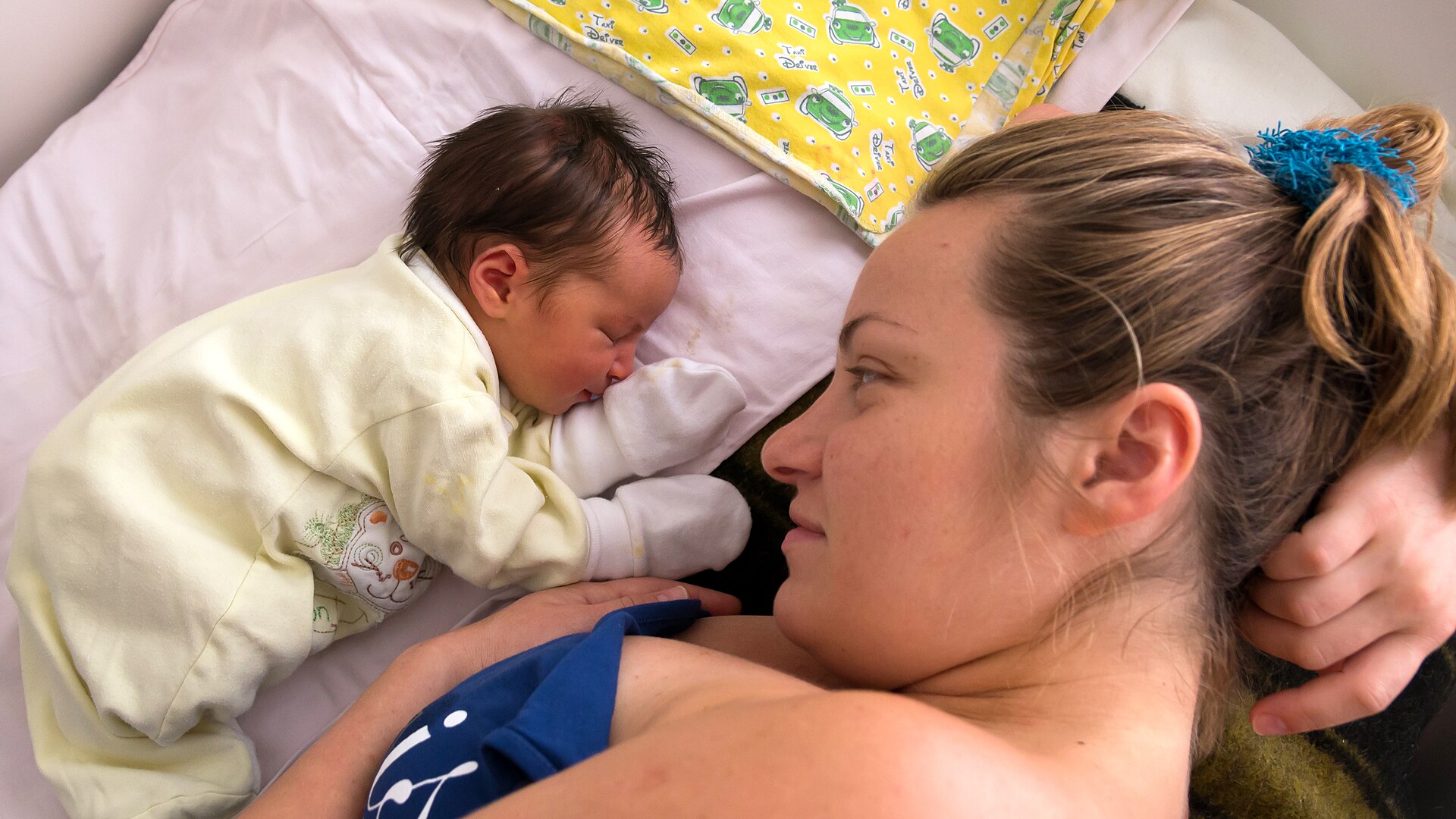
[A mother holding her newborn baby.] Photograph: the mother and newborn
Image Credits: Wikimedia Commons
A new baby changes everything in a house at once: the sounds, the smells, the sleep and the amount of attention each person gets. For an older child, that change can feel like a loss even when the baby is wanted. Preparation works best when it starts early and stays practical, built on two anchors: a routine that does not move, and a role that makes the older child matter.
Books help, and this article lists some. But books alone do not carry a child through the first weeks. What carries them is knowing what each day will look like, knowing what their job is, and knowing they still get time that belongs only to them.
This article explains when to start, how to talk about the baby, which books help, how to build the helper role, how to keep routines steady, and how to handle the first meeting and the weeks after.
Start early, and start with honesty
Begin no later than three months before the baby arrives, and longer if possible, according to guidance from The Memo, which draws on early-childhood specialists. Three months gives a toddler time to absorb an idea that is still abstract. A baby that cannot be seen is hard to understand, so repetition over weeks beats one big announcement.
Use simple, concrete language and repeat it. Cincinnati Children's, writing from a social worker's family experience, suggests calling the child a big sister or big brother, pointing to the baby in the belly, and letting the child talk to the baby if they want to. Avoid vague warnings about a big change, since a toddler cannot picture what that change means and may fill the gap with worry.
Answer questions honestly, including the unexciting parts. A baby sleeps a lot, cries, needs feeding and cannot play yet.
Children who expect a playmate can feel tricked when a newborn mostly sleeps. Children who expect a baby that needs care can feel proud when they help provide it.
Let the child feel whatever they feel. Excitement, jealousy, worry and anger can all appear before the birth, and none of them needs correcting.
Cincinnati Children's advises letting the child feel all of those emotions, even when parents feel delight that the child does not yet share. Naming a feeling, such as saying that it makes sense to feel unsure, calms it faster than arguing against it.
Use books, dolls and real babies
Books give children a story to practise with. Two widely recommended titles are "I Am a Big Sister" and "I Am a Big Brother" by Caroline Jayne Church, named by Cincinnati Children's. Other well-known choices include "The New Small Person" by Lauren Child, "You Were the First" by Patricia MacLachlan, and "Peter's Chair" by Ezra Jack Keats, which follows a boy whose chair is painted pink for the new baby.
Read these books often rather than once. Repetition lets a child ask new questions each time, and the answers can grow more detailed as the birth nears. Ask what the child thinks the book's big sibling feels, since that question opens feelings the child may not volunteer directly.
A baby doll adds practice that books cannot. A child can feed it, change its nappy and sing to it, which turns the abstract idea of helping into something their hands know.
The Memo also suggests exposure to real babies where possible, such as pointing out babies at a playground and talking about how tiny they are. Familiarity lowers the shock of the first meeting.
Build a real helper role
The strongest preparation is a role, not a slogan. Calling a child a big sibling means little on its own. Giving them jobs that the family genuinely needs means a great deal.
Toddlers can fetch a nappy, choose the baby's outfit or sing during a change. Preschoolers can help at bath time, tidy the baby's toys or pick a bedtime story. School-age children can read to the baby, show visitors the nursery or teach the baby a song.
Keep the jobs small, real and praised. Praise the effort, not only the result, and let the child refuse a job without a fuss on a tired day.
A role that feels like a burden breeds resentment, while a role that feels chosen builds pride. Frame the change as a promotion rather than a replacement: the child is not losing their place, they are gaining a job only they can do.
Avoid turning the older child into a second parent. Cincinnati Children's notes the pattern in which the oldest child starts acting like a second parent, and guidance across sibling sources warns against loading older children with care duties. The child's job is to help in small ways and to enjoy being a sibling, not to carry adult responsibility.

[Siblings together, the relationship that preparation aims to protect.] Photograph: the siblings
Image Credits: Wikimedia Commons
Keep routines steady, and move big changes early
Routines are a child's safety system. When bedtime, mealtimes and morning rituals stay the same, the child can predict the day even while the house changes around them. Welcome Baby Co puts it plainly: children find reassurance in routines because they can predict what happens next, and familiar routines help an older child relax when much of life looks different.
Start practising any new routine before the birth. If bedtime stories will move from one parent to the other, make that switch weeks early so the child does not link it to the baby. If a new carer will look after the child during the hospital stay, practise short stays with that person first.
Move big changes even earlier, or delay them. The Memo advises avoiding major changes in the three months before the birth, including moving to a big bed, changing rooms or starting toilet training. Welcome Baby Co gives the same advice: make bedroom or bed changes well before the baby comes home, so the child does not believe the baby caused them.
A change made months early belongs to growing up. The same change made the week the baby arrives feels like eviction.
Plan the first meeting and the first weeks
Plan the hospital visit in advance, and tell the child the plan in simple steps. The Memo suggests explaining the likely sequence: one parent will be in hospital, a grandparent or familiar adult will stay with the child, and then the other parent will bring the child to meet the baby. Children cope better with a sequence they have heard before than with a day that unfolds without warning.
One small trick helps the first meeting. Arrange for the parent to greet the older child without the baby in their arms first, so the reunion belongs to the two of them.
Then the older child can meet the baby as a shared event rather than as an interruption. A small present "from" the baby, such as a book or a toy, is a common tradition, and it works best as a warm gesture rather than a bribe.
After the birth, protect one-on-one time daily. Cincinnati Children's suggests ten to fifteen minutes per parent per day of fun, special time that is not teaching or chores.
Papmate and other guides land on the same range, with even ten minutes a day enough to reassure a child they remain a priority. A short walk, a bedtime story or a snack together while the baby naps all count.
Watch the language used around the baby. Welcome Baby Co warns against blaming the baby for every no: hearing "I cannot play, I am feeding the baby" again and again teaches resentment.
Rephrasing helps, such as "I would love to play, give me five minutes" or asking the child to show you a toy while your hands are full. Where possible, make the baby wait instead: "The baby needs a nap in ten minutes, but first I am going to play with you" shows the older child taking priority in a visible way.
Expect some regression. Thumb-sucking, baby talk, clinginess and tantrums are common responses to a new sibling, and they usually pass.
Stay calm and consistent, increase affection, and do not punish regression as bad behaviour. Celebrate big-kid achievements alongside it, so the child sees growing up as a gain rather than a loss.
Frequently asked questions
When should I tell my child about the new baby?
Start no later than three months before the birth, and earlier if the child asks questions about the pregnancy. Early, simple and repeated explanations give a young child time to understand. A single late announcement leaves little room for questions or feelings to surface.
What if my child says they do not want a baby?
That feeling is normal and does not need fixing. Let the child say it, name it calmly, and keep including them in small preparations without pressure. Many children who resist the idea beforehand warm to the baby once they have a role and a routine that still belongs to them.
Should my child visit the baby in hospital?
A planned visit usually helps, especially when the child knows the sequence in advance. Greet the child first without the baby in your arms, then introduce the baby together. Keep the visit short and follow the child's lead if they want to leave.
How do I handle jealousy after the baby arrives?
Keep one-on-one time daily, avoid blaming the baby for every refusal, and give the older child small real jobs with praise. Jealousy often fades when the child sees their place in the family is secure and their help is genuinely valued.
The bottom line
Preparing a child for a new brother or sister works when it is practical and early. Start three months ahead, talk simply and honestly, read sibling books together, and give the child a real helper role they can practise. Keep bedtime and morning routines steady, move big changes well before the birth, and protect ten to fifteen minutes of one-on-one time every day after the baby arrives.
A child who knows their routine, their role and their special time does not just meet a new baby. They meet them as a big sibling with a place that is already secure.
Tags: new sibling, big sibling, family routines
Rive News is a research desk that writes plain-language explainers from public sources, with no individual author persona behind the byline.
Related
- How to Handle Sibling Rivalry Without Taking Sides
- Why do children need routines to feel safe and calm?
- How to Build a Bedtime Routine Kids Actually Follow
- Why the Oldest Child Often Acts Like a Second Parent
Subscribe to Rive News for one practical explainer each morning.
Rive News follows a standards footer: facts are checked against named public sources, and corrections are published when a source is shown to be wrong.
Related stories
Why babies cry more in the evening: the witching hour explained
The witching hour is the fussy evening stretch most newborns hit daily. Why overtiredness, cluster feeding, and overstimulation stack up
When Do Babies Start Sleeping Through the Night by Month?
Most babies sleep through the night between 3 and 6 months, with regressions at 4 and 8 to 10 months. See the month-by-month table

Why Your Baby Wakes Up the Second You Put Them Down
Newborns wake when put down as the startle reflex, light sleep, and lost warmth hit at once. It is normal and peaks early, fading