
Why younger siblings copy older siblings so closely
By Rive News / Research desk | Rive News / Published October 28, 2026 at 9:00 AM PKT
Key takeaways
- Copying is usually admiration, not mischief: the older sibling is the closest skilled model a younger child sees daily.
- Researchers call this sibling modeling, when a younger child willingly repeats a behaviour they hold in high esteem.
- Copying can speed up learning, from motor milestones to school habits, because the model is always nearby.
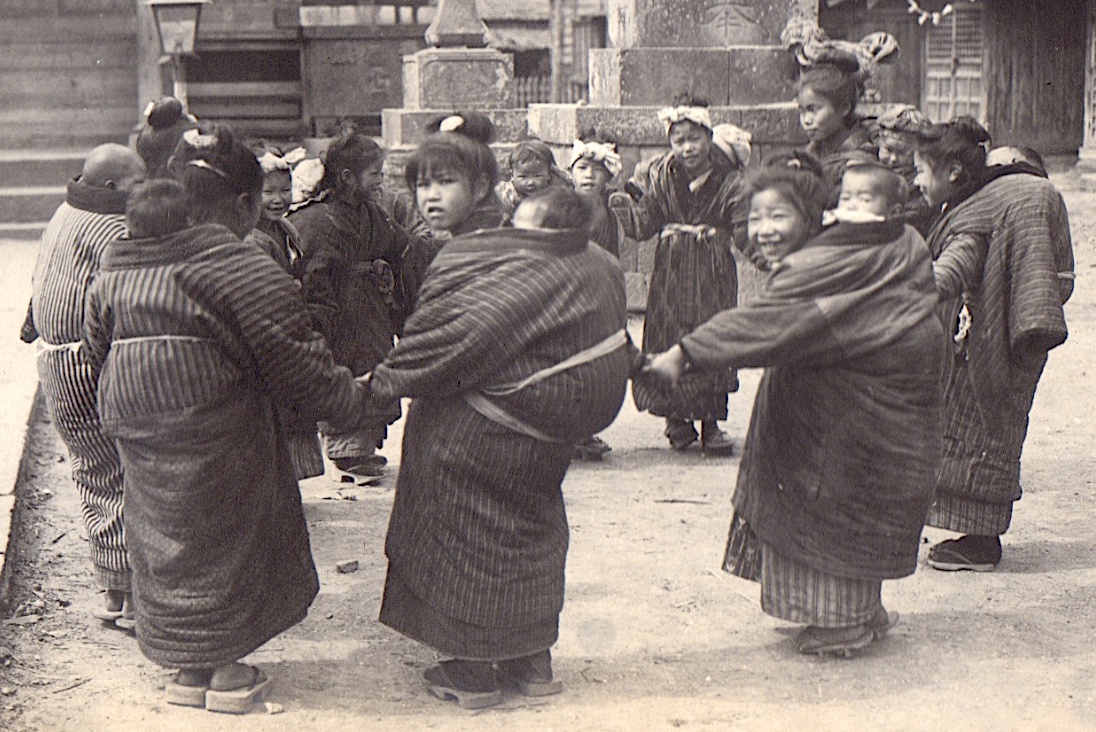
[Children playing together outdoors in a 1911 photograph.] Photograph: children playing together
Image Credits: Wikimedia Commons
A younger sibling who wears the same clothes, repeats the same phrases, and insists on the same game is usually not trying to annoy anyone. They are learning from the person closest to them who already knows how the world works.
This article explains why younger siblings copy older ones, what research says about that copying, and how parents can respond without shaming either child.
Copying starts with admiration
An older sibling is a constant presence. They eat, play, argue, and solve problems in front of a younger child every day, which makes them a more available model than any adult.
Psychologists describe this through social learning theory. Children watch others, judge whether a behaviour looks useful or rewarding, and then try it themselves.
For a younger sibling, the older child passes that test easily. They are bigger, more skilled, and more independent, and they seem to know the rules of the house and the playground.
That admiration is the engine of copying. A younger child copies a big sister's walk or a big brother's joke because being like them feels like belonging.
It also feels safe. Trying something an older sibling already does carries less risk than inventing a behaviour from scratch.
What researchers call sibling modeling
Research on siblings gives this pattern a name: sibling modeling. A 2021 paper in the journal Social Cognitive and Affective Neuroscience, available through PubMed Central, defines it as the process by which younger siblings observe and willingly replicate the behaviour of their older sibling.
The paper, drawing on Whiteman and colleagues (2014), notes that this happens because younger siblings hold the model in high esteem and perceive the behaviour as valuable.
That definition matters because it separates copying from simple mimicry. A younger sibling is not just echoing sounds, they are choosing behaviours they believe are worth having.
The same paper pairs modeling with its opposite: differentiation. Differentiation is when adolescents actively set themselves apart from an older sibling to build a unique identity and reduce comparison.
Both processes can exist in one family. A child may copy an older sibling's sport at age 7 and reject the same sport at age 14, and both choices are part of the same learning system.
Copying can speed up real milestones
Copying is not only about clothes and catchphrases. It can change when skills appear.
A 2008 study by Berger and Nuzzo, published in Infant and Child Development, looked at motor milestones in siblings. In some families, younger siblings crawled and walked earlier than their older siblings had.
The authors suggested that the onset of younger siblings' motor milestones may be helped by imitating or modeling their older siblings. Watching a sibling crawl gives a baby a moving target to follow, not just a skill to discover alone.
The same study found the opposite pattern in other families, where younger siblings reached milestones later. The authors linked that pattern to parents splitting attention between two children, which shows copying is one influence among several, not a guarantee.
School life shows a similar effect. In a 2023 report from Athens Drive High School, a student named Cas Beacham, the youngest of four siblings, said having older siblings in the school pushed him to do his best.
Another student, Anya, described the imitation effect directly, saying her younger brother sees her as a role model and imitates things she does. The report also noted that older siblings guide younger ones through teachers, classes, and school activities.
That guidance is practical, not just emotional. An older sibling knows which teacher gives hard homework, which club is welcoming, and how to navigate a new building, and a younger sibling inherits that knowledge by watching.
Why copying can irritate everyone
Copying feels flattering to adults and irritating to the older child. The older sibling may feel that nothing is theirs alone, from a favourite song to a private friendship.
That irritation is understandable. An older child is still building their own identity, and a younger shadow can feel like a loss of privacy.
Parents often make it worse by accident. Telling an older child to "just share" or "be nice" treats their frustration as selfishness, when it is really a boundary request.
A calmer response names both sides. The younger child can hear that admiration is welcome, and the older child can hear that they are allowed private things.
Giving each child something that is only theirs helps. It might be a toy, a hobby, a bedtime story, or a weekly activity, but the point is the same: copying does not have to mean sameness in everything.
When copying turns into differentiation
Most younger siblings do not copy forever. As they grow, many start to choose different interests, friends, and styles on purpose.
Researchers call this differentiation, and it serves a clear purpose. It lets a younger child answer the question "who am I apart from my sibling" with evidence, not just words.
Differentiation can look like rebellion, especially in adolescence. A younger sibling may drop a sport, change a music taste, or pick a different subject purely because an older sibling chose it first.
Parents can treat that as a phase rather than a rejection. A child who differentiates is still learning from the sibling, just by contrast instead of by copying.
Problems arise mainly when comparison becomes the family habit. If every achievement is measured against an older sibling, differentiation can harden into resentment.
Keeping praise specific helps. Praising a younger child's effort or choice, rather than ranking it against a sibling, lets both children own their progress.
How parents can respond well
The first step is to avoid punishing admiration. A child who copies is showing trust, and a harsh reaction can teach them that wanting to be like someone is wrong.
The second step is to protect the older child's boundaries. A simple rule, such as asking before borrowing or entering a room, gives the older child control without banning copying outright.
The third step is to notice what is being copied. Copying kind behaviour deserves praise, while copying risky behaviour needs a calm conversation about why it is not safe.
It also helps to spend one-to-one time with each child. A younger sibling who gets their own attention is less likely to chase an older sibling's attention all day.
Finally, parents can model the same balance in their own lives. Adults admire and imitate people they respect, and they also keep distinct tastes, which is exactly the pattern children are learning.
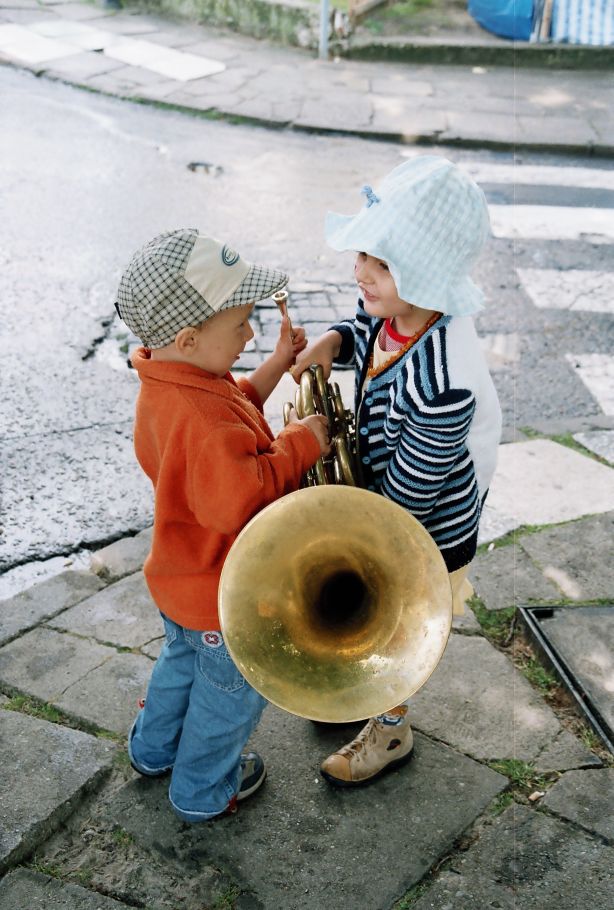
[Two young children playing with a large brass instrument outdoors.] Photograph: children with a brass instrument
Image Credits: Wikimedia Commons
The bottom line
Younger siblings copy older siblings because the older child is the nearest, most admired, and most skilled model in their daily life. Research calls this sibling modeling, and it can speed up learning from first steps to school habits.
Copying is not a flaw to fix. It is a phase that usually gives way to differentiation, when the younger child starts choosing a distinct identity.
The best parental response is balanced: welcome the admiration, protect the older child's space, and give each child room to become someone distinct.
Tags: siblings, child development, social learning
Rive News / Research desk writes plain-language explainers drawn from published research and reputable education sources.
Related
- How to handle sibling rivalry without taking sides
- Why the oldest child often acts like a second parent
- How to prepare a child for a new sibling
Subscribe to Rive News for one plain-language explainer each week.
Rive News follows published sources and corrects errors when readers point them out.
Related stories
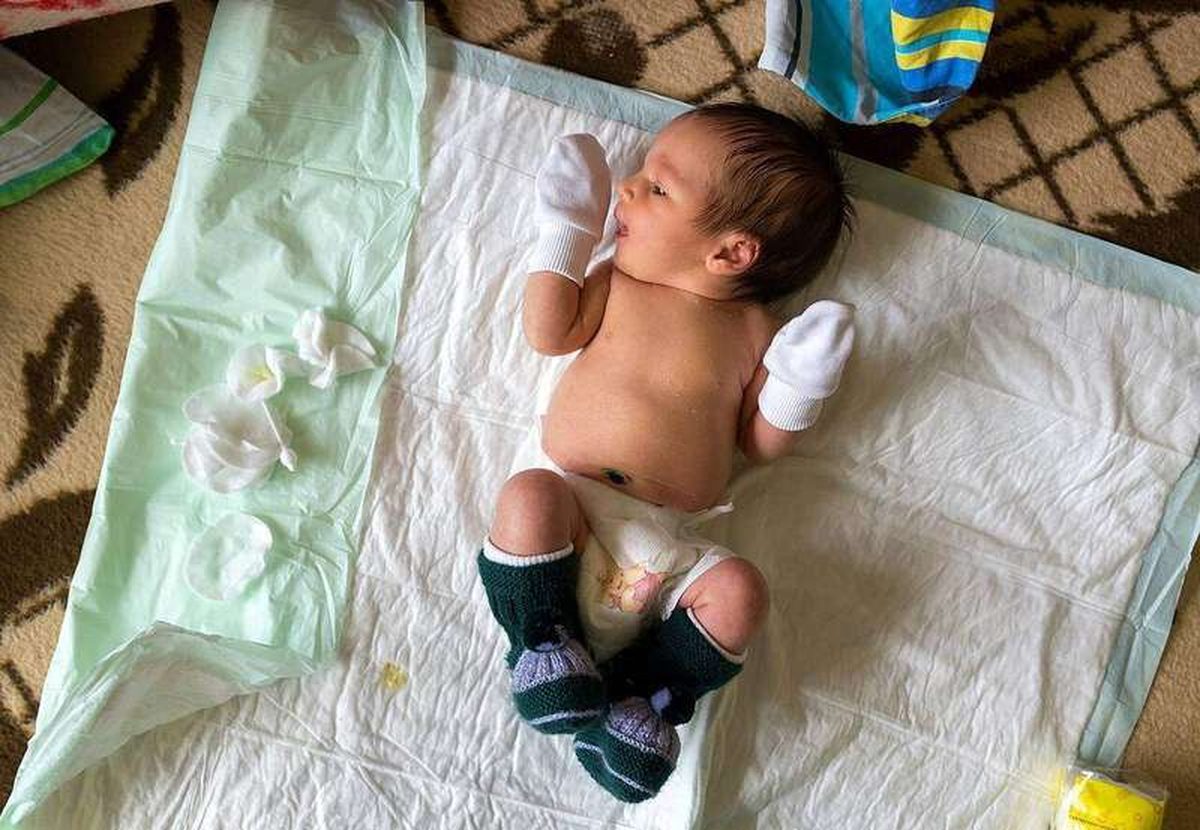
Why babies cry more in the evening: the witching hour explained
The witching hour is the fussy evening stretch most newborns hit daily. Why overtiredness, cluster feeding, and overstimulation stack up
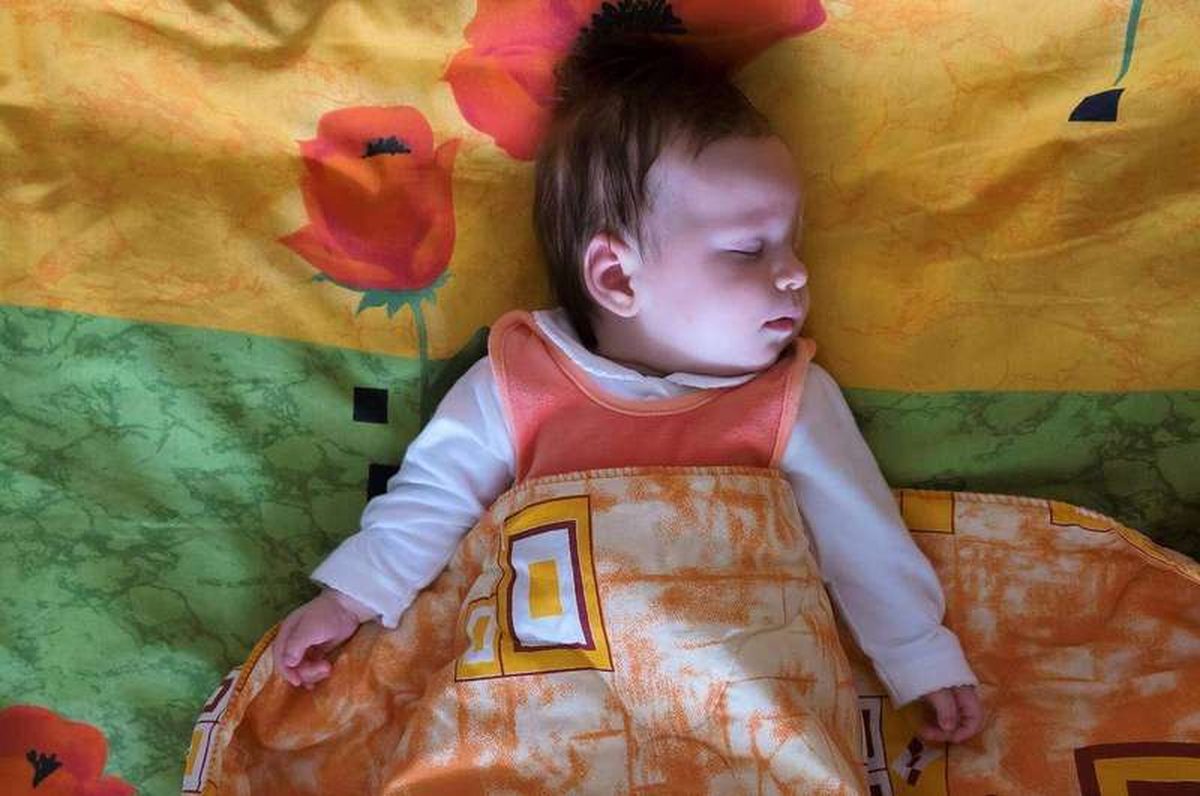
When Do Babies Start Sleeping Through the Night by Month?
Most babies sleep through the night between 3 and 6 months, with regressions at 4 and 8 to 10 months. See the month-by-month table
Why Your Baby Wakes Up the Second You Put Them Down
Newborns wake when put down as the startle reflex, light sleep, and lost warmth hit at once. It is normal and peaks early, fading