
How to crate train a puppy step by step: a calm, gradual plan
Key takeaways
- Crate training works because dogs naturally avoid soiling their sleeping area, says the NHSPCA.
- Pick a crate the puppy can stand, turn, and lie down in, and never use it as punishment.
- A young puppy can hold it for roughly its age in months plus one hour, so short sessions first.
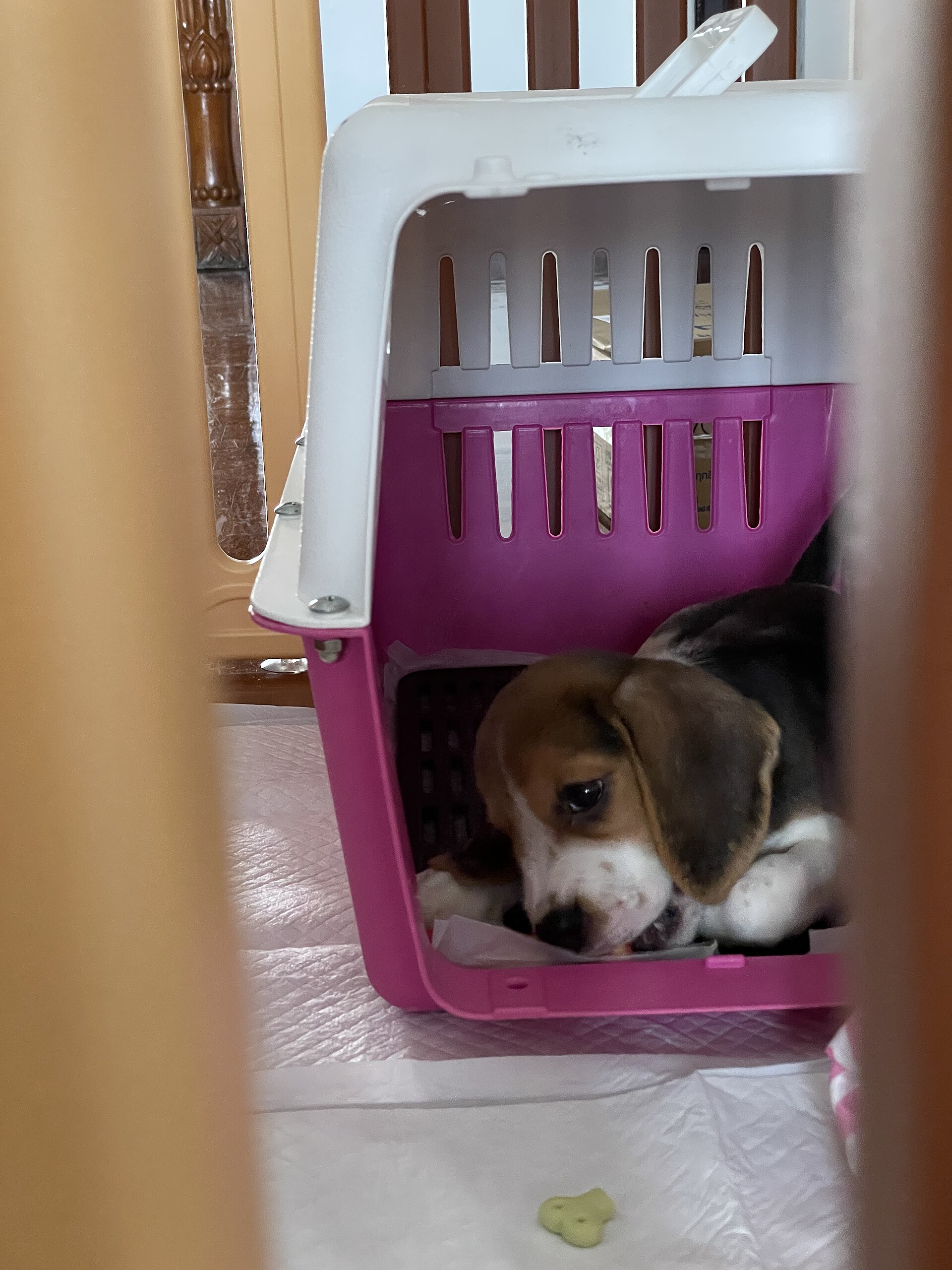
What crate training actually is
Crate training teaches a puppy to treat a crate as a safe den. It is a management tool for house training, for times you cannot supervise, and for travel. VCA Canada Animal Hospitals describe being able to relax when confined as an important life skill for dogs, useful for vet visits, boarding, and emergencies.
The method works on a simple instinct. Dogs naturally avoid soiling their sleeping area. The NHSPCA states this directly: crate training helps housetraining because a puppy will try to hold it rather than dirty the place where it sleeps.
That instinct is the engine of the whole plan.
This article takes a closer look at how to crate train a puppy step by step. It covers choosing the right crate, building a positive first impression, running the first closed-door sessions, adding a cue word, and handling the mistakes almost every owner makes.
Step 1: Choose the right crate
The crate should be large enough for the puppy to stand, turn around, and lie down comfortably. That is the rule every source agrees on. A crate that is too large loses the point: the puppy can sleep in one corner and soil another.
For a growing puppy, buy a crate with a divider panel. It lets you shrink the space to fit the puppy now and expand it as the dog grows. This saves buying two crates.
VCA Canada lists the main types. Collapsible wire crates fold flat and let you see the dog, but chewers can hurt their teeth on the bars. Plastic crates are easy to clean and approved for most airline travel.
Metal box-style crates are the toughest but heavy. For simple house training, a basic wire crate with a divider is usually enough.
Place the crate where the family gathers, such as the living room. VCA recommends starting there so the puppy has company. A puppy shut away in a distant room learns that the crate means isolation, which is the opposite of what you want.
Step 2: Make the first meetings positive
Set the crate up with a soft bed, a safe chew toy, and the door wide open. Then do nothing. Let the puppy wander in on its own terms.
Some puppies claim the crate within an hour. Others take a day or two, and that is fine.
Toss treats near the door, then just inside it, then further back. The NHSPCA suggests this exact progression: throw a treat just inside the door, and when the puppy puts its head in, praise it. Move the treat farther back each round until the puppy walks all the way in.
Feed meals inside the crate. Put the food bowl at the back once the puppy goes all the way in willingly. Golden Paws Dog Training calls this the core of positive association: the crate becomes the place where the best things happen.
If the puppy only goes halfway in, put the bowl as far back as it is comfortable going, then move it back a little more at the next meal.
Run this stage for one to three days. There is no reason to rush. A puppy that walks into the crate eagerly is worth three days of patience.
Step 3: Close the door for the first time
Once the puppy goes in and out reliably, close the door briefly. The NHSPCA sequence is: do a couple of in-and-out rounds, then on one round close the door. Praise the puppy and give treats while it is inside.
Then open the door and walk away. No treats for coming out.
Keep the first closed-door sessions to a few minutes. Sit nearby. Gradually stretch the time over several sessions per day.
When the puppy settles quickly, take a few steps away, return, and reward calm behavior. Then leave the room for a moment and come back before the puppy gets restless.
A brief whimper in the early sessions is common. VCA Canada advises giving the puppy a few minutes to see if it settles, as long as the behavior is brief and does not escalate. If the puppy is genuinely distressed, with persistent vocalizing or escape attempts, stop the session and try a shorter one later.
If distress continues across sessions, consult a veterinarian before pushing further.
New puppy owners often manage several new skills at once, from trimming nails without fear to judging whether a pet is overweight. Crate training pairs well with these because every session is short and calm.
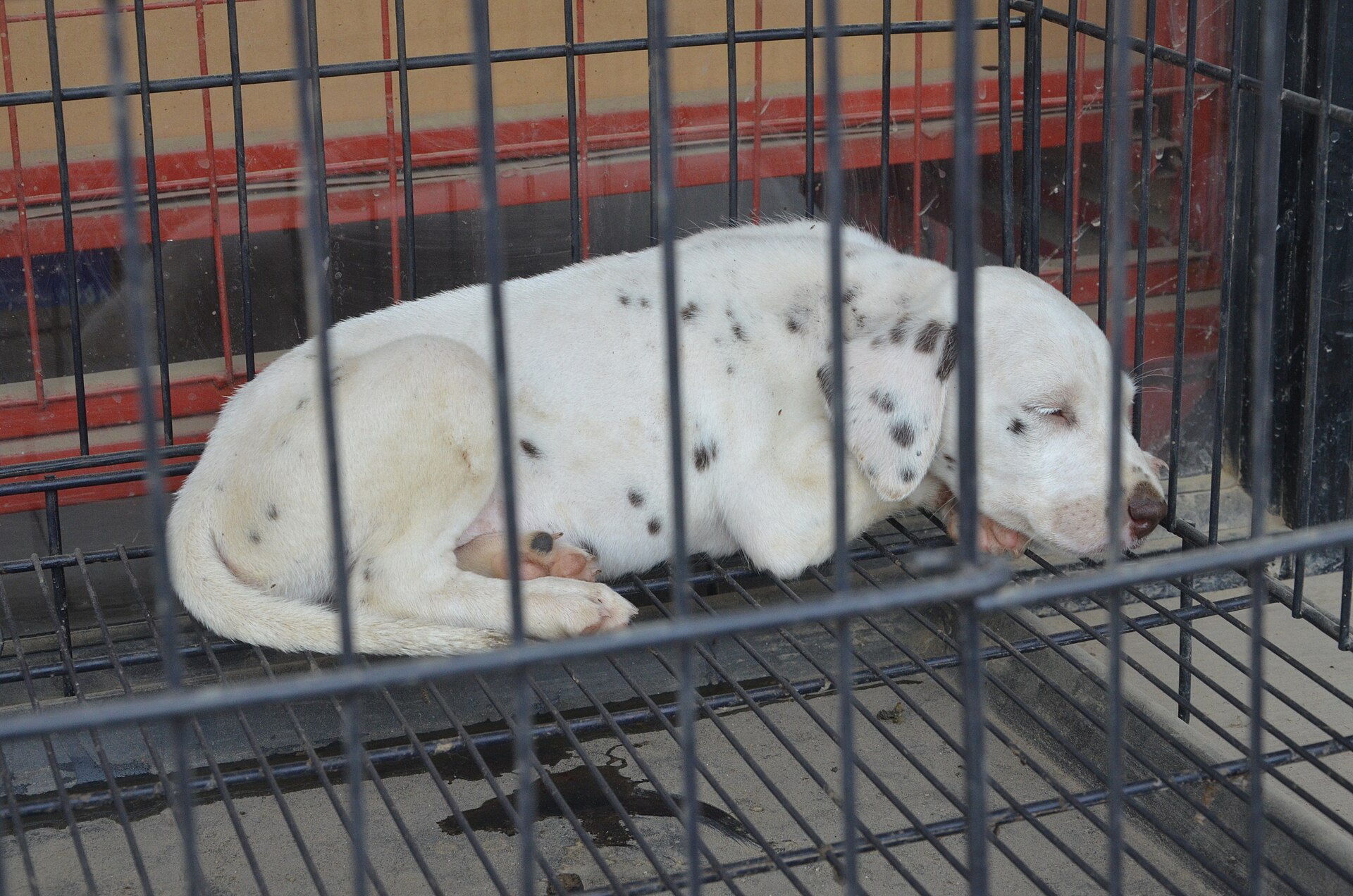
Step 4: Build up to real sessions
Now turn the crate into a rest routine. Ask the puppy to go in, hand over a stuffed chew toy, close the door, and stay nearby for a while. An hour of quiet crate time with a food toy is a good target before you start leaving the house.
Always give a potty break right before longer sessions. Take the puppy outside the moment it comes out of the crate. Golden Paws recommends bathroom breaks immediately after crate time to reinforce house training.
The pattern is simple: crate, potty, praise, repeat.
The bladder sets your limits. The NHSPCA gives a rule of thumb: a puppy can hold it for the number of hours equal to its age in months plus one. A 3-month-old puppy holds about 4 hours.
Puppies under six months should not be expected to hold it longer than 3 to 4 hours at a stretch.
At night, move the crate to the bedroom for the first weeks. The puppy hears you nearby and settles faster. Keep the lights low and the mood boring.
If the puppy cries at night, it may genuinely need a potty break, since young puppies often cannot last until morning. Take it out on leash, keep the trip calm and businesslike, then return it to the crate with a small treat.
Step 5: Add a cue word
Once the puppy trots into the crate eagerly, teach a verbal cue. VCA Canada lays out the sequence: toss a treat inside, and the moment the puppy starts running toward the crate, say "crate" or "kennel." After a few sessions, say the word first, then toss the treat as the puppy responds.
Practice from different rooms. Work up until the puppy happily runs to the crate from anywhere in the house. Then practice closing the door on cue, delivering a few treats seconds apart to build duration.
Teach a calm exit too. Ask for a sit before opening the door, then release with a word like "okay". If the puppy rushes, calmly close the door and try again.
Mistakes that slow everything down
Using the crate as punishment is the big one. Golden Paws states it plainly: never use the crate as punishment. A puppy that is sent to the crate for chewing a shoe learns to dread the crate, not to regret the shoe.
Letting the puppy out during whining is the second classic error. If crying opens the door, crying becomes the strategy. Wait for a quiet moment, even a brief one, then open the door.
Skipping exercise before sessions is the third. A wired puppy does not settle. A tired puppy does.
A walk or a play session before crate time makes every step easier.
Crating for too long is the fourth. Confinement is a management tool, not a storage solution. VCA Canada warns that extended periods of confinement are not healthy.
Puppies need daily training, play, and social interaction outside the crate.
Owners of vocal dogs may notice the pattern continues past puppyhood. Dogs that bark at some strangers but not others are often reacting to the same uncertainty that makes crating hard: new situations need calm repetition.
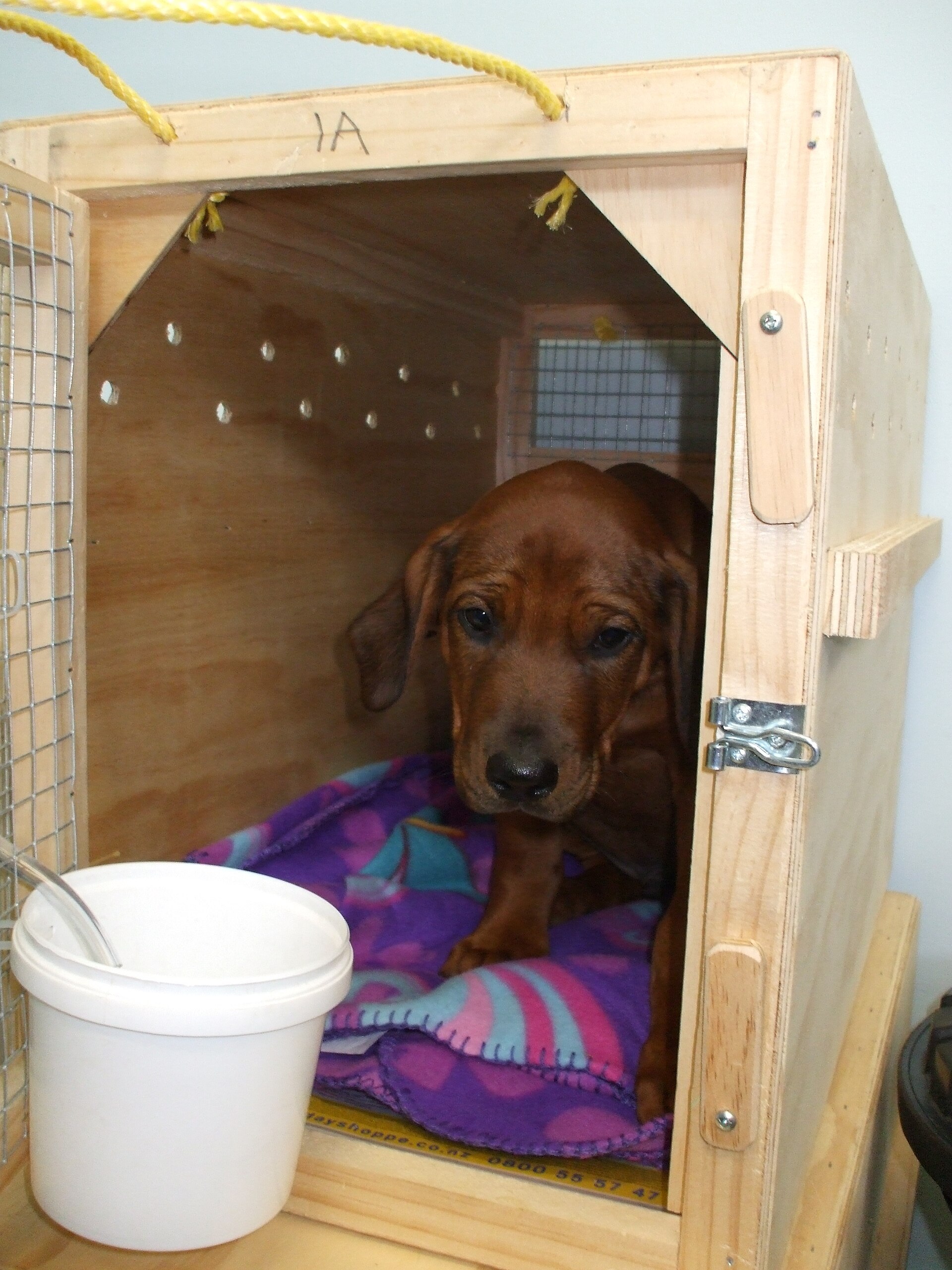
Frequently asked questions
How long does crate training take?
Expect two to four weeks for a puppy to settle reliably, though some take longer. Golden Paws notes that training can take weeks of small steps, and rushing is the main cause of setbacks. A puppy that is fearful of the crate needs the timeline stretched, not the pressure increased.
Can I crate my puppy while I am at work?
Only if someone can come home for a midday break. Puppies under six months should not be expected to hold it longer than 3 to 4 hours. An 8-hour workday without a break sets the puppy up to soil the crate, which undermines the training.
A dog walker, a family member, or a puppy-proofed pen with a potty area works better.
Should the crate have food and water all day?
Meals in the crate are great during training. Leaving water all day is fine for older puppies, but for young ones, timed water helps you predict potty needs. Remove the bowl about two hours before bedtime to help the puppy make it through the night.
What if my puppy has an accident in the crate?
Clean it thoroughly with an enzymatic cleaner so no odor remains. Then look at what went wrong: the crate may be too big, the session too long, or the potty break skipped. Accidents are information, not rebellion.
Adjust and move on.
The week-by-week outlook
Week one is about introductions: treats, meals, and an open door. Week two brings short closed-door sessions and the first cue-word practice. By week three, most puppies settle for an hour or two with a chew toy, and nights get quieter.
Full reliability, including alone time while you leave the house, usually lands in weeks three to six. Keep sessions positive, respect the bladder limits, and end every session on a calm note. The payoff is a dog that treats its crate like a bedroom: a place it chooses, not a place it is sent.
Related stories

Why Does My Dog Eat Grass and Vomit?
A UC Davis study of 1,571 owners found grass eating is normal dog behavior, not self-medication: only 10% were ill first. What the science

Why Does My Dog Stare at Me While I Eat?
Dogs stare at you while you eat because it has worked before, and mutual gaze raises bonding hormones. Learn the reinforcement science

Foods toxic to dogs: the list, with reasons
Chocolate, xylitol, grapes, onions: common foods can harm dogs. Learn what makes each one toxic, the warning signs, and what to do if your