
Why Do We See Mirages Shimmering on Hot Roads? The Physics
Key takeaways
- A highway mirage is light from the sky bent upward by hot air near the road, which your brain reads as water on the pavement.
- The bending comes from refraction through air layers of different temperatures, ending in total internal reflection at a shallow critical angle.
- The image shimmers because turbulent hot air keeps shifting the layers, and it vanishes as you approach because the viewing angle changes.
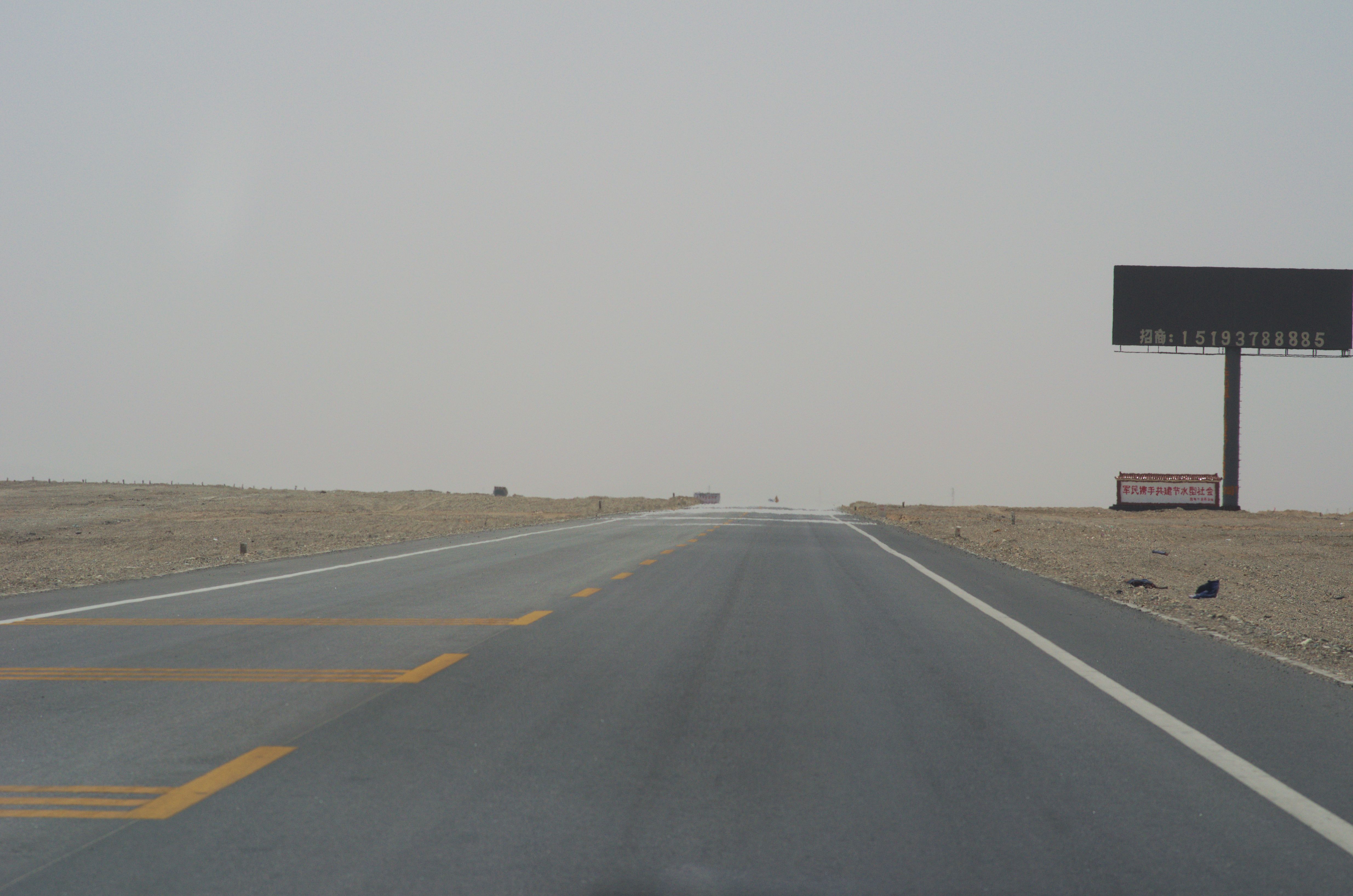
On a hot summer afternoon, a distant stretch of highway can look wet. The pale shimmer sits on the asphalt like a puddle, sometimes even reflecting the sky. You drive toward it, and it is never there.
That vanishing puddle is a mirage, and it is one of the most familiar optical illusions in everyday life. It is not a trick of tired eyes and not heat rising in visible waves. It is light itself taking a curved path through air, bent by temperature, and your brain misreading where the light came from.
This article explains what a mirage is, how layers of hot air bend light, why the image shimmers instead of sitting still, and why it always disappears as you get closer.
What a mirage actually is
A mirage is a naturally occurring optical illusion in which light rays are bent to produce a displaced image of distant objects or the sky. On hot roads, the effect is called an inferior mirage, because the false image appears below the real object, near the ground.
The key point: there is no water, and the road is not reflecting anything. What you see is light from the sky that never touched the road at all, curved through the air just above the asphalt to arrive at your eyes from below eye level. Your visual system assumes light travels in straight lines, so it projects the image downward and concludes there must be a reflective surface down there, and water is the brain's best guess.
This is the same family of illusion that makes desert travelers report lakes that recede as they walk. Testbook's physics explainer notes the type is especially common in hot deserts, and drivers know it from summer highways, where a distant patch of road appears wet but shows no wetness when you reach the spot.
How hot air bends light
Light travels at slightly different speeds through air at different temperatures, and that difference steers it. On a sunny day, the asphalt absorbs solar heat and warms the thin layer of air touching it. That hot layer is less dense than the cooler air above it.
Density controls the refractive index, a number that describes how much a material slows light. Hotter air is less dense and has a smaller refractive index than cooler air, Testbook explains. So the air above a hot road is not uniform: the refractive index increases with height, layer by layer, from the scorching surface up to the cooler air a meter or two above.
Now follow a ray of sunlight, or light reflected from the sky, heading downward toward the road at a shallow angle. As it passes through each warmer, thinner layer, it bends slightly away from the vertical, like a car drifting on a banked curve. The bending is gradual refraction, layer after layer.
At some point the ray is traveling almost parallel to the ground, and if the angle at which it meets the next layer exceeds the critical angle, it cannot pass through at all. Instead it undergoes total internal reflection and bounces back upward into the cooler air. EduRev's physics Q&A identifies this as the defining mechanism: a mirage is a phenomenon due to total internal reflection, caused first by refraction through air layers of different temperatures.
Why your brain sees water
The reflected ray now travels upward to your eyes. But your visual system has a firm assumption built in: light moves in straight lines. It traces the incoming ray backward along a straight path, which points below the road surface.
So the brain renders an image of the sky sitting on the asphalt. Since the sky is bright and bluish, and since still water reflects the sky, the brain labels the patch as water. Testbook puts it plainly: the light appears to be coming from somewhere below the ground, and the observer naturally assumes it is reflected from a pool of water.
Tall objects get the same treatment. Light from the top of a distant tree bends through the hot layers and reflects upward, so you may see an inverted ghost of the tree beneath the real one, like a reflection in a lake that is not there.
The effect needs a shallow viewing angle, which is why mirages appear far ahead on a long straight road and never at your feet. The geometry only works when you look across a long stretch of heated surface. Physics textbook problems, like the one in the college physics text hosted on Vaia, frame it exactly this way: the bending becomes significant at shallow angles, and changing the observer's viewpoint can make the mirage vanish.
Why it shimmers
A textbook mirage would be a steady, mirror-like patch. Real ones wobble and ripple. That shimmer is turbulence.
The hot air layer above asphalt is not a neat stack of uniform sheets. Heat rises in plumes, breezes stir the layers, and passing vehicles churn the air. Each pocket of air has a slightly different temperature and therefore a slightly different refractive index, so the path of the light jitters from moment to moment.
That is also why a mirage can flicker out entirely on a gusty day. Testbook's explanation assumes still air, with small air currents, for the layered structure to hold, and when wind mixes the layers the smooth gradient collapses and the reflection breaks up. The shimmer is, in a sense, the mirage telling you about the invisible turbulence above the road.
The same turbulence explains heat haze, the wavy distortion you see above hot pavement even without a mirage. Both come from light passing through moving pockets of air at different temperatures. They are cousins, not the same phenomenon: haze is distorted light from real objects, while a mirage is light from the sky arriving by a bent path.
Why it always disappears up close
Every driver has watched the puddle retreat. It never gets closer than a few hundred meters, and it is gone by the time you arrive. The reason is geometry.
Total internal reflection only happens when light strikes the air layers at an angle shallower than the critical angle. As you drive toward the mirage, your line of sight to that patch of road gets steeper. Past a certain point, the angle exceeds what the temperature gradient can reflect, the light passes through instead of bouncing, and the image dissolves.
Nothing moved and nothing dried up; the conditions simply stopped being right for your eyes at that distance. Meanwhile, a new mirage may be forming farther ahead, which is why the "water" seems to flee before you. It is always the same distance away because the distance is set by the angle, and the angle moves with you.
The cold-weather cousin: superior mirages
Hot roads make inferior mirages, with the false image below the real one. The reverse temperature setup makes a superior mirage, with the image floating above.
Superior mirages happen when cold air sits near the surface with warmer air above it, a temperature inversion common over cold oceans and polar ice. Light bends downward instead of upward, and distant ships or coastlines can appear to float in the sky or loom larger than life. Sailors have reported ghost ships hovering above the horizon for centuries, and the physics is the mirror image of the highway puddle.
The famous Fata Morgana, a complex, shifting superior mirage seen in narrow straits, is the dramatic end of this family. It stacks multiple distorted images of a distant coastline into towers and castles that morph as the air moves. Same principle, colder air.
Mirages in science and history
The physics of the mirage has been understood since the 19th century, but it still shows up in modern work. Surveyors and astronomers correct for the same refraction when light passes through unevenly heated air, a problem called atmospheric refraction that shifts the apparent position of stars near the horizon.
The critical angle idea behind the mirage is also the principle behind fiber optics and the sparkle of diamonds. A diamond's critical angle is only about 24.4 degrees because of its high refractive index, so light entering it bounces around inside through multiple total internal reflections before escaping, which is what makes it glitter. The highway puddle and the diamond are running the same physics in opposite directions.
For a different everyday physics puzzle, why salt melts ice on roads covers the chemistry happening on that same asphalt in winter, when the temperature gradient works in reverse.
Frequently asked questions
Is a mirage a reflection or a refraction?
Both, in sequence. Refraction through air layers of different temperatures bends the light into a curve, and total internal reflection at a shallow critical angle sends it back upward. Students often confuse the two, but physics references classify the mirage as a case of total internal reflection enabled by refraction.
Why do mirages look like water specifically?
Because the light forming the image comes from the sky, which is bright and blue, and your brain interprets a bright reflective-looking patch on the ground as water. If the sky were a different color, the "puddle" would be too.
Can you photograph a mirage?
Yes. Cameras record the same bent light your eyes receive, so the shimmering patch shows up in photos and dashcam footage. That is one reason the Dunhuang road mirage photographed above looks so convincing: the camera is fooled exactly the way you are.
Do mirages happen at night?
Rarely. They need a strong temperature gradient with hot air at the surface, which requires intense solar heating of the ground. On clear calm nights the ground cools faster than the air, which can produce the superior-mirage setup instead.
The bottom line
The puddle on the hot highway is light from the sky, bent by layers of heated air and bounced back up by total internal reflection, then misread by a brain that assumes light travels straight. It shimmers because the air is turbulent, and it vanishes as you approach because the viewing angle changes. No water, no trick, just physics doing its quiet work a few inches above the asphalt.
Tags: physics, optics, weather, light
Latest in Science
- Why Does Helium Make Your Voice Squeaky?
- Why Does Salt Melt Ice on Roads?
- What Is Dark Matter, Explained Without Jargon?
- How Do Seismographs Detect Earthquakes From Far Away?
Subscribe for one fascinating science explainer in your inbox every morning.
Related stories

Why diamond is hard and graphite is soft when both are carbon
Diamond and graphite are both pure carbon, yet diamond is 10 on the Mohs scale and graphite is 1 to 2. The difference is not the atoms;

Why Hot Water Can Freeze Faster Than Cold: The Mpemba Effect Explained
Hot water can freeze faster than cold under specific conditions. The Mpemba effect, named for a 1963 schoolboy experiment, still divides

How Magnets Work at the Atomic Level: Spins, Domains, and Iron
Magnetism comes from electrons: their spin and orbits make each atom a tiny magnet. In iron, quantum forces align these atomic magnets into